

Originally published by Northwestern University’s Medill Local News Initiative and republished with permission.
Executive Overview
Last summer, public broadcasting in the United States stood on the edge of a financial abyss. When President Donald Trump successfully urged Congress to pass the Rescissions Act of 2025, it triggered a historic and unprecedented reversal: the withdrawal of nearly all federal funding for public broadcasting, clawing back approximately $1.1 billion in subsidies originally appropriated by a previous Congress. For nearly six decades, federal support—funneled primarily through the Corporation for Public Broadcasting (CPB)—had served as the foundational bedrock for a national network of educational, local, and emergency programming.
The political justification was familiar. Citing alleged ideological bias against conservatives, critics championed the elimination of taxpayer support for PBS and NPR. Yet, the real-world operational fallout sent shockwaves through the media landscape. Within weeks of the bill’s signing, the CPB announced it would wind down its operations, leaving thousands of media professionals, station managers, and community leaders bracing for catastrophic closures. Industry watchdogs predicted a wave of station dark-outs that would accelerate the spread of "news deserts" across vulnerable rural and underrepresented American communities.
However, the definitive demise of public media never materialized. Instead, the sector experienced an unexpected and profound lifeline driven by grassroots defiance—dubbed "rage giving"—and a historic mobilization of philanthropic capital. Across the nation, everyday citizens, major foundations, and institutional bridge funds stepped forward with tens of millions of dollars. While this extraordinary infusion of private capital successfully staved off a sweeping, immediate collapse, the underlying systemic vulnerabilities remain unresolved. As initial donation surges begin to normalize and structural pressures mount, the central question facing public broadcasting is as stark as ever: Can a system built on public utility survive indefinitely on philanthropy and volatile public sentiment?
Detailed Chronology: The Road to the Rescission and Its Immediate Aftermath
To understand the current state of public media, one must trace the rapid acceleration of political and economic pressures that culminated in the summer of 2025.
The Political Push for Defunding
For years, conservative critics targeted public broadcasting, framing institutions like NPR and PBS as ideologically skewed. While previous administrations and legislative sessions debated these subsidies, they historically preserved funding given its popularity in rural districts and its essential role in emergency alert systems. That political calculus shifted dramatically in early 2025. The White House formally released administrative actions aimed at "ending taxpayer subsidization of biased media," urging Congress to utilize a rescission package—a legislative mechanism designed to claw back previously approved federal spending.
Despite fierce opposition from media advocates and congressional Democrats, the Rescissions Act of 2025 cleared Congress and was signed into law by President Trump. The impact was immediate and absolute. The CPB, which had distributed federal grants to more than 1,500 local radio and television stations, announced it would shutter its doors, terminating a 57-year partnership between the federal government and public media.
The Scramble for Survival
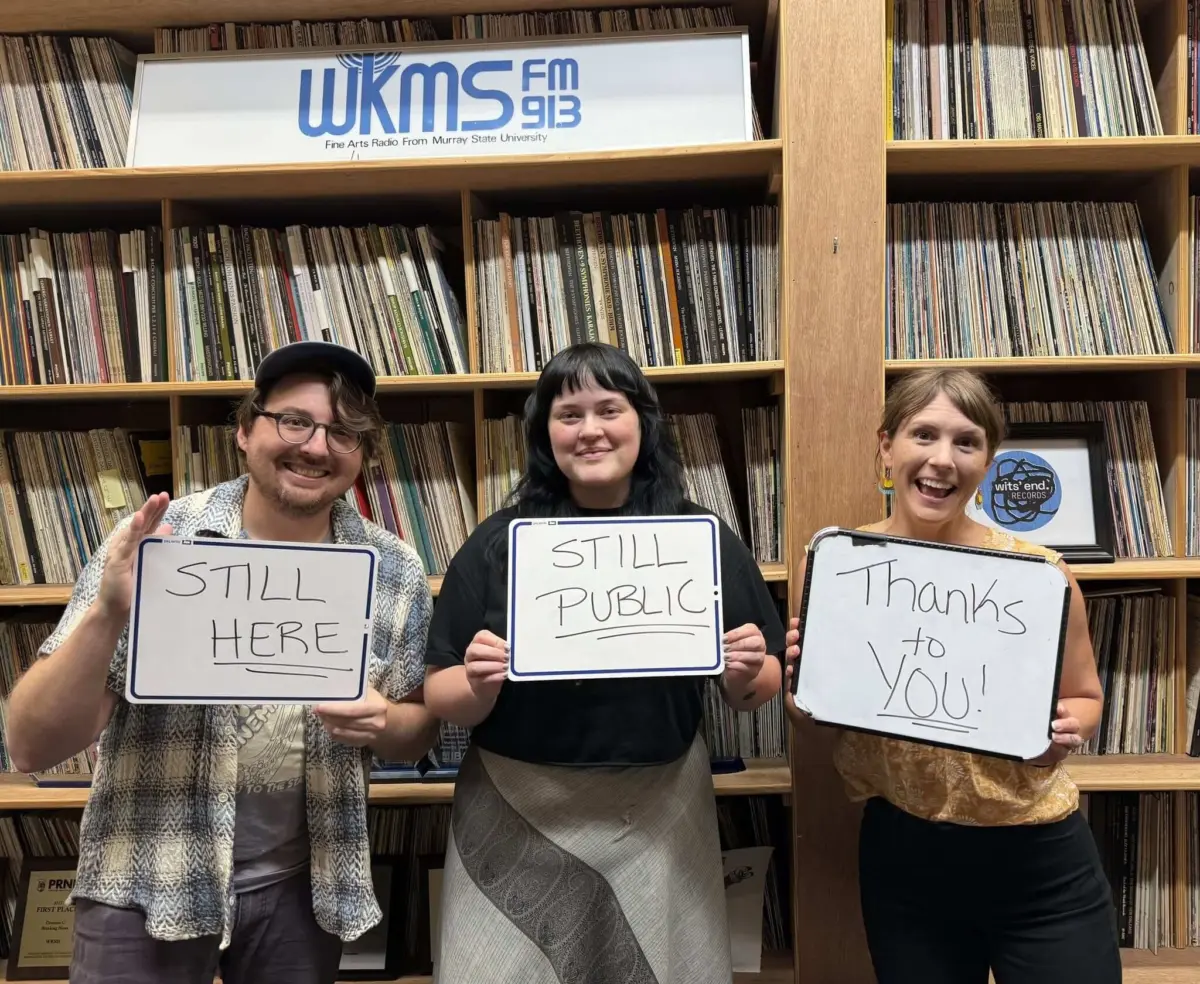
In southwestern Kentucky, Asia Burnett, manager of public radio station WKMS, watched the unfolding crisis with profound dread. Operating in a region where per capita income barely hovers around $30,000, WKMS relied on the CPB for $215,000 annually—roughly 15% of its total operating budget.
"That’s a lot of money for a small, rural station to lose," Burnett reflected. "It was a large hit."
Similar anxieties rippled across the country. In Northern California, KEET-TV in Humboldt County lost nearly half of its operating budget, forcing the station to slash its staff from 13 to six and cancel its flagship local newscast, Headline Humboldt. Major national producers like WETA in Washington, D.C., and GBH in Boston faced immediate contractions, shedding personnel and cutting staple programs such as the weekend edition of the PBS NewsHour.
The Rise of "Rage Giving"
Yet, as stations prepared for the worst, an unexpected phenomenon took hold. Fuelled by anger over Washington’s decision, everyday listeners and viewers opened their wallets in numbers rarely seen in modern media history.
In Kentucky, WKMS listeners donated more than $900,000 in the months following the federal cuts—roughly two-and-a-half times the station’s typical annual fundraising total. Contributions ranged from modest donations by supermarket cashiers and local farmers to a single transformative gift of $250,000. This financial cushion allowed Burnett to protect her eight-person newsroom and even build out the station’s endowment.
This trend was echoed nationwide. Data compiled by the Contributor Development Partnership (CDP), which analyzes fundraising across 170 public stations, revealed that average revenue rose by 44% in the months immediately following the federal clawback. Oregon Public Broadcasting (OPB) lost $5 million in CPB funding—representing about 9% of its budget—but saw an influx of contributions that CEO Rachel Smolkin noted "more than covered" the shortfall.
Supporting Context & Metrics: The Dual Reality of Public Media
While the headlines were dominated by tales of resilient fundraising triumphs, aggregate figures conceal a deeply uneven landscape. Public broadcasting is not a monolith; rather, it is a fragile patchwork of high-capacity urban institutions and hyper-local, under-resourced rural operations.
The Tale of Two Ecosystems
While major metropolitan stations leveraged large donor bases to weather the storm, small rural stations faced an existential threat. For decades, federal subsidies constituted 40% or more of the operating budgets for stations operating in sparsely populated areas.
- KNBA-FM in Anchorage, Alaska: Heavily reliant on federal funding to broadcast daily Alaska Native newscasts.
- KGLP-FM in Gallup, New Mexico: Crucial for delivering Navajo and Zuni community news.
- KCAW in Sitka, Alaska: Operating in a remote maritime community where independent local journalism depends entirely on external institutional support.
Lacking affluent donor pools, these stations were uniquely exposed. According to tracking data from Semipublic, an organization monitoring public media analytics, the broader economic fallout has resulted in roughly 550 layoffs across the sector—equating to approximately 3% of the total public media workforce. NPR itself shed 10 journalists and offered buyouts to 18 others, while regional stations across Appalachia, the Mountain West, and rural California grappled with reduced broadcast hours and program cancellations.
The Philanthropic Safety Net
Recognizing that community donations alone could not save every station, major philanthropic organizations mobilized an unprecedented rescue mission. The nonprofit Public Media Bridge Fund stepped forward to aggregate capital from institutional donors, including the Knight Foundation, the Carnegie Corporation, the MacArthur Foundation, the Ford Foundation, and the Mellon Foundation.
Since August 2025, the Bridge Fund has directed approximately $26 million in emergency stabilization grants, low-interest loans, and strategic consulting to the nation’s most financially precarious stations. Erik Langner, executive director of the Bridge Fund, noted that an initial coalition of 1,500 donors ultimately committed $86 million to ensure operational continuity. Concurrently, the federal Bureau of Indian Affairs stepped in with $9.4 million in designated grants for 35 tribal-operated stations.
Official Statements and Industry Insights
Industry leaders, researchers, and station executives have offered candid assessments of the post-rescission landscape, balancing relief over short-term survival with deep anxiety regarding long-term structural viability.
"The end of federal funding was an incredibly dramatic event. People were motivated to give. It’s not the imminent crisis that everyone thought it would be a year ago… It doesn’t mean the crisis has been resolved. It just means it’s delayed."
— Alex Curley, Executive Director, Semipublic
Reflecting on the psychological shift among donors, Rachel Smolkin, CEO of Oregon Public Broadcasting and former executive at CNN and Politico, emphasized the necessity of converting reactive "rage givers" into long-term organizational sustainers:
"The kind of news and other information public stations provide—free to all and usually of high quality—is critical to converting rage-givers into sustainers. The goal wasn’t just to save a dollar today. It was to build an organization with the scale and resilience to sustain robust, independent local reporting… for decades to come."
Local news managers like Asia Burnett of WKMS pointed to the deep public validation of trusted community journalism:
"It shows how important local journalism is. Journalism is always changing, but this speaks to how people still need a trusted source, a trusted voice."
Future Outlook: Collaboration, Consolidation, and the Road Ahead
As the initial shock of the rescission recedes, public broadcasting is being forced to accelerate structural transformations that were already underway before the crisis. To survive in an era of declining public subsidies and shifting audience habits, stations are increasingly turning toward structural mergers, regional news collaboratives, and digital diversification.
The Rise of Newsroom Mergers
One of the most effective defense mechanisms against financial insolvency has been structural consolidation. Following a model established in cities like St. Louis, Los Angeles, and Chicago—where Chicago Public Media famously acquired the Chicago Sun-Times in 2022—public broadcasters are merging with independent digital newsrooms.
A prominent example is Texas Public Radio (TPR), which operates seven stations across south-central Texas. In May, TPR announced a formal operational combination with the San Antonio Report, a digital nonprofit news organization. Ashley Alvarado, chief executive of TPR, noted that while the merger was under discussion prior to the federal rescission, tightening resources and the need for long-term fiscal resilience forced the issue.
"The reality across local journalism is that resources are tight, philanthropic dollars are competitive and audiences are fragmented," Alvarado stated. The resulting newsroom of 31 journalists pools audio and digital reporting expertise while stripping away redundant administrative overhead.
Regional Collaboratives and Emergency Networks
Beyond mergers, public stations are banding together to form regional content-sharing hubs. The Texas Newsroom—which served as the prototype for NPR’s nationwide Collaborative Journalism Network—unites 20 public radio stations across the state to share reporting on state politics, immigration, health, and climate. NPR has since replicated this hub model across the South, California, New England, the Midwest, Appalachia, and the Mountain West.
In Florida, the Florida Public Radio Emergency Network demonstrates how low-cost, high-impact collaboration can serve the public good. Funded entirely by the state at a modest cost of approximately $256,270 annually, the network utilizes 14 stations to broadcast critical, lifesaving weather alerts—serving as a vital public safety backstop when commercial and digital infrastructure fails during natural disasters.
The Looming Challenges Ahead
Despite these innovations, significant headwinds remain. According to tracking indexes maintained by the Contributor Development Partnership, new donor growth dipped by 16% following the initial fundraising surge, signaling that "rage giving" is beginning to normalize as public media fades from the daily political spotlight.
Furthermore, a significant portion of public broadcasting stations—over half of public radio stations and roughly a quarter of public TV stations—are housed within colleges and universities. These academic institutions face their own impending financial reckoning driven by declining state funding and a looming demographic "enrollment cliff."
As Erik Langner of the Public Media Bridge Fund cautioned, the long-term structural reality is that the public media system will likely feature fewer originating organizations moving forward. While emergency philanthropy and passionate community supporters have successfully bought the sector precious time, the fundamental challenge of securing a permanent, sustainable economic model for independent public journalism remains the defining test of the decade.