

Executive Overview
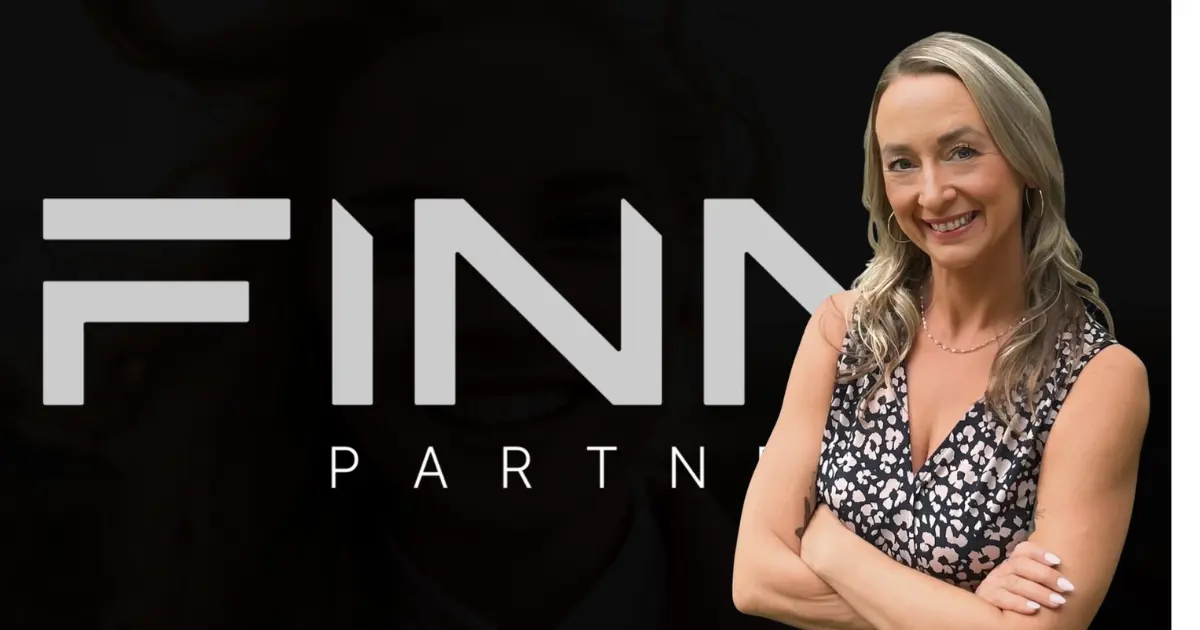
In a high-stakes talent migration that signals a broader structural shift within the advertising and public relations landscapes, marketing veteran Kim Sizemore has officially joined Finn Partners as the head of integrated media. Bringing with her an impressive 18-year tenure from the creative powerhouse Wieden+Kennedy, Sizemore steps into a role charged with bridging the widening chasm between traditional advertising, social media ecosystems, and immersive, in-person brand activations. Her mandate at Finn Partners is clear yet immensely complex: to orchestrate cohesive, unified brand identities for some of the world’s most recognizable household names, including Jack Daniel’s, 2K, Mazda, and Delta Air Lines.
Sizemore’s arrival at Finn Partners occurs at a pivotal historical moment for the marketing industry. Modern consumers are increasingly fragmented across digital channels, immune to traditional interruptive advertising, and hyper-sensitive to context, authenticity, and brand values. In response, agencies are being forced to dismantle legacy silos that historically separated public relations, media buying, creative development, and experiential marketing. Sizemore’s extensive background in culturally resonant, daring creative environments positions her uniquely to spearhead this multidisciplinary convergence.
This comprehensive report examines the industry implications of Sizemore’s career transition, unpacks the strategic philosophy she brings to Finn Partners, contextualizes the mandate within the broader evolution of integrated media, and projects how this leadership appointment will shape the future trajectories of major global brands.
Detailed Chronology: From Wieden+Kennedy to Finn Partners
To understand the weight of Kim Sizemore’s recent transition, one must examine the crucible in which her professional philosophy was forged: Wieden+Kennedy (W+K). Founded in Portland, Oregon, in 1982, W+K is globally revered as an incubator for boundary-pushing, culturally defining advertising. Responsible for monumental campaigns—most notably Nike’s legendary "Just Do It" platform—the agency is defined by an uncompromising commitment to creative bravery, cultural relevance, and narrative integrity.
During her nearly two decades at W+K, Sizemore operated within an ecosystem that prioritized deep consumer understanding over algorithmic ad-serving. Over 18 years, she witnessed the complete digital transformation of the media landscape—from the nascent days of banner ads and early social media experiments to the complex, hyper-personalized, algorithm-driven omnichannel reality of the mid-2020s. Within this crucible, Sizemore developed a granular appreciation for context: the understanding that a brand’s message is fundamentally altered, amplified, or neutralized by the environment in which it appears.
The decision to leave W+K after 18 years was not merely a lateral career move; it represents a deliberate pivot toward the holistic integration models championed by agencies like Finn Partners. Founded in 2004 by Peter Finn, Finn Partners has experienced explosive growth over the past two decades, scaling through a combination of organic expansion and strategic acquisitions. Unlike traditional holding-company behemoths that often struggle with internal friction between legacy PR units and digital shops, Finn Partners has aggressively pursued a truly integrated model. The agency positions itself as a nimble, values-driven alternative capable of handling complex global accounts with a boutique level of personalized attention.
By bringing Sizemore on board to lead integrated media, Finn Partners is signaling its ambition to elevate its media capabilities to match its world-class creative and public relations offerings. For Sizemore, the move offers an expansive canvas: the opportunity to apply her decades of creative media discipline across a diverse, high-profile client roster that demands both cultural currency and rigorous business accountability.
Supporting Context & Metrics: The Modern Media Landscape and the Context Imperative
The mandate entrusted to Kim Sizemore at Finn Partners addresses one of the most persistent vulnerabilities in contemporary marketing: media fragmentation without strategic cohesion.
The Cost of Fragmentation
In the race to capture consumer attention, brands have flooded every conceivable digital and physical touchpoint. According to recent industry benchmarks, the average consumer is exposed to thousands of commercial messages daily. However, quantity has not translated into effectiveness. Industry studies indicate that consumer trust in traditional advertising continues to fluctuate, while ad-blocker adoption rates remain stubbornly high, particularly among Gen Z and Millennial cohorts.
Compounding this fatigue is the phenomenon of channel silos. Historically, a brand’s PR team would pitch one narrative, its media-buying agency would chase programmatic efficiencies elsewhere, and its experiential marketing partners would design in-person activations completely detached from digital campaigns. The result is a fractured brand identity that confuses consumers, dilutes equity, and wastes valuable marketing capital.
The Context Imperative
Sizemore’s philosophy directly challenges the brute-force, hyper-targeted programmatic approach that dominated the 2010s. While data-driven targeting allows brands to pinpoint specific demographic and behavioral niches, it has frequently led to severe contextual misalignments—such as high-end luxury or sensitive wellness products appearing adjacent to polarizing, tragic, or entirely inappropriate online content.
Sizemore encapsulated this philosophy in a striking statement to industry publication ADWEEK:
"My husband actually says, ‘my wife is responsible for the reason you don’t see tampon ads on ESPN.’ It’s really important to understand the context of the message you’re running."
This anecdote highlights a profound truth about modern media planning: placement is messaging. Where an ad appears tells the consumer just as much about the brand’s values, cultural literacy, and self-awareness as the creative copy itself. By ensuring that brand touchpoints across social media, live activations, and traditional channels are harmonized, Sizemore aims to protect client equity while maximizing resonance within targeted consumer niches.
Managing Global Giants: Jack Daniel’s, 2K, Mazda, and Delta
At Finn Partners, Sizemore’s strategic vision will be immediately tested across a formidable portfolio of enterprise accounts, each operating in vastly different cultural and commercial arenas:
- Jack Daniel’s: A historic, heritage-driven spirits brand that must constantly balance timeless authenticity with modern, culturally relevant digital engagement.
- 2K: A titan in the interactive entertainment and video game industry, requiring community-first strategies, real-time social listening, and immersive digital-physical activations.
- Mazda: An automotive manufacturer navigating the transition toward electric vehicles, shifting consumer buying behaviors, and experiential retail environments.
- Delta Air Lines: A legacy airline leader needing seamless omnichannel communication that addresses both corporate reliability and consumer emotional connection, particularly across travel disruptions and loyalty ecosystems.
For each of these brands, Sizemore’s team will act as the central nervous system, ensuring that whether a consumer interacts with a Mazda ad on TikTok, encounters a Jack Daniel’s experiential pop-up at a music festival, or reads a Delta press release, the underlying identity remains unmistakably unified.
Official Statements and Industry Reception
The industry reaction to Sizemore’s appointment has been overwhelmingly positive, viewed by analysts as a bellwether for where agency talent acquisition is heading. Senior executives across the marketing ecosystem have pointed to her Wieden+Kennedy pedigree as proof that traditional PR and integrated agencies are successfully poaching elite creative talent from the world’s most prestigious ad shops.
In internal announcements and external briefings, Finn Partners leadership has emphasized that Sizemore’s hire is a cornerstone of the agency’s long-term growth strategy. Peter Finn and other key stakeholders have consistently championed an agency culture built on collaboration, purpose-driven work, and cross-disciplinary excellence. Sizemore’s leadership style—rooted in listening closely to consumer subcultures and respecting the integrity of media environments—aligns seamlessly with the agency’s core ethos.
Industry observers note that agencies capable of offering genuinely integrated media—where PR, paid media, creative storytelling, and experiential strategy operate as a single unified force—will command the lion’s share of enterprise marketing budgets in the coming years. Brands are exhausted by managing disconnected rosters of specialist agencies; they are actively consolidating their business with partners who can deliver holistic solutions without sacrificing creative excellence. Sizemore’s arrival positions Finn Partners precisely in that sweet spot.
Future Outlook: What Sizemore’s Appointment Means for the Industry
As we look toward the remainder of the decade, several key trends will define the success of Kim Sizemore’s leadership at Finn Partners and offer a glimpse into the future of integrated media:
1. The Death of the Legacy Silo
Sizemore’s transition underscores an irreversible industry truth: the artificial walls separating public relations, paid media, social strategy, and experiential marketing are crumbling. Brands can no longer afford to treat earned media as an afterthought to paid campaigns, nor can they execute social media campaigns that ignore physical-world realities. Future-proof agencies will be built entirely around integrated pods where media planners, PR practitioners, and creative directors sit at the same table from day one of a pitch.
2. A Return to Contextual Craftsmanship
While programmatic automation will continue to handle efficiency-driven tasks, the strategic oversight of where brands show up will require human intuition, cultural literacy, and rigorous contextual awareness. Sizemore’s philosophy champions the idea that restraint is just as important as reach. Knowing where not to place a brand is frequently more valuable than knowing where to deploy a standard ad impression. This mindset will become vital as consumers grow increasingly skeptical of automated, indiscriminate brand intrusion.
3. Experiential and Digital Convergence
With major clients like 2K and Mazda in her portfolio, Sizemore will undoubtedly lean into the fusion of physical and digital spaces—often referred to as phygital marketing. Whether it is integrating gaming communities into live cultural events or turning automotive launches into multi-platform interactive experiences, the boundaries between a brand’s digital footprint and its physical activations are disappearing. Sizemore’s cross-channel expertise will be instrumental in designing campaigns where every touchpoint naturally reinforces the next.
Conclusion
Kim Sizemore’s move from Wieden+Kennedy to Finn Partners is more than a high-profile executive hiring; it is a clear indicator of where the marketing industry is heading. As brands face unprecedented fragmentation, consumer cynicism, and media complexity, the demand for unified, context-aware, and culturally resonant storytelling has never been higher. By anchoring her integrated media strategy in deep consumer empathy and contextual discipline, Sizemore is well-positioned to help Finn Partners’ elite client roster navigate the complexities of modern marketing—proving once and for all that when it comes to brand building, where you show up matters just as much as what you say.