

Executive Overview
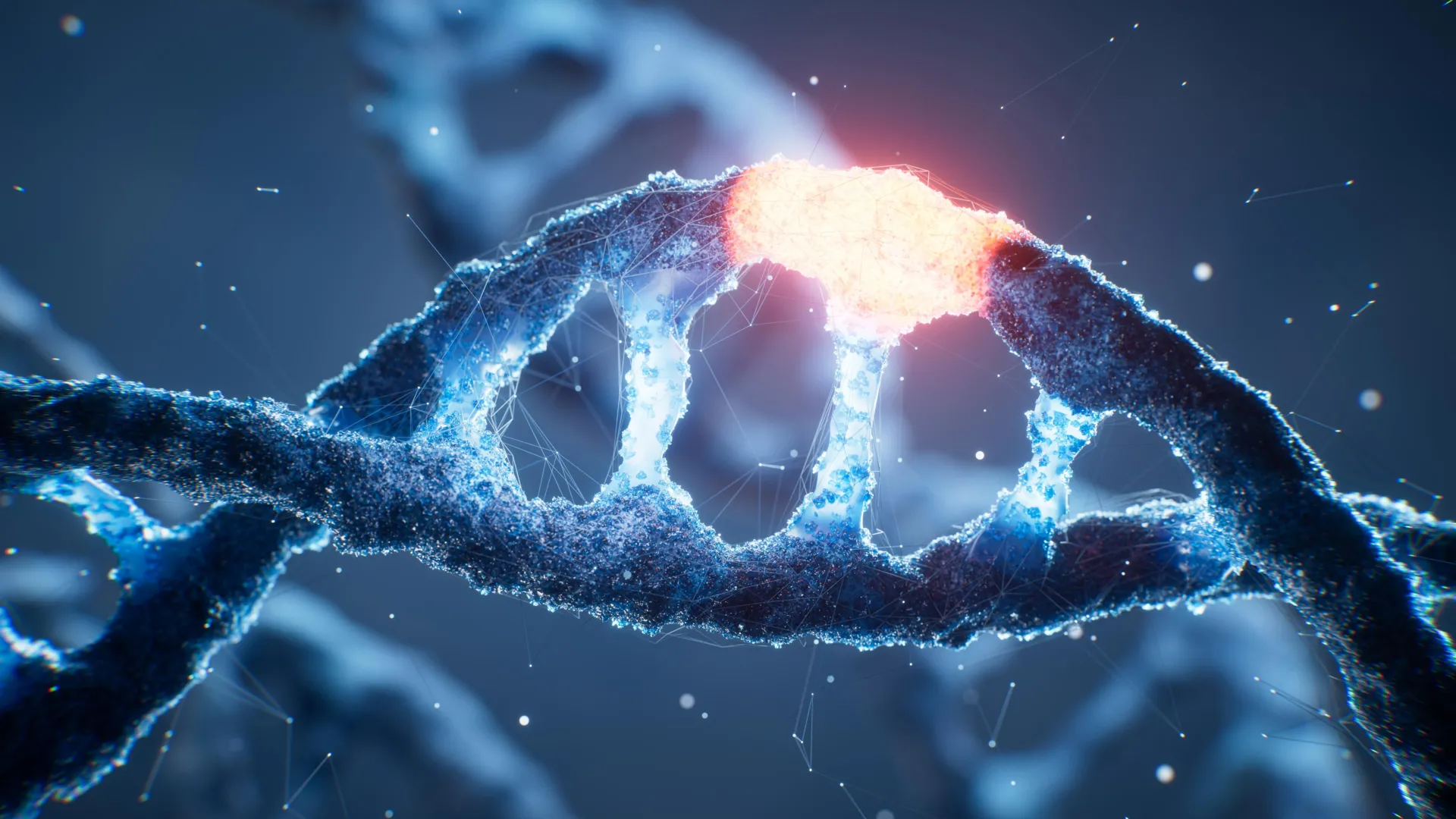
For billions of years, the blueprint of life on Earth has been written in a remarkably succinct four-letter dialect. Across every known organism—from the simplest single-celled bacterium in a hydrothermal vent to the complex physiology of the blue whale and human beings—DNA relies exclusively on four nucleotide bases: Adenine (A), Thymine (T), Cytosine (C), and Guanine (G). This universal genetic alphabet dictates the synthesis of proteins, drives cellular evolution, and underpins the magnificent biodiversity of our planet.
Now, a pioneering team of researchers at the University of California San Diego (UC San Diego) has shattered this foundational biological paradigm. In findings that represent a monumental leap forward for synthetic biology, the research team has demonstrated that one of life’s most vital and evolutionarily conserved enzymes—RNA polymerase—can accurately and efficiently read, process, and transcribe a vastly expanded, synthetic genetic alphabet consisting of eight letters rather than four.
This breakthrough suggests that the fundamental molecular machinery of living cells is remarkably versatile, capable of handling synthetic genetic information without requiring a complete redesign of biological architecture. Published in a pair of landmark studies in late 2026, this research moves synthetic biology closer to its ultimate holy grail: expanding the informational capacity of life itself. By mastering an eight-letter genetic code, scientists open the door to engineering completely novel biological systems capable of synthesizing designer therapeutics, advanced diagnostic probes, and alien polymers and proteins that have never before existed in nature.
Detailed Chronology of the Breakthrough
The journey toward understanding how cellular machinery interacts with expanded genetic codes spans decades of biochemical inquiry, but the culmination of this specific UC San Diego breakthrough unfolded across two pivotal studies published in the late summer of 2026.
The Hachimoji Milestone and Structural Revelation
For years, synthetic biologists, most notably pioneered by teams at institutions like the Scripps Research Institute, have toyed with creating synthetic base pairs—dubbed "hachimoji" DNA (from the Japanese hachi meaning eight and moji meaning letter). While chemists successfully synthesized these artificial base pairs in the laboratory, a fundamental question plagued the field: Could natural biological machinery actually interact with these foreign codes, or would cellular enzymes reject them as biological noise or damage?
To answer this, a team led by Dr. Dong Wang, professor at the UC San Diego Skaggs School of Pharmacy and Pharmaceutical Sciences, set out to capture the precise molecular choreography of transcription. Transcription—the process by which RNA polymerase reads a DNA template to synthesize messenger RNA—is the essential first step of gene expression. If an enzyme cannot transcribe synthetic DNA, the expanded code remains trapped, incapable of being translated into functional proteins or cellular machinery.
On September 2, 2026, the team published a definitive study in Nature Communications titled "Structural Basis of Transcription of the Hachimoji Eight-Letter Alphabet by E. coli RNA Polymerase." Using a combination of cutting-edge biochemical assays and ultra-high-resolution cryo-electron microscopy (cryo-EM), the researchers did something previously thought nearly impossible: they froze and imaged RNA polymerase from Escherichia coli (E. coli) bacteria in the exact microsecond it recognized, bound to, and incorporated synthetic base pairs into a growing RNA chain.
The resulting images, resolved at scales finer than the width of a single atom, provided a breathtaking look at molecular recognition. They revealed that RNA polymerase does not require a wholly unique structural conformation to process non-natural letters. Instead, the enzyme identifies and accommodates the synthetic DNA letters by co-opting many of the same biochemical and structural signals it relies on to proofread and process natural A-T and C-G base pairs.
Defying Dogma: Hydrogen Bonds Not Required
Just weeks prior to the Nature Communications publication, Dr. Wang’s laboratory dropped another bombshell in the pages of Proceedings of the National Academy of Sciences (PNAS) on August 12, 2026. The study, entitled "Hydrophobic unnatural base pair promotes trigger loop closure and catalysis in cellular RNA polymerase independent of hydrogen bonding," challenged a bedrock principle of molecular biology.
For decades, biological dogma held that hydrogen bonding was the absolute glue of molecular recognition. The double helix is held together by hydrogen bonds between complementary base pairs (A pairs with T via two hydrogen bonds; C pairs with G via three). Conventional wisdom dictated that any artificial base pair attempting to trick cellular machinery would also need to form hydrogen bonds.
However, the UC San Diego team demonstrated that RNA polymerase could successfully recognize and catalyze transcription using an entirely synthetic, hydrophobic (water-fearing) base pair completely devoid of hydrogen bonds. By utilizing hydrophobic packing rather than hydrogen-bonded pairing, this unnatural base pair nevertheless triggered the essential closure of the enzyme’s "trigger loop"—a conformational change vital for catalytic efficiency. This surprising revelation proves that biological enzymes possess untapped mechanical flexibilities that transcend traditional evolutionary parameters.
Supporting Context & Metrics: The Mechanics of Synthetic Transcription
To appreciate the magnitude of the UC San Diego findings, one must examine the staggering scale and complexity of the molecular machinery involved.
The Scale of Cryo-Electron Microscopy
The structural insights captured by Dr. Wang’s team were made possible by recent revolutions in cryogenic electron microscopy. Cryo-EM allows researchers to flash-freeze biomolecules in liquid ethane, preserving their native structures in a near-physiological state. By bombarding these frozen samples with electron beams and computationally processing hundreds of thousands of individual particle projections, the UC San Diego team achieved near-atomic resolution maps of the E. coli RNA polymerase elongation complex.
At this resolution, individual amino acid side chains and nucleotide bases are clearly visible, allowing computational modelers to map the exact steric and electrostatic interactions occurring within the enzyme’s active site as it processes the hachimoji alphabet.
Expanding Informational Density
The mathematical implications of expanding the genetic alphabet from four letters to eight are staggering.
- Four-letter DNA (Nature): Yields $4^3 = 64$ possible three-letter codons, which code for 20 standard amino acids and various stop signals.
- Eight-letter DNA (Synthetic): Expands the possible codons to $8^3 = 512$ unique combinations.
This exponential increase in informational density transforms DNA from a mere biological storage medium into a high-capacity data tape. With 512 potential codons, synthetic biologists can theoretically encode scores of non-standard, custom-designed amino acids into a single protein chain, introducing entirely new chemical, mechanical, and electronic properties into biological materials.
Official Statements and Expert Perspectives
The academic community has received the twin publications with immense enthusiasm, viewing them as a foundational milestone for the practical implementation of synthetic biology.
"For a long time, the prevailing assumption was that natural enzymes were too finely tuned over billions of years of evolution to accept anything other than the standard four-letter nucleic acid alphabet," said Dr. Dong Wang, the principal investigator behind both studies. "Our structural snapshots prove otherwise. We are seeing that nature’s most fundamental machines are remarkably accommodating, utilizing familiar structural cues to read foreign, human-engineered code. This fundamentally changes our understanding of what biological machinery is capable of."
Industry analysts and bioethicists are equally alert to the implications. While previous milestones in synthetic biology focused heavily on synthesizing entire bacterial genomes from scratch (such as the work by the J. Craig Venter Institute), those organisms still relied on the traditional four-letter alphabet. By proving that transcription can accurately process an eight-letter system—including hydrophobic pairs stripped of hydrogen bonds—the UC San Diego team provides the mechanistic blueprint for engineering organisms that speak a genuinely alien chemical language.
Dr. Elena Rostova, a prominent synthetic biologist unaffiliated with the research, noted:
"The discovery that RNA polymerase doesn’t strictly require hydrogen bonding to catalyze transcription is arguably the most disruptive finding here. It frees chemists from the traditional constraints of base-pairing design, opening up a vast periodic table of hydrophobic interactions that we can now leverage to build designer biopolymers."
Future Outlook: Applications in Medicine, Technology, and Beyond
The bridge from structural biology to applied technology is rapidly shortening. With the molecular mechanisms of expanded-alphabet transcription now laid bare, researchers are poised to deploy these systems across multiple high-impact sectors.
1. Targeted Cancer Therapeutics and Diagnostics
Even before these structural revelations, pioneering researchers began experimenting with expanded genetic alphabets to create specialized single-stranded DNA and RNA molecules known as aptamers. These synthetic aptamers can be engineered to fold into complex three-dimensional shapes that bind with exquisite specificity to disease markers. Earlier experimental models successfully utilized expanded alphabets to design synthetic DNA structures capable of zeroing in on and recognizing liver cancer cells while leaving healthy tissue untouched. With a clearer molecular understanding of how RNA polymerase processes these letters, researchers can now design larger, more stable, and more effective diagnostic libraries.
2. Biomanufacturing of Novel Biomaterials
Natural proteins are constrained by the limited palette of the 20 canonical amino acids. By expanding the genetic code to 512 codons, future bioengineers can program microbes to incorporate synthetic amino acids bearing exotic chemical side chains—such as fluorescent tags, metallic binding sites, or extreme heat-resistant bonds. This could lead to the large-scale industrial fermentation of advanced nanomaterials, ultra-strong bioplastics, and self-healing structural polymers manufactured cleanly inside engineered bacterial vats.
3. Enhanced Biosafety and Containment
One of the most exciting implications of an eight-letter genetic code is inherent biological containment. Because natural organisms lack the machinery to process eight-letter DNA, and because synthetic organisms engineered to use this expanded code would depend on artificial building blocks not found in the wild, such engineered life forms possess a built-in safety switch. If an engineered microbe were to escape the laboratory into the natural ecosystem, it would rapidly starve or fail to replicate due to the absence of synthetic nucleotides in the environment. This "genetic firewall" offers a robust biosafety mechanism for industrial synthetic biology.
Conclusion
The work conducted by Dr. Dong Wang and his team at UC San Diego marks a defining chapter in the history of science. By peering deep into the atomic architecture of RNA polymerase and demonstrating its ability to transcribe an eight-letter, non-hydrogen-bonded hachimoji alphabet, the researchers have bridged the gap between natural evolution and human ingenuity.
As we look toward the horizon of the 21st century, the monopoly of the four-letter genetic code is officially broken. We stand on the threshold of a new era in which humanity no longer merely reads the book of life, but actively expands its vocabulary—writing new sentences, chapters, and volumes that nature never imagined.