

Executive Overview
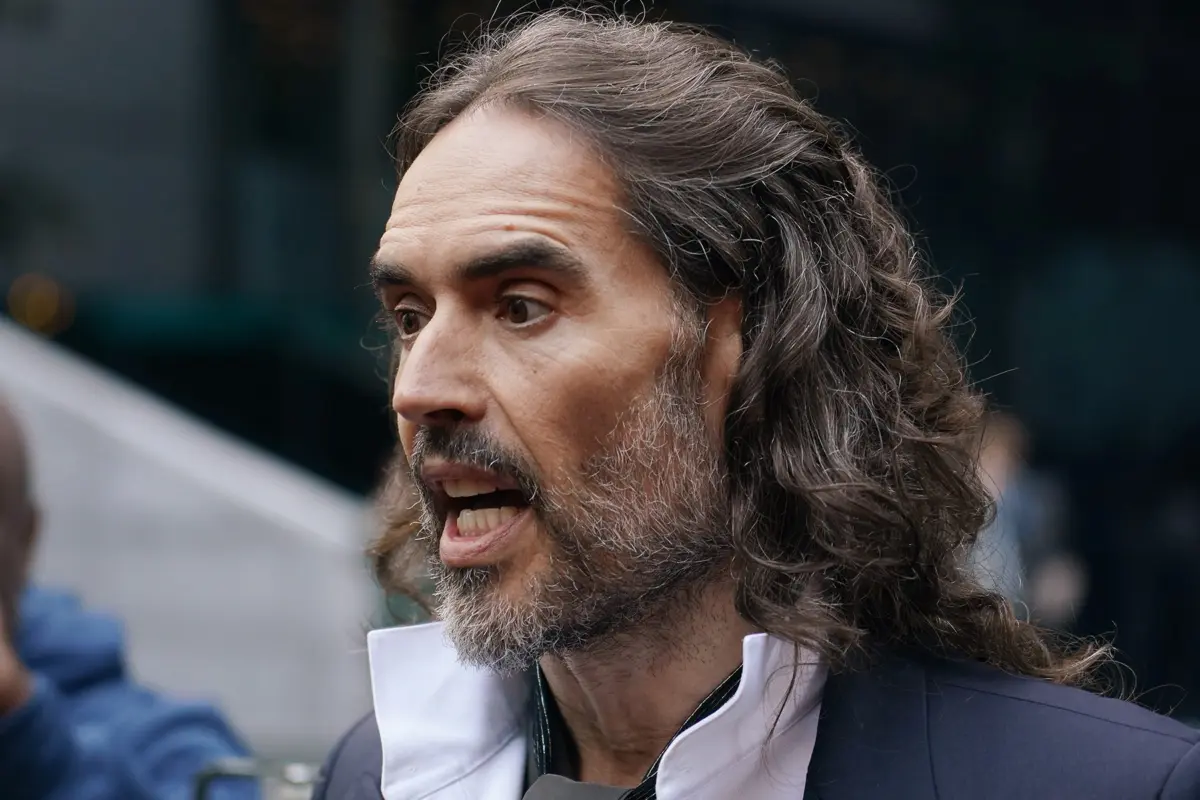
LONDON — Standing before a jury of his peers at London’s Southwark Crown Court, former actor and comedian Russell Brand delivered a stark appraisal of his current reality: he is facing the gravest legal battle of his life entirely alone.
Brand, 51 once a ubiquitous fixture of Hollywood comedies such as Forgetting Sarah Marshall and Get Him to the Greek, took the witness stand to defend himself against a litany of historical criminal charges. Across a decade spanning from 1999 to 2009, six women have come forward to accuse the British entertainer of severe sexual offenses. The indictment includes three counts of rape, three counts of sexual assault, and one count of attempted indecent assault.
Throughout the proceedings—which commenced on October 12—Brand has maintained a plea of not guilty, asserting steadfastly that all of his sexual encounters were entirely consensual. Yet, as the courtroom doors close each afternoon, the cascading fallout of the trial underscores a profound societal reckoning. Brand’s testimony revealed a man largely abandoned by his former professional circles; when asked by his lead defense attorney, Ian Winter, if anyone would touch him “with a bargepole,” Brand bluntly answered, “No.”
“My entire life has been consumed by these allegations,” Brand told the jurors, his voice heavy with resignation. “I have devoted myself to these matters.”
The high-stakes trial is expected to continue for at least another four weeks, pitting the harrowing, corroborated testimonies of six distinct accusers against Brand’s selective recollections of his past lifestyle. Prosecutors paint a picture of a voracious, predatory celebrity who weaponized fame and power, while Brand and his defense team attempt to cast his actions within the permissive, fluid boundaries of a bygone era of rock-star excess.
Detailed Chronology of the Legal Proceedings
To understand the gravity of the current trial at Southwark Crown Court, one must trace the timeline from Hollywood stardom to digital contrition, and finally, to the courtroom dock.
The Origins: 1999–2009
The charges leveled against Brand do not stem from his recent internet persona or his tenure as a mainstream movie star. Instead, the Crown Prosecution Service’s indictment targets a decade—between 1999 and 2009—during which Brand transitioned from a rising, eccentric British stand-up comic to a fixture of MTV UK, British television, and eventually, Hollywood blockbusters. This period marks the zenith of his public persona as an unapologetic, hyper-sexualized “bad boy” who routinely mined his promiscuity for comedic material on chat shows and in bestselling autobiographies.
The Catalyst: The 2023 Documentary Investigation
For years, rumors and whispered industry gossip shadowed Brand, but it was not until late 2023 that the dam broke. A joint investigative documentary project titled Russell Brand: In Plain Sight brought together multiple women who detailed harrowing accounts of alleged abuse, manipulation, predation, and rape.
The documentary served as an institutional catalyst. Within days of its broadcast, six women independently stepped forward to file formal criminal complaints with British law enforcement, detailing distinct encounters that occurred during the 1999–2009 window. These allegations formed the basis of the current multi-count indictment.
The Trial Opening and Prosecution Arguments: October 2023 – Present
The trial officially kicked off on October 12, drawing intense global media scrutiny. In her opening statements, lead prosecutor Riel Karmy-Jones set a fierce tone, characterizing Brand as a serial predator who viewed women as disposable commodities.
“The circumstances of the offending were as wide and as varied as the defendant’s career,” Karmy-Jones told the jury. She argued that Brand’s well-documented public boasts about his sex life were not merely eccentric humor, but rather admissions of a compulsive pattern of behavior. “His strong desire for some form of sexual contact was indiscriminate and voracious.”
Testimony from the Accusers
Over the past two weeks, the courtroom has confronted the raw realities of the alleged assaults. Jurors have watched video-recorded police interviews and listened as victims took the stand to recount their experiences.
One accuser testified regarding an incident around 2004 at a British radio station. As she attempted to leave a room, Brand allegedly “lept on her,” seizing her waist, bottom, arms, and legs. She described being roughly pinned to a wall and forcibly kissed while she physically resisted. Shockingly, the room was occupied by members of Brand’s professional entourage—none of whom intervened.
When cross-examined about why she did not immediately report the assault to police, the witness offered a stark assessment of the power dynamics at play: “One, who is going to believe me? Two, I could lose my job and I have a mortgage to pay.”
Another accuser addressed allegations of anal rape occurring during an otherwise consensual encounter. Defense attorneys probed whether her initial willingness to accompany Brand implied consent to the entirety of the evening’s events. The accuser pushed back fiercely against this line of questioning:
“I did not consent. We are not here to discuss my morality… I didn’t consent to what happened to me, I have said that repeatedly,” she testified. “I carried that feeling of guilt and shame and I felt lots of things but particularly for exactly the reason that you are doing right here—that I brought it on myself. That just because you go somewhere willingly and the outcome in the end is not consensual, it’s a different scenario.”
Brand Takes the Stand
Taking the stand on Wednesday, Brand faced direct questioning regarding his memories of the alleged incidents. He admitted that while he recalls sleeping with some of the claimants, others he has no memory of whatsoever.
Nevertheless, he flatly denied all accusations of assault. Defending his sexual conduct, Brand claimed that he routinely communicated with partners during intimate acts to ensure mutual enjoyment. When asked by his attorney to provide an example of how he would verify consent, Brand responded: “I believe I would have been saying: ‘Am I doing this right, do you like this, is this OK?’”
He added, emphatically: “Consent is fundamental, essential and necessary, and in many ways more important than sex itself.”
Supporting Context & Metrics: The Anatomy of a Fall from Grace
| Metric / Category | Details |
|---|---|
| Defendant Age | 51 years old |
| Timeframe of Allegations | 1999 – 2009 (A 10-year span) |
| Number of Accusers | 6 independent women |
| Criminal Charges | 3 counts of rape, 3 counts of sexual assault, 1 count of attempted indecent assault |
| Plea | Not Guilty across all charges |
| Key Venue | Southwark Crown Court, London, UK |
| Expected Trial Duration | Approximately 6 weeks total (4 weeks remaining) |
The Cultural Pivot
To fully contextualize Russell Brand’s current defense, one must examine his trajectory over the past decade. Following his high-profile Hollywood run—which included roles in Forgetting Sarah Marshall (2008), Get Him to the Greek (2010), and a brief, 14-month marriage to pop superstar Katy Perry—Brand’s career underwent a radical transformation.
As mainstream film offers dried up amid shifting cultural norms and industry scrutiny, Brand pivoted hard into digital media. He cultivated a massive online following via YouTube and podcasting platforms, recasting himself as a spiritual guru, a wellness advocate, and an anti-establishment political pundit. He frequently railed against mainstream media institutions, pharmaceutical companies, and global elites, building a loyal counter-cultural audience that viewed him as a truth-teller.
However, the 2023 documentary investigation dismantled that digital sanctuary, tying his past personal conduct directly to the legal jeopardy he now faces in a traditional British court of law.
Official Statements & Legal Positions
The Prosecution’s Perspective
The Crown Prosecution Service, spearheaded by Riel Karmy-Jones, is treating this case as a textbook study in institutional power imbalances and predatory behavior cloaked in celebrity charm. The prosecution’s core argument rests on the premise that Brand’s behavior was not a series of isolated misunderstandings, but a calculated pattern of boundary violations enabled by his rising fame and the compliant silence of those in his orbit.
The Defense’s Perspective
Ian Winter, leading Brand’s defense team, faces the formidable task of dismantling the testimonies of six separate women without the benefit of supporting character witnesses from the entertainment industry. Brand’s defense strategy relies heavily on reframing his historical persona: acknowledging that he was a promiscuous, eager seeker of physical gratification, but insisting that he operated strictly within the legal bounds of consensual behavior. By emphasizing his purported verbal check-ins (“Is this OK?”), the defense aims to plant reasonable doubt in the minds of the jurors regarding the subjective nature of consent during the encounters in question.
Future Outlook
As the trial at Southwark Crown Court pushes past its halfway mark, the remaining four weeks will likely feature grueling cross-examinations, closing arguments from both legal teams, and ultimately, jury deliberations.
The verdict in this case will carry profound implications. For Russell Brand, a conviction on charges of rape and sexual assault would mean a catastrophic fall resulting in substantial prison time, effectively obliterating whatever remains of his public platform and legacy. For the six accusers, the trial represents the culmination of a grueling, public path toward legal accountability. More broadly, the proceedings serve as another watershed moment for the British judicial system in handling historical allegations against powerful public figures, testing the resilience of victim testimony against the meticulously crafted defenses of celebrity defendants.