

By [Author Name]
Published: Investigative Journalism Desk
Executive Overview
While high-profile legal battles—such as the lawsuits brought by CNN, Politico, and MS NOW against White House credential restrictions—dominate national media headlines, a profound and systemic threat to the First Amendment is quietly unfolding across the American heartland. At state capitals, city halls, and municipal chambers from Utah to Florida, local and independent journalists are facing an escalating campaign of institutional exclusion, viewpoint-based discrimination, and bureaucratic stonewalling.
What was once a routine, if occasionally contentious, dynamic between public servants and the press has deteriorated significantly over the past decade. Bolstered by intense political polarization, the widespread erosion of traditional local newsrooms, and a copycat culture of hostility toward independent media, state and local leaders are increasingly shuttering government spaces, enforcing archaic or restrictive communication policies, and denying press credentials to non-traditional and watchdog reporters.
These measures do not outright silence the press, but they systematically impair its function. By erecting arbitrary barriers to information, public officials increase the cost and time required to report critical stories, force the shelving of investigative projects, and ultimately deprive citizens of essential transparency. As independent and statehouse journalists turn to the federal courts to defend their constitutional rights, the legal skirmishes are drawing a stark battle line: Is the press an indispensable pillar of American democracy, or an inconvenient filter that politicians can bypass at will?
Detailed Chronology: A Cascading National Landscape of Access Restrictions
The restriction of press freedom at the local and state levels has accelerated through a series of tactical legislative shifts and municipal policy revivals, creating a patchwork of constitutional confrontations across the country.
Utah: The Battle Over Independent Watchdogs
In Utah, Bryan Schott—a veteran political journalist and founder of Utah Political Watch—has been locked in a multi-year fight for press credentials at the Utah State Legislature. After years of covering state politics for traditional outlets like The Salt Lake Tribune, Schott launched an independent digital watch. When he applied for credentials for the 2025 legislative session, state media liaisons Alex Musselman and Aundrea Peterson rejected him outright, stating that credentials are "not issued to blogs, independent or other freelance journalists."
The denial came on the heels of aggressive text messaging from Peterson criticizing Schott’s investigative reporting on a local nonprofit’s campaign finance accusations against Senate President J. Stuart Adams. Schott filed a federal lawsuit in January 2025, alleging viewpoint-based discrimination. Over the summer, a panel of the U.S. Court of Appeals for the Tenth Circuit revived the lawsuit, sending it back to a lower court to determine whether the legislature violated the First Amendment. In the interim, Schott remains excluded from press briefings, governor’s press conferences, and essential distribution lists.
Kansas: Restricting the Statehouse Floor and Caucuses
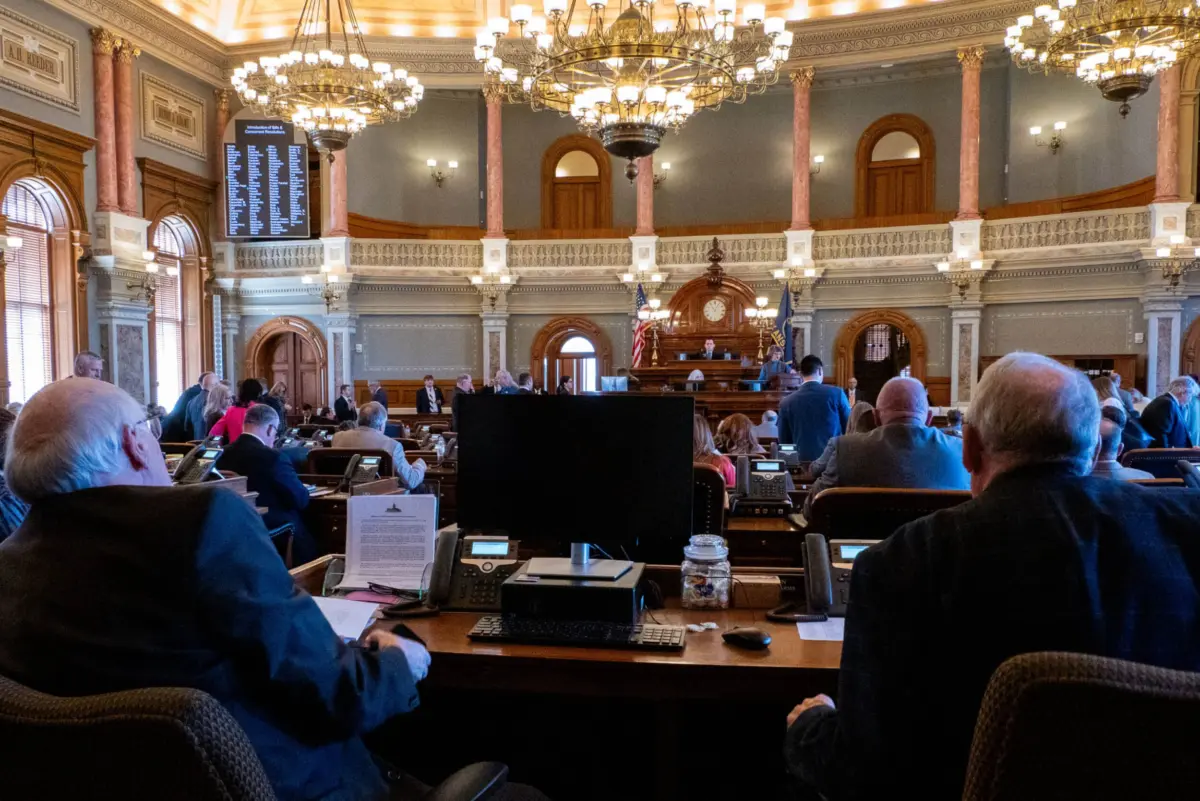
A similar squeeze has materialized in Kansas. In early 2025, following national shifts in political tone, Kansas House Speaker Dan Hawkins dismantled the legislature’s designated press area. Reporters were moved from the House floor—where they had close, continuous access to lawmakers—to a distant back wall. Relegated to standing positions, they are barred from taking notes or approaching legislators for impromptu interviews.
Concurrently, Kansas House Republicans began holding their caucus meetings behind closed doors, a practice that was previously rare. These private sessions allow lawmakers to coordinate votes without public or press scrutiny. Furthermore, state Senator Virgil Peck proposed an aggressive rent hike targeting statehouse press offices, jumping from a flat rate of $100 annually to $1 per square foot per month (later threatening up to $11 per square foot). Peck openly justified the measure as a punitive response to journalists who wrote "inaccurate stories" about lawmakers, highlighting an explicit weaponization of state resources against critical coverage.
Iowa: Credentialing Hurdles and the Struggle for Documents
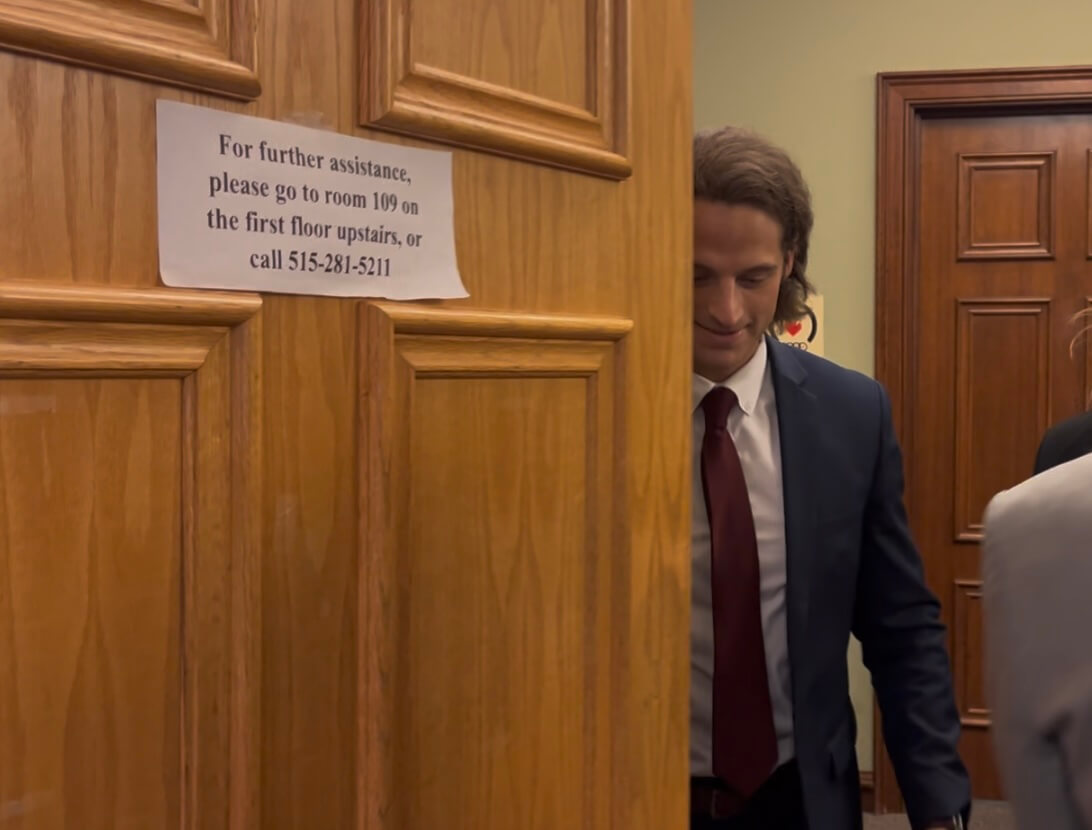
In Iowa, independent journalist Laura Belin, editor of Bleeding Heartland, spent five years jumping through bureaucratic hoops to secure press credentials for the Iowa House. Despite publishing some of the state’s most prominent political coverage, Belin was repeatedly told she was a "member of the public" rather than a reporter.
Belin complied with every hurdle imaginable: she became a paid radio correspondent, added formal disclaimers that her site follows the Society of Professional Journalists’ Code of Ethics, and spent hours retagging thousands of posts to isolate news reporting from commentary. It was only after she filed a federal lawsuit against House clerk Meghan Nelson in January 2024 that she was granted credentials just in time to cover the legislative session.
Nevertheless, Belin continues to face roadblocks on the campaign trail, where some political candidates deny her credentials, and within Governor Kim Reynolds’ administration, where press conferences are increasingly rare and her questions are frequently ignored.
Miami: Weaponizing 2011 Media Policies
In Florida, the crisis extends to municipal government. Following years of deep newsroom layoffs—including the recent loss of the Miami Herald’s city hall reporter—the launch of the Coconut Grove Spotlight in 2024 brought a renewed wave of municipal scrutiny.
In response, Miami officials began strictly enforcing a dormant 2011 media policy that prohibits city employees from speaking with journalists without prior approval. City workers routinely decline interview requests, and the city’s communications office often responds to inquiries with complete silence. In June, the Spotlight filed a federal lawsuit against the city, arguing that the policy violates employees’ First Amendment rights and severely impedes public accountability.
Supporting Context & Metrics: The Decline of the Local Watchdog
The systematic exclusion of reporters does not occur in a vacuum; it coincides with an unprecedented contraction of the American local news ecosystem.
- The 75% Collapse: According to a landmark 2026 study by Muck Rack and Rebuild Local News, the number of full-time local journalists in the United States has plummeted by a staggering 75% since 2002.
- Statehouse Shifts: While data from the Pew Research Center indicates that the absolute number of statehouse reporters has fluctuated over the years, the number of journalists assigned to the beat full-time has experienced a secular decline. Many who remain are less experienced and face high burnout rates.
- The Erosion of Norms: With fewer reporters watching municipal councils and state legislatures, public officials are increasingly unaccustomed to real-time scrutiny. This institutional isolation breeds a culture of executive comfort, where politicians can communicate directly with constituents via social media while shutting out independent verification.
As Bryan Schott notes, the underlying rationale among politicians is simple: "Why do we need to have our message filtered through a reporter, a journalist, an outside organization when just as easily, we can decide what is said about our policies? Why should we give equal access to the media who might not report things the way that we want?"
Official Statements & Legal Arguments
The friction between government officials and the press has rapidly shifted from political friction to constitutional litigation.
- Bryan Schott (Utah Political Watch): Drawing a direct line between national and local access battles, Schott emphasizes that his lawsuit mirrors high-profile federal cases. "It is pretty much the same argument that’s happening right now in the CNN versus Trump case on a national level… I was targeted because I was no longer protected by a large organization. I was on my own and easy to make an example of."
- David Villano (Coconut Grove Spotlight): Commenting on the ongoing mediation with the City of Miami over its restrictive communication policies, Villano stated: "What we are insisting upon is some sort of proactive language within some policy document that advises and reminds employees of their rights under the Constitution to speak freely on matters of their expertise with the media without prior approval."
- Sherman Smith (Kansas Reflector): Reflecting on the lost art of the legislative scrum, Smith recalled: "There were times when it’s like, we have to get an explanation out of this person. You could form a wall of reporters and make sure they weren’t going to leave this room until they answered everybody’s questions together. And we don’t have that really anymore."
- Ryan Winslett (Independent Newsmedia / Fountain Hills Times Independent): Addressing local council members in Arizona who removed press tables and refused to answer inquiries, Winslett observed: "You’re basically choosing not to communicate to your constituents."
Note: Requests for comment sent to Kansas House Speaker Dan Hawkins, Kansas state Senator Virgil Peck, Utah legislative liaisons Alex Musselman and Aundrea Peterson, Iowa House Clerk Meghan Nelson, Governor Kim Reynolds’ office, and the City of Miami went unanswered prior to publication.
Future Outlook: The Stakes for Democratic Accountability
Despite the formidable obstacles—ranging from exorbitant public records fees and multi-month delays to physical exclusion from press boxes and revocation of credentials—reporters remain resolute. Every journalist interviewed for this report echoed a singular refrain: "They can’t stop me from continuing to report on them."
However, the collateral damage of these access restrictions falls squarely on the public. When independent and local journalists are forced to write stories with "one hand tied behind their back," investigative reporting takes exponentially longer, costs more, and is frequently abandoned altogether. Public records requests are stalled for months—prompting separate open-records lawsuits, such as the successful action led by Iowa journalists against Governor Reynolds, and pending litigation in Miami.
As these cases wind their way through the federal court system, the judiciary will play a critical role in establishing whether government bodies can weaponize credentialing criteria, office rent, and communication policies to silence critical viewpoints. If the courts rule in favor of the watchdogs, it may stem the tide of institutional exclusion. If not, the dark of closed-door caucuses, silenced municipal employees, and barred press rooms may well become the permanent baseline of American governance.