


Executive Overview
The integration of artificial intelligence into the modern digital workspace is no longer a futuristic speculation; it is an established reality reshaping the professional landscape. For freelance writers, copywriters, and content strategists, the core dilemma has shifted dramatically. The question is no longer whether to adopt AI, but how to wield it effectively.
Thriving modern freelancers are not those who resist technological evolution, nor are they those who outsource their entire creative process to language models. Instead, successful professionals are utilizing AI as a high-powered operational force multiplier. They delegate the friction-heavy administrative and structural tasks of writing—such as outlining, initial research, and content repurposing—to large language models. This strategic delegation frees up cognitive bandwidth for tasks that demand uniquely human attributes: critical thinking, deep-dive subject matter expert (SME) interviews, original analysis, and interpersonal relationship-building.
Conversely, professionals who ignore AI risk working exponentially harder for diminishing returns, while those who use AI as an uncritical crutch churn out generic, easily identifiable mediocrity. This report examines the 10 most effective ways freelance writers can integrate AI tools like ChatGPT, Claude, and Perplexity into their daily workflows to enhance productivity and quality without compromising their authentic professional value.
Detailed Chronology: The Evolution of AI in Freelance Workflows
To understand where freelance writing stands today, it is essential to trace how artificial intelligence has permeated the industry over recent years:
- Phase 1: The Novelty and Fear Era (2022–2023). Publicly accessible generative AI tools emerged, sparking widespread panic across the creative industries. Initial reactions split between apocalyptic predictions of the complete obsolescence of human writers and wholesale adoption of unedited, raw AI text by low-rate content mills.
- Phase 2: The Backlash and Commoditization (2023–2024). Clients quickly became fatigued by the flood of bland, repetitive, AI-generated content. Search engines adjusted their algorithms to penalize unhelpful, automated fluff. Freelancers realized that directly prompting an AI to "write a 1,000-word article" produced unpublishable work that eroded client trust.
- Phase 3: The Augmentation Era (2025–Present). The industry matured into a nuanced understanding of human-AI collaboration. Forward-thinking freelancers began treating AI not as an autonomous writer, but as an administrative assistant, sounding board, and research accelerator. Tools evolved from basic chat interfaces to specialized multimodal ecosystems capable of managing transcripts, tracking marketing pipelines, and processing complex datasets.
Supporting Context & Metrics: The Modern Freelancer’s Toolkit
The modern freelance economy demands unprecedented efficiency. With clients tightening budgets and accelerating content calendars, writers must maximize their billable hours.
1. Beating the Blank Page
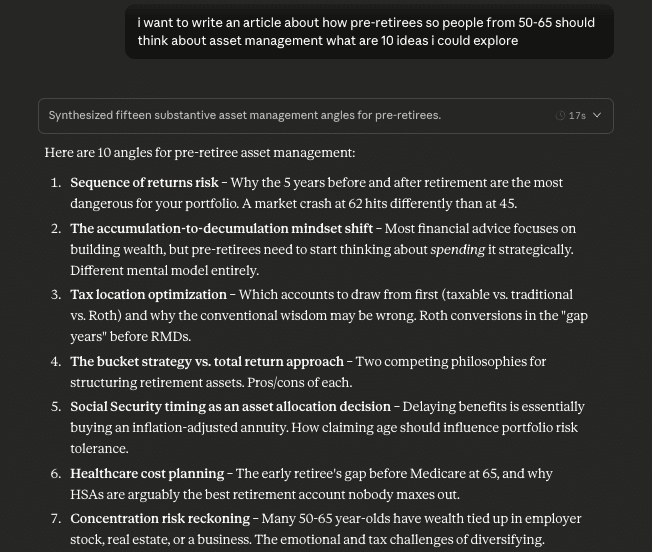
The psychological barrier of the blank document remains one of the greatest time sinks in writing. AI excels not at creating final drafts, but at breaking initial paralysis. By prompting tools like ChatGPT or Claude for ten distinct angles, alternative opening frameworks, or anticipated reader questions, writers can bypass the psychological friction of getting started. The output does not need to be used verbatim; its primary function is to jump-start human cognition.

2. Streamlining the Outlining Process
Structuring an article before drafting ensures logical flow and comprehensive coverage. Writers can feed their core topic, target audience, and primary goals into an AI tool to generate a structural skeleton. By establishing a systematic intake prompt—detailing target demographics, core arguments, and research data—freelancers can instantly receive structured subheadings and conceptual frameworks that accelerate the writing process.
3. Accelerating Research and Triage
Comprehensive research is time-intensive. AI platforms significantly reduce the legwork required to parse dense studies, long reports, and industry white papers. Specialized tools like Perplexity Pro allow writers to comb the live web for verified statistics complete with citations, transforming hours of manual searching into minutes of targeted discovery. Furthermore, running transcript files from SME interviews through AI tools allows writers to rapidly surface specific thematic quotes and core arguments.
4. Crafting Cold Outreach and Letters of Introduction (LOIs)
Client acquisition requires persistent outbound marketing, yet drafting customized Letters of Introduction (LOIs) can lead to severe burnout. AI can generate multiple structural variations of cold emails tailored to specific agencies or brands. However, the human element remains non-negotiable: the opening line must feature genuine, manual personalization based on recent company achievements or news. AI provides the structural foundation (70-80% of the draft), while the freelancer supplies the indispensable finishing touch.
5. Generating Headlines and Hooks
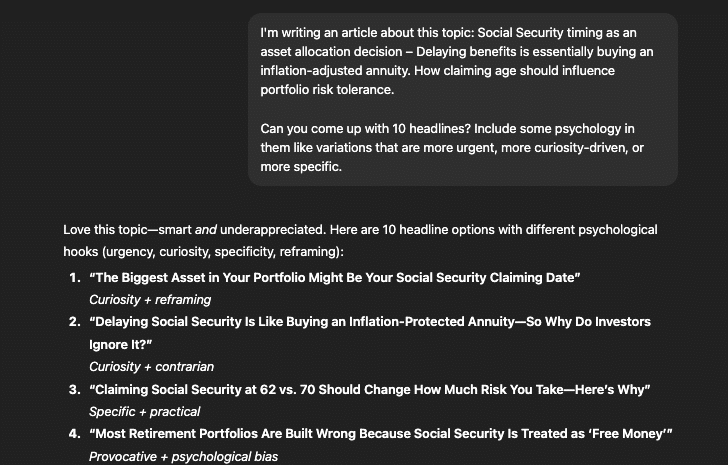
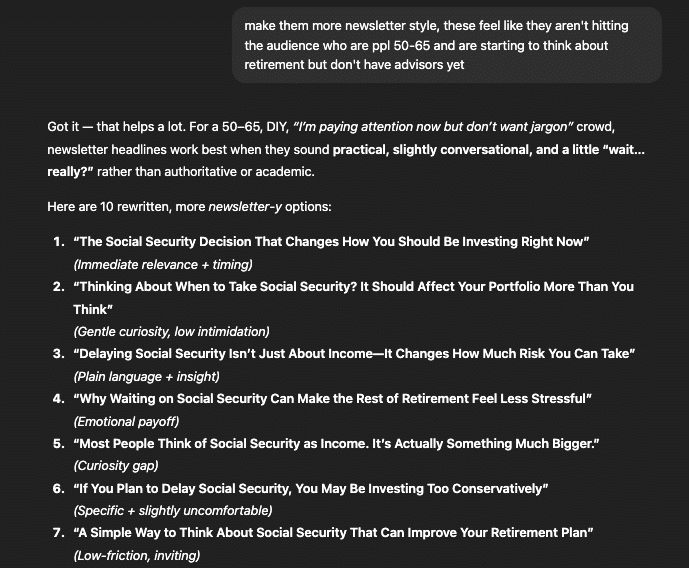
Click-through rates depend heavily on compelling headlines. Because crafting concise, engaging, and non-clickbaity titles is notoriously difficult, AI serves as an ideal generator for headline and hook variations. Writers can request ten distinct options categorized by emotional resonance, urgency, or curiosity. Even if none of the generated options are used wholesale, they frequently spark creative breakthroughs or allow writers to combine elements from multiple suggestions.
6. Advanced Editing and Proofreading
Human eyes naturally gloss over recurring errors, filling in what the brain expects to see rather than what is actually on the page. AI acts as an objective, tireless copyeditor. Pasting a draft into an LLM to check for wordiness, awkward phrasing, and structural ambiguity provides a vital secondary perspective. Writers can even prompt the AI to roleplay as the target audience, identifying confusing passages or areas requiring further elaboration. Complementary tools like Grammarly further streamline mechanical proofreading.
7. Scalable Content Repurposing
Producing a comprehensive 1,500-word article is only the first step; maximizing its reach requires multi-channel promotion. AI simplifies the repurposing process by extracting micro-insights from a long-form piece to generate LinkedIn posts, Twitter/X threads, newsletter blurbs, and promotional hooks. This allows freelancers to extract five to ten distinct promotional assets from a single core article without repeating the heavy lifting of original thought generation.

8. Strategic Interview Preparation
The quality of a subject matter expert (SME) interview relies entirely on the quality of the questions asked. Writers can brief an AI on the interviewee’s background, industry, and the specific angle of the piece to generate a comprehensive list of probing, high-value questions. This preparation ensures that interviewers in unfamiliar niches avoid basic, easily Googleable questions and instead maximize their limited time with industry leaders.
9. Managing and Synthesizing Transcripts
Conducting recorded SME interviews generates massive walls of raw transcription text. Platforms like Otter.ai feature built-in chat capabilities that allow writers to query the transcript directly. Instead of reading through a 10-hour recording or a multi-page transcript three times to locate a specific data point or quote regarding industry compliance, writers can instantly command the AI to extract relevant sections, summarize themes, and flag primary talking points (though final quote verification against audio remains mandatory).

10. Automated Marketing Tracking via AI Workspaces
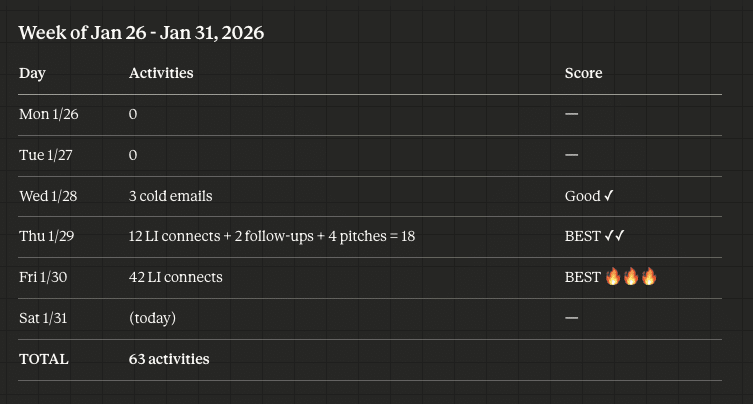
Maintaining traditional spreadsheets for outbound marketing metrics often falls by the wayside. Advanced AI workspaces (such as Claude Cowork) allow freelancers to log outreach activities conversationally—recording dates, contacts, pitches sent, and response data. At the end of the month, the AI can synthesize this data into performance scorecards, helping writers identify response patterns, conversion bottlenecks, and optimal outreach volumes.
Official Guidelines: What NOT to Do with AI
While artificial intelligence offers profound operational advantages, misusing it introduces severe career risks. Industry leaders emphasize several critical boundaries:
- Never Outsource Original Voice and Strategy: AI cannot replicate lived experience, genuine emotional resonance, or proprietary strategic thinking. Outsourcing the core perspective of an article turns human writers into interchangeable text-generators.
- Never Skip Human Verification: Relying entirely on unverified AI research invites factual inaccuracies, hallucinated statistics, and outdated data citations that destroy professional credibility.
- Never Bypass Personalization in Outreach: Clients and editors can instantly spot mass-produced, automated cold emails. The human touch in client acquisition is sacred and non-transferable.
Future Outlook
The trajectory of the freelance writing industry points toward deeper, more sophisticated human-machine collaboration. As generative models become more context-aware and integrated into everyday digital infrastructure, the baseline expectation for content volume and efficiency will rise.
However, this technological shift elevates the value of genuinely human contributions. The future belongs to freelancers who master AI as an operational co-pilot to handle administrative, research, and structural friction. By shedding the tedious mechanics of the job, writers can reinvest their time into what truly differentiates elite professionals: rigorous original reporting, profound subject matter expertise, and deep interpersonal relationships with clients and readers.