


Executive Overview
In the hyper-competitive landscape of digital freelance writing, hundreds of thousands of aspiring creators enter the market every year, armed with passion, a handful of writing samples, and a dream of location independence. Yet, a staggering majority stall out long before they ever cross the milestone of their first $1,000 month. According to industry veteran and Location Rebel founder Sean Ogle, the discrepancy between thriving freelancers and those who quietly wash out rarely boils down to a lack of raw writing talent. Instead, it comes down to a fatal flaw in execution: an inability to effectively master cold outreach—specifically, the art and science of the email follow-up.
For years, the conventional wisdom doled out to novice freelancers has centered on volume. Send more cold emails, the gurus preach. Blast your portfolio to dozens of prospective editors and business owners every single week, and eventually, the law of averages will land you a client. But this simplistic approach misses a foundational rule of modern sales psychology. A single cold email sent into the void of a busy executive’s inbox is rarely enough to bridge the gap between initial contact and a signed contract. Most prospects are simply not ready to hire at the exact micro-second an introductory letter arrives.
The real engine of freelance revenue is not the initial pitch; it is the systematic, respectful, and persistent follow-up sequence that follows. By abandoning outreach after one unanswered email, freelancers are routinely leaving tens of thousands of dollars on the table. This report investigates the mechanics of cold outreach, the psychological barriers that prevent writers from following up, the strategic cadence required to stay top-of-mind without crossing into spam territory, and the technological tools—ranging from CRM extensions to advanced artificial intelligence—that are revolutionizing how modern solopreneurs manage their pipelines.
Detailed Chronology: The Evolution of Freelance Cold Outreach
To understand where modern freelance writing outreach went wrong, one must examine how the practice has evolved over the past decade.
In the early days of the digital economy, cold emailing was largely unregulated and remarkably unrefined. Writers could pull together a basic list of blogs, drop a generic pitch into a contact form, and expect a reasonable conversion rate simply due to a lack of digital noise. Inboxes were less crowded, attention spans were longer, and personalization was treated as a luxury rather than a baseline requirement.
As the barriers to entry for remote work collapsed—accelerated by global shifts toward remote employment and the gig economy—inboxes became saturated. Today, decision-makers at agencies, SaaS companies, and digital publications are routinely bombarded with dozens of pitches every day. In response, a cottage industry of automated outreach tools emerged, allowing low-quality service providers to spray generic, machine-generated templates across the web en masse.
This deluge of low-effort spam fundamentally poisoned the well. Prospects developed an immediate and acute aversion to cold outreach. They learned to spot the unpersonalized AI-generated hook from a mile away, hitting the delete or block button without a second thought. For legitimate freelance writers, this environment created an existential crisis: how do you stand out in a digital ecosystem that has learned to tune out external noise entirely?
The pivot point in this evolutionary timeline arrived with the realization that volume is a fool’s errand. The winners in the modern freelance economy are no longer those who send the most emails; they are the ones who build sustainable, long-term relational pipelines. And the cornerstone of that relational pipeline is the multi-touch follow-up sequence.
When Ogle and other veteran operators analyze successful student case studies from programs like Location Rebel, a clear chronological pattern emerges. The transition from struggling freelancer to booking consistent, high-paying retainer clients almost always correlates with the implementation of a structured follow-up protocol. Writers who stop treating cold outreach as a one-off transaction and instead view it as the opening chapter of a sustained professional correspondence dramatically alter their conversion metrics.
Supporting Context & Metrics: The Mathematics of Persistence
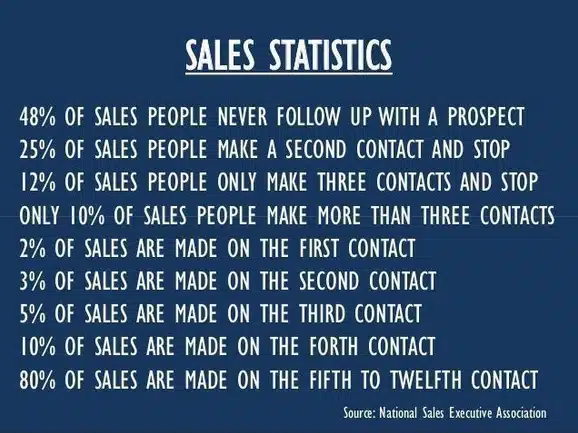
To appreciate why follow-ups are non-negotiable, one must look closely at the empirical data governing sales and digital outreach. Sales statistics compiled across B2B industries consistently highlight a glaring disconnect between how often salespeople attempt to close a deal and how often buyers actually make a purchasing decision.

- The First-Contact Fallacy: Historical sales data reveals that an overwhelming majority of sales professionals—roughly 44%—abandon their outreach efforts after a single follow-up attempt, while many give up entirely after the initial email.
- The Buyer’s Timeline: Conversely, empirical studies on B2B conversion cycles show that nearly 80% of sales and long-term contracts are made between the fifth and twelfth contact points.
When translated to freelance writing, these metrics paint a stark picture. If a writer sends a single Letter of Introduction (LOI) and never writes again upon receiving silence, they are operating within the 20% success window while completely ignoring the 80% zone where the actual deals are closed.
Why Timing Matters: The Physics of the Inbox
Why do follow-ups work so effectively, even when the initial email is ignored? The answer lies in timing and situational luck.
When a freelance writer’s cold email lands in a marketing director’s inbox, the probability that the director is actively hunting for a writer that exact morning is microscopically small. They may already have a team in place, or they may be knee-deep in a product launch that leaves no mental bandwidth for vetting new contractors. Silence does not necessarily mean rejection; more often than not, it means bad timing.
Three months later, however, the landscape changes. A staff writer resigns, a content backlog piles up, or a quarterly marketing strategy shifts toward aggressive inbound growth. Suddenly, the need for a specialized freelance writer becomes acute.
If the freelancer vanished after the first email, they are a distant memory. But if that same writer has maintained a respectful, quarterly touchpoint cadence—dropping into the inbox with a helpful note, a relevant content idea, or a polite seasonal check-in—they occupy prime real estate in the prospect’s mental landscape. When the need arises, the prospect does not need to search Google or post a desperate plea on LinkedIn; they simply scroll down their inbox and reply to the writer who has consistently shown up.
The Fine Line Between Persistence and Harassment
A common anxiety plaguing new freelancers is the fear of being a nuisance. Writers worry that sending multiple emails to a busy professional constitutes digital harassment and will permanently damage their personal brand.
Industry leaders draw a sharp, unambiguous distinction between persistence and spamming.
- Spamming is unpersonalized, irrelevant, high-frequency, and devoid of value. It ignores explicit boundaries and continues regardless of context.
- Persistence, when executed correctly, is rooted in professional courtesy, offering genuine solutions, and respecting the operational realities of busy decision-makers.
Furthermore, ethical outreach always provides an operational "easy out." A well-crafted follow-up acknowledges that the recipient is busy, validates their lack of response without passive-aggressiveness, and explicitly invites them to opt out if the timing or fit is wrong. If a prospect replies asking to be removed from the list, compliance must be immediate and absolute. Short of that, following up is rarely viewed as annoying; rather, it is frequently interpreted as a sign of dedication, organization, and professional stamina.
Official Guidelines: Crafting the Ideal Follow-Up Cadence
Mastering the follow-up requires a disciplined schedule. Moving too fast makes the outreach feel desperate and aggressive; moving too slow allows the initial impression to fade entirely from the prospect’s memory.
Based on proven field-tested frameworks from top-tier digital entrepreneurs, a balanced outreach and follow-up cadence typically looks like this:
- The Initial Pitch (Day 0): A highly personalized Letter of Introduction (LOI) featuring a customized opening sentence that proves you have researched the prospect’s business, website, or recent content. It closes with a low-friction, easy-out call to action.
- The First Follow-Up (Day 3 to 5): A brief, polite nudge. This email should not repeat the entire pitch. Instead, it serves as a gentle reminder, perhaps adding a single piece of fresh value—such as a specific headline idea or a link to a recent piece of relevant work you published.
- The Mid-Range Check-In (Day 14 to 21): A pivot away from the original pitch toward a broader expression of value. Ask how their quarter is shaping up or share a genuine insight related to their industry niche.
- The Long-Term Quarterly Cadence (Months 3, 6, 9, and 12): Once the immediate sequence concludes without a response, transition the contact into a long-term nurturing list. Reach out once per quarter with natural conversation hooks tied to the calendar year—such as prepping for end-of-year content rushes in November, launching new strategies in mid-January, or touching base during summer planning cycles.
The Power of Radical Personalization
The single greatest differentiator in executing this cadence is personalization. As Sean Ogle notes, the sheer volume of low-quality, AI-generated pitches flooding the market has created an immense backlash. Decision-makers are exhausted by robotic outreach.
However, this systemic laziness works to the advantage of diligent freelancers. Because so many cold emails are utterly devoid of human thought, a writer who invests even three to five minutes of genuine research into a prospect immediately rises to the top 5% of all inbound messages.
Personalization does not require writing a multi-paragraph biographical essay about the target client. In most cases, crafting a deeply customized first sentence—acknowledging a specific podcast episode they hosted, a recent product update they rolled out, or an insightful article they published on their blog—is entirely sufficient to establish rapport, prove authenticity, and earn the right to follow up later.
Future Outlook: Technology, AI Assistants, and the Modern Pipeline
As the freelance writing industry continues to mature, the tools available for managing outreach pipelines have evolved far beyond manual spreadsheets and sticky notes. The future of freelance business development belongs to those who successfully combine human relationship-building with automated operational efficiency.
CRM Integration and Workflow Automation
Tracking dozens of active prospects across various stages of a follow-up cadence can quickly become overwhelming. Without a systematic tracking mechanism, warm leads inevitably slip through the cracks.
- Gmail-Integrated CRMs: Tools like Streak have transformed standard email clients into lightweight, highly efficient Customer Relationship Management systems. By turning an inbox into a visual pipeline, freelancers can track exactly when an email was opened, log detailed notes regarding previous interactions, and automate reminder notifications for upcoming follow-up dates.
- AI-Assisted Pipeline Management: Artificial intelligence tools such as Claude and ChatGPT are also stepping into the role of virtual chief operating officers for solo creators. Freelancers can maintain a running conversational log with an AI assistant—feeding it data regarding the date, the nature of the outreach, and the identity of the prospect. The AI can then synthesize this data to generate weekly or monthly progress reports, calculate conversion ratios from cold email to discovery call, and flag precisely which contacts are due for their quarterly check-in.
By leveraging these technologies, freelancers eliminate the administrative friction that so often derails outreach consistency. They transform cold emailing from a sporadic, emotionally draining chore into a predictable, mechanical system that operates reliably in the background while they focus on their core craft: writing.
Conclusion: Protecting Your Investment of Effort
Building a sustainable freelance writing business requires an immense expenditure of creative and emotional energy. Finding potential clients, auditing their web properties, researching their brand voices, and drafting tailored introductory emails is hard work.
To complete that entire process and then abandon the lead at the very first sign of silence is an unnecessary waste of professional capital. By adopting a structured, respectful, and persistent follow-up cadence—and utilizing modern tracking tools to keep the machine running smoothly—freelancers can radically shift their conversion metrics, secure long-term client relationships, and successfully build a thriving, location-independent writing career from the ground up.