

Executive Overview
In the sprawling, often esoteric subculture of heirloom pomology, few varieties capture the imagination—or invite linguistic theatrics—quite like the Franc Rambour (affectionately, and perhaps irreverently, dubbed "Frank Rambo" by field researchers). Sourced late in its harvest window from the hallowed grounds of Scott Farm in Dummerston, Vermont, this French heritage cultivar provides a fascinating case study in agricultural science, micro-climatic impacts, and the fickle nature of fruit maturation.
This investigative report examines the Franc Rambour not merely as a standalone piece of produce, but as a nexus for several pressing questions in modern agricultural journalism:
- How does the concept of terroir influence cloned fruit trees separated by thousands of miles from their ancestral French origins?
- What physiological transformations occur when an apple is harvested past its theoretical peak?
- And how do specialized horticultural databases shape our romanticized, nearly botanical-erotic perception of standard heirloom varieties?
Through field observations, pomological literature reviews, and organoleptic testing, this feature unpacks the life, times, and somewhat subdued legacy of an apple that tastes, in the words of its reviewers, like "drinking the memory of apple juice."
Detailed Chronology: The Journey of the Franc Rambour
The lineage of the Franc Rambour traces back centuries, rooted deeply in the soil of northern France—specifically tied to the region historically recognized as Rambures. Like the vast majority of cultivated apples, the Franc Rambour does not true-to-seed; its survival across generations relies entirely on human intervention through cloning and grafting.
From French Roots to Vermont Soil
The movement of European heirloom varieties to North American agricultural hubs like Vermont represents a massive geological and climatic shift. When a scion wood of Franc Rambour is grafted onto rootstock and planted in New England, it is subjected to radically different soil compositions, hydration cycles, temperature fluctuations, and day-length parameters than those experienced in its native French terroir.
The timeline of the specific specimen evaluated in this report unfolded as follows:
- Spring: The grafted tree breaks dormancy, driven by regional frost-free days and soil warming in southern Vermont.
- Late Summer / Early Fall: The fruit sets, develops its characteristic shape, and theoretically reaches its optimal harvest window—typically classified as an early-to-mid-season apple.
- The Late-Harvest Deviation: Due to logistical constraints in the field, our subject specimen was acquired significantly past its theoretical prime.
- The Tasting Event: Evaluated under controlled amateur conditions, the late-harvested Franc Rambour exhibited structural and flavor shifts that diverged notably from standard pomological text descriptions, highlighting the immense vulnerability of early-season apples to post-peak degradation.
Supporting Context & Metrics
To truly understand the Franc Rambour, one must contextualize it within the broader ecosystem of apple scholarship, digital pomology archives, and the sensory science of tasting.
The Digital Pomology Ecosystem
The contemporary apple enthusiast is well-supported by a robust network of digital archives and enthusiast blogs. Sites such as Orange Pippin serve as vital directories for tracking down rare orchards, while Adam’s Apples offers intimate, highly personalized chronicles of heirloom consumption. Furthermore, databases like Pomiferous provide hyper-specific horticultural data that often borders on the poetic.
When consulting Pomiferous regarding the Franc Rambour under the header “Cultivation,” the database dryly notes:
"Vigorous. Spur bearer. Precocious."
Such clinical agricultural terminology inadvertently captures the fervent devotion of botanical hobbyists, illustrating how deeply intertwined technical horticulture and sensory appreciation have become.

The Terroir Debate: Clone vs. Environment
A central inquiry surrounding the Franc Rambour—and heirloom apples at large—is the impact of terroir. In the wine industry, terroir is gospel; a Pinot Noir grape grown in Burgundy tastes fundamentally distinct from one grown in Oregon.
With apples, however, the paradigm shifts. Because apples are overwhelmingly propagated through clonal grafting rather than sexual reproduction via seed, the genetic blueprint remains virtually identical across continents. This raises a profound biological question: Is the Franc Rambour harvested in Vermont truly identical to the one harvested in the Somme department of France?
While cider experts frequently attribute regional flavor profiles to local microflora driving wild fermentation, the solid-state apple presents a different riddle. Does the local air, water, and mineral-rich soil imprint subtle, persistent signatures on a cloned apple, or does the tree’s rigid genetic programming fiercely protect its core characteristics regardless of geography? Science currently suggests a delicate hybrid: the core architecture remains loyal to the clone, but localized nutritional uptake and climatic stress subtly modulate acidity, phenolic compounds, and juiciness.
Organoleptic Evaluation & Official Review Metrics
Evaluating an apple outside of its prime seasonal window is an inherently tragic exercise in pomology, yet it offers vital data regarding how a fruit ages on the branch or in cold storage.
Physical Structure and Texture
Standard literature categorizes the Franc Rambour as a crisp, breaking fruit. However, our late-harvest specimen told a different story:
- Firmness: Softer than the benchmark "crisp" ideal, though mercifully avoiding the dreaded mealy, sandy, or mushy breakdown associated with overripe commercial apples.
- Mouthfeel: It presented an extraordinarily easy chew, functioning less like a dense solid fruit and more like an edible, apple-shaped vessel containing a reservoir of liquid. The sheer volume of juice was astonishing, described aptly as "deliquescing apple ooze."
Flavor Profile and Chemical Balance
Most pomological texts classify the Franc Rambour as a subacid (meaning pleasantly sweet with low-to-moderate acidity). Our late-season experience diverged:
- Dominant Notes: The flavor profile leaned heavily toward tart and floral expressions rather than overt sugar.
- Intensity: The flavor was remarkably subdued—delicate, refreshing, but ultimately bordering on forgettable.
- The Ripening Paradox: Typically, starches convert to sugars as an apple breaks down late in the season. Here, however, the expected sweetness failed to materialize, leaving behind a ghost of a flavor profile.
Scoring Breakdown
- Texture (Post-Peak): 6.0 / 10 (Retained juiciness, lost snap)
- Flavor Complexity: 5.0 / 10 (Subdued florality and tartness)
- Overall Agronomic Potential: 7.5 / 10 (Projected higher score if sampled earlier in the season)
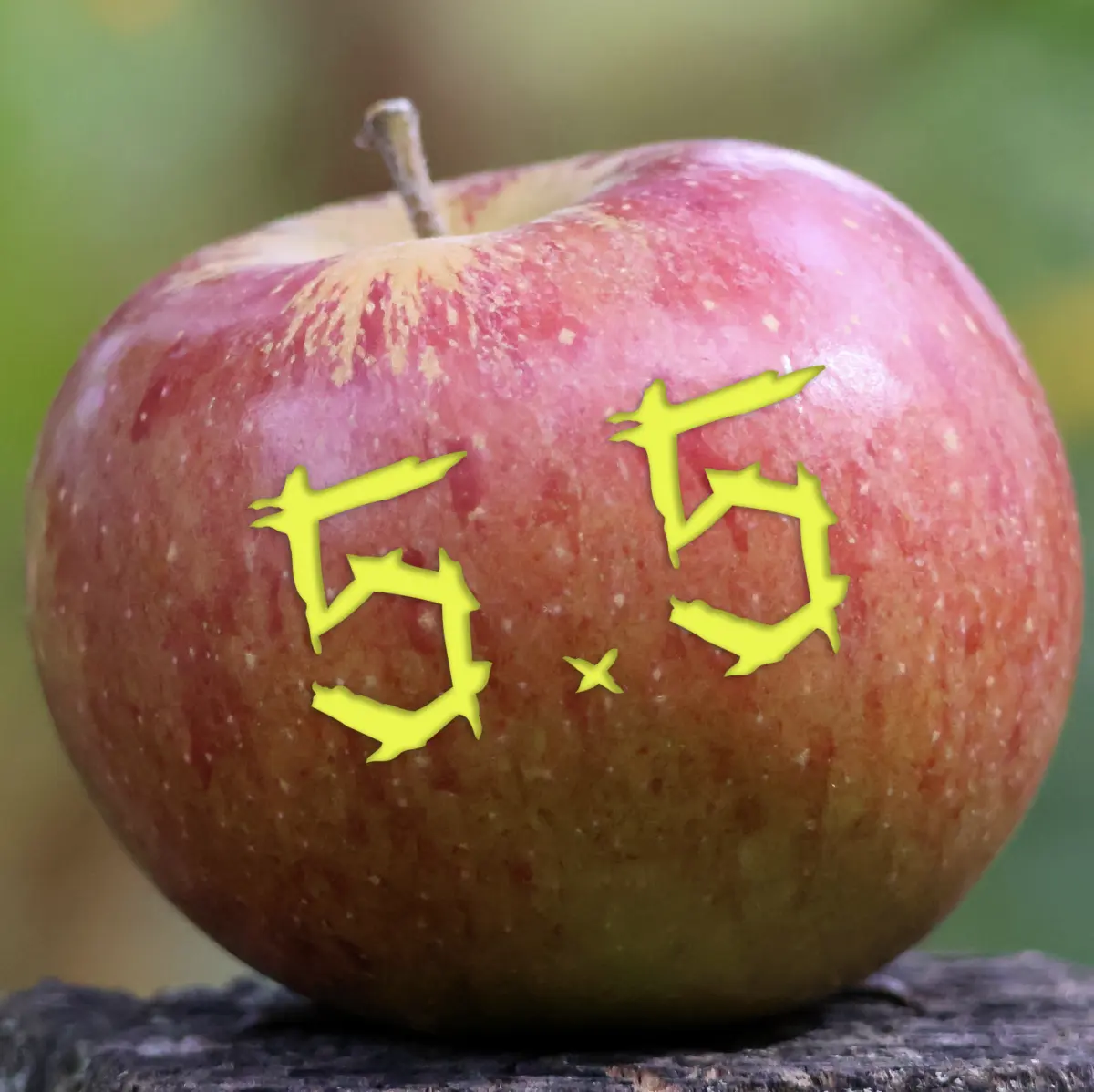
- Final Adjusted Score: 5.5 / 10
Summary Tagline: Franc Rambour: Like drinking the memory of apple juice.
Future Outlook
As the revival of heirloom and heritage agriculture gains momentum through networks of dedicated independent orchards—such as Scott Farm—varieties like the Franc Rambour occupy a critical space in agricultural conservation.
Future developments in pomological research must address several emerging frontiers:
- Genomic Mapping vs. Environmental Plasticity: Controlled studies tracking identical apple clones across varying global micro-climates to definitively isolate the true parameters of apple terroir.
- Cold Storage Innovations: Enhancing post-harvest preservation techniques specifically tailored to delicate, early-to-mid-season European heirlooms to prevent the rapid structural degradation observed in late-season tastings.
- Consumer Education: Expanding public engagement initiatives through digital platforms, shifting consumer palates away from monolithic commercial varieties (like the ubiquitous Red Delicious or standard supermarket Honeycrisp) and toward the complex, historical, and occasionally eccentric world of antique apples.
Until then, the amateur appleology community will continue its tireless, slightly obsessive march through the orchards—raising a glass (or biting into a watery, overripe mystery) in search of the next perfect fruit.
