

Executive Overview
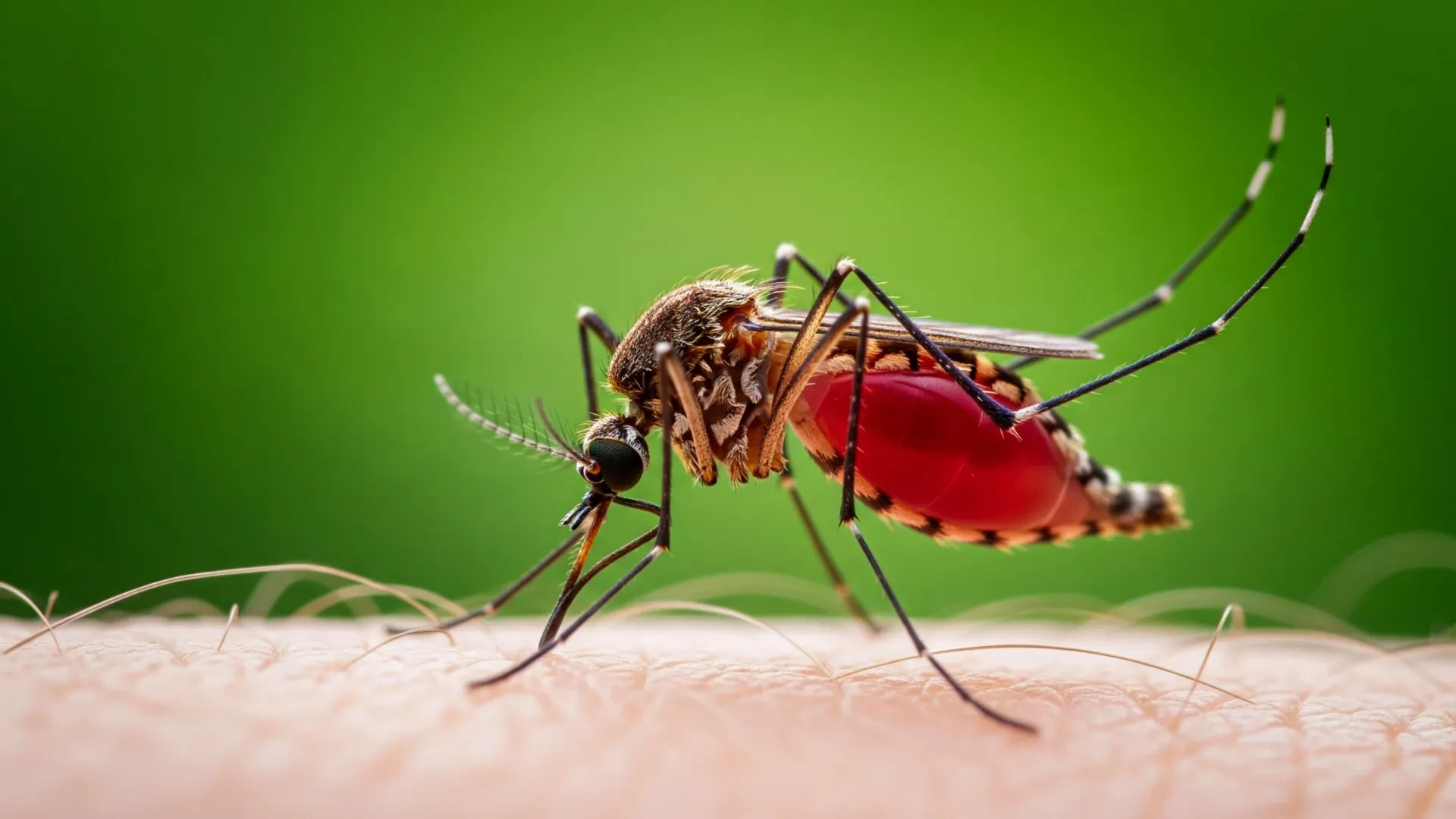
For centuries, humanity has resigned itself to a frustrating reality: while some people can sit through a humid summer evening completely untouched, others serve as an irresistible feast for mosquitoes the moment they step outside. The conventional wisdom has long blamed a singular, elusive quality—often generalized as "sweet blood," elevated body temperature, or the consumption of specific foods. However, groundbreaking new research led by scientists at Florida International University (FIU) shatters this monolithic view of human-mosquito dynamics.
Published in the journal iScience, a comprehensive study conducted by FIU researchers reveals that being a "mosquito magnet" is not a universal condition. Instead, attraction is strictly dependent on which species of mosquito is doing the biting. In an extensive behavioral trial involving 119 human volunteers and three of the world’s most dangerous mosquito vectors, researchers discovered a startling reality: not a single participant acted as a universal magnet for all three species. Rather, each species exhibited distinct, highly specialized preferences for entirely different subsets of people.
This divergence is rooted in the complex interplay of individual human body chemistry, volatile organic compounds, and the unique microbial communities living on our skin. Because different mosquito species have evolved distinct biological mechanisms to decode the complex human scent profile, they are drawn to different chemical signatures.
This paradigm shift carries profound implications for global public health. By moving away from the assumption that all mosquitoes respond to the same human cues, scientists can now lay the groundwork for next-generation, species-specific repellents. These tailored solutions could radically transform how communities combat vector-borne diseases like dengue, Zika, yellow fever, and West Nile virus, offering more precise, effective, and targeted personal protection than ever before.
Detailed Chronology of the FIU Study
The journey to decoding the complex relationship between human scent and mosquito preference required a meticulously designed scientific investigation, steering through uncharted territory in neurogenetics and vector biology.
Phase 1: Conceptualization and Recruitment
The research initiative was spearheaded by Matthew DeGennaro, a prominent neurogeneticist who directs the Biomolecular Sciences Institute at FIU in Miami. Alongside lead author and Ph.D. student Kaylee Marrero, DeGennaro set out to answer a fundamental question that had long puzzled entomologists: How do multiple mosquito species simultaneously operating in the same environment select their human hosts?
To capture an accurate and diverse cross-section of human scent profiles, the research team recruited 119 human volunteers. This diverse cohort provided a broad spectrum of genetic backgrounds, skin types, diets, and metabolic rates—factors long suspected of influencing human attractiveness to insects.
Phase 2: Behavioral Preference Assays
Unlike previous studies that typically focused on a single mosquito species in isolation, the FIU team exposed the body odor samples and physical presence of the 119 volunteers to three distinct, high-risk mosquito species:
- Aedes aegypti (the yellow fever mosquito)
- Aedes albopictus (the Asian tiger mosquito)
- Culex quinquefasciatus (the southern house mosquito)
The goal was to track comparative behavioral responses. The researchers wanted to see whether a volunteer who proved exceptionally attractive to Aedes aegypti would hold the same allure for Aedes albopictus or Culex quinquefasciatus.
Phase 3: Chemical and Microbial Sampling
To understand why the mosquitoes made the choices they did, the research team went beyond mere behavioral observation. They gathered comprehensive chemical and biological datasets from each of the 119 participants. This involved collecting samples of volatile organic compounds (VOCs) released by the skin—the invisible aromatic cloud that defines human body odor—as well as swabbing the skin to analyze individual microbiomes.
Phase 4: Data Integration and the Breakthrough Discovery
Once the behavioral assays and chemical analyses were complete, the data was cross-referenced to identify correlations between mosquito choice and skin chemistry.
The results completely overturned the research team’s initial hypotheses. The data revealed that the three mosquito species did not share a collective "hit list" of desirable humans. Instead, each species consistently favored its own distinct group of participants. Furthermore, the chemical and microbial profiles of these preferred groups correlated directly with the specific sensory biology of each mosquito species, proving that different vectors interpret the human body odor signature through entirely different evolutionary lenses.
Supporting Context & Metrics: The Science of Scent and Vector Biology
To fully grasp the magnitude of the FIU findings, one must examine the complex biological mechanisms that govern human body odor and mosquito host-seeking behavior.
The Anatomy of Human Odor
Human skin is far more chemically complex than it appears. The skin constantly releases a mixture of more than 1,000 distinct volatile organic compounds (VOCs). These compounds are generated through a combination of several physiological processes:
- Apocrine and Eccrine Sweat Glands: While fresh sweat is largely odorless, it interacts with skin lipids and proteins to create complex aromatic profiles.
- Sebaceous Glands: These glands secrete sebum, an oily substance that feeds the microscopic organisms living on the skin’s surface.
- The Skin Microbiome: Millions of bacteria, fungi, and microbes inhabit human skin. As these microorganisms metabolize sweat, sebum, and dead skin cells, they break down non-volatile molecules into volatile organic compounds. This metabolic byproduct is the primary composer of individual human body odor.
Because every person possesses a unique genetic makeup, diet, immune system, and skin micro-ecosystem, no two human odor signatures are identical.
The Dangerous Trio: Meet the Mosquito Species
The FIU study focused on three mosquito species of monumental public health significance. Each is a primary vector for debilitating and potentially fatal viral pathogens:
- Aedes aegypti: Often considered the most dangerous mosquito species globally, Aedes aegypti is a sleek, black-and-white insect easily identified by lyre-shaped markings on its thorax. It thrives in tropical and subtropical urban environments, breeding in small pools of stagnant water around human habitations. It is the principal vector for dengue fever, Zika virus, yellow fever, and chikungunya.
- Aedes albopictus (Asian Tiger Mosquito): Recognized by its striking black-and-white striped legs and body, the Asian tiger mosquito is an aggressive daytime biter. Originally native to Southeast Asia, it has spread aggressively across the globe via international trade and travel. It is capable of transmitting more than 20 distinct pathogens, including dengue, West Nile virus, and eastern equine encephalitis.
- Culex quinquefasciatus (Southern House Mosquito): Unlike the day-biting Aedes species, the southern house mosquito is primarily active at night and prefers to feed on both humans and birds. It is a major vector for West Nile virus, St. Louis encephalitis, and lymphatic filariasis.
Decoding the Sensory World of Mosquitoes
Mosquitoes do not hunt using a single sense; rather, they rely on a sophisticated multi-stage sensory hierarchy. When searching for a host, female mosquitoes (which require a blood meal for egg development) rely on:
- Carbon Dioxide ($CO_2$): Used for long-range detection, tracking the plumes of breath exhaled by humans and animals.
- Visual Cues: Motion, contrast, and dark clothing help mosquitoes locate hosts at intermediate distances.
- Thermal Cues: Body heat helps mosquitoes pinpoint exposed skin as they close in for a landing.
- Chemical/Olfactory Cues: Once in close proximity, the mosquito’s maxillary palps and antennae use specialized odorant receptors (ORs) and ionotropic receptors (IRs) to decode the complex volatile organic compounds radiating from the skin.
The FIU study demonstrates that while all three species use these sensory mechanisms, their molecular "decoders"—the specific receptors tuned to chemical signatures—have evolved differently. Consequently, an odor profile rich in carboxylic acids might trigger intense attraction in Aedes aegypti, while leaving Culex quinquefasciatus completely indifferent.
Official Statements and Expert Insights
The implications of this research extend far beyond academic curiosity, offering a fresh roadmap for vector control and infectious disease prevention.
Reflecting on the unexpected nature of the discovery, lead author Kaylee Marrero noted:
"We didn’t expect the species to prefer different people when we started the study. Each species having a distinct microbial signature that they use as a cue was so surprising to me."
Marrero’s observation underscores how little science previously understood about the micro-ecological dynamics between human skin microbes and vector host selection. For decades, broad-spectrum studies treated mosquitoes as a homogeneous group, assuming that whatever repelled or attracted one species would universally affect others. The FIU data shatters this assumption.
Dr. Matthew DeGennaro, the study’s senior author, director of the Biomolecular Sciences Institute, and a leading voice in neurogenetics, emphasized the translational potential of these findings for global health:
"Isolating the components of human odor that attract or repel mosquitoes could lead to novel strategies to combat vector-borne diseases. This connected so well with the differences in skin bacteria and odors. It is clear to me now that our skin microbiomes define our human odor signature. Each species found its own way to decode that signature."
DeGennaro’s laboratory has long focused on understanding the molecular basis of mosquito host-seeking behavior, utilizing gene-editing tools like CRISPR-Cas9 to study mosquito olfaction. By mapping how specific skin bacteria correlate with species-specific attraction, DeGennaro’s team has provided the foundational data required to engineer precision repellents.
Public health officials note that these insights could not come at a more critical time. As climate change expands the geographic ranges of Aedes aegypti and Aedes albopictus, bringing vector-borne diseases into temperate zones where they were previously absent, traditional prevention toolkits are being pushed to their limits.
Future Outlook: The Dawn of Species-Specific Repellents
The publication of the FIU study marks a turning point in the design of personal protection and public health interventions. As researchers look toward the future, several transformative applications emerge from these findings.
1. Next-Generation, Species-Specific Repellents
For generations, humanity has relied on broad-spectrum repellents like DEET (N,N-Diethyl-meta-toluamide), Picaridin, and oil of lemon eucalyptus. While effective, these compounds generally act by masking human scent or disorienting the mosquito’s general olfactory receptors.
With the FIU team establishing that different mosquito species rely on distinct chemical and microbial cues, the future of pest control lies in precision. Scientists can now envision designing targeted repellents or spatial deterrents tailored to block the specific olfactory receptors utilized by individual species. For example, a traveler visiting a region dominated by Aedes aegypti could utilize a repellent formulated specifically to disrupt that species’ ability to decode local skin signatures, offering superior protection compared to a generalized formula.
2. Tailored Attract-and-Kill Traps
Conversely, understanding what specifically attracts each species allows for the optimization of surveillance and trapping systems. Rather than deploying generic traps, vector control agencies can design species-specific synthetic lures that mimic the exact chemical and microbial profiles favored by local vector populations. This precision targeting enhances monitoring efforts, allowing public health officials to track disease vectors accurately and intervene before outbreaks occur.
3. Modifying the Skin Microbiome
In the long term, researchers are exploring whether human skin microbiomes can be modulated. Because skin bacteria play a fundamental role in shaping the volatile organic compounds that attract or repel mosquitoes, future interventions might involve topical prebiotics or probiotics designed to temporarily alter the skin microbiome, rendering a person less appealing to dangerous vectors without disrupting overall skin health.
4. Precision Public Health Strategies
On a community level, public health policy can shift away from a one-size-fits-all approach to vector management. By identifying which specific mosquito species are driving disease transmission in a given region, local authorities can deploy targeted educational campaigns, environmental management protocols, and species-specific control measures.
Conclusion
The research conducted at Florida International University has fundamentally rewritten our understanding of the eternal tug-of-war between humans and mosquitoes. By proving that being a "mosquito magnet" is entirely relative to the species doing the biting, the study bridges the gap between human dermatology, microbiology, and vector neurogenetics. As scientists continue to decode the intricate language of human scent, the dream of outsmarting mosquitoes through precise, species-specific science moves ever closer to reality.
