

Executive Overview
In modern American politics, traditional debate has historically relied on policy disagreements, exaggerated rhetoric, or out-of-context soundbites designed to demolish an opponent’s credibility. However, the political landscape of 2026 has introduced a far more surreal dynamic: the open, frequently lustful fascination that right-wing media outlets and conservative audiences hold for the rising stars of the progressive left.
From Fox News segments dedicated to breaking down the aesthetic appeal of Democratic lawmakers to Republican National Committee events unexpectedly featuring the hyper-muscular imagery of left-wing streamers, the boundaries between political animosity and intense physical attraction have blurred. This phenomenon—what sexologists term "eroticized antagonism"—reveals deep-seated psychological contradictions within the conservative movement. Built on centuries of structured repression and rigid cultural rules, the modern right finds itself magnetically drawn to figures who represent the very freedom and self-possession they officially condemn.
As the nation careens toward high-stakes midterm elections and the early rumblings of the 2028 presidential race, this strange collision of political orthodoxy and unacknowledged desire offers a revealing window into the emotional mechanics of modern American polarization.
Detailed Chronology: The Summer of Progressive Appeal and Right-Wing Fixation
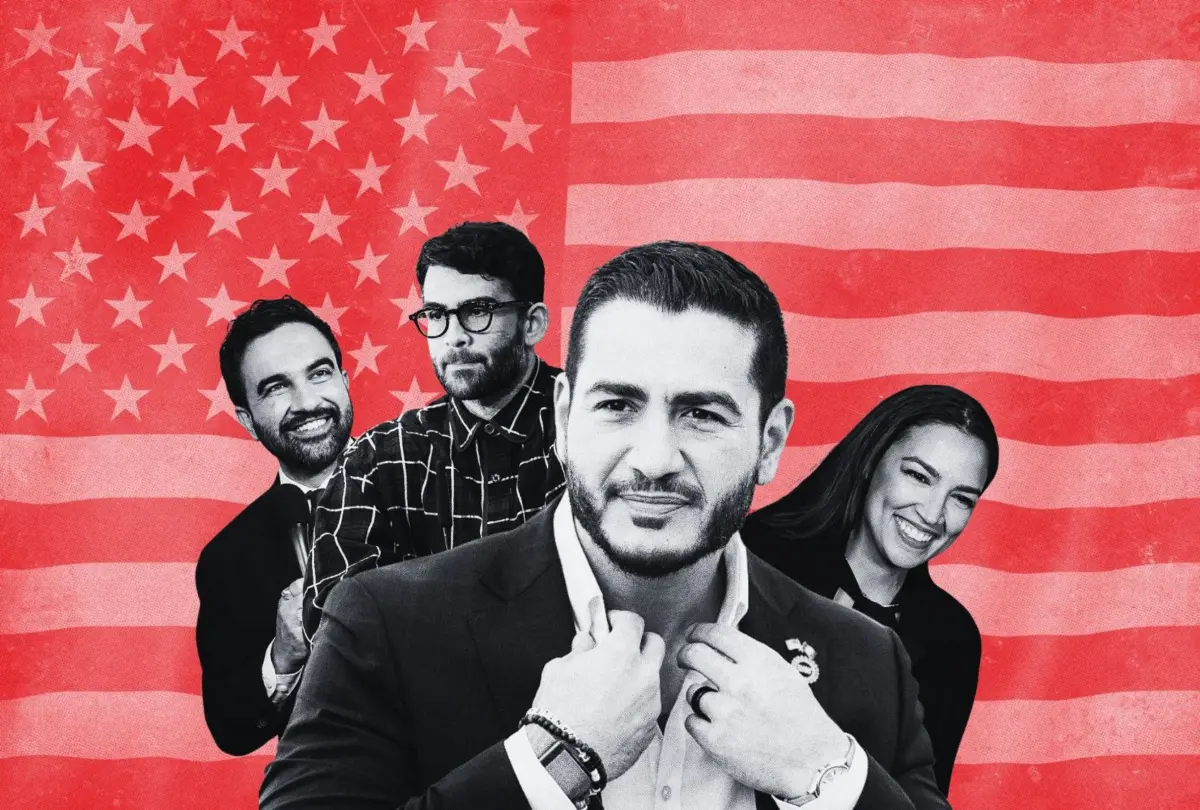
The summer of 2026 marked a high-water mark for the progressive left, characterized by unexpected electoral victories and the emergence of a fresh cohort of charismatic leaders. Chief among them is Dr. Abdul El-Sayed, Michigan’s Democratic nominee for the U.S. Senate. A progressive capitalist endorsed by the Democratic Socialists of America, El-Sayed quickly joined figures like New York City Mayor Zohran Mamdani and high-profile lawmakers in dominating national political discourse.
Predictably, conservative media mobilized to warn the public of the dangers of democratic socialism. Yet, beneath the standard talking points about economic policy, a distinct shift occurred: conservative commentators could not stop talking about how physically attractive these progressive figures were.
The shift was broadcast live on prime-time cable news. Fox News host Laura Ingraham dedicated a segment to speculating about a potential presidential run by Representative Alexandria Ocasio-Cortez (D-N.Y.). Rather than focusing strictly on policy proposals, Ingraham fixated on the lawmaker’s aesthetic presence, noting her "long, sleek raven hair and red lipstick" and describing her dual public persona as an earnest grassroots activist and a trend-conscious millennial sharing recipes online.
Shortly thereafter, Ingraham’s colleague Ainsley Earhardt launched into a candid, visibly frustrated complaint during a segment explicitly titled "Democrats Enter Their Thirst Trap Era." Earhardt lamented that the left’s new political vanguard was simply too attractive to ignore, pointing to El-Sayed’s form-fitting shirts, Ocasio-Cortez’s smile, and Mamdani’s persistent, upbeat demeanor. Ingraham even took a momentary pause from critiquing Ocasio-Cortez to comment derisively on El-Sayed’s posture, specifically noting his "big manspread."
This fixation extends far beyond Capitol Hill politicians to online political commentators. Hasan Piker, the prominent left-wing streamer, has become a permanent fixture of right-wing media critique. However, nearly every profile or segment addressing Piker—whether celebratory or deeply critical—inevitably devolves into a debate among conservative pundits regarding his physical fitness and overall attractiveness. Even prominent conservative figures on air have found themselves publicly grading the streamer’s looks, turning ideological opposition into an involuntary beauty contest.
Supporting Context & Metrics: The Psychology of Eroticized Antagonism
To understand why political opponents are suddenly generating such intense, undeniable physical fascination, one must look past standard political science and examine human psychology. Dr. Tara Suwinyattichaiporn, a Kinsey-certified sexologist, author, and cultural commentator, identifies this dynamic as "eroticized antagonism."
According to Dr. Suwinyattichaiporn, this phenomenon frequently surfaces in storytelling, cinema, and cultural media where individuals find their ideological opposition deeply attractive. The feelings are frequently intensified precisely because the object of affection represents a taboo or stands in direct opposition to the observer’s deeply held beliefs.
"When you see someone, and you’re excited, or you’re angry, it ignites a similar part of the brain," Dr. Suwinyattichaiporn explains. This neurological overlap creates an uncomfortable cognitive dissonance. Observers experience a sense of internal conflict: hating the person for disrupting their worldview, hating themselves for finding the enemy attractive, and resenting their own neurological responses for simply doing their job.
This psychological friction is particularly acute within the modern conservative movement, which has historically relied on strict social rules, traditional hierarchies, and behavioral repression. Dr. Suwinyattichaiporn notes that political movements built on tight boundaries and ideological conformity often breed a deep, underlying resentment toward those who live freely outside of those confines.
When conservative audiences or media personalities encounter progressive leaders who project absolute self-possession, comfort in their own skin, and a total disregard for right-wing cultural orthodoxies, the reaction is rarely neutral. For figures like El-Sayed—who openly embraces physical fitness, wears casual athletic wear, and projects unwavering professional confidence—the appeal to individuals trapped in rigid social structures can manifest as a powerful, unspoken fantasy. The compulsion to obsess over these figures on national television becomes a public outlet for private, repressed fascination.
Official Statements and Cultural Reactions
The intersection of politics, media, and unacknowledged desire has generated widespread commentary across the cultural spectrum, drawing reactions from media analysts, psychologists, and political strategists alike.
Media watchdogs have noted that the tone of right-wing commentary regarding progressive politicians has shifted markedly over successive electoral cycles. Where previous generations of conservative pundits maintained a sterile, strictly policy-oriented distance from their opponents, modern cable news commentary routinely incorporates parasocial fascination and aesthetic evaluation into daily broadcasts.
Commentators analyzing the trend have pointed out the inherent irony of a political movement centered on traditional family values and modesty frequently devoting prime-time broadcast hours to analyzing the physical fitness, clothing choices, and personal lives of socialist politicians and internet streamers.
Public response on social media platforms has been equally pronounced. Clips of Fox News anchors expressing frustration over the perceived physical appeal of progressive candidates routinely go viral, generating widespread commentary about the absurdity of modern media discourse. Meanwhile, political campaigns have quietly recognized the power of modern aesthetic branding. The deliberate curation of image, fitness, and modern digital savvy among rising left-wing leaders has proven to be an effective counter-weight to traditional political attacks, turning attempts at media derision into badges of cultural relevance.
Future Outlook: Navigating the Intersection of Politics and Desire
As the United States approaches the critical midterm elections and looks ahead to the 2028 presidential cycle, the convergence of ideological warfare and personal fascination shows no signs of abating. The structural conditions driving these media dynamics—polarized media ecosystems, hyper-personalized political branding, and deeply ingrained cultural repression—remain firmly entrenched.
If current trajectories hold, the coming years will likely see even more prominent progressive figures step onto the national stage. Figures like Abdul El-Sayed navigating the U.S. Senate, Alexandria Ocasio-Cortez or Jon Ossoff potentially eyeing higher executive office, and digital creators like Hasan Piker maintaining massive cultural footprints ensure that the right-wing media apparatus will continue grappling with its complex relationship with progressive appeal.
Whether society will eventually move toward a more integrated, sex-positive understanding of human desire and political disagreement remains an open question. Dr. Suwinyattichaiporn expresses cautious hope that cultural conversations might eventually untangle the knotty relationships people hold with their own desires. However, for a political media landscape deeply invested in cultural division and behavioral control, such an evolution appears distant.
For now, political observers, media consumers, and cable news anchors alike must prepare for a long, uncomfortable political season—one where ideological battles are increasingly fought not just in policy papers and legislative chambers, but in the complicated, highly reactive depths of the human psyche.