

Executive Overview
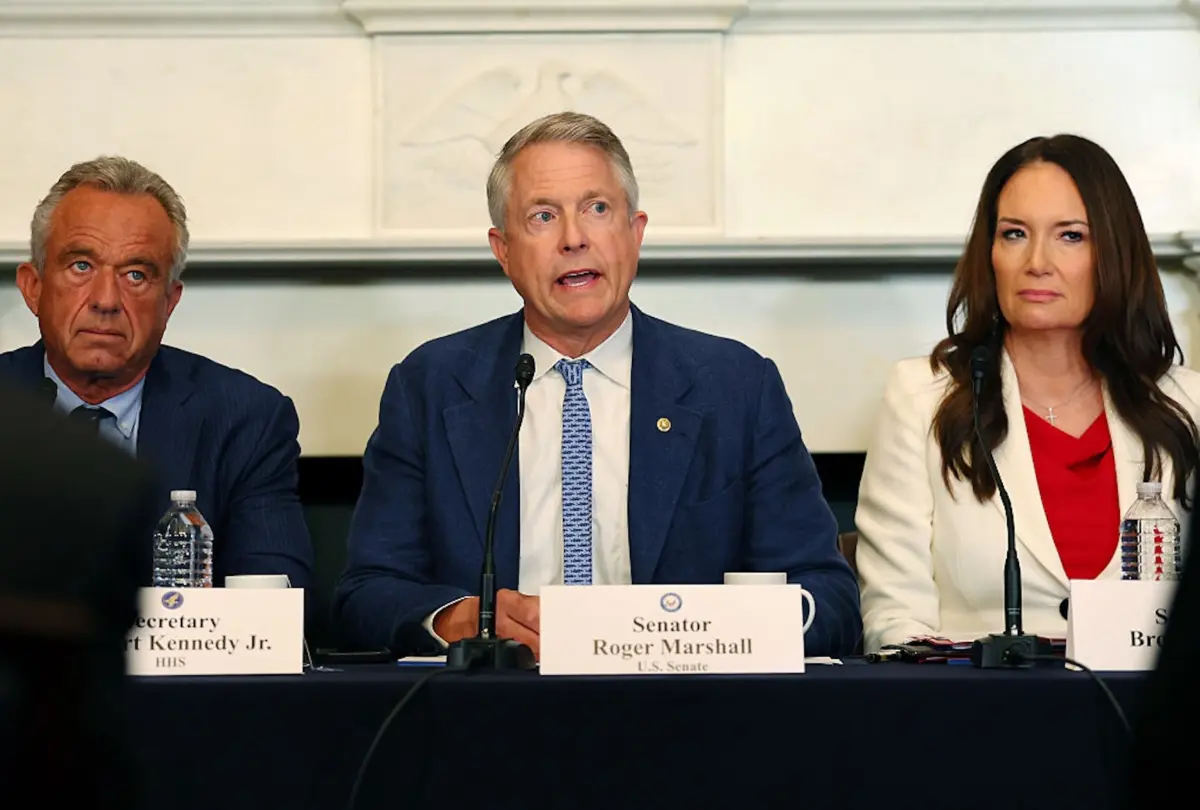
The intersection of modern American politics and the medical profession has increasingly laid bare a troubling paradox: elected officials who swore an oath to “do no harm” routinely advance legislative and rhetorical agendas that critics argue actively undermine public health. At the center of this scrutiny is Kansas Republican Senator Roger Marshall, an obstetrician-gynecologist whose past legal practices involving financially distressed patients have drawn intense national attention.
Marshall is far from an isolated figure. Over the past decade and a half, a distinct faction of conservative lawmakers with formal medical training—including Senators Rand Paul and John Barrasso, as well as high-profile political figures like Dr. Mehmet Oz and former Representative Ronny Jackson—has risen to prominence within the Republican Party. Rather than acting as moderating forces rooted in scientific evidence and clinical ethics, these physician-politicians frequently champion policies that dismantle healthcare access for vulnerable populations, challenge federal public health guidance, and foster vaccine hesitancy.
This investigative commentary explores the systemic tension between the core tenets of the medical profession—compassion, scientific rigor, and patient advocacy—and the rigid demands of modern hyper-partisan politics. By examining Marshall’s contentious medical debt litigation, the legislative records of key GOP medical figures, and the broader ideological evolution of the American right regarding healthcare, this report analyzes how medical credentials are frequently weaponized to legitimize partisan policy goals at the direct expense of public well-being.
Detailed Chronology: From the Examination Room to the Halls of Power
The Ideological Genesis: Ron Paul and the 2011 Paradigm Shift
To understand how modern physician-politicians navigate the intersection of medicine and governance, political historians often point to a clarifying moment during the 2011 Republican presidential primary debates. When Texas Representative Ron Paul—then a practicing obstetrician-gynecologist and former U.S. Air Force flight surgeon—was asked whether an uninsured 30-year-old patient should be left to die if they required life-saving emergency care, the studio audience famously erupted into applause.
Paul responded by asserting that individuals must take absolute personal responsibility for their own welfare, dismissing collective healthcare safety nets. While conservative skepticism of government-managed healthcare was hardly new, Paul’s unfiltered rhetoric stripped away standard political euphemisms about "market competition" or "consumer choice." He articulated a stark philosophical stance: healthcare is a pure commodity, and those unable to afford it are entirely on their own. The paradox of a physician publicly advocating for policies that could result in preventable mortality for lack of insurance set a precedent for a new generation of medically trained politicians.
Roger Marshall and the Medical Debt Controversy
Fifteen years after Ron Paul’s watershed debate moment, another obstetrician-gynecologist turned conservative lawmaker faced intense scrutiny over how he handled the financial realities of his medical practice. A comprehensive investigative report published by The New York Times in September 2026 revealed that Senator Roger Marshall had filed lawsuits against more than 700 former patients during his years practicing in rural Kansas.
Marshall’s medical practice predominantly served low-income, rural communities where many patients struggled to pay upfront fees or co-pays. To manage these financial gaps, the practice required patients to sign agreements bearing an 18% interest rate. When patients defaulted, the legal fallout was severe. Court records and journalistic investigations showed that dozens of patients faced aggressive wage garnishments and, in some instances, arrest warrants for failing to appear at required court hearings regarding their mounting medical debts.
Case studies highlighted in the reporting underscored the human toll of these practices. One patient, for example, detailed being arrested multiple times over a prolonged period for failing to satisfy an outstanding balance tied to a medically necessary Caesarean section—a bill that had ballooned past $7,000 due to compounding interest rates and legal fees.
While health law experts note that medical debt litigation has grown more common amid rising insurance deductibles, they emphasize that aggressive legal maneuvers—such as wage garnishments and arrest threats—represent extreme outlier tactics. Most medical providers utilize third-party collection agencies or elect to write off uncollectible debt.
Ascendance in Washington and the MAGA Realignment
Following his election to the U.S. House of Representatives in 2016 and subsequent election to the Senate, Marshall quickly aligned himself with the populist wing of the Republican Party, branding himself as an authority on rural healthcare. However, his legislative record has consistently run counter to the health security of the very constituents he represents.
Marshall voted repeatedly to repeal the Affordable Care Act (ACA) and supported sweeping legislative packages that reduced federal health subsidies and significantly slashed Medicaid funding. Furthermore, during and after the COVID-19 pandemic, Marshall embraced rhetoric that public health advocates condemned as vaccine-skeptical. In various media appearances, he frequently invoked speculative links between immunization and severe adverse health events, framing government public health campaigns as a primary driver of institutional distrust. Critics argue that such rhetoric from a licensed physician lends unwarranted scientific legitimacy to misinformation, complicating national efforts to manage infectious disease outbreaks.
Supporting Context & Metrics: The Landscape of GOP Physician-Politicians
Marshall is part of a broader fraternity of medical professionals turned politicians who have shaped conservative policymaking over successive congressional sessions.
Key Figures in the Medical-Political Complex
- Sen. Rand Paul (R-Ky.): An ophthalmologist and the son of Ron Paul, Senator Rand Paul has built a significant portion of his national profile on challenging federal health institutions and leading prolonged, combative Senate hearings against former National Institute of Allergy and Infectious Diseases Director Dr. Anthony Fauci. Paul has consistently categorized federal health safety nets like Medicare as "socialized medicine" and advocated for high deductibles to curb utilization.
- Sen. John Barrasso (R-Wyo.): Serving as a senior member of the Senate leadership, Barrasso is an orthopedic surgeon who frequently cites his clinical background when discussing rural healthcare issues. Despite this background, Barrasso has consistently voted to curtail Medicaid and dismantle the ACA, though he has generally avoided the vaccine skepticism seen among some of his populist colleagues.
- Dr. Bill Cassidy (R-La.): A practicing hepatologist, Cassidy has occasionally demonstrated a willingness to engage with complex healthcare policy nuances. However, political pressures have repeatedly tested his legislative independence. Notably, despite expressing private reservations regarding vaccine-skeptical figures, Cassidy ultimately provided critical support for executive and cabinet nominations that alarmed the broader scientific community—a move that nevertheless failed to protect him from primary challenges within his own party.
- Dr. Mehmet Oz: Appointed to lead the Centers for Medicare and Medicaid Services (CMS), Dr. Oz transitioned from a celebrity cardiothoracic surgeon to a daytime television personality known for promoting unverified medical treatments and dietary supplements. His appointment underscored the growing influence of non-traditional medical figures within executive health infrastructure.
Official Statements and Diverse Perspectives
The dichotomy between clinical ethics and partisan political strategy has generated intense debate among medical ethicists, legal scholars, and political commentators.
Proponents of the conservative physician-lawmaker cohort argue that their clinical backgrounds provide them with a vital, ground-level understanding of regulatory overreach, administrative burdens, and the inefficiencies of government-run healthcare systems. Defenders maintain that advocating for free-market principles, reducing federal health spending, and questioning bureaucratic mandates are legitimate legislative duties that do not violate professional oaths, provided they occur outside the direct doctor-patient relationship.
Conversely, medical ethics organizations and public health advocates express deep alarm. Critics point to the American Medical Association’s (AMA) Code of Medical Ethics, which emphasizes a physician’s broader responsibility to society, public health, and the elimination of barriers to healthcare access.
"When a medical professional uses their scientific credentials to lend authority to disproven health claims, or implements punitive financial practices against economically disadvantaged patients, it represents a profound moral failure," noted an independent health law scholar commenting on the intersection of medical practice and politics. "The Hippocratic Oath is not suspended simply because a doctor walks onto the Senate floor or into a television studio."
Future Outlook
As healthcare remains a central flashpoint in American politics, the role of physician-politicians will continue to be heavily scrutinized. The ongoing tension between evidence-based public health mandates and populist political messaging suggests that the ideological divide within the medical-political complex will only widen.
For lawmakers like Roger Marshall, whose political survival depends on navigating tight electoral margins while maintaining strict alignment with populist bases, the pressure to conform to party orthodoxy often outweighs clinical consensus. As long as political rewards favor sensationalized rhetoric and aggressive deregulation over institutional trust and equitable healthcare access, the paradox of the partisan physician will remain a defining feature of contemporary American governance.