

Executive Overview
The debate over the temporal rhythm of the United States has long been framed as a trade-off between evening leisure and economic productivity. For years, proponents of ending the biannual ritual of shifting clocks have argued that keeping daylight saving time (DST) in effect year-round would usher in brighter, safer, and more vibrant winter evenings. This promise of an extra hour of afternoon sunlight has galvanized lawmakers in Washington, D.C., and inspired sweeping legislative initiatives across dozens of states.
However, a landmark study published in the journal Current Biology introduces a sobering counter-narrative, shifting the focus from the evening leisure of adults to the morning safety and well-being of the nation’s children.
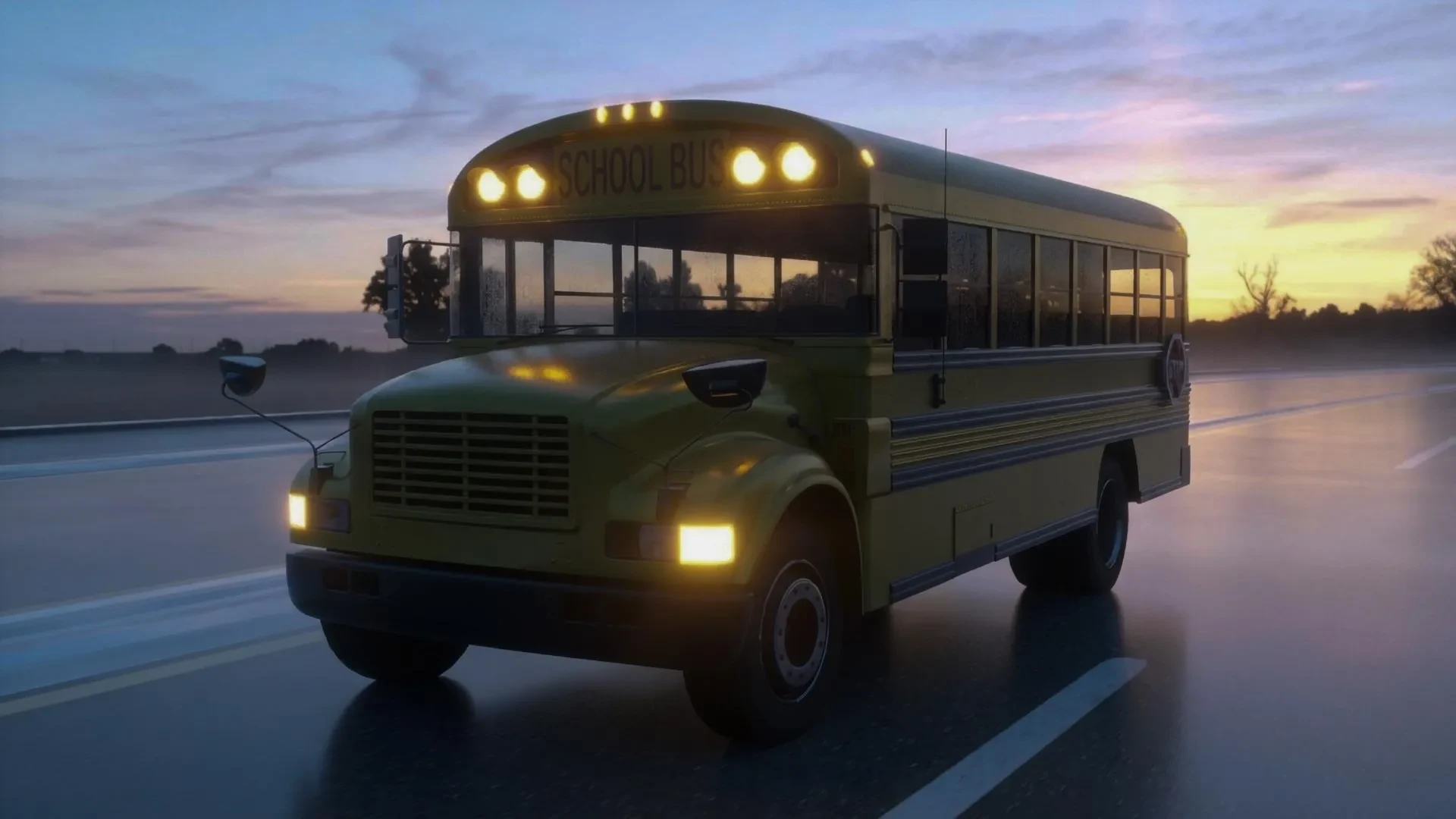
According to new research conducted by a team at the University of Washington, a nationwide transition to permanent daylight saving time would carry a profound and troubling consequence: an estimated minimum of 2 billion additional school commutes conducted in pitch darkness. By pushing sunrises an hour later during the winter months of November through March, permanent DST would fundamentally alter the morning routine for millions of students.
The researchers analyzed granular data from 14 states that have already passed legislation favoring permanent DST, combining geographic coordinates, individual school start times, and district-level enrollment figures. Their findings reveal stark increases in hazardous morning travel, with states like Georgia and Washington bracing for tens of millions of additional dark commutes. Beyond the immediate logistical hurdles, the study underscores alarming traffic safety statistics—noting that fatal pedestrian crashes involving school-aged children are twice as likely to occur in the dark as they are after sunrise—and raises critical questions regarding the disruption of children’s circadian biology and access to essential morning light.
As the federal Sunshine Protection Act remains stalled in the U.S. Senate amid mounting concerns over early-morning safety, this investigation unpacks the complex web of science, policy, and public health implications surrounding America’s enduring obsession with daylight saving time.
Detailed Chronology: The Push for Permanent DST and the Scientific Awakening
The Legislative Momentum in Washington and the States
The modern legislative push to abolish the biannual clock change gained unprecedented traction in the spring and summer of 2022, when the U.S. Senate unanimously passed the Sunshine Protection Act. Though that specific bill ultimately stalled before clearing the House, the momentum migrated to the legislative chambers of individual states. Frustrated by the twice-yearly disruption of sleep schedules, commerce, and daily routines, state lawmakers across the country began taking matters into their own hands.
To date, 19 states—including Washington, California, Florida, and Georgia—have passed legislative measures or ballot initiatives expressing official support for permanent daylight saving time. Crucially, these state-level statutes are contingent; they are designed to take effect only if Congress amends federal law to permit states to observe DST year-round.
This past summer, the legislative debate reignited in the U.S. House of Representatives, where lawmakers reintroduced and advanced discussions on the measure (House Bill 139). Yet, as the bill advanced toward potential consideration, a formidable roadblock emerged in the Senate: education advocates, pediatricians, and transportation safety experts began raising urgent alarms regarding the impact of delayed winter sunrises on school children.
Shifting the Lens to the Classroom
While lawmakers debated the merits of extended evening sunlight for retail commerce and outdoor recreation, a team of researchers at the University of Washington decided to investigate the hidden costs borne by the nation’s youngest citizens. Led by senior biology professor Horacio de la Iglesia and postdoctoral researcher Guadalupe Rodríguez Ferrante, the research team sought to move past abstract political rhetoric and calculate concrete, empirical metrics regarding children’s morning commutes.
The team recognized that while everyone traveling early in the day would experience darker mornings, school children represent a uniquely vulnerable demographic. Bound by rigid, legally mandated schedules and concentrated commuter flows, students cannot simply sleep in or alter their departure times without cascading disruptions to family work schedules.
By collaborating with a multidisciplinary team—including high school researcher Daniel Zhang and a cohort of university biology undergraduates—the team embarked on a comprehensive geospatial analysis to determine precisely how many school children would be thrust into morning darkness under a permanent DST regime. Their findings, published on October 29 in Current Biology, transformed the national debate, providing the rigorous data needed to challenge the assumptions of permanent DST proponents.
Supporting Context & Metrics: Quantifying the Dark Commutes
To measure the true scope of the problem, the University of Washington research team designed a sophisticated methodological framework. They focused their initial, highly detailed analysis on 14 of the 19 states that have already enacted legislation supporting permanent daylight saving time.
Methodology: Mapping the Dark Commutes
The researchers synthesized three massive datasets for every school district within the 14 target states:
- Official School Start Times: Factoring in the exact bell schedules listed by individual institutions.
- Geographic Coordinates: Mapping the precise latitude and longitude of each school to determine local sunrise times throughout the calendar year.
- Student Enrollment Figures: Calculating the total volume of children traveling to those institutions.
By comparing simulated daily sunrise times under a permanent DST system with historical baselines under the current system of semi-annual clock changes, the team calculated the exact number of school days children would spend traveling in pre-dawn darkness from November through March.
State-by-State Disparities
The results of the geospatial analysis laid bare the vast, localized inequities that permanent DST would introduce. The impact would not be distributed evenly; rather, it would concentrate heavily based on geographic positioning within time zones and regional school start times.
- Washington State: Home to the researchers’ institution, Washington would experience nearly 35 million additional school commutes in darkness. Communities located near the western boundaries of the Pacific Time Zone—such as the timber town of Forks, Washington—would be hit particularly hard, as sunrise already occurs exceptionally late in these western extremities.
- Georgia: Emerging as one of the most heavily impacted states in the study, Georgia schools would account for approximately 71 million additional dark trips.
- The Deep South (Mississippi and Alabama): These two states provided some of the most striking anomalies in the dataset. Because many school districts in Mississippi and Alabama begin classes well before 8:00 a.m., their baseline exposure to dark commutes is relatively low under the current system—hovering around 2 million trips per state in total darkness. Under permanent daylight saving time, however, those figures would skyrocket to more than 20 million trips per state, representing a tenfold increase.
The Nationwide Extrapolation: 2 Billion and Counting
When the researchers scaled their regional models to estimate the nationwide impact of permanent daylight saving time across all 50 states, the numbers reached staggering proportions. The team calculated that a nationwide switch would result in at least 2 billion additional trips to school in pre-dawn darkness every single winter.
Crucially, the research team emphasizes that this 2-billion figure is almost certainly an underestimation. To execute the nationwide projection, the researchers assumed a standardized student departure time of 8:00 a.m. across districts that lacked granular data. However, millions of American children leave for school much earlier—often to accommodate parental work shifts, bus route logistics, or early-morning school breakfast programs.
"Keep in mind that we used the actual start time listed for each school, and a lot of schools offer breakfast or other things before school, so the kids could be getting there even earlier," noted co-author Guadalupe Rodríguez Ferrante.
Official Statements and Expert Perspectives
The publication of the University of Washington study has injected much-needed empirical rigor into a political debate that has frequently relied on anecdotal assertions. Prominent scientists, public health advocates, and researchers have spoken out about the multifaceted dangers of sacrificing morning light.
The "Sunshine Destruction Act"
Senior author Horacio de la Iglesia did not mince words when describing the deceptive branding of the federal legislation.
"It’s called the ‘Sunshine Protection Act’ because you get an extra hour of light at the end of the day. But you will take that hour from the morning. You could call it the ‘Sunshine Destruction Act,’" Dr. de la Iglesia stated. "These dark mornings will inequitably affect children who have to go to school at a certain time. It’s a very tangible metric that anybody from any state or socioeconomic background can relate to. Nobody wants their kids to go to school in the dark."
The Traffic Safety Hazard
The logistical reality of billions of children walking to bus stops, riding bicycles, or being dropped off in unlit conditions carries severe safety implications. To contextualize this risk, the research team analyzed comprehensive U.S. traffic collision records, cross-referencing the timing of pedestrian accidents with local sunrise data.
The findings were unequivocal: fatal crashes involving school-aged pedestrians were roughly twice as likely to occur during dark mornings as they were after sunrise.
When visibility is compromised by pre-dawn darkness, distracted motorists struggle to spot children crossing intersections or walking along unpaved rural roads lacking sidewalks. The sudden introduction of billions of pre-dawn commutes threatens to reverse decades of progress in pedestrian safety infrastructure around schools.
Disruption of Circadian Rhythms and Health
Beyond the immediate physical dangers of vehicular traffic, the loss of morning sunlight poses a subtle yet profound threat to children’s physiological development.
Human biology is governed by circadian rhythms—internal 24-hour timing systems that regulate sleep architecture, hormonal secretion, metabolic function, mood, and cognitive alertness. These biological clocks are primarily synchronized, or "entrained," by exposure to bright light early in the day. Morning sunlight acts as the primary environmental cue that signals to the brain that the night has ended, shutting down melatonin production and setting the body’s internal clock to an optimal daytime frequency.
When children are subjected to chronic morning darkness during the winter months, their bodies are deprived of this vital developmental cue. Lead author Guadalupe Rodríguez Ferrante emphasized the human cost of this biological deprivation:
"When we send kids to school in the dark, we are depriving them from an opportunity to get that morning daylight," Dr. Rodríguez Ferrante explained. "We were asking what’s the cost for these children. We wanted actual numbers, a real number of kids based on the geographic location of each school."
Pediatric sleep specialists note that adolescents already suffer from a natural biological shift that delays their sleep phase, making early high school start times notoriously misaligned with their developmental needs. While numerous public health organizations have spent years advocating for later school start times to give teenagers adequate rest, permanently shifting the clock forward would effectively neutralize those gains by plunging those later start times into absolute darkness.
Future Outlook: Navigating the Policy Dilemma
As the debate over permanent daylight saving time persists in Washington, D.C., lawmakers and policy experts face a complex policy trilemma. The core tension involves balancing three competing priorities: public safety, children’s biological health, and the public desire for extended evening leisure during dark winter months.
The Flawed Proposal of "Just Delay School Start Times"
Recognizing the validity of concerns regarding dark commutes, some proponents of permanent DST have suggested a seemingly simple workaround: if mornings are darker, school districts should simply delay their start times by an hour to compensate.
However, Dr. de la Iglesia and his colleagues caution that this proposed fix creates a cascade of unintended societal consequences. If schools push their opening bells back by an hour to maintain post-sunrise arrivals:
- Parents would be forced to adjust their own work schedules to accommodate childcare drop-offs.
- The entire workday framework would shift backward.
- Employees would leave their workplaces an hour later, completely erasing the cherished evening leisure time that serves as the primary selling point for permanent daylight saving time in the first place.
"Well, if we do that, you will end up going to work later. And everything is going to get delayed," Dr. de la Iglesia noted. "You will get out of work an hour later, and you will miss the opportunity to enjoy your evening light. And essentially, we’re just going to be realigning everybody to solar time. That, by definition, is Standard Time."
The Scientific Consensus: Returning to Standard Time
Paradoxically, the data presented in the University of Washington study reinforces what sleep scientists and chronobiologists have argued for years: the healthiest and safest temporal regime for human biology is Standard Time, not daylight saving time.
Major medical organizations—including the American Academy of Sleep Medicine, the American Medical Association, and the Sleep Research Society—have previously issued formal position statements advocating for the abolition of daylight saving time in favor of permanent Standard Time. They point out that standard time aligns most closely with human circadian biology, minimizing the cardiovascular risks associated with the biannual clock shifts while protecting morning light exposure.
Conclusion
The allure of endless summer evenings is a powerful political driver, capable of uniting diverse coalitions in state legislatures and the halls of Congress. Yet, as the empirical evidence compiled by the University of Washington demonstrates, time is not an elastic resource that can be manipulated without consequence.
By threatening to thrust American children into at least 2 billion additional commutes in pitch darkness, permanent daylight saving time reveals a hidden invoice paid in pedestrian safety, circadian health, and morning well-being. As federal lawmakers weigh the future of the Sunshine Protection Act, the nation is forced to confront a fundamental question: Are we willing to sacrifice the safety and biological health of our children for an extra hour of evening twilight?