

Executive Overview
As the United States hurtles toward the high-stakes 2026 midterm elections, the American political landscape is witnessing an unprecedented convergence of corporate sovereignty and partisan survival. At the center of this maelstrom is Elon Musk, the world’s richest man, whose financial and political interventions have escalated from social media provocation to outright political life support for the Republican Party.
With House control slipping and the Senate locked in a dead heat, Musk has poured a staggering $366 million into pro-GOP political action committees, television ad buys, and localized rescue missions. This capital injection is not merely ideological; it is an aggressive, high-stakes defensive maneuver. Musk faces mounting legal exposure, potential congressional investigations into the controversial Department of Government Efficiency (DOGE), and a public increasingly skeptical of unchecked oligarchical influence.
This report provides a comprehensive examination of Musk’s late-stage midterm meddling, exploring the fragile détente between the Tesla CEO and President Donald Trump, the shifting electoral maps in key battlegrounds like Texas, and the looming accountability reckoning that threatens to upend Musk’s empire.
Detailed Chronology: From Bureaucratic Cleansing to Electoral Panic
To understand Elon Musk’s current political expenditure, one must trace the volatile trajectory of his relationship with Donald Trump since the beginning of the administration’s second term.
The Early Term Alliance and the "DOGE" Era
At the dawn of Trump’s second term, Musk was positioned not as an outsider, but as an internal engine of state restructuring. Operating under the auspices of the Trump-approved Department of Government Efficiency (DOGE), Musk ripped through federal agencies, slashing budgets, auditing programs, and dismantling regulatory bodies. To the public, it appeared to be a permanent, symbiotic alignment of the world’s most powerful political figure and the planet’s wealthiest entrepreneur.
The Summer 2025 Fallout
The alliance proved brittle. By June 2025, tensions boiled over. According to reports from the Wall Street Journal, Musk and Trump had "torched" their relationship. The rift dissolved into a public spectacle of social media combat, mutual recriminations, and explosive public accusations regarding unrelated personal controversies. Observers noted that the two men seemed incapable of sustaining a partnership once their immediate, transactional goals diverged.
The Pragmatic Reconciliation
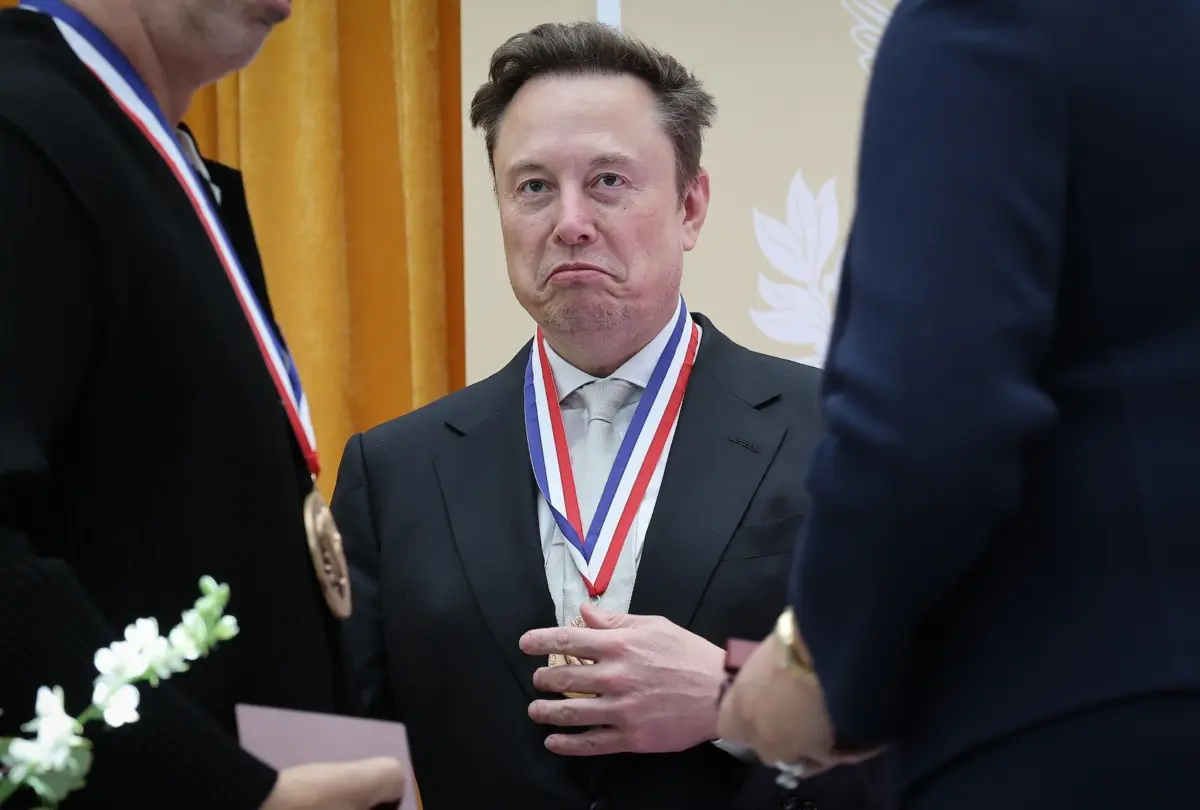
By late 2025 and into 2026, political survival forced a rapprochement. Recognizing mutual vulnerabilities—Trump facing a hostile electorate and Musk facing shifting congressional power dynamics—the pair reconciled. The apex of this uneasy reconciliation occurred on October 8, 2026, when President Trump awarded Musk the National Medal of Science during the "Golden Age of American Innovation Summit" in Washington, D.C. While framed as a tribute to engineering excellence, critics and industry insiders viewed the ceremony as political theater designed to obscure the staggering web of federal subsidies and military contracts underpinning SpaceX and Tesla.
Supporting Context & Metrics: The Financial Footprint of a Billionaire Rescue
Musk’s financial intervention in the 2026 midterms represents an unprecedented scale of direct capital deployment in congressional elections.
The Numbers Behind the Meddling
- Total 2026 Outlay: Musk has funneled approximately $366 million into keeping the Republican Party afloat in vulnerable districts and states.
- The Summer Surge: Of that total, $276 million was donated since July alone, establishing Musk as the single largest individual donor of the cycle by a wide margin.
- Key Recipients: Funds have been routed through his own super PACs, the Senate Leadership Fund, and the Lone Star Liberty PAC, targeting endangered Republican incumbents and seats.
The Texas Crucible
Nowhere is Musk’s financial triage more evident—or more desperate—than in Texas. The Lone Star State, long considered a safe fortress for the GOP, has morphed into a battleground. Musk-backed political action committees have heavily funded Texas Attorney General Ken Paxton’s endangered U.S. Senate campaign against Democratic state Representative James Talarico.
Polling data from the University of Texas/Texas Politics Project reveals a statistical dead heat across major statewide offices. Talarico leads Paxton 50% to 47%, while Democratic state Representative Gina Hinojosa holds a one-point edge over incumbent Republican Governor Greg Abbott. Should Democrats capture a Senate seat in Texas—a feat unaccomplished since 1988—it would spell catastrophic disaster for the national GOP apparatus, with reports indicating President Trump is already seeking scapegoats.
A History of Diminishing Returns
Despite his bottomless financial reserves, Musk’s record of direct electoral intervention outside of presidential contests has been remarkably mixed. In 2025, Musk poured more than $18 million into a Wisconsin Supreme Court race—transforming it into the most expensive judicial election in U.S. history—in an effort to alter state redistricting and car dealership regulations. Despite the capital expenditure, the gambit failed to deliver the desired outcome.
Furthermore, legal accountability has begun to shadow his political spending. Musk recently settled a class-action lawsuit alleging that his super PAC engaged in voter fraud during the 2024 presidential election by promoting a misleading $1 million lottery system for registered voters. Earlier in August, he narrowly evaded bribery charges for attempting a similar promotional stunt in Wisconsin.
Official Statements and Industry Analysis
The motivations driving Musk’s unprecedented spending have become a central subject of debate among documentary filmmakers, political analysts, and investigative journalists.
In a recent interview regarding his documentary Musk, director Alex Gibney offered a blunt assessment of the billionaire’s strategy:
"He’s spending way more now than he did for the presidential campaign in 2024, and in part that’s to get more money for himself in the form of military contracts," Gibney told Salon. "But also, he knows that a reckoning is coming for him if the Democrats take over the House and the Senate, and there’s going to be a lot of investigations into him for corruption and abuse of power, taking our information, particularly possibly relating to DOGE, and doing God knows what with it."
This perspective highlights the dual nature of Musk’s electoral investments: offensive accumulation through state-backed military and aerospace contracts, and defensive insulation against potential congressional subpoenas.
Public sentiment polling underscores the perils of this strategy. A recent Fox News poll revealed that corruption has surged to become the top concern among both Democratic and Republican voters, with 60% expressing extreme concern—outpacing inflation (58%), gas prices (50%), and healthcare (48%). Compounding this, a Washington Post-ABC News-Ipsos poll found that roughly two in three Americans believe President Trump is using the presidency for personal and political enrichment, with the sharpest increases originating from Republican-leaning respondents.
Future Outlook: The Reckoning Ahead
As the nation approaches November 3, 2026, the fundamental question remains: Can Elon Musk buy a congressional majority, or are voters reaching a saturation point regarding oligarchical interference?
The indicators suggest a profound disconnect between billionaire liquidity and voter sentiment. While Musk possesses the financial resources to flood airwaves, fund super PACs, and prop up flailing campaigns, his aggressive tactics are running headfirst into a populist wave of voter fatigue. The rising tide of anxiety over government corruption, corporate welfare, and ethical conflicts within the administration suggests that the American electorate is increasingly wise to the mechanisms of billionaire-backed political rescue missions.
If Democrats successfully retake the House and retain or expand their footing in the Senate, Musk’s $366 million investment will be remembered not as a firewall that saved the GOP, but as a frantic, high-priced insurance policy that expired on arrival. For the world’s richest man, the true test will not be whether he can tip a handful of tight races in Texas or Wisconsin, but whether his corporate empire can weather the congressional investigations and public accountability reckoning waiting on the other side of the ballot box.