

Executive Overview
In the contemporary digital marketplace, visibility is the ultimate currency. Securing prime digital real estate on Search Engine Results Pages (SERPs) requires more than just high-quality writing and a well-designed website; it demands a rigorous, data-driven keyword research strategy. Among the myriad of digital marketing platforms available today, Semrush has established itself as an indispensable powerhouse for enterprise-level search engine optimization (SEO) and content marketing.
This comprehensive guide explores the advanced mechanics of using Semrush for strategic keyword research. Moving far beyond basic search volume queries, this tutorial unpacks end-to-end methodologies—ranging from capitalizing on existing web footprints and conducting deep competitor gap analyses to generating topical keyword clusters and refining multi-channel Pay-Per-Click (PPC) and organic strategies. Designed for business owners, enterprise SEO managers, and digital marketers alike, this playbook provides actionable, step-by-step frameworks to capture high-intent search traffic, optimize workflows, and maximize return on investment (ROI).

Detailed Methodology: Unlocking Keyword Intelligence with Semrush
Implementing a successful SEO strategy requires a systematic approach to data extraction, filtering, and execution. Semrush offers a suite of integrated tools—specifically the SEO Toolkit, Keyword Manager, Keyword Magic Tool, and Keyword Gap Tool—that streamline these complex analytical processes.

Phase 1: Identifying Quick-Win Opportunities within Existing Website Architecture
When working with an established website that already possesses a content footprint, the most efficient starting point is not hunting for brand-new terms, but rather optimizing existing rankings. Specifically, digital strategists should focus on identifying keywords where the website already ranks between positions 4 and 15—the threshold of page one and page two of Google’s search results.

Step-by-Step Implementation:
- Access the SEO Toolkit: Navigate to the Organic Research >> Positions report within Semrush by inputting your website’s domain. This will generate a raw list of every keyword for which your domain currently ranks in the top 100 positions.
- Apply Advanced Filters: Because raw lists are often overwhelming, apply tailored filters for Position (setting the range to 4–15), Search Volume (e.g., a minimum monthly volume threshold relevant to your niche), and Keyword Difficulty (KD) to weed out hyper-competitive terms.
- Segment and Save: Review the remaining high-potential keywords and add them to a newly created list within Semrush. To maintain workflow efficiency, segment your target lists into distinct categories such as Existing and New.
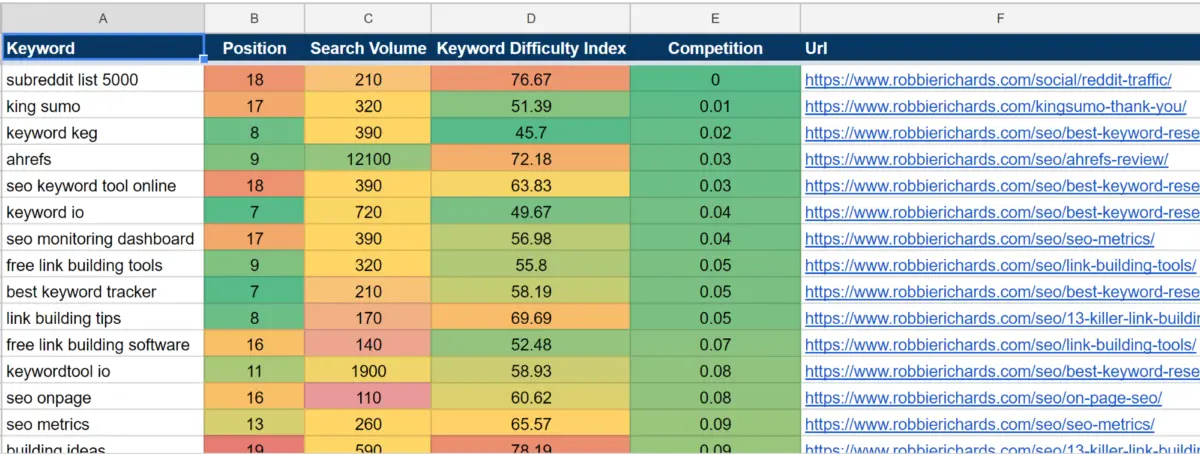
For marketers who prefer offline data manipulation, custom spreadsheet templates can automate this process. By exporting keywords ranking in positions 4–15 and pasting them into an automated tracking sheet, teams can instantly sort opportunities by descending search volume and color-code the matrix to spot high-volume, low-competition SERP targets.

Phase 2: Decoding Competitor Strategies and Uncovering High-Intent Keywords
Analyzing competitors is one of the fastest ways to shortcut the research phase and tap directly into proven, high-intent market demand. Semrush provides multiple avenues for competitor intelligence, moving from macro-level traffic analysis down to granular subfolder and keyword modifier filtering.

Leveraging the Top Pages Report and Subfolder Analysis
Every successful business model has a specific architecture designed to convert traffic. For e-commerce enterprises, product pages drive direct revenue; for legal practices or service-based agencies, specific service landing pages do the heavy lifting.

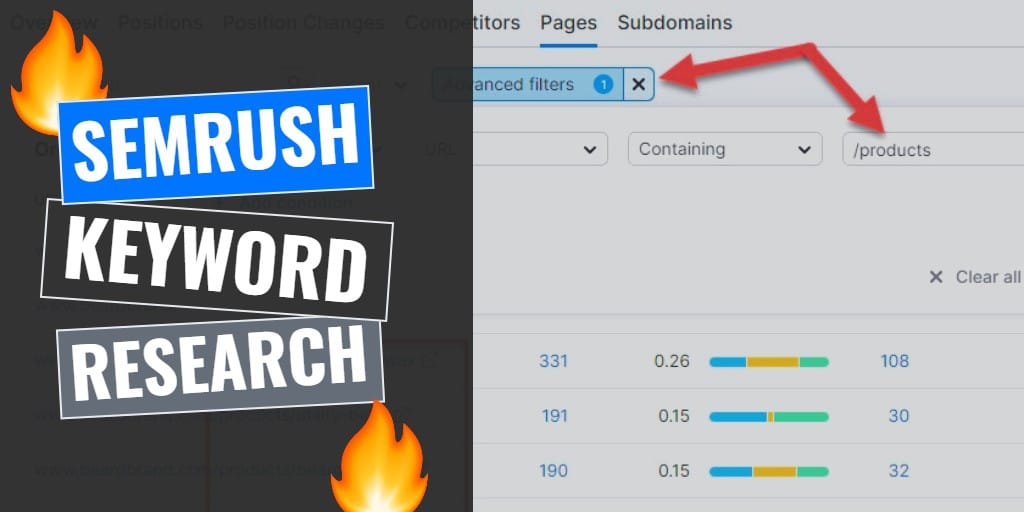
- E-Commerce Strategy: If you operate an online grooming brand, analyzing a market leader like Beardbrand via the Organic Research >> Pages report reveals which specific URLs drive the lion’s share of their organic traffic. By applying a URL filter containing
/products, marketers can instantly isolate top-performing product pages and extract the underlying transactional keywords. - Service-Business Strategy: For regional service providers (such as a personal injury law firm), examining a competitor’s navigation structure often reveals specific directory subfolders—such as
/legal-services/. Filtering Semrush reports to focus strictly on these subfolders allows competing firms to ensure they are targeting the exact service queries driving qualified leads to their rivals.
Utilizing Keyword Modifiers for Niche Monetization
When competitors do not cleanly segregate content into subfolders, keyword modifiers serve as an effective substitute. By applying text-inclusion filters within organic research reports—such as searching for terms containing "software," "best," "review," or specific product names—marketers can instantly isolate bottom-of-funnel affiliate and conversion-driven keyword targets.

Phase 3: Executing Advanced Keyword Gap Analyses
The Semrush Keyword Gap Tool allows digital strategists to compare up to five competitor domains simultaneously against their own website, surfacing valuable organic and paid search opportunities that are currently being missed.

Missing and Weak Keyword Identification
- Missing Keywords: This report highlights every keyword for which your competitors rank in the top 100, but your website does not. By filtering these results for manageable Keyword Difficulty and minimum search volume, you can uncover immediate content creation opportunities.
- Weak Keywords: This view highlights search terms where your domain currently ranks, but your position is lower than that of your designated competitors. These represent prime candidates for comprehensive content updates, structural on-page optimization, and authority-building internal linking campaigns.
Bridging the PPC-Organic Gap
One of Semrush’s most unique analytical capabilities is its ability to bridge paid search (PPC) and organic SEO data. Two primary use cases stand out for enterprise marketers:

- Providing Paid Aircover: If a brand holds valuable organic rankings outside the top 3 positions for high-intent commercial terms, running paid search ads on those specific keywords can ensure continuous visibility while long-term SEO efforts work to secure the top organic spot.
- Identifying High-Value Conversion Gaps: Competitors frequently invest advertising budgets into keywords that carry proven conversion intent. By analyzing the paid keywords of top competitors that your site does not yet target organically, you can capture high-intent search traffic that has already been validated through paid media spend.
Phase 4: Generating Topical Ideas and Question-Based Queries with the Keyword Magic Tool
Housing a database of over 24 billion keywords, the Semrush Keyword Magic Tool acts as an expansive ideation engine. However, its true value lies in advanced intent and modifier filtering.

To capture middle-of-funnel consideration traffic (such as software comparison queries like “Ahrefs vs. Semrush” or “Moz vs. Semrush”), marketers can input core industry seed terms and apply match-type filters. This uncovers hundreds of comparative, high-intent search queries where brands can position their offerings directly against competitors.

Furthermore, leveraging the Questions filter within the tool extracts natural-language queries (starting with how, what, why, where, can, and is). These question-based keywords typically feature lower keyword difficulty scores and represent exceptional opportunities to capture Google’s coveted Featured Snippets and People Also Ask (PAA) boxes.

Phase 5: Building Topical Authority through Keyword Clustering
Historically, SEO professionals targeted single, isolated keywords per page. Modern search engine algorithms, however, reward holistic topical authority. Semrush’s Keyword Manager and automated clustering engine enable marketers to group hundreds or thousands of related search terms into coherent topical buckets.

When generating clusters from scratch using seed keywords and domain context, Semrush analyzes SERP overlap to group keywords that should logically be targeted by a single URL versus those that require distinct, dedicated landing pages. Reviewing the Content references section within these clusters allows SEO teams to see whether competitors are ranking using a single broad guide or multiple granular sub-service pages, guiding the overall site architecture and content roadmap.

Supporting Context & Metrics: The Integrated SEO Ecosystem
The true efficiency of Semrush lies in its tightly integrated ecosystem. Rather than forcing digital marketers to toggle between disconnected software suites for research, tracking, and content production, Semrush bridges the entire workflow:

- Seamless Tool-to-Tool Transfers: Once target keyword lists are finalized within the Keyword Manager or Keyword Gap tools, users can instantly export them to the Position Tracking Tool to monitor daily ranking fluctuations, or send them directly to the SEO Writing Assistant to guide real-time content creation and on-page optimization.
- Algorithmic Intent Classification: Semrush automatically categorizes search intent into four primary buckets—Informational, Navigational, Commercial, and Transactional—allowing marketing teams to align their content formatting precisely with user expectations.
Future Outlook: The Evolution of Search Intelligence
As artificial intelligence continues to reshape the search engine landscape, the role of strategic keyword research is evolving rather than diminishing. With Search Generative Experience (SGE) and AI-driven answers altering how users interact with SERPs, understanding semantic search relationships, topical clusters, and deep user intent is more critical than ever.

Platforms like Semrush are continuously adapting their data architectures to provide deeper insights into user behavior, cross-channel PPC/SEO synergies, and algorithmic shifts. Enterprises that master these advanced keyword research frameworks will not only secure sustainable organic growth but will also maintain a definitive competitive edge in an increasingly crowded digital ecosystem.