

Executive Overview
When Rockstar Games unleashed the long-awaited Grand Theft Auto VI onto the global market, it immediately triggered the expected cultural shockwaves. Millions of players rushed to digitally immerse themselves in Leonida—a sprawling, satirical, yet shockingly faithful caricature of South Florida. Traditional media outlets predictably swarmed to the release, churning out the usual commentary: analytical pieces debating the economic windfall for local municipalities, cautious editorials fretting over the simulation of criminal enterprise, and hand-wringing cultural critiques about youth screen addiction.
Yet, amidst the predictable noise of the news cycle, a pair of journalists at the Tampa Bay Times carved out an entirely unprecedented path. Environment and climate reporter Max Chesnes and environment reporter Jack Prator looked at the most anticipated piece of interactive media in a decade and asked a brilliantly eccentric question: Are the birds any good?
Equipped with an Xbox kindly provided by colleague Christopher Spata, a field guide borrowed from a local library, and an open-minded editor’s blessing, Chesnes and Prator parked themselves in front of a screen for two hours. Their mission? To go birdwatching in a virtual criminal underworld.
What began as an office curiosity evolved into a viral sensation and a masterclass in modern journalism. Eschewing the tired tropes of moral panic or detached corporate reporting, the Tampa Bay Times team met their audience directly inside a cultural phenomenon. In doing so, they didn’t just log a dozen avian species in a fictionalized Everglades; they demonstrated how legacy newsrooms can leverage humor, deep local expertise, and digital fluency to connect with readers on their own turf. This is the story of how virtual birding became the most refreshing piece of environmental reporting of the year.
Detailed Chronology: From Watercooler Pitch to Virtual Expedition
The genesis of the Tampa Bay Times birdwatching guide was as casual as it was inspired. Following the global rollout of GTA VI, the newsroom was buzzing with chatter. Discussions naturally gravitated toward the game’s hyper-detailed rendering of Florida’s ecosystems—a digital landscape designed to evoke everything from neon-drenched Miami nights to the dense, humid labyrinth of the swamplands.
As Chesnes and Prator marveled at the sheer scale of the game’s environmental design, reporter Christopher Spata made a fateful offer: he was willing to bring his personal Xbox into the office and let anyone take the virtual world for a spin.
For Chesnes and Prator, whose day jobs routinely involve tracking climate metrics, tracking wildlife corridors, and investigating environmental degradation across Florida, a lightbulb went off. Why not test the authenticity of Leonida’s wilderness? How well did a multi-billion-dollar video game studio capture the ecological nuances of the Sunshine State?
They pitched the concept to their editor with modest expectations, half-expecting a polite rejection. Instead, the green light was given: Go for it.
The following morning, Prator arrived at the newsroom armed with a physical birding guide sourced from a local library. With the console hooked up and the digital landscape loading, the experiment commenced. The methodology was simple yet rigorous: one reporter took the controller, navigating the virtual terrain, while the other scanned the digital canopy and wetlands, calling out species as they appeared. The second reporter acted as the scribe, meticulously logging each sighting against the real-world field guide.
The expedition was not without its occupational hazards. True to the Grand Theft Auto franchise, peaceful nature walks were occasionally interrupted by the chaotic realities of open-world gameplay. Over the course of their two-hour digital survey, the reporters had to contend with a few minor distractions: fending off a sudden alligator attack, hijacking an airboat to navigate remote marshlands, and dodging aggressive gunfire from a disgruntled local residing in a dilapidated swamp shack.
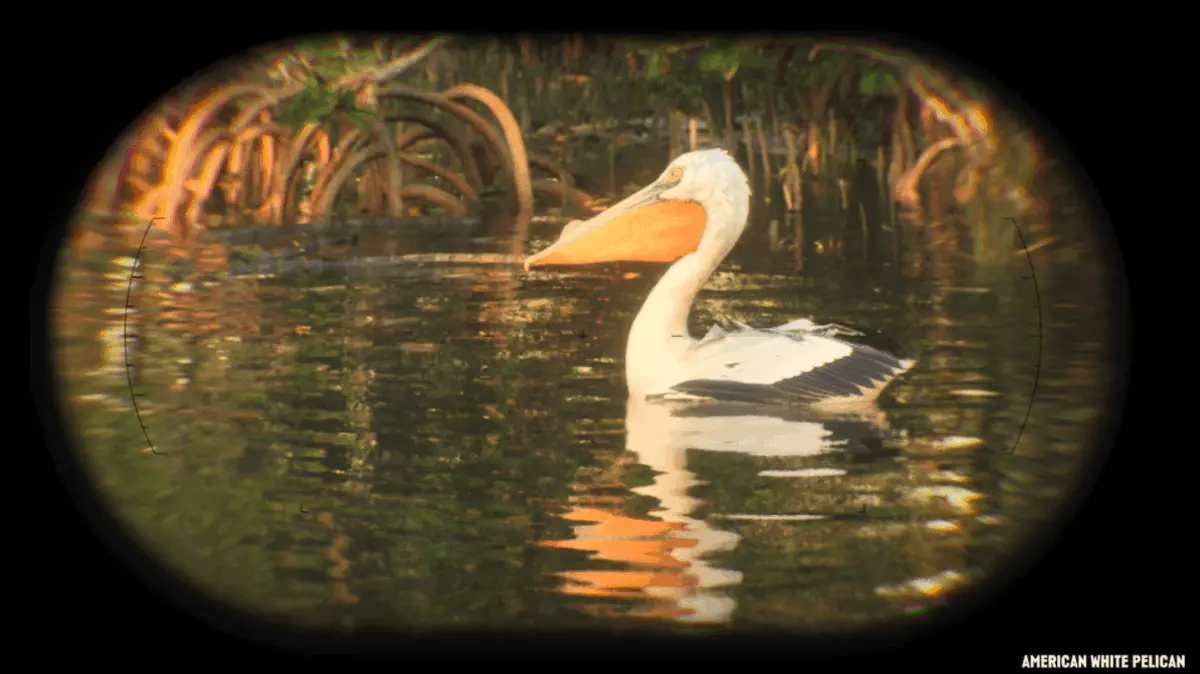
Yet, when the digital dust settled, the tally was staggering. The reporters successfully identified a dozen distinct avian species inhabiting the fictionalized state of Leonida. Their final roster included:
- Whooping cranes
- Wood storks
- Northern gannets
- Great egrets
- Roseate spoonbills
- Herring gulls
- Laughing gulls
- Caspian terns
- Mottled ducks
- Brown pelicans
- American white pelicans
- Great blue heron
(Note: The reporters humorously noted that they chose to exclude the plastic yard flamingo they accidentally obliterated while running it over in a "borrowed" sedan.)
Supporting Context & Metrics: The Technical Marvel of GTA VI
To understand why a serious environmental reporter could spend two hours cataloging virtual birds without breaking character, one must examine the staggering fidelity of modern game design. Grand Theft Auto VI is not merely a game; it is a monumental technical achievement. Industry critics and mainstream publications alike have marveled at the simulation’s depth, noting that the virtual world rewards human curiosity in ways previous generations of software could never manage.
According to digital culture critics, GTA VI represents a cultural milestone—a "generational" piece of media that captures the zeitgeist of 2020s America. The New York Times described the game’s environment as a collection of "countless temptations," pointing to fully stocked convenience stores boasting at least six different varieties of canned sodas, functional little free libraries scattered across suburban neighborhoods, and a surprisingly intricate national park system modeled after real-world conservation areas.
For Florida residents and environmental journalists, however, the most impressive feat wasn’t the soda selections or the pop culture Easter eggs—it was the biome fidelity. Rockstar Games poured an immense amount of computational power into replicating the unique atmospheric and ecological conditions of South Florida. The lighting mimics the blinding, humid glare of a subtropical afternoon; the flora transitions realistically from manicured coastal resorts to impenetrable mangrove mazes; and the fauna behaves with a surprising degree of ecological verisimilitude.
When Chesnes and Prator examined the birds populating the game’s skies and wetlands, they weren’t looking at generic, recycled assets. They were observing carefully modeled digital replicas of native Florida wildlife. The silhouette of a soaring magnificent frigatebird, the distinct pink plumage of a foraging roseate spoonbill, and the lumbering flight path of a brown pelican were rendered with enough anatomical accuracy to satisfy professional environmentalists.
This level of detail transforms the virtual landscape from a mere backdrop for virtual crime into an interactive digital diorama. It allows players to experience the natural beauty of Florida’s wild spaces—its springs, caves, and marshes—from the safety of a living room couch, proving that the game functions simultaneously as a high-octane crime thriller and an accidental virtual tourism board.
Official Statements and Cultural Reception
The reaction to the Tampa Bay Times stunt was swift, overwhelmingly positive, and indicative of a broader shift in how media consumers view the intersection of journalism and pop culture. While legacy media outlets often treat video games as either a societal menace or a niche subculture, the Times treated GTA VI as a shared civic experience.
Max Chesnes reflected on the motivation behind the piece, noting that the public discourse surrounding the game was needlessly polarized. "The debate around GTA has largely centered on whether or not it encourages criminal behavior," Chesnes observed. "We wanted to ask a different question: Are the birds good?"
The answer, as their reporting proved, was an emphatic yes. Far from being a hollow exercise in mockery, the endeavor morphed into an unexpected tribute. "It actually is a celebration of Florida," Chesnes remarked. By focusing on the ecosystem rather than the explosive set-pieces, the reporters highlighted the quiet, enduring beauty of the state’s natural heritage, even when filtered through the satirical lens of a video game developer.
Gene Park, a digital culture critic for The Washington Post, echoed these sentiments in a widely shared review of the game. Park emphasized that Grand Theft Auto VI "rewards so much human curiosity," praising the developers for creating a world that invites players to look closer, explore deeper, and appreciate the granular details of their digital surroundings.
Furthermore, the stunt served as a vital reminder to the journalism industry at large. In an era where newsrooms are constantly fighting for audience attention amidst an overwhelming flood of digital noise, the ability to "meet people where they’re at"—even if that happens to be inside a virtual swamp in a video game—is an invaluable skill. It proves that authoritative journalism does not have to be stuffy, and that local expertise can be successfully applied to unconventional domains.
Future Outlook: The Evolution of Immersive Journalism
The success of the Tampa Bay Times‘ virtual birdwatching guide points toward an exciting and largely uncharted frontier for creative journalism. As virtual worlds grow increasingly complex, photorealistic, and culturally dominant, the barrier between physical reality and digital simulation continues to blur.
For decades, newsrooms have deployed reporters to cover physical spaces, cultural festivals, and political rallies. As digital universes like Leonida attract millions of daily active users—rivaling the populations of mid-sized nations—the question arises: should news organizations begin covering virtual spaces with the same analytical and creative rigor they apply to the physical world?
The Tampa Bay Times has a storied history of thinking outside the traditional journalistic box. Over the years, the newsroom has cultivated a reputation for innovative, boundary-pushing storytelling. Past projects from the publication include:
- Gabrielle Calise’s deep dives into local culture, including a definitive historical look at Tampa’s strip clubs and the legal battles to preserve exotic dancing.
- Christopher Spata’s unflinching reality TV recaps, bringing a sharp, narrative-driven eye to chaotic pop culture phenomena like Floribama Shore.
- The legendary Lego bridge project, a critically acclaimed investigative and visual feature that explained how and why a major plan to fix Tampa Bay’s most crucial transit corridor fell apart, entirely illustrated using Lego bricks.
These projects share a common philosophy: that pop culture and everyday entertainment are not distractions from real life, but rather vital components of the modern human experience. When journalists refuse to look down upon the things their audiences care about, and instead lean into them with wit, intelligence, and professional expertise, the resulting work resonates profoundly.
As we look to the future, the integration of interactive media into everyday reporting may no longer be an anomaly. Whether it is tracking climate data in simulated ecosystems, analyzing urban planning through the lens of city-building simulators, or simply cataloging digital wildlife in a fictionalized Florida, reporters are finding new ways to bridge the gap between the physical world and the digital realms where millions of people spend their time.
Max Chesnes and Jack Prator didn’t just write a viral article about a video game; they showed that curiosity, when paired with a sense of humor and deep local knowledge, can turn even a virtual underworld into a rich landscape for discovery. In doing so, they reminded us that adventure can be found anywhere—even if you have to dodge a digital alligator to get there.
