

Executive Overview
For decades, the state of Ohio operated under a dangerous legal fiction regarding aggressive canines. While neighboring jurisdictions debated the nuances of breed-specific legislation versus behavior-based enforcement, victims of horrific maulings were left to navigate a system that actively shielded negligent owners from accountability. Dangerous dogs could repeatedly attack humans, severely injure children, and even kill, yet the owners frequently retained custody of the animals. Punishments were negligible, oversight was virtually nonexistent, and the public remained largely unaware of the statutory gaps until a collaborative investigative team from the USA Today Network Ohio pulled back the curtain.
Titled "Vicious," the groundbreaking multimedia investigation exposed how Ohio’s flawed dangerous dog laws failed thousands of residents. By meticulously culling horrifying details from police incident reports, body-worn camera footage, dash-cam recordings, witness statements, and first-person interviews with 60 victims, the reporting team constructed an unshakeable narrative of systemic failure. The project’s profound impact culminated in multiple accolades, including being named one of two winners of the prestigious Batten Medal as part of the 2026 Poynter Journalism Prizes, and ultimately prompted sweeping legislative reform symbolized by the passage of Avery’s Law.
This comprehensive report examines the anatomy of the "Vicious" investigation, detailing the harrowing human cost of legislative inaction, the exhaustive reporting methodologies employed by the journalists, the crucial visual and emotional storytelling techniques used to convey the crisis, and the rapid, bipartisan political mobilization that transformed a journalistic exposé into statutory salvation.
Detailed Chronology: The Anatomy of a Crisis and an Investigation
To understand the urgency driving the USA Today Network Ohio team, one must examine the individual tragedies that illuminated the legal vacuum. The investigation was not born in a vacuum; it was forged through years of covering localized horror stories that pointed to a systemic breakdown.
The Mauling of Michael Palmer
Early on a cold December morning in 2022, Michael Palmer found himself living out a nightmare in Green, Ohio. Palmer had long maintained a cautious distance from Piper, a pit bull owned by neighbor Wendy Trippett that had already established a violent track record by attacking others in the neighborhood.
On that fateful morning, Trippett approached Palmer asking to borrow twenty dollars. She hadn’t received her paycheck yet and was desperate for a cigarette. She invited Palmer over to her home. When he arrived, Piper shot out the door like a projectile, aiming directly for Palmer’s face. The dog dragged the grown man to the ground, sinking its jaws into his right hand. Trippett made a futile attempt to fend off the animal with a broom, while Palmer tried to restrain the pit bull in a desperate bear hug. It was not enough. Piper repeatedly overpowered him, dragging his bloodied body across the snow.
The attack lasted an agonizing 15 minutes, during which Palmer cycled in and out of consciousness.
Police body-camera footage from the responding officer captured the scene in all its chaotic, bloody reality: Palmer pinned to the ground with his pants torn down, his blood staining the pristine snow. Christine Witte, a neighbor who also lived in terror of Piper, can be heard screaming frantically for the officer to neutralize the threat. The officer fired a shot at the pit bull, which finally released its grip and limped away.
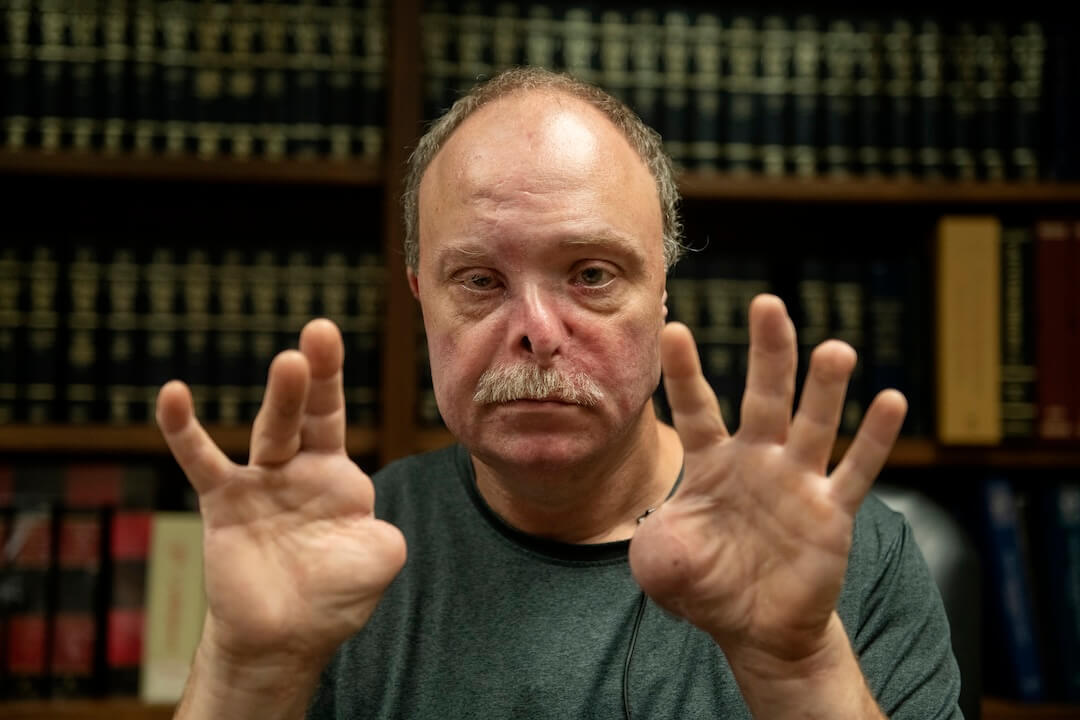
The physical and psychological toll on Palmer was catastrophic. He lost his ears, his thumbs, an index finger, and a portion of his nose. Once an active machinist and musician, Palmer can no longer work, play the guitar, or perform basic tactile tasks like picking up small items. He struggles to leave his home, permanently imprisoned by the trauma of those 15 minutes.
A History Etched in Tragedy: The Klonda Richey Case
For veteran Ohio political and state government journalist Laura Bischoff—who served as the lead reporter on the "Vicious" project—the investigative fire had been burning since 2014, when she covered the horrific death of 57-year-old Klonda Richey in Dayton.
Richey had done everything by the book. Fearing her neighbor’s two mixed mastiffs, she repeatedly contacted the local dog warden, installed security fencing, and upgraded her exterior lighting. None of it protected her. On a freezing, snowy February morning, Richey was found dead and shredded to pieces in her own front yard.
"She had done everything right," Bischoff recalled. "And she was found on a cold, snowy February morning, dead and ripped to shreds on her front yard in the snow."
When Ohio shifted away from breed-specific legislation in favor of a behavior-based system, lawmakers left sweeping loopholes that allowed owners of lethal animals to evade severe penalties. As Anthony Shoemaker, USA Today Network’s Ohio bureau chief and editor of the project, noted, "Dogs could kill somebody, and you could keep the dog. The punishment was very low for people who owned dangerous animals."
Supporting Context & Metrics: Uncovering the Scale of the Epidemic
Recognizing that individual anecdotes, while powerful, might be dismissed as isolated incidents, the investigative team set out to quantify the scope of the problem. However, this task proved exceptionally difficult.
Bischoff began her reporting by requesting official dog bite data from local public health departments across Ohio. She hit an immediate brick wall: the records were routinely returned heavily redacted, stripping out victims’ personal information and obscuring accountability.
Pivoting their strategy, the reporters monitored media coverage of dog attacks across the state and began the painstaking process of cold-contacting victims. Recognizing the immense trauma associated with these incidents, many survivors initially turned the reporters down. The team’s success hinged on a philosophy of radical empathy: letting sources dictate the terms of engagement and prioritizing their psychological safety above all else.
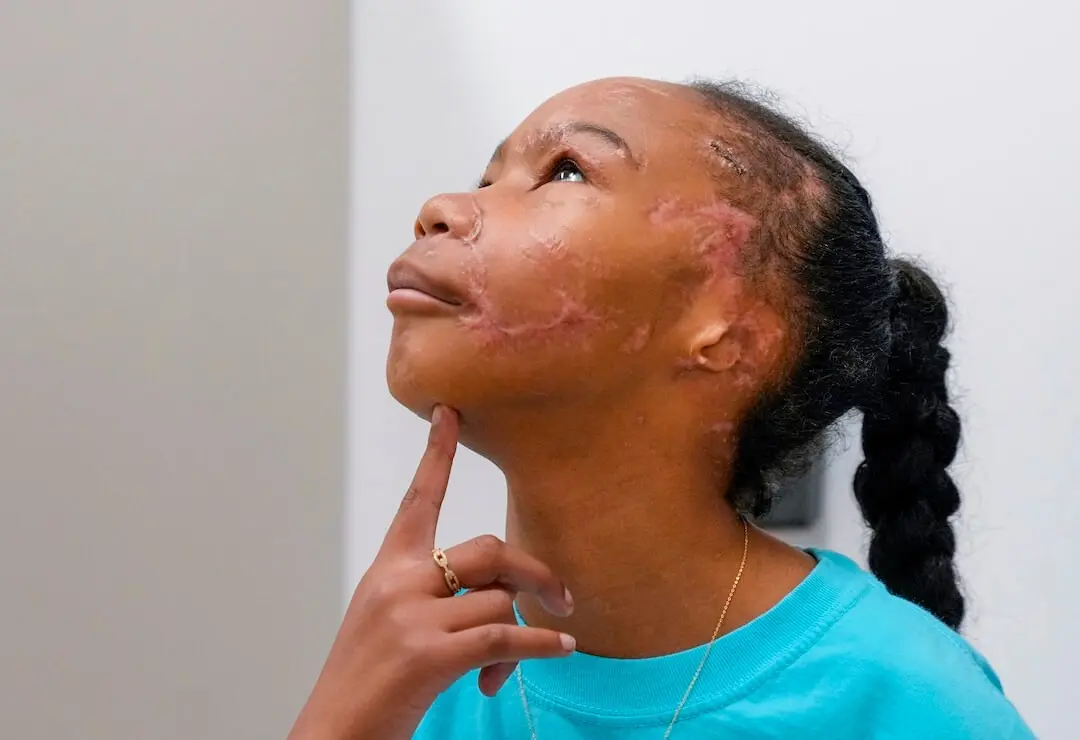
This empathetic approach eventually broke through to Drew Russell, mother of Avery Russell, a young girl from Columbus who had been viciously attacked by two pit bulls during a playdate. Avery suffered catastrophic injuries, including having her ears mostly chewed off and her forehead violently gouged above her left eye.
Initially, Drew Russell was understandably reluctant to speak with the media. Rather than pressuring her, Bischoff maintained open lines of communication, assuring the family that their primary goal was to avoid retraumatizing the child.
As Avery slowly progressed through grueling physical, hand, and speech therapy appointments at Nationwide Children’s Hospital, and as trust deepened between the family and the journalists, Drew Russell finally opened the door. Bischoff and former Columbus Dispatch photojournalist Courtney Hergesheimer documented Avery’s recovery, including deeply emotional encounters where the young girl thanked the first responders who saved her life.
Simultaneously, enterprise reporter Stephanie Warsmith of the Akron Beacon Journal—a 28-year veteran with extensive crime and courts reporting experience—was tasked with investigating local bite cases. Warsmith uncovered the harrowing story of Michael Palmer, carefully navigating police reports, incident logs, and civil lawsuits filed against landlords to expose the institutional negligence that allowed dangerous animals to remain in residential neighborhoods.
Official Statements and Multimedia Storytelling
The "Vicious" investigation transcended traditional print journalism by incorporating a multimedia strategy designed to convey the sheer terror and urgency of the crisis without resorting to gratuitous shock value.
At the center of this strategy was a 20-minute documentary featuring a graphic content warning. Edited by Phil Didion, a photojournalist at The Cincinnati Enquirer, the film opened with raw snippets of police body-camera footage capturing active maulings. Viewers heard the agonizing screams of victims and the frantic pleas of bystanders.
"You have to think about what are the visuals, but also what can we show the public that’s not going to be horrifying?" explained bureau chief Anthony Shoemaker. He emphasized that children are low to the ground, making them particularly vulnerable, small targets for aggressive dogs.
Didion worked closely with Laura Bischoff and editorial leadership to balance raw impact with sensitivity. While the body-cam audio and selective visuals conveyed the sudden, terrifying nature of the attacks, editors carefully evaluated what to blur or omit to protect viewers while maintaining the unvarnished truth of the crisis.
"Laura did a really great job of mapping that out and having topics to cover," Didion said. "And she had kind of a general roadmap for me to follow, but I had to go through all those interviews not only to make it sound and look good, but trying to find a connecting story between all of them."
The resulting multimedia package struck a chord across the state, piercing the political bubble in Columbus. Lawmakers watched the documentary, examined the data, and listened to the victims. The universal consensus was swift and stark: legislators admitted they were entirely unaware of how porous and inadequate Ohio’s animal control statutes truly were.
Future Outlook: Legislative Triumph and the Legacy of "Vicious"
The ultimate measure of an investigative journalism project is its capacity to effect tangible, enduring change. In the case of "Vicious," the impact was both immediate and historic.
In late 2025, Ohio Governor Mike DeWine signed House Bill 247, officially establishing Avery’s Law. Named in honor of young Avery Russell, the landmark legislation fundamentally overhauled Ohio’s dangerous dog statutes, imposing stringent new ownership requirements, closing historical loopholes, and ensuring that owners of vicious animals face severe criminal accountability before—rather than after—lives are permanently destroyed.
"This was all sparked by the project that Laura, Stephanie and our whole team did," Shoemaker reflected. "I’ve never really seen something that was so unifying as an issue. Lawmakers on both sides knew, ‘OK, this is a major problem,’ so they pushed the legislation through."
The rapid bipartisan adoption of Avery’s Law stands as a rare testament to the power of investigative reporting in the 21st century. For the journalists involved, the recognition—including the Batten Medal at the 2026 Poynter Journalism Prizes—vouched for the necessity of deep, resource-intensive investigative journalism.
Today, the human face of that legislation is thriving. Avery Russell is a teenager who has returned to her normal life. Recently, Laura Bischoff stood proudly in the cheering squad as Avery participated in the Nationwide Children’s Hospital Columbus Marathon, witnessing firsthand the resilience of a young girl who helped rewrite a state’s laws.
While victims like Michael Palmer will carry the physical and emotional scars of Ohio’s past legal failures for the rest of their lives, the "Vicious" investigation has ensured that future generations of Ohioans will walk their neighborhoods under a vastly more protective shield of justice.
