In the high-stakes arena of Search Engine Optimization (SEO), few questions elicit as much anxiety, speculation, and wasted capital as: “How many backlinks do I need to rank?”
For years, digital marketers and website owners have operated under the assumption that outranking competitors requires an aggressive, scattershot approach to link building—accumulating hundreds, if not thousands, of external links regardless of their contextual relevance or authority. However, industry analysis and modern algorithmic evaluations suggest a more strategic reality: the actual number of backlinks required to secure a lucrative page-one ranking is almost always significantly lower than conventional wisdom dictates.
Rather than relying on guesswork or bloated metrics generated by out-of-the-box SEO tools, savvy digital strategists are turning to methodical, data-driven frameworks. This report outlines a precision-engineered, 5-step blueprint designed to strip away the noise of raw referring domain counts, accurately calculate the true volume and quality of backlinks required to scale the Search Engine Results Pages (SERPs), and maximize the return on investment (ROI) for modern link-building campaigns.
Detailed Chronology & Strategic Framework: The 5-Step Analysis Process
To execute a reliable backlink assessment, SEO professionals must move away from vanity metrics and adopt a granular, step-by-step auditing process. The following chronological workflow provides the exact methodology required to evaluate target assets, analyze top-performing competitors, and establish sustainable link-velocity benchmarks.
Before calculating link requirements, you must first determine where to deploy your limited resources. The primary objective is not merely to build links to high-traffic vanity pages, but to target high-converting assets capable of driving tangible leads and revenue. Specifically, look for high-intent pages currently lingering on the mid-to-lower rungs of page one (Positions 4 through 10) that require a minor authority push to break into the top three spots.
Method A: Subfolder Analysis
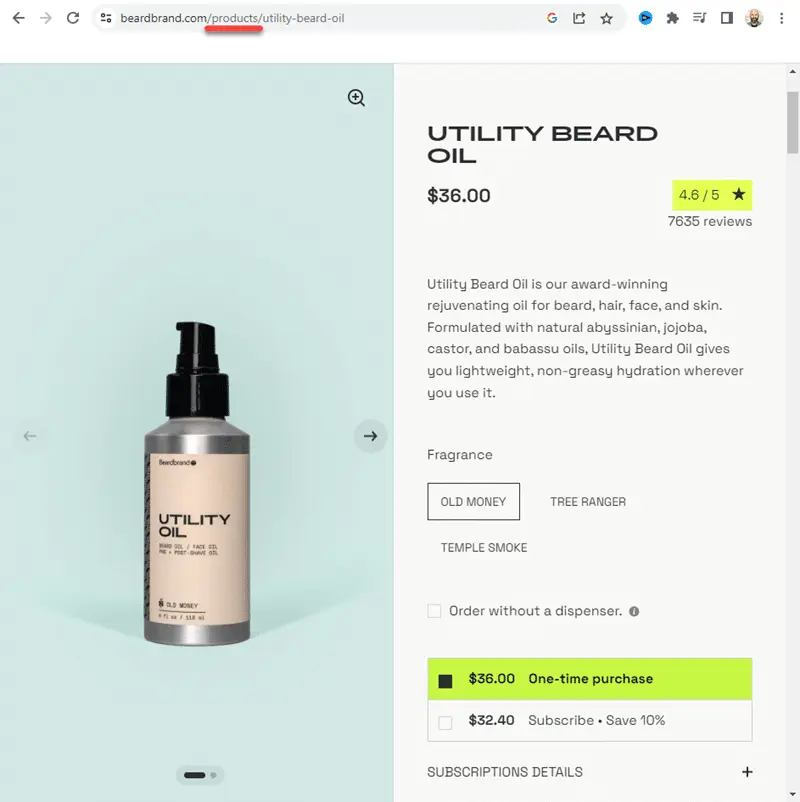
Many e-commerce sites and enterprise platforms architecture their content within specific subfolders (e.g., /products, /features, /industries, /reviews, /services).
Audit the site’s main navigation and footer to uncover primary URL paths.
Input the domain into an SEO intelligence suite like Ahrefs Site Explorer and navigate to the Subfolders report.
Plug the target subfolder path into the Top Pages report and apply a Positions filter targeting ranks 4 to 10. This generates a prioritized list of commercial assets primed for immediate optimization.
Method B: Keyword Modifiers
For content models that do not rely on distinct subfolder structures (such as traditional content sites and affiliate blogs), keyword modifiers serve as an effective extraction tool.
Enter your domain into Ahrefs Site Explorer and open the Top Pages report.
Apply a Keyword Contains filter incorporating commercial modifiers relevant to your niche, such as Best, Software, Tools, Platform, Solutions, Alternatives, vs, or specific product/service types.
Isolate assets that have remained stagnant or have experienced positional decay over recent quarters, making them prime candidates for a comprehensive content refresh coupled with targeted link acquisition.
Step 2: Review Comprehensive SERP Data
Once your target asset is identified, the next phase involves analyzing the existing competitive landscape for its primary keyword.
Navigate to the keyword dropdown within the Top Pages report, right-click the primary target keyword, and open its Keyword Explorer Overview.
Scroll to the SERP Overview report to inspect the top 10 ranking URLs.
Evaluate the Referring Domains (RD) column—keeping in mind that raw metrics can be misleadingly inflated.
To conduct an accurate "apples-to-apples" comparison, filter your focus to a competitor that:
Possesses a Domain Rating (DR) score comparable to or slightly lower than your own.
Utilizes the exact same content type and format (e.g., comparing a listicle-format blog post to another listicle-format blog post).
Features the lowest feasible referring domain count among matching competitors, establishing a realistic baseline target.
Raw referring domain counts often include low-quality, automated, or topically irrelevant links that skew the apparent difficulty of a keyword. To uncover the true number of links needed:
Open the Referring Domains report for the chosen competitor’s URL.
Apply rigorous filters to strip out low-value noise. (For instance, filtering for do-follow links from relevant content types).
Scan the remaining domains to weed out topically irrelevant results—such as unrelated directory listings or foreign-language blog networks.
By systematically subtracting these filtered-out anomalies, you arrive at a lean, highly accurate referring domain count that reflects the actual competitive barrier to entry.
Step 4: Assess Domain Rating Distributions
Quantifying the number of links is only half the battle; understanding link quality is paramount. A backlink profile composed entirely of low-authority directories differs vastly from one built on high-authority industry publications.
Review the Domain Rating distribution of the competitor’s backlink profile.
Identify the proportion of links originating from elite domains (e.g., DR 80+) versus mid-tier assets (DR 70–79).
Inspect the drop-down link attributes to reverse-engineer how the competitor acquired those assets. Common pathways typically include guest-contributed expert roundups, digital PR campaigns, or strategic industry collaborations.
Step 5: Determine Link Velocity and Maintenance Targets
Reaching page one is a formidable milestone, but defending that position requires ongoing effort. Competitors often continue building links to protect their rankings.
Toggle the competitor backlink report to display New Backlinks over specific timeframes (e.g., the last 30 days, 3 months, and 6 months).
Calculate the link velocity—the rate at which the competitor acquires new referring domains over a given quarter.
This data informs your ongoing resource allocation. If a competitor has generated zero new referring domains over the past quarter, your post-campaign maintenance strategy will require minimal ongoing upkeep (perhaps securing one or two high-value quarterly links to defend your position). Conversely, aggressive niches demand steady, institutional link velocity to prevent positional erosion.
Supporting Context & Metrics
To contextualize this 5-step framework, consider two distinct real-world application scenarios analyzed through enterprise SEO telemetry:
Scenario A (Commercial Affiliation / Listicle): An established blog targeting the keyword "serp tracking tools" (Domain Rating 70) found itself ranking at the bottom of page one. While a top competitor ("Marketing Arsenal," DR 56) superficially showed 85 referring domains, a granular filter of do-reduced, topically relevant links revealed that only 22 true domains were actually driving the competitor’s rank. Furthermore, historical velocity metrics showed zero new links acquired in the preceding 30 days. Armed with this data, the site owner recognized that closing the gap required a moderate push of 22 targeted links, followed by minimal quarterly maintenance.
Scenario B (Enterprise B2B Software): An enterprise tool roundup page ranking in position nine faced competition from an asset (Plerty, DR 71) holding position five with a mere three referring domains. After filtering out low-quality organic residue, the competitive gap was reduced to just two high-authority domains. A targeted content refresh paired with two DR70+ contextual links presented a mathematically sound pathway to triple organic traffic without committing excessive capital to broad, untargeted outreach.
Official Industry Insights & Expert Perspectives
As search engines incorporate sophisticated machine learning models to evaluate page quality, the philosophy surrounding link equity has undergone a profound evolution. Industry analysts and search quality advocates consistently emphasize relevance over raw volume.
"The era of indiscriminate link building is over. Algorithms have grown increasingly adept at discounting links that lack contextual harmony and user utility. When calculating backlink requirements, digital marketers must prioritize structural quality and topical alignment over sheer numerical parity."
— Senior Search Engine Algorithm Analyst
Furthermore, search engine representatives have repeatedly reiterated that links serve primarily as discovery and validation mechanisms rather than simplistic ranking multipliers. Consequently, aligning link acquisition velocity with natural organic growth patterns remains the gold standard for sustainable, penalty-resistant SEO execution.
Future Outlook: The Evolution of Link-Driven Rankings
Looking ahead, the intersection of AI-driven search experiences (such as generative search engines and conversational query interfaces) and traditional algorithmic ranking factors suggests that the role of backlinks will continue to shift.
While backlinks will remain a vital signal of trust and authority, their deployment must become increasingly surgical. Websites that rely on bloated, automated link farms will face diminishing returns as search engines place a heavier emphasis on E-E-A-T (Experience, Expertise, Authoritativeness, and Trustworthiness) and user engagement signals.
By implementing the disciplined, 5-step auditing framework detailed in this report, digital strategists can future-proof their operations—ensuring that every link-building dollar spent directly contributes to sustainable, revenue-driving SERP dominance.


![How Many Backlinks Do I Need To Rank? [Answered]](https://www.robbierichards.com/wp-content/uploads/2023/07/How-many-backlinks-are-needed-to-rank.jpg)
![How Many Backlinks Do I Need To Rank? [Answered]](https://www.robbierichards.com/wp-content/uploads/2023/07/image19.png)
![How Many Backlinks Do I Need To Rank? [Answered]](https://www.robbierichards.com/wp-content/uploads/2023/07/image6.png)
![How Many Backlinks Do I Need To Rank? [Answered]](https://www.robbierichards.com/wp-content/uploads/2023/07/image24.png)
![How Many Backlinks Do I Need To Rank? [Answered]](https://www.robbierichards.com/wp-content/uploads/2023/07/image10.png)
![How Many Backlinks Do I Need To Rank? [Answered]](https://www.robbierichards.com/wp-content/uploads/2023/07/image5.png)
![How Many Backlinks Do I Need To Rank? [Answered]](https://www.robbierichards.com/wp-content/uploads/2023/07/image16.png)
![How Many Backlinks Do I Need To Rank? [Answered]](https://www.robbierichards.com/wp-content/uploads/2023/07/TSP-Banner.jpg)
![How Many Backlinks Do I Need To Rank? [Answered]](https://www.robbierichards.com/wp-content/uploads/2023/07/image2.png)
![How Many Backlinks Do I Need To Rank? [Answered]](https://www.robbierichards.com/wp-content/uploads/2023/07/image8.png)
![How Many Backlinks Do I Need To Rank? [Answered]](https://www.robbierichards.com/wp-content/uploads/2023/07/image9.png)
![How Many Backlinks Do I Need To Rank? [Answered]](https://www.robbierichards.com/wp-content/uploads/2023/07/image3.png)
![How Many Backlinks Do I Need To Rank? [Answered]](https://www.robbierichards.com/wp-content/uploads/2023/07/image4.png)
![How Many Backlinks Do I Need To Rank? [Answered]](https://www.robbierichards.com/wp-content/uploads/2023/07/image20.png)
![How Many Backlinks Do I Need To Rank? [Answered]](https://www.robbierichards.com/wp-content/uploads/2023/07/image13.png)
![How Many Backlinks Do I Need To Rank? [Answered]](https://www.robbierichards.com/wp-content/uploads/2023/07/image11.png)
![How Many Backlinks Do I Need To Rank? [Answered]](https://www.robbierichards.com/wp-content/uploads/2023/07/image18.png)
![How Many Backlinks Do I Need To Rank? [Answered]](https://www.robbierichards.com/wp-content/uploads/2023/07/image23.png)
![How Many Backlinks Do I Need To Rank? [Answered]](https://www.robbierichards.com/wp-content/uploads/2023/07/image14.png)
![How Many Backlinks Do I Need To Rank? [Answered]](https://www.robbierichards.com/wp-content/uploads/2023/07/image15.png)