

Published Date: August 26, 2026
By: Coleman Spilde
Source/Distributor: MUBI
Executive Overview
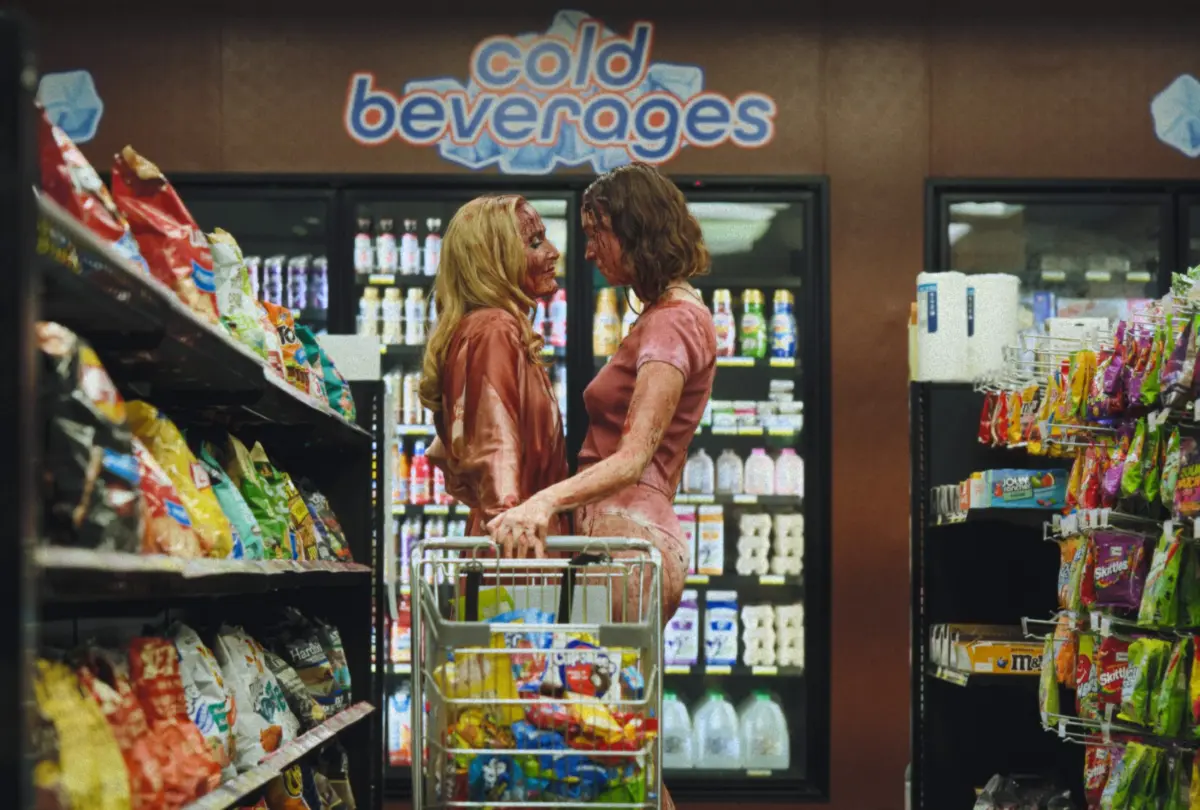
In the contemporary cinematic landscape, few auteurs command as distinct a niche of hypnotic, internet-era surrealism as writer-director Jane Schoenbrun. Following a rapid ascent as one of modern cinema’s most visionary and distinct new voices, Schoenbrun returns with their third feature film, Teenage Sex and Death at Camp Miasma (released via MUBI). Boasting a stellar cast that includes Hannah Einbinder and Gillian Anderson, the film aims to dissect, honor, and reconstruct the time-honored tropes of the retro slasher flick.
Yet, for all its dazzling visual texture, atmospheric winter-woods isolation, and provocative identity-driven subtext, Camp Miasma stumbles over its own intellectual ambition. By prioritizing an endless cascade of meta-commentary, transparent psychological allegories, and self-conscious winks at the audience, Schoenbrun buries a promising premise under an avalanche of theory. The result is a film that demands deep analytical engagement while simultaneously draining its own narrative core, leaving behind a heavily stylized husk of ideas where a living, breathing movie should be.
Detailed Chronology & Narrative Breakdown
The Premise: Rebooting a Retro Nightmare
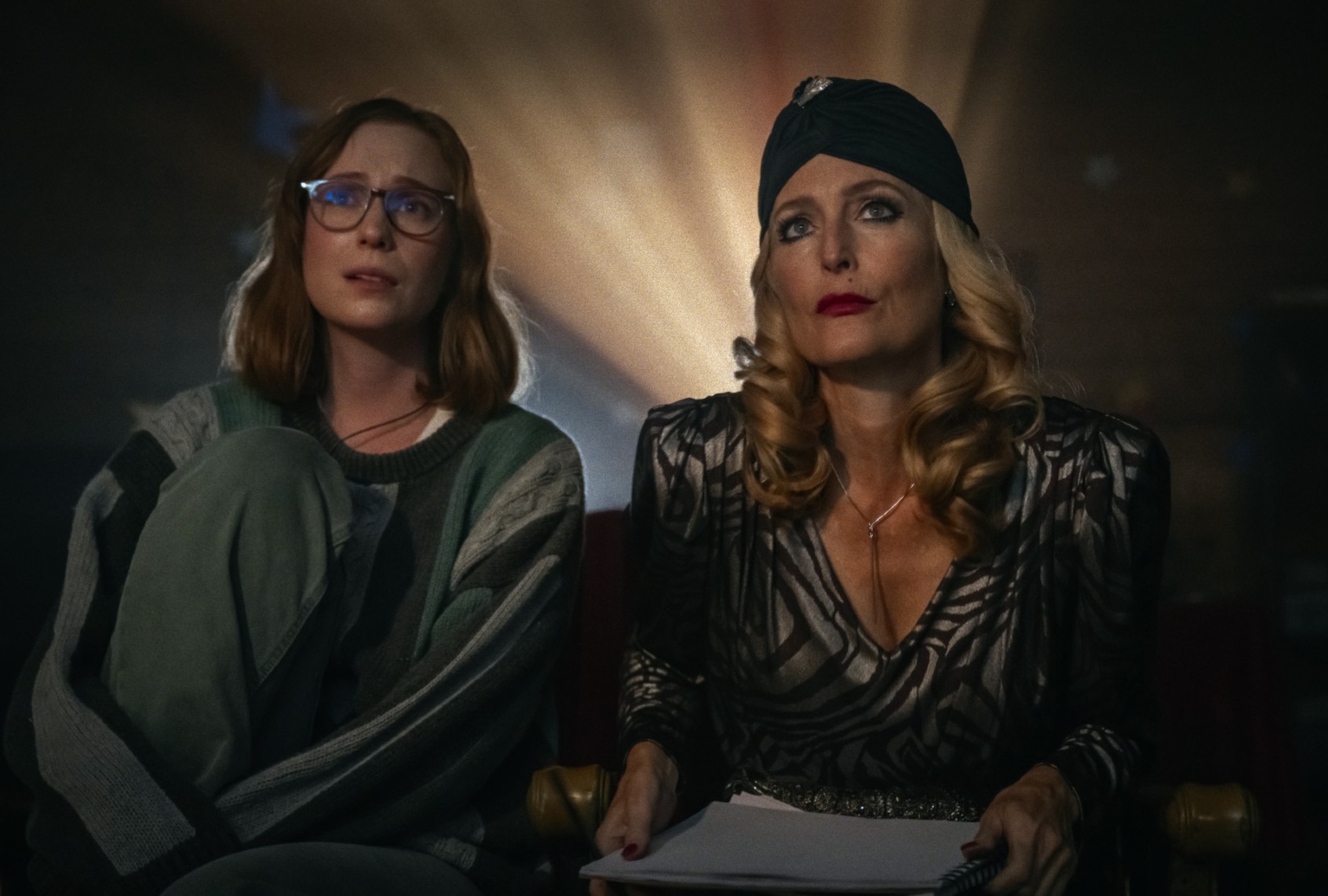
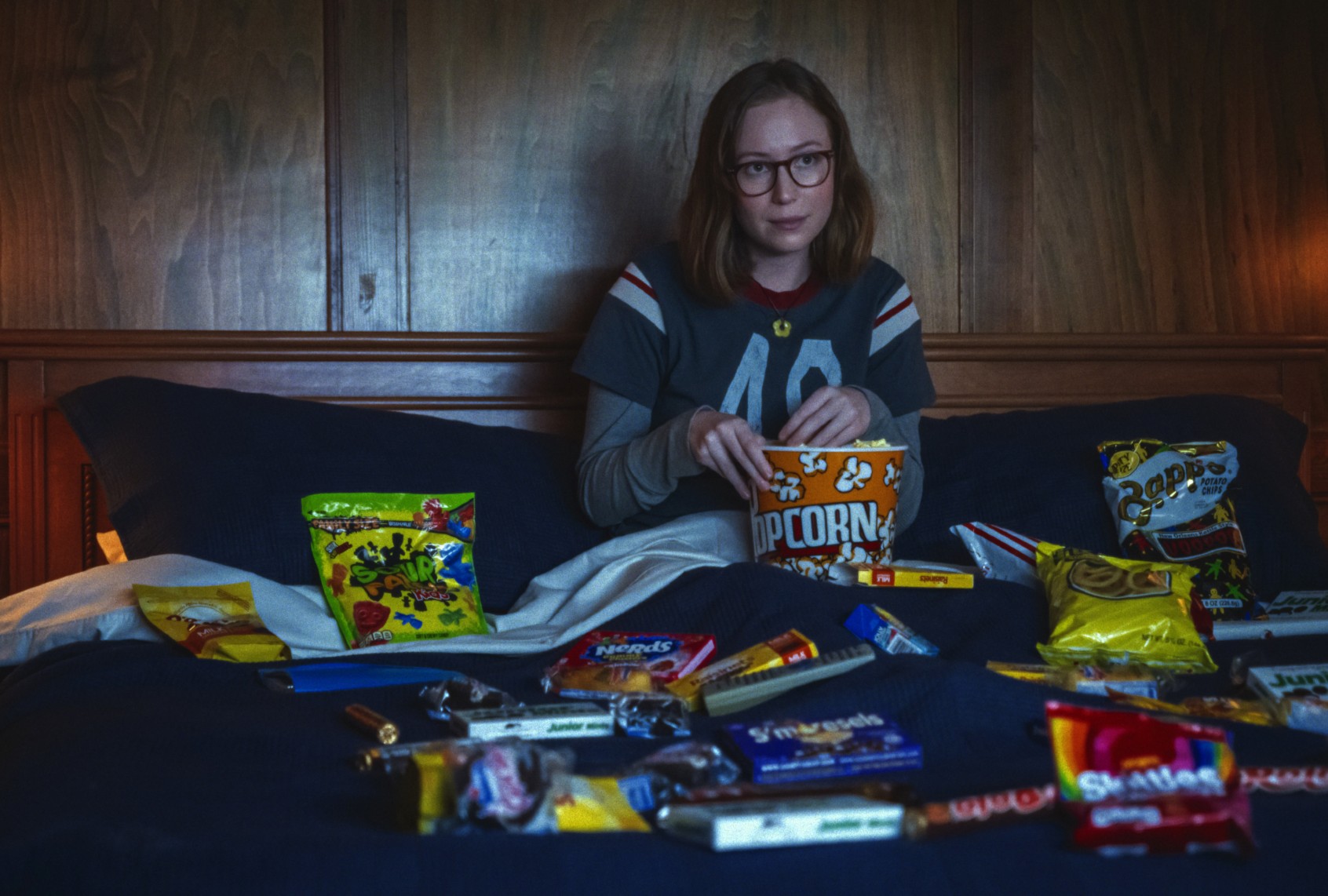
Teenage Sex and Death at Camp Miasma introduces viewers to Kris (Hannah Einbinder), a young, media-obsessed queer filmmaker handed the daunting task of spearheading a "woke" studio reboot of a classic, retro-slasher franchise. The fictional series Camp Miasma functions as a thematic cross between the blood-soaked camp antics of Friday the 13th and the institutional identity-bending of Sleepaway Camp.
Recognizing that the original films carried deeply entrenched transphobic and problematic baggage, Hollywood executives hire Kris specifically because of her identity. They calculate that a queer perspective is the ultimate shield against modern cancel culture. However, the studio execs fail to realize that Kris’s connection to the franchise is intensely personal. Camp Miasma was her childhood obsession—an inexplicable sexual awakening that she has spent a lifetime trying to parse.
The Enigmatic Final Girl and the Psychological Block
To secure authenticity for the reboot, Kris tracks down Billy Presley (Gillian Anderson), the reclusive, effortlessly cool "final girl" of the original 1980s slasher run. Huddled together in Billy’s remote, snow-draped cabin in the wintry woods, the generational and temperamental divide between the two women sparks immediate friction. Kris’s hyper-intellectual neuroses constantly butt heads with Billy’s grounded, southern-drenched demeanor.

Despite Kris’s initial resistance to their growing chemistry, Billy patiently helps her unpack a lifetime of professional and personal repression. The film anchors its central motif around the French phrase la petite mort (“the little death”)—traditionally used to describe post-orgasmic release, but here expanded to mean both the fleeting intensity of joy and the deep-seated parts of the self killed off by the trauma of existence.
As Kris confronts her desires, she realizes what truly turns her on about the Camp Miasma archetype: she yearns for the "final girl" fantasy. She craves the vulnerability of running through the dark woods, helpless, pursued by the franchise’s meta-antagonist, a killer named Little Death (portrayed by Jack Haven) whose bloody harpoon serves as an unsubtle phallic extension of terror. Kris wants to surrender control and turn off her brain, but a thick sea of unwarranted shame stands between understanding the fantasy and accepting it.
The Blurring of Reality and Academic Subtext
True to Schoenbrun’s previous cinematic blueprints, the boundary between reality and fantasy soon dissolves. The narrative introduces extended sequences from the fictional Camp Miasma sequels—notably directed within the movie’s universe by Ray Blanchard, a winking nod to the real-life sexologist whose controversial theories regarding autogynephilia claim that a person’s desire to transition stems from misdirected sexual identification.

While this reference provides rich thematic scaffolding for Kris’s internalized shame—her fear that her passion for the franchise reduces her womanhood to a cis-heterosexual male fantasy of a victimized woman—Schoenbrun refuses to let the audience do any heavy lifting. The film spells out these correlations with exhaustive literalism, culminating in a scene where Kris sits down with a pen and paper to write the word "DESIRE" in all caps, underlining it twice.
Supporting Context & Metrics: The Auteur’s Dilemma
To fully understand the polarizing nature of Camp Miasma, one must contextualize Jane Schoenbrun’s broader cinematic footprint. Operating as a breakout trans voice in a cinematic ecosystem historically dominated by cisgender, heterosexual men, Schoenbrun’s prior works have excelled at capturing the intoxicating, hazy dissonance of internet subcultures, identity formation, and digital alienation.
| Metric / Dimension | Camp Miasma Context |
|---|---|
| Director | Jane Schoenbrun |
| Key Cast | Hannah Einbinder, Gillian Anderson, Jack Haven |
| Primary Distributor | MUBI |
| Thematic Focus | Retro slashers, queer identity, representation, media consumption, and psychological repression |
| Core Metaphor | La petite mort (The Little Death) paired with slasher tropes |
However, Camp Miasma highlights a recurring structural flaw in Schoenbrun’s filmography: the tendency to weaponize explanatory self-awareness as a shield against genuine dramatic stakes. Early in the film, Billy explicitly warns Kris that she is approaching her reboot "too academically." In this exchange, viewers instantly recognize Schoenbrun playfully critiquing their own intellectualized directorial impulses through a self-insert character.

Unfortunately, acknowledging a flaw in the script’s meta-commentary does not excuse it. By trading rich character development and textured world-building for an endless supply of hand-painted, quasi-fantastical practical backgrounds (reminiscent of the semi-surreal works of Thomas Kinkade—a clever linguistic setup for Billy aiding Kris’s kinks), the film leaves its structural foundation starved of narrative meat.
Official Statements and Critical Reception
The reception of Teenage Sex and Death at Camp Miasma has sparked vigorous debates across cultural commentary circles. Critics are sharply divided over whether the film’s heavy-handed structural framing is a brilliant deconstruction of media literacy or an exhausting exercise in over-explanation.
- On the Meta-Layering: Cultural critics point out that Schoenbrun’s approach to horror relies too heavily on treating the audience like undergraduate film students attending a mandatory lecture. As one reviewer noted: "Schoenbrun buries the movie alive, heaping layer upon layer of meta subtext onto it… You get tired of digging, knowing that the once-promising film at the bottom has already been reduced to its bones."
- On the Horror Tradition: Billy’s in-universe summation of the genre—"Horror is just flesh and fluids"—serves as an accidental indictment of the film itself. While traditional slasher films thrive on visceral, kinetic dread, Camp Miasma drains its own physical body of lifeblood. When the film is sliced open, loose metaphors and half-sketched allegories gush forth, leaving the viewer to assemble a narrative husk out of scattered intellectual exercises.
- On Identity and Representation: The casting of cisgender comedian Hannah Einbinder as a queer filmmaker navigating trans-adjacent experiences introduces an additional layer of critical discourse. While the film accurately portrays the complex dissonance between embracing one’s public identity and fearing the vulnerability of being perceived as a sexual creature, the execution occasionally feels at odds with the lived realities it attempts to honor.
Future Outlook
As Teenage Sex and Death at Camp Miasma rolls out globally via MUBI, its legacy within the modern horror renaissance remains complex. It solidifies Jane Schoenbrun’s status as one of the boldest conceptual architects working today, proving that they are unafraid to challenge audiences, provoke academic discourse, and merge high-art theory with low-brow gore.
At the same time, the film serves as a cautionary tale for elevated genre filmmaking. When an auteur becomes so fixated on teaching the audience how to read their work that they forget to build a compelling narrative vehicle, the emotional resonance evaporates. Ultimately, Camp Miasma proves that if you linger too long in the intellectualized terminal of la petite mort, you run the risk of forgetting that cinema requires more than just sex, death, and a red pen underlining desire.
