

Executive Overview
Historically, late August is viewed as a dormant period within the global publishing industry. As major trade houses slow their release schedules and corporate publishing executives take end-of-summer hiatuses, the literary calendar typically experiences a quiet lull. However, August 2024 revealed a markedly different trend across New York City’s cultural landscape. A coalition of independent small presses, debut authors, digital subcultures, and institutional film programmers mobilized to fill the seasonal void with immersive, community-driven programming.
Far from quiet, the month became a canvas for innovative literary marketing and audience building. Through high-concept social gatherings, nightlife takeovers, and cross-disciplinary cinematic events, a new generation of creators demonstrated that book marketing is migrating away from the traditional, institutional bookstore reading toward experiential, multi-sensory events. From Midtown private social clubs and Brooklyn queer venues to the prestigious halls of Film at Lincoln Center, these initiatives disrupted traditional publicity models, proving that literary engagement thrives when embedded directly within vibrant, localized subcultures.
Detailed Chronology
August 12: High Culture Meets Reality TV at The Moss NYC
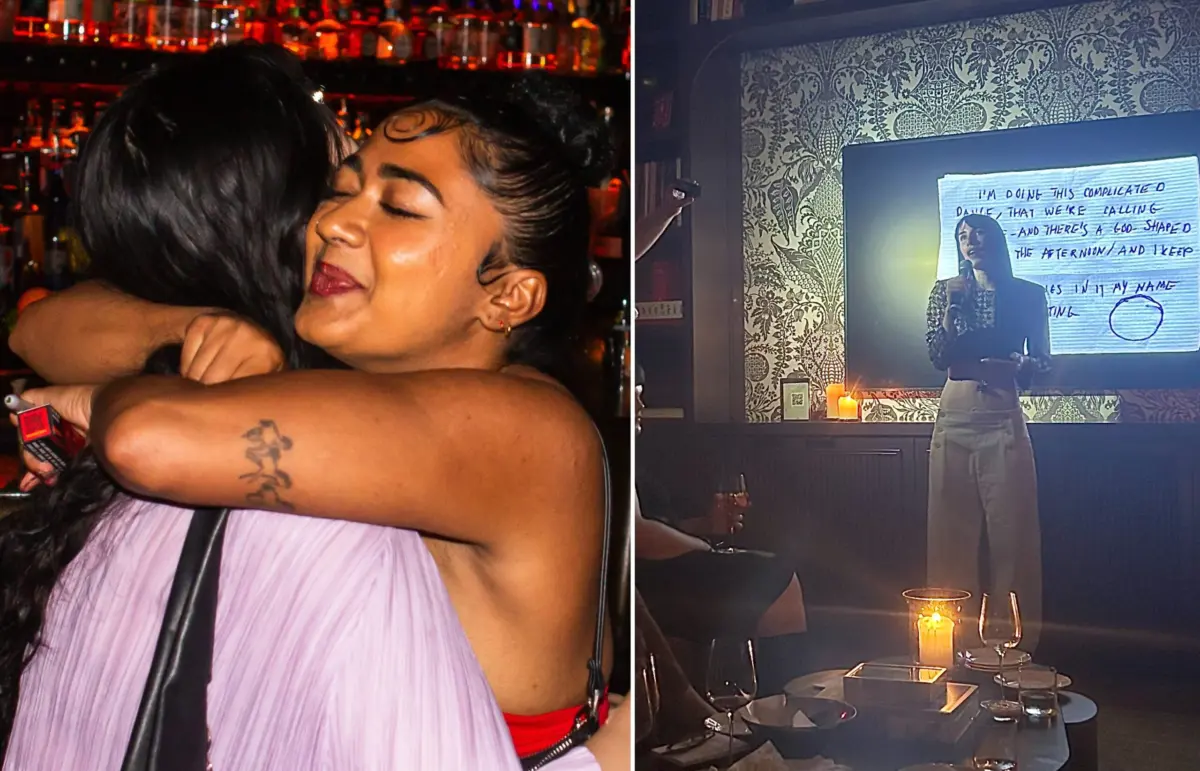
The late-summer literary circuit commenced on August 12 at The Moss NYC, a newly established Midtown social club dedicated to the concept of "intelligent leisure." The event celebrated the release of Blue Afternoon, the debut poetry collection from Georgia McCann, published by the Los Angeles–based independent press Dream Boy Book Club.
McCann, widely recognized for her role on season two of Bravo’s reality television series Next Gen NYC, brought a distinct intersection of television fame and downtown literary aesthetics to the venue. Published in a pocket-sized pastel volume, Blue Afternoon presents a series of lyric poems exploring themes of heartbreak, longing, and high-glamour social landscapes.
+-----------------------------------------------------------------------+
|                       EVENT PROFILE: AUGUST 12                        |
+----------------------+------------------------------------------------+
| Title / Author       | Blue Afternoon by Georgia McCann               |
| Publisher            | Dream Boy Book Club (Los Angeles, CA)          |
| Venue                | The Moss NYC (Midtown Social Club)             |
| Aesthetic / Format   | Candlelit salon, paper-scrawled digital poetry |
| Sales Outcome        | Complete sell-out within one hour              |
+----------------------+------------------------------------------------+
The launch occupied the fourth floor of The Moss, utilizing a candlelit salon alongside digital screens displaying hand-scrawled excerpts of McCann’s verse. The gathering attracted a diverse crowd, ranging from the author’s intimate circle—including family members and former digital staff—to figures associated with the lower Manhattan Dimes Square subculture. Friends of the author hand-sold copies at the doorway, resulting in a complete sell-out of physical inventory within sixty minutes.
The venue choice underscored a deliberate alignment between literary production and luxury event curation. Alexander Kellogg, Director at The Moss and former producer for high-profile cultural platforms such as China Chalet and Highsnobiety, indicated a strategic effort to transform the multi-level art deco venue into a major Midtown cultural hub. Throughout the evening, attendees moved between the fourth-floor salon and adjacent art deco lounges, utilizing space designed to bridge commercial entertainment and independent literary arts.
August 22: Queer Nightlife and Community Liberation for Unprecedented Times
Ten days later, on August 22, the focus shifted to Brooklyn’s queer nightlife scene at Oberon, where author Malavika Kannan celebrated the launch of her debut adult novel, Unprecedented Times. Published on August 18 by Henry Holt & Company, the 400-page Gen-Z coming-of-age novel arrived with substantial critical momentum, including a starred review from Publishers Weekly and features in Vogue and Cultured.
Rather than relying solely on traditional corporate promotional apparatuses, Kannan self-organized a hybrid launch event and dance party titled "Funprecedented Times." The event re-framed the traditional literary reading into a multidisciplinary cabaret and dance celebration.
+-----------------------------------------------------------------------+
|                       EVENT PROFILE: AUGUST 22                        |
+----------------------+------------------------------------------------+
| Title / Author       | Unprecedented Times by Malavika Kannan         |
| Publisher            | Henry Holt & Company                           |
| Venue                | Oberon (Brooklyn Queer Bar)                    |
| Program Highlights   | Literary readings, drag, zine distribution     |
| Musical Curation     | "Tamil Dreamgirl Lineup" (urkanmani, srizzy)   |
+----------------------+------------------------------------------------+
The evening began with Kannan reading an excerpt addressing the complexities of contemporary queer relationships, followed by a lineup of performances from her artistic community:
- Drag Performance: Stanford alumnus and drag artist Zz Chic performed among the audience, converting the center of the crowded venue into a performance stage.
- Literary Readings & Comedy: Featured appearances by authors Bobuq Sayed and Leah Abrams, journalist bittnia, and comedian Myesha Choudhury.
- Community Sponsorships: Independent support was provided by corporate and media partners, including ride-share platform Lyft and queer media outlet Autostraddle, which provided free zines for attendees.
- Musical Programming: The evening concluded with late-night sets by DJs urkanmani and srizzybeats—billed as the "Tamil dreamgirl lineup"—who blended electronic tracks with pop motifs under Oberon’s disco ball.
August 25–29: Archival Obsession and Indie Presses at Film at Lincoln Center
The late-August literary convergence extended into institutional cinema through a collaboration between Film at Lincoln Center (FLC) and a collective of prominent independent book publishers. Curated by filmmakers Jack Auen and Kevin Walker alongside FLC senior programmer Tyler Wilson, the Bibliomania film series ran from August 28 to September 3, preceded by a dedicated one-day book fair in the lobby of the Walter Reade Theater on August 29.
+-----------------------------------------------------------------------+
|                   EVENT PROFILE: AUGUST 25–29                         |
+----------------------+------------------------------------------------+
| Host Institution     | Film at Lincoln Center (Walter Reade Theater)  |
| Curators             | Jack Auen, Kevin Walker, Tyler Wilson          |
| Participating Presses| NYRB, Deep Vellum, Archipelago Books           |
| Cinematic Focus      | Archival research, text-on-screen narrative    |
| Anchor Release       | Chronovisor (2026)                             |
+----------------------+------------------------------------------------+
The film series was conceptualized to highlight cinema that successfully dramatizes the quiet, internal work of scholarly research and archival discovery. Serving as a prologue to Auen and Walker’s academic thriller Chronovisor (releasing September 4), the programming juxtaposed high-budget blockbusters with classic screwball comedies and avant-garde cinema, including:
- Indiana Jones and the Last Crusade (1989): Screened in 70mm, highlighting pop-culture representations of historical obsession.
- Ball of Fire (1941): Howard Hawks’ classic screwball comedy centered on lexicographers and language compilation.
- National Treasure (2004): A blockbuster exploration of cryptology and historical decipherment.
- Experimental works by filmmaker David Gatten, examining the tactile relationship between text, film stock, and historical record.
Concurrently, independent publishers—including New York Review Books (NYRB), Deep Vellum, and Archipelago Books—tabled in the theater lobby, connecting cinematic audiences with literary works. Deep Vellum reported strong interest in their Dalkey Archive imprint’s spring reissue of William H. Gass’s 1995 metafictional novel The Tunnel.
The narrative core of Auen and Walker’s Chronovisor revolves around fictional Columbia University professor Béatrice Courte (played by real-life academic Anne-Laure Sellier) investigating the legendary chronovisor—a theoretical device attributed to Benedictine monk Pellegrino Ernetti, alleged to visually record historical events. To mirror the scholar’s process, the film projects real historical documents and parapsychological texts directly onto the screen, enabling viewers to read primary sources along with the protagonist.
Supporting Context & Literary Metrics
The events of August reflect shifting patterns in author self-marketing, publisher operations, and demographic engagement across the book trade. Historically reliant on traditional retail placements and earned print media, authors are increasingly deploying direct-to-community event models that prioritize spatial atmosphere and social connection over conventional bookstore panel discussions.
+-----------------------------------------------------------------------------------+
|                        COMPARATIVE ANALYSIS OF AUGUST LAUNCHES                    |
+--------------------+---------------------------+----------------------------------+
| Metric / Aspect    | Blue Afternoon Launch     | Unprecedented Times Launch       |
+--------------------+---------------------------+----------------------------------+
| Lead Demographic   | Downtown scene, Media     | Gen-Z, LGBTQ+, Literary Community|
| Publishing Scale   | Independent Small Press   | Major Commercial Imprint (Holt)  |
| Primary Venue Type | Private Midtown Social Club| Public Brooklyn Queer Bar        |
| Monetization Model | Direct book sales at door | Integrated brand support (Lyft)  |
| Marketing Focus    | Visual aesthetic & prestige| Experiential party & community   |
+--------------------+---------------------------+----------------------------------+
Commercial and Media Metrics
- Critical Acclaim vs. Grassroots Activation: Malavika Kannan’s Unprecedented Times demonstrated a dual-track strategy. While securing top-tier legacy placements (a starred review in Publishers Weekly alongside profiles in Vogue and Cultured), the author independently financed and organized a community launch event to capture grassroots audience engagement.
- Small Press Speed & Niche Demand: Dream Boy Book Club’s release of Georgia McCann’s Blue Afternoon illustrated the agility of boutique small presses. By tapping into existing social media followings and local subcultures, the press achieved an immediate sell-out of initial physical inventory at the launch venue.
- Backlist & Reissue Circulation: The inclusion of publishers like Deep Vellum at Film at Lincoln Center proved that film-going audiences represent a viable market for dense, challenging backlist reissues, as evidenced by sales of William H. Gass’s The Tunnel.
Official Statements and Industry Perspectives
Key figures across all three events highlighted a shared desire to challenge traditional literary presentation formats, expressing a commitment to creating more dynamic, accessible, and cinematic spaces for literature.
Addressing the audience at The Moss NYC, Georgia McCann reflected on the challenge of bridging public entertainment personas with intimate literary expression:
"I swear to god guys, I can do Bravo TV for cameras in my face, but giving a speech in front of friends is an issue. I want to distance my voice from the narrator’s voice, so I’m not gonna be reading, but the book is there if you wanna flip through it."
Alexander Kellogg, Director of The Moss, outlined his long-term structural vision for integrating literary culture into luxury hospitality spaces:
"We are focused on making The Moss a sustainable literary and cultural hub, bridging the gap between nightlife, intellectual discussion, and high-level event curation in Midtown."
Speaking at her Brooklyn launch event, Malavika Kannan contextualized her party-first approach to book promotion as both a personal milestone and a critique of industry norms:
"I joked to my friends that this is the age that historically a lot of women would have had weddings, and instead I get to celebrate something different. A lot of book launches can feel stuffy and inaccessible, and I wanted this, above all, to feel fun and like an extension of the ethos of the book!"
Co-director Jack Auen detailed the narrative philosophy behind the Bibliomania series and its film Chronovisor, emphasizing the challenge of dramatizing literary research on screen:
"We spent the first few months just being fans of the conspiracy theory, and it was sort of through that process that we were like, maybe we could share the feeling that gave us with the audience. All of these films grapple with the question of how to translate the largely silent, internal process of archival research for the big screen, whether as a $100 million blockbuster or an early 20th-century screwball comedy."
Future Outlook: The New Frontier of Literary Curation and Event Marketing
The success of these late-summer events suggests a lasting shift in how books are marketed, consumed, and integrated into broader pop-cultural ecosystems. As traditional media channels for book promotion undergo structural shifts, independent creators and publishers are pioneering experiential models that are likely to shape industry strategies in the coming years.
+-----------------------------------------------------------------------+
|                    EMERGING LITERARY EVENT MODELS                     |
+-----------------------+-----------------------------------------------+
| Strategy              | Operational Execution                         |
+-----------------------+-----------------------------------------------+
| Nightlife Integration | Hosting launches in bars, clubs, and venues   |
| Cross-Media Curation  | Pairing book sales with film, drag, and DJs   |
| Direct Brand Partnerships| Securing corporate/media sponsorship (e.g. Lyft)|
| Alternative Geography | Moving events out of traditional book retail  |
+-----------------------+-----------------------------------------------+
Key Trends Shaping the Future of Literary Promotion
- De-institutionalization of the Book Launch: The traditional author Q&A at a retail chain is increasingly being augmented or replaced by curated, multi-hyphenate events held in nightlife venues, private social clubs, and art spaces.
- Cross-Disciplinary Programming: As demonstrated by Film at Lincoln Center, independent presses benefit significantly from audience crossover when partnering with film institutions, visual arts centers, and repertory cinemas.
- Community-Led Marketing Infrastructures: Emerging authors are taking direct control of event production, utilizing brand partners (such as Lyft and independent media platforms) to fund gatherings that reflect their personal creative networks.
- Blurring Boundaries Between Digital Media and Print: The intersection of reality television personalities, digital subcultures, and traditional print media points toward an evolving ecosystem where literary print objects serve as physical keepsakes for digital-first communities.
Ultimately, August’s literary activities revealed that the perceived seasonal slowdown in publishing is an opportunity for reinvention. By breaking down the traditional barriers separating print literature from cinema, nightlife, and performance art, these organizers demonstrated that the appetite for literary culture in New York remains robust when given space to innovate.