

Executive Overview
For decades, the digital economy has operated on an implicit, albeit exhausting, premise: more is better. Every time a new technological paradigm emerges—whether it was the dawn of mobile apps, the SaaS explosion, or the current generative artificial intelligence boom—the immediate industry reaction is to churn out a tidal wave of standalone applications. Users are expected to download, onboard, authenticate, and constantly context-switch between dozens of discrete tools just to accomplish their daily workloads.
Yet, a profound shift is occurring in user experience (UX) and product design. The market is signaling a collective fatigue with shiny, standalone "AI-first" novelties. Users do not wake up hoping to spend their mornings navigating complex terminal commands, managing labyrinthine chat interfaces, or jumping back and forth across a dozen browser tabs.
Instead, the modern digital landscape demands a radical philosophy: seamless integration into established mental models.
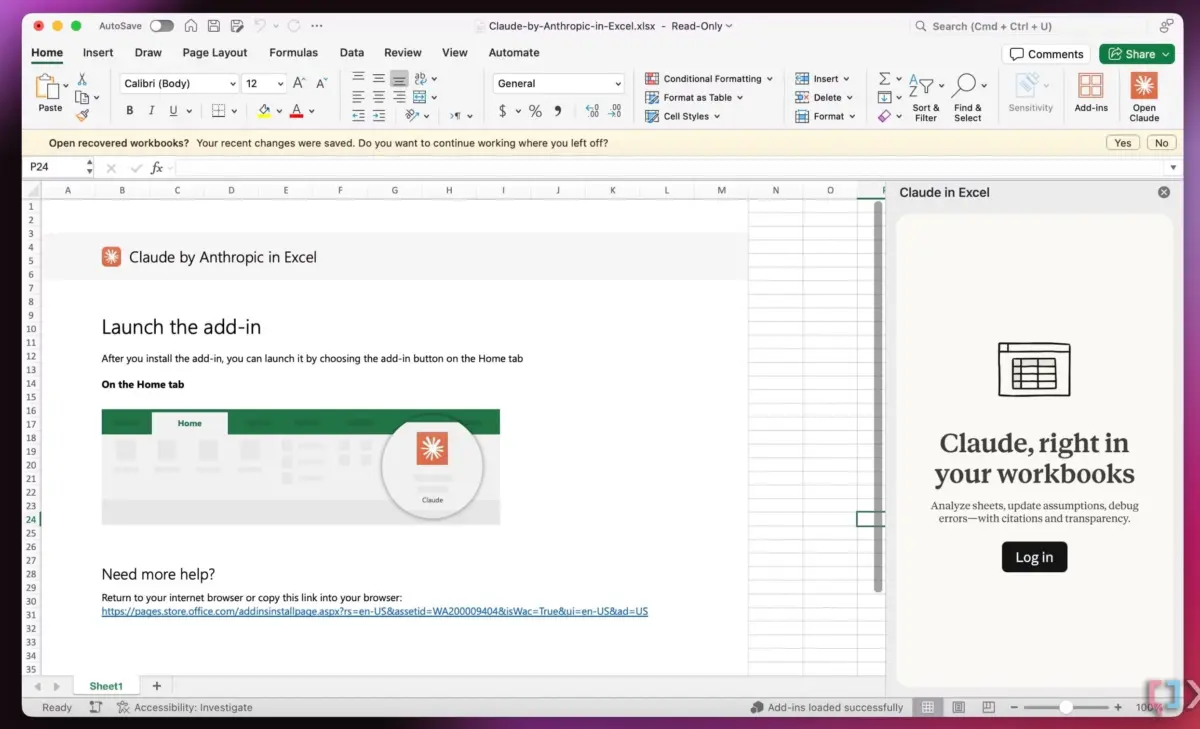
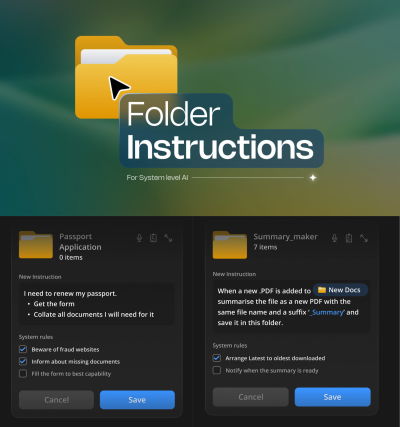
Rather than forcing users to adopt new tools, the next era of technology relies on "Quiet AI"—intelligent capabilities that sit invisibly in the background, embedded directly into the native environments where work already happens. From system-level file management innovations like "Folder Instructions" to context-aware integrations like Claude embedded directly inside Microsoft Excel, the mandate for product architects is clear. Value is no longer created by adding more software to the user’s life; it is forged by removing friction from the tools they already know and trust.
Detailed Chronology: The Evolution of User Interfaces and the AI Paradox
1. The Era of Standalone Fragmentation (Pre-2023)
To understand why users are rejecting modern app bloat, one must examine how we arrived here. Throughout the 2010s, the Software-as-a-Service (SaaS) boom fragmented the digital workspace. Every distinct function—from project management and team communication to document editing and customer feedback—spawned its own dedicated application.
While this allowed specialized tools to flourish, it inflicted a severe cognitive tax on the end-user. Context-switching became the default state of knowledge work. Studies in workplace productivity consistently revealed that workers spent hours every week simply moving data, tracking notifications, and logging into disparate platforms, leading to widespread burnout and diminished deep-focus time.
2. The "AI-First" Flash Flood (2023–2024)
When generative AI burst into the mainstream consciousness, the software industry rushed to repeat past mistakes. The market was flooded with "AI-first" products: wrappers, standalone chat applications, and proprietary generation dashboards designed to be destinations in their own right.
While these tools showcased technological marvels—synthesizing text, generating code, or producing imagery—they fundamentally misunderstood human psychology and workflow ergonomics. They asked users to abandon comfortable, decades-old habits and learn entirely new paradigms of interaction. To write a paragraph, one had to open a browser tab, paste a prompt, copy the response, and format it back in a word processor. The technological capability was revolutionary, but the user experience was cumbersome.
3. The Shift Toward "Quiet AI" and Native Integration (Present Day)
We are currently witnessing a necessary correction. Product designers and engineers are realizing that the most successful AI features are those that require the least amount of conscious thought.
Instead of demanding that users visit an AI chat interface, forward-thinking platforms are bringing intelligence directly to the data. By embedding large language models into existing environments—such as a spreadsheet cell, a slide deck sidebar, or a file directory—software is finally aligning with established mental models. The technology fades into the background, operating as an invisible co-pilot rather than a demanding, attention-seeking master.
Supporting Context & Metrics: The Cognitive Cost of App Overload
To grasp why seamless integrations and Quiet AI represent a structural shift rather than a passing design trend, we must look at the cognitive metrics governing human-computer interaction.
The True Price of Context-Switching
According to extensive human-factors research in workplace productivity, knowledge workers switch between different applications and websites hundreds of times a day. Each switch incurs a cognitive penalty:
- The Resumption Lag: It takes an average of over 20 minutes to return to a deep focus state after a significant interruption or context switch.
- Error Rates: Fragmented workflows across multiple tools drastically increase the likelihood of copy-paste errors, data loss, and miscommunication.
- Adoption Resistance: Enterprise software buyers report diminishing returns on new tool adoption. Employees routinely bypass corporate-mandated software in favor of familiar, lightweight alternatives because the learning curve of new tools outweighs their perceived utility.
High-Severity, High-Frequency, High-Frustration
Users do not care about the underlying architectural complexity of an AI model if it does not solve a painful, repetitive problem. Product adoption data consistently shows that features succeed when they target tasks characterized by:
- High Severity: Problems that result in major bottlenecks, compliance risks, or severe data fatigue.
- High Frequency: Tasks that occur multiple times a day or week (e.g., data sorting, file organization, formatting).
- High Frustration: Tedious administrative chores that drain creative energy without adding strategic value.
When AI is integrated quietly to solve these exact friction points—without forcing the user to learn a new interface—retention and satisfaction skyrocket.
Official Perspectives: The Philosophy of System-Level AI and Design Patterns
The philosophy of moving away from fragmented tools toward integrated, quiet experiences is gaining traction among leading UX thinkers and platform architects.
The Fallacy of "AI-First" Design
Industry analysts and interface design experts have increasingly questioned the utility of the "AI-first" label. As veteran UX educator and designer Vitaly Friedman notes, designing products around the technology rather than human behavior often ignores decades of established mental models.
"I’ve always been puzzled by the notion of ‘AI-first’ products. They might speed up production, but we need to know really well first what we actually want to build. AI-first often doesn’t account for years of small and big design decisions that have shaped expectations and mental models over the years."
Instead of forcing users to adapt to an AI-centric world, the goal is to make AI subservient to human intent within familiar paradigms. This brings us to the concept of Quiet AI—systems that operate quietly, locally, and contextually.
Case Study: Folder Instructions for System-Level AI
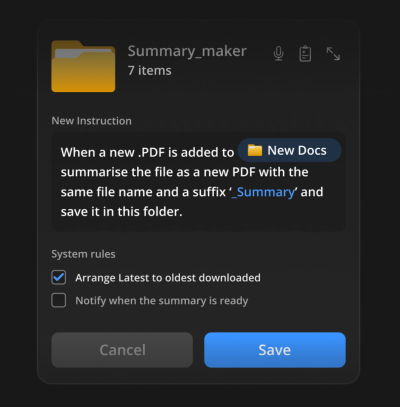
A prime illustration of this philosophy is the emerging concept of Folder Instructions, popularized by interface researchers like Karthikeya GS. Rather than opening a dedicated application to organize data, users interact with the file management systems they have used for decades: folders.
By allowing users to define natural-language instructions and system rules directly at the folder level, the operating system or document management tool handles the automation behind the scenes. For instance:

- A folder labeled “Passport Application” can be programmed with system rules to automatically parse uploaded PDFs, verify expiration dates, check photo dimensions against regulatory guidelines, and summarize missing documentation.
- A file management setup for “Research Summaries” can automatically ingest downloaded academic papers and generate executive abstracts on the fly whenever a new PDF is dropped into the directory.
These actions happen right where the work already takes place. Users do not need to learn a new command language or open a separate browser tab; they simply organize their files as they always have, while the system quietly executes intelligent workflows in the background.
The Power of Native Co-Pilots
Another validation of this approach is seen in enterprise integrations, such as Claude’s native integration within Microsoft Excel, Word, and PowerPoint. By bringing advanced data analysis and content synthesis directly into spreadsheet rows and document margins, users can query data and inspect specific columns or cells without breaking their analytical train of thought. The tool meets the user in their native habitat.
Future Outlook: The Next Decade of Human-Computer Interaction
As we look toward the future of software design, several defining trends will shape how we interact with intelligent systems:
1. The Death of the "Chatbox Interface"
While the conversational chat window was a necessary stepping stone for introducing generative AI to the masses, it is inherently limited as a long-term productivity interface. Typing out verbose prompts for minor tasks is often slower than clicking a well-designed button or letting an invisible agent execute a predefined rule. The future will see chat interfaces recede into specialized use cases, replaced by context-aware, proactive interface elements embedded directly into operational software.
2. Hyper-Localized, Privacy-First Automation
As demonstrated by folder-level instructions and local system rules, users and enterprises are increasingly demanding data sovereignty and localized control. The next generation of seamless integrations will prioritize scoped permissions—where AI agents operate strictly within defined boundaries (such as a single folder or document) unless explicitly granted broader system access. This builds trust and drastically reduces the security anxieties associated with monolithic cloud-based AI tools.
3. Education and Design Patterns
To help product teams navigate this transition, educational resources and frameworks—such as comprehensive design pattern guides and professional UX courses—are shifting their focus away from "how to build cool AI demos" and toward "how to design invisible, high-impact features." The measure of a great AI feature in the coming years will not be how much it dazzles the user, but how seamlessly it disappears into the workflow.
Conclusion
The golden rule of modern product design is deceptively simple: do not give users more work to do; help them do the work they already have.
The era of app fatigue and disjointed "AI-first" novelties is drawing to a close. Users are voting with their time and attention, rejecting tools that demand constant context-switching and steep learning curves. By embracing Quiet AI, respecting established mental models, and building seamless integrations—like intelligent folder instructions and native office suite assistants—developers can deliver unprecedented value.
Ultimately, the most profound technologies are those that disappear. By working quietly in the background where life and work actually happen, seamless integrations promise a digital future defined not by software overload, but by effortless, human-centric clarity.
