

Executive Overview
In a legal and civic landscape defined by eroding trust in foundational institutions, a recent ruling from the Fifth Circuit Court of Appeals has laid bare a terrifying question: What is the actual point of government?
When federal courts explicitly rule that citizens possess no constitutional right to clean water or to honest information from officials during a public health crisis, the social contract binding a populace to its governing bodies is fundamentally fractured. This disturbing judicial reality was brought into sharp focus by a recent federal decision dismissing a lawsuit against Jackson, Mississippi. The lawsuit had charged municipal and state authorities with knowingly compelling residents to consume lead-contaminated water, violating basic tenets of bodily integrity and government accountability.
Yet, as Judge Kurt Engelhardt—appointed by President Donald Trump—dismissed the action with the declaration that "the Constitution does not provide redress for every governmental wrongdoing," he exposed a yawning chasm in American jurisprudence. According to the bench, official malfeasance, administrative poisoning, and institutional lying do not infringe upon any "deeply rooted constitutional right."
This ruling does not exist in a vacuum. Paired with newly declassified documents from New York City revealing deliberate disinformation regarding toxic air quality following the September 11 terrorist attacks, a chilling pattern emerges. From the marginalized, predominantly Black neighborhoods of Jackson to the ash-covered streets of Lower Manhattan, public health crises have repeatedly been met with state-sanctioned obfuscation and abandonment. As the line between administrative negligence and intentional endangerment blurs, legal experts, civil rights advocates, and everyday citizens are forced to confront an existential reality: a government that claims no duty to protect its people from toxins—or to tell the truth about them—has effectively absolved itself of its raison d’être.
Detailed Chronology: From Crisis to Judicial Dismissal
The Jackson Water Crisis and Legal Retraction
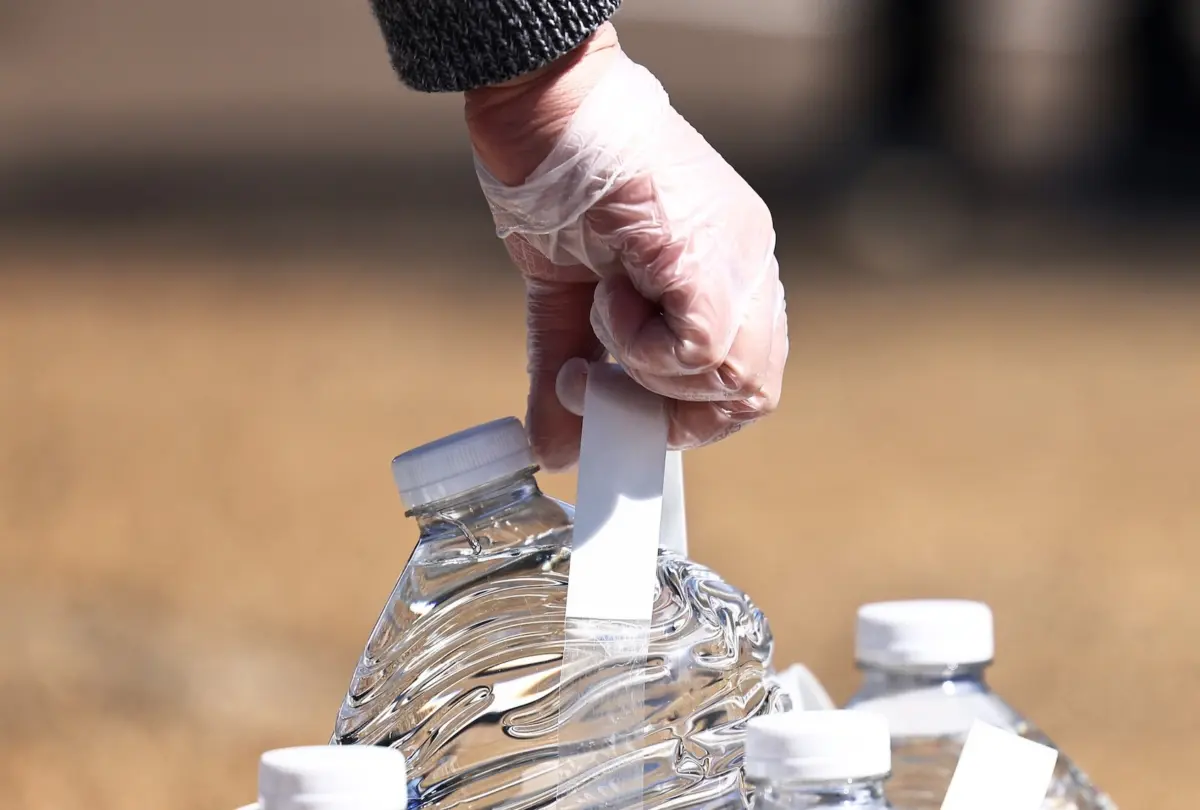
The roots of the Jackson legal battle stretch back years, accelerated by the catastrophic infrastructure failures of February 2021, when back-to-back winter storms crippled a severely neglected municipal water system. For weeks, residents—in a city that is over 80% Black and coping with a poverty rate double the national average—were left without running water. When service was partially restored, the water flowing from taps was found to be tainted with dangerous levels of lead.
Affected residents initiated legal action, contending that local and state officials were acutely aware of the lead contamination yet actively suppressed the information, exposing thousands to severe neurotoxic hazards. The plaintiffs argued that this amounted to a deprivation of bodily integrity and a violation of due process rights.
However, in September 2026, the Fifth Circuit Court of Appeals slammed the door on accountability. Judge Engelhardt wrote that the plaintiffs’ grievances, "while grievous, do not infringe upon any deeply rooted constitutional right." Most alarming was the court’s explicit defense of governmental silence during emergencies, asserting that there is no constitutional entitlement to truthful communications from officials when public safety hangs in the balance.
The 9/11 Air Quality Deception: 25 Years of Fallout
Coinciding with the fallout from the Fifth Circuit’s decision is the public release of a massive archival trove in New York City. Ahead of the 25th anniversary of the September 11 attacks, NYC Mayor Zohran Mamdani authorized the release of approximately 170,000 documents detailing the government and Environmental Protection Agency’s (EPA) handling of Ground Zero air quality.
The records confirm what first responders and downtown residents have argued for decades: they were systematically misled. In the chaotic days and weeks following the collapse of the World Trade Center towers, federal and local officials—including the EPA—repeatedly assured the public that the air near Ground Zero was safe to breathe.
These assurances were issued despite internal data indicating alarming concentrations of pulverized concrete, asbestos, benzene, and heavy metals. The newly unearthed documents demonstrate that officials prioritized economic reopening and public calm over the biological safety of the citizens breathing the toxic plume. Two and a half decades later, the human toll of those lies is accelerating rapidly, starkly challenging the legal immunity granted to negligent state actors.
Supporting Context & Metrics: The Human and Systemic Toll
The legal rationalizations upholding government immunity stand in stark contrast to the escalating health and social metrics documenting the cost of institutional betrayal.
- The Accelerating Cancer Crisis: According to recent health data highlighted by The Washington Post, the number of 9/11 survivors and rescue workers receiving aid for cancer has roughly tripled over the last five years. Respiratory illnesses, cardiovascular degradation, and rare malignancies continue to shorten the lives of those who trusted official safety declarations.
- The Demographics of Neglect: In Jackson, Mississippi, the intersection of crumbling infrastructure and racial demographics cannot be ignored. With an 80% Black population and a poverty rate exceeding double the national average, the city’s inability to secure clean drinking water highlights how systemic environmental racism compounds institutional abandonment.
- Global Legal Standards: The United States’ dismissal of clean water as a fundamental right places it increasingly at odds with the international community. At least nine U.S. states—including Massachusetts (constitutionally protected since 1972) and New York (via a 2021 constitutional amendment)—enshrine the right to clean air, water, and a healthful environment. Globally, more than a dozen countries, including Uruguay and South Africa, explicitly protect the right to clean water within their national constitutions.
The juxtaposition is jarring: while a growing number of sovereign nations and progressive American states recognize that a habitable biosphere is a prerequisite for human life, federal jurisprudence continues to retreat into formalistic technicalities that shield the state from the consequences of its own failures.
Official Statements and Institutional Responses
The growing rift between governed populations and administrative apparatuses has prompted fierce rhetoric from labor representatives, municipal leaders, and civil rights advocates.
The betrayal felt by frontline workers was crystallized by Lt. James Brosi, president of New York City’s Uniformed Fire Officers Association, in remarks to CNN following the document release:
"We were dying with every breath we took down there. What we learned is that the city knew it."
The release of the 9/11 documents has also triggered intense political friction. While Mayor Mamdani’s administration has faced political backlash from opponents attempting to weaponize the disclosures, legal analysts note that these attacks serve primarily as a deflection mechanism for institutional failures. Shifting the cultural narrative away from the state’s failure to protect its citizens has long been a favored tactic of administrative self-preservation.
Meanwhile, federal jurists continue to double down on a narrow, textualist interpretation of the Constitution that views positive rights—such as the right to non-poisonous water—as non-existent. In the view of judges like Engelhardt, unless a right was explicitly conceptualized by the Framers in the 18th century, contemporary citizens possess no federal legal recourse when modern states fail to secure basic survival needs.
Future Outlook: The Brink of a Social Contract Crisis
The implications of the Fifth Circuit’s ruling and the ongoing reckoning over 9/11 extend far beyond individual courtrooms or municipal budgets. They threaten the foundational premise of the American social contract.
Society is currently engaged in complex debates over whether internet access, housing, and higher education constitute basic human rights. Yet, forcing citizens to litigate whether they possess a constitutional right to breathable air and potable water—the absolute lowest rungs of Maslow’s hierarchy of human needs—reveals a profound systemic dysfunction.
If administrative agencies can poison communities through neglect and deliberately lie about the hazards without legal consequence, the conceptual boundary between a protective state and an extractive corporate entity dissolves entirely.
Judicial figures who casually dismantle the scaffolding of public trust appear oblivious to the long-term consequences of their rulings. A populace cannot indefinitely tolerate being poisoned, lied to, and subsequently denied legal redress by the very institutions designed to serve them. As public health crises multiply in an era of climate disruption and crumbling infrastructure, the backlash against unchecked governmental impunity will likely be severe.
Ultimately, the choice facing the American legal and political establishment is stark. It can labor to maintain the technical fiction that the state owes no duty of care or truth to its people, inviting its own institutional delegitimization. Or it can recognize that a government unable—or unwilling—to guarantee the fundamental biological survival of its citizens has lost its raison d’être, inviting a profound and unpredictable restructuring of civic life.