

Executive Overview
The morning of September 11, 2001, permanently altered the geopolitical landscape of the modern world, redefining international security, travel, and public consciousness. For the global news media, it was an immediate crucible—an unprecedented, catastrophic event unfolding in real time that forced journalists, editors, and executives to pivot instantly from standard news-gathering operations to round-the-clock crisis management. While the harrowing visual testimony from New York City, Washington, D.C., and Shanksville, Pennsylvania, remains etched into the collective global memory, the internal mechanics of how major news organizations processed and managed the unfolding tragedy have largely remained behind closed doors.
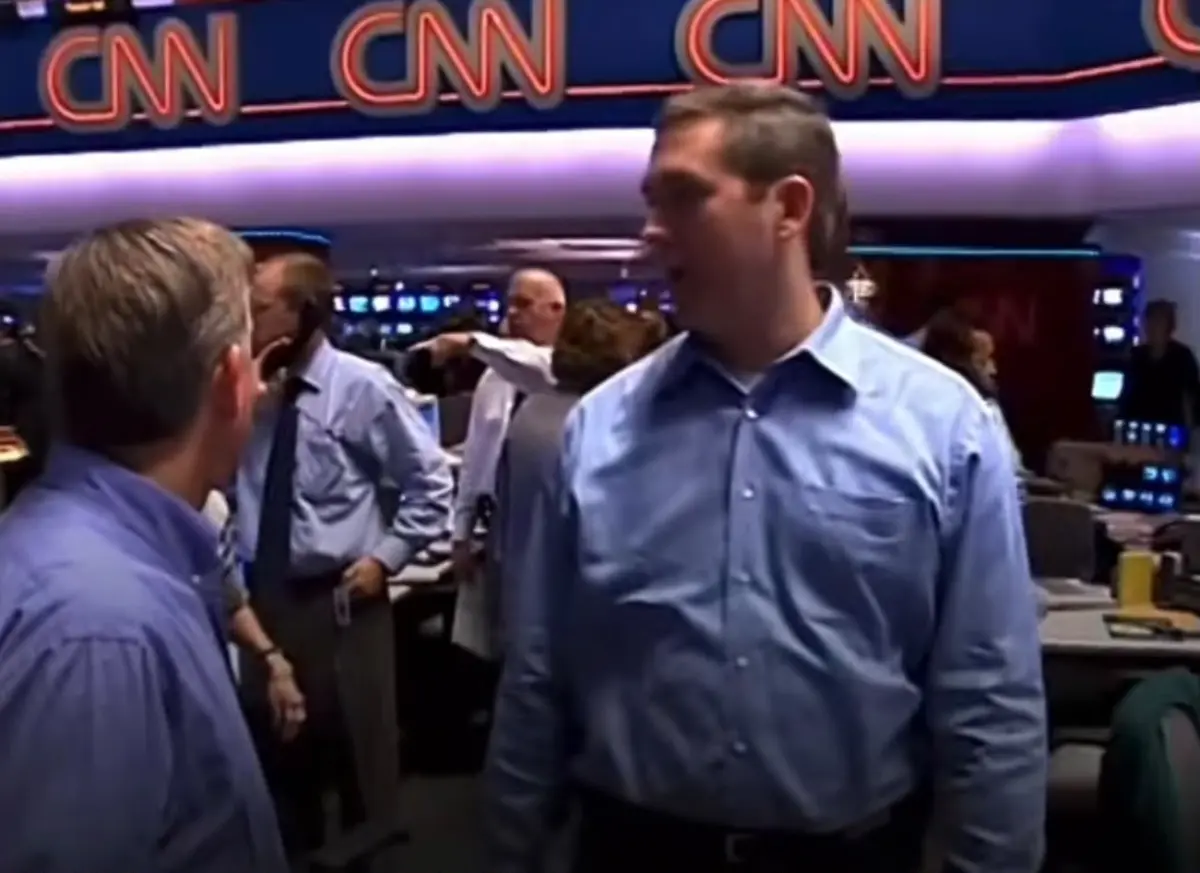
Recently surfaced archival video recordings, however, offer a rare, unfiltered look into the headquarters of one of the world’s preeminent news networks during those critical, chaotic hours. Captured by Atlanta-based CNN videographer Ric Blackburn inside the historic CNN Center, the footage documents the agonizing transition from ordinary morning programming to the realization of a historic national calamity.
This comprehensive report examines Blackburn’s raw, unedited chronicle, exploring the atmosphere within the newsroom, the reactions of top-tier network executives—including CNN founder Ted Turner and then-President Walter Isaacson—and the profound psychological and professional shift experienced by the journalists on the ground. By analyzing this rare behind-the-scenes perspective, media historians and analysts gain valuable insight into the operational realities, technical hurdles, and human elements of broadcast journalism facing its ultimate test.
Detailed Chronology: The Morning of September 11 Inside the CNN Center
The Initial Interruption and Rising Confusion
At 8:49 a.m. ET on Tuesday, September 11, 2001, CNN abruptly cut away from a scheduled commercial break to display a live, shocking video feed of thick, dark smoke billowing from a gaping structural breach in one of the twin towers of the World Trade Center. Anchor Carol Lin addressed the audience with the scant details available at the moment, noting that the network had received unconfirmed reports of an aircraft colliding with the tower. "CNN Center right now is just beginning to work on this story, obviously calling our sources and trying to figure out exactly what happened," Lin told viewers, unaware of the vast historical weight the day would ultimately carry.
Meanwhile, Ric Blackburn was on "bump-shot duty"—a routine assignment where one of Atlanta’s 16 rotating video journalists captured footage of the CNN newsroom to transition the network’s morning broadcasts into and out of commercial breaks. Blackburn’s shift had begun at 5:00 a.m. ET and was scheduled to run through 2:00 p.m. ET. As the newsroom erupted into a frenzy of ringing telephones, urgent murmurs, and frantic coordination following the first impact, Blackburn’s instincts as a seasoned journalist took over. He secured his primary camera and a boom microphone to capture both the visual chaos and the ambient audio of the floor.
The Escalation and the Second Impact
By the time Blackburn’s continuous recording began rolling around 9:25 a.m. ET, the operational reality of the disaster had shifted dramatically. The second hijacked aircraft, United Airlines Flight 175, had already struck the South Tower at 9:03 a.m., confirming beyond any doubt that the nation was under a coordinated attack.
Moving freely through the bustling newsroom, Blackburn captured a scene that escalated continuously. "I just started roaming the newsroom, people on the phone, people looking up at the monitors, people talking to each other, and it just crescendoed, like a loud crescendo as time went on," Blackburn recalled in an exclusive retrospective interview.
This environment of acute tension did not initially sit well with network leadership. Walter Isaacson, then-president of CNN, was laser-focused on managing the unprecedented coverage and rebuffed the presence of a documentary camera in the immediate vicinity of executive decisions. According to Blackburn, Isaacson ordered him multiple times to "get the F out of the newsroom with that camera." Recognizing the historical significance of the moment, Blackburn opted to ignore the directive, continuing to document the unfolding history.

Executive Shock and Crisis Management
The archival footage captures a constellation of media executives and foundational figures grappling with the unfolding tragedy. Alongside Isaacson, the video features prominent leaders such as Sid Bedingfield, Tom Johnson, Jim Walton, Earl Casey, Jamie Kellner, Eason Jordan, Sue Bunda, and Jane Maxwell.
Perhaps most striking is the raw, visible grief and disbelief exhibited by CNN founder Ted Turner. Arriving in the newsroom shortly after the initial tower strike, Turner stood with his hands clasped over his face, staring up at the television monitors and shaking his head. In one pivotal sequence, Blackburn’s camera recorded Turner, Isaacson, and Eason Jordan debating whether Turner’s broader network portfolio—including its entertainment and general interest properties—should simulcast CNN’s emergency news feed.
As the morning progressed, Jordan delivered successive waves of devastating updates to Turner and the executive team, including the collapse of the North and South Towers, initial reports of the Pentagon strike, the evacuation of the White House, the nationwide grounding of all commercial aviation, and the eventual crash of United Flight 93 in Somerset, Pennsylvania. Upon hearing of the tower collapses, a visibly shaken Turner openly questioned the identity and motivations of the orchestrators, at one point speculating about the involvement of the Taliban.
Beyond the executive suite, Blackburn’s lens captured the broader operational adjustments within the facility:
- Discussions regarding the deployment of anchor Aaron Brown to lead special coverage.
- On-air talent—including Daryn Kagan, Leon Harris, Bill Hemmer, and Lou Waters—preparing and executing continuous reports under extreme pressure.
- Critical technical hurdles, including disruptions in securing clean signal feeds from New York City.
- Security measures that led to the lockdown of the CNN Center, restricting access strictly to essential personnel.
- Logistical efforts to sustain the newsroom staff, including the continuous delivery of food and beverages.
- Brief, heated verbal clashes inside the network control room as producers fought to maintain editorial clarity amid competing streams of unverified intelligence.
Supporting Context & Metrics: The Mechanics of Legacy Newsrooms
To fully understand the gravity of Blackburn’s footage, one must examine the technological and logistical landscape of television news in 2001. The transition from analog workflows to digital integration was still in its infancy. High-definition digital video cameras were not standard issue, streaming video infrastructure over the internet was rudimentary, and mobile smartphones capable of capturing breaking news did not exist.
Operational Footprint of CNN in 2001
- Atlanta Newsroom Staff: A dedicated rotation of 16 video journalists managed internal station aesthetics and supplementary recording duties.
- Global Bureau Network: CNN relied heavily on fixed terrestrial phone lines, satellite uplink trucks, and established permanent bureaus in major metropolitan centers like New York, Washington, and international capitals to relay critical visual data.
- Broadcast Infrastructure: The network operated under traditional linear broadcast constraints, where remote live shots required complex satellite frequency coordination—making the technical difficulties of downlinking signals from a disrupted New York City infrastructure an immediate operational crisis.
The physical architecture of the CNN Center itself acted as a fishbowl of information. With glass-walled newsrooms and open-concept editorial floors, the psychological contagion of shock traveled rapidly from the assignment desks to executive offices. Blackburn’s observation of the workforce shifting from panic to a grim, professional acceptance highlights the psychological resilience required of legacy journalists during systemic national crises.
Official Statements & Retrospective Reflections
Decades after the events of September 11, the participants and chroniclers of that day continue to reflect on the psychological toll and the enduring legacy of their work.
Ric Blackburn, now retired after a distinguished 34-year career in photojournalism, was reassigned from his bump-shot duties later that afternoon. At 12:30 p.m. ET, he received orders to pack his gear and embark on an grueling 18-hour van journey to New York City, where he would be stationed for the next month and a half to document the aftermath at Ground Zero.

Recalling his time in Manhattan, Blackburn described an environment suspended in collective trauma:
"There was such a solemn, disbelief, surreal feeling in the whole city… It was like a twilight zone."
He noted that the sensory experience of the city—compounded by the pervasive odor of burning debris, compromised infrastructure, and human remains—left an indelible mark on the reporting corps. Citizens continually approached camera crews bearing photographs of missing loved ones, searching desperately for answers in an environment defined by absence.
Despite the profound sorrow of the assignment, Blackburn maintains a deep appreciation for his unique vantage point. His recordings—now preserved in two parts on public video platforms—serve as an unvarnished educational artifact for modern journalism students and historians alike, demonstrating how institutional newsrooms functioned before the advent of modern digital connectivity.
Future Outlook: Archival Preservation and Journalism in the Digital Age
The public release of archival material from September 11, 2001, underscores a broader movement within media institutions to preserve and digitize historical records for contemporary analysis. As linear television gives way to decentralized digital streaming and citizen journalism, the behind-the-scenes reality captured by professionals like Ric Blackburn provides an essential baseline for media literacy and crisis communication studies.
Key takeaways for the future of newsroom management and archival protocol include:
- Comprehensive Documentation of Crises: Encouraging internal journalistic documentation ensures that future generations understand the immense human and operational costs associated with covering global catastrophes.
- Technological Redundancy: The technical hurdles faced by CNN in 2001—such as signal loss from metropolitan hubs—highlight the modern imperative for decentralized, cloud-based ingest and broadcast infrastructure.
- Mental Health and Operational Resilience: Recognizing the psychological toll on front-line camera operators, producers, and anchors has led to modernized psychological support frameworks within major news organizations today.
Ultimately, Blackburn’s footage remains a testament to the dedication of broadcast professionals who, standing at the precipice of history, chose to document the chaos rather than flee from it, securing an invaluable window into the defining news day of the 21st century.
