

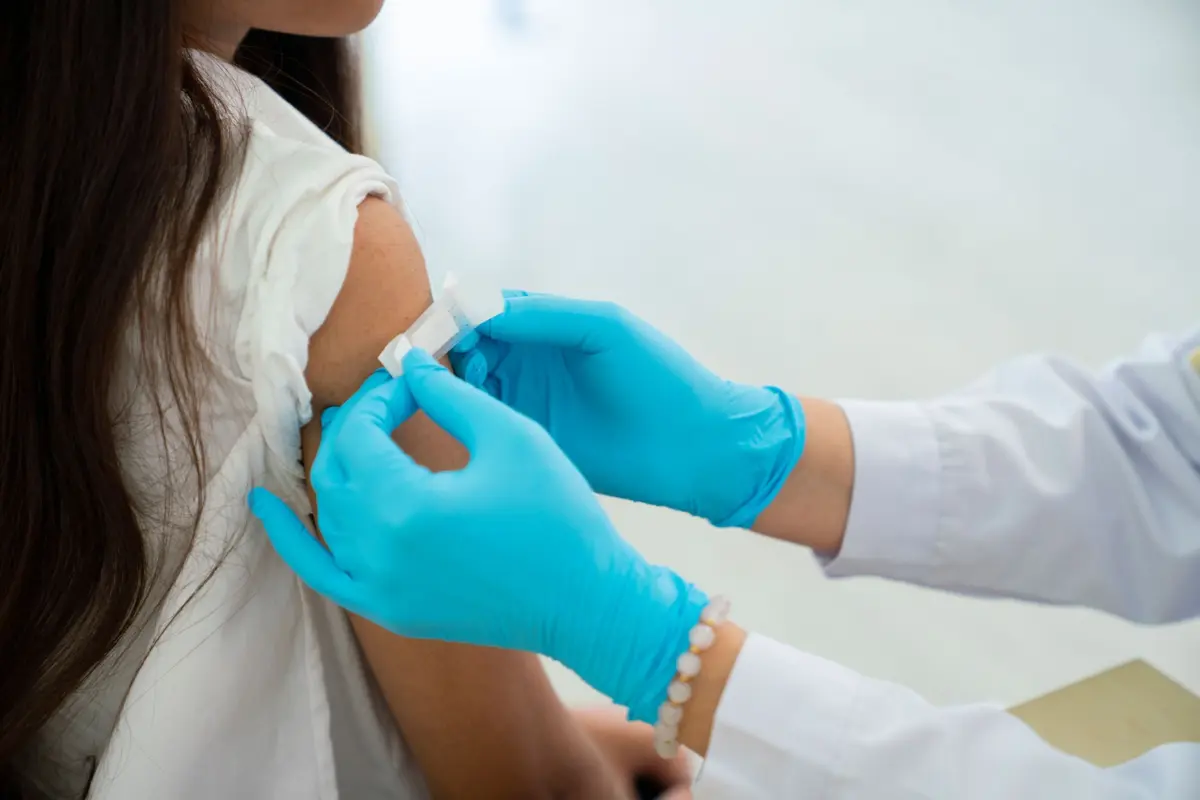
As millions of children return to classrooms across the United States for the academic year, public health officials find themselves facing an unprecedented crisis. A dangerous collision of plummeting routine childhood vaccination rates, rising exemption requests, and an aggressive wave of federally propagated health misinformation is threatening to reverse decades of public health gains.
Local health departments, school nurses, and major medical associations are sounding the alarm. They warn that declining immunization coverage—particularly for the measles, mumps, and rubella (MMR) vaccine, as well as routine immunizations for influenza, COVID-19, and respiratory syncytial virus (RSV)—has dragged community protection far below the critical thresholds required for herd immunity. This erosion of public health defenses is occurring against a backdrop of intense political friction. Leading federal health figures and the White House have amplified misleading and disproven claims regarding vaccine safety, sowing confusion among parents and forcing municipal and state public health systems to act as defensive bulwarks.
The stakes are exceptionally high. The United States is currently grappling with a 35-year high in confirmed measles cases, and pediatric respiratory virus seasons routinely hospitalize and claim the lives of children—the vast majority of whom are unvaccinated. Beyond the immediate health risks, preventable disease outbreaks threaten to trigger widespread school closures and disrupt the socioeconomic stability of working families who lack access to reliable childcare and paid sick leave.
Detailed Chronology: The Summer Prelude and the Back-to-School Push
Early Summer: Alarm Bells in Municipal Health Departments
Throughout the summer months, local health officials tracked concerning trends regarding kindergarten enrollment paperwork and vaccination registries. In Kansas City, Missouri, Dr. Marvia Jones, director of the Kansas City Health Department, reviewed data indicating that public school students were falling dangerously behind on required immunizations ahead of the late-August bell. Recognizing that under-vaccinated children faced exclusion from classrooms—a disruption that harms student learning and destabilizes working parents—Jones mobilized her agency.
The health department expanded its outreach, scheduling mobile vaccine clinics at church picnics and community festivals and extending operating hours to accommodate families working non-traditional schedules.
Mid-August: The Misinformation Barrier and the Executive Order Impact
Despite proactive outreach, traffic for back-to-school immunizations lagged 20 to 30 percent behind historical averages by mid-August. Public health leaders attributed this hesitation partly to a deluge of conflicting messaging, exacerbated by a recent executive order from President Donald Trump aimed at scaling back federal recommendations for childhood vaccines.
Although local health officials rushed to clarify that executive orders and shifting federal rhetoric had not legally altered state-level school immunization mandates in places like Missouri, the damage to public confidence was palpable. Responding to the crisis, Dr. Jones coordinated an emergency news conference alongside nursing staff from Kansas City Public Schools to directly address parental anxieties. By adopting a posture of empathy rather than judgment, local health authorities managed to spark a late-August surge in vaccinations, offering a brief glimmer of hope that direct, trusted community engagement could still break through the noise.
Late August to September: Outbreaks, Closures, and National Data Releases
As classrooms reopened nationwide, the consequences of lagging immunization rates manifested rapidly. In South Texas, a school district was forced to abruptly close its doors for two days following a sharp spike in local COVID-19 cases. Simultaneously, a middle school in Louisiana shut down operations for a day after dozens of students and faculty members contracted the virus.
These local disruptions coincided with the release of sobering new data from the Centers for Disease Control and Prevention (CDC). The federal data confirmed that routine kindergarten vaccination rates continue to spiral downward, while vaccine exemption rates have climbed to 4.2 percent nationwide, up from 3.6 percent the previous year.
Supporting Context & Metrics: The Erosion of Herd Immunity
The statistical reality facing American schools underscores a deepening vulnerability to vaccine-preventable pathogens. Herd immunity—the indirect protection from an infectious disease attained when a population is sufficiently immunized—requires exceptionally high coverage rates, particularly for highly contagious viruses like measles.
The Measles Resurgence
According to the American Academy of Pediatrics (AAP), community immunity for measles demands that more than 95 percent of susceptible individuals be immunized. However, national MMR coverage among kindergartners has dipped below this critical threshold. The real-world consequence is unmistakable: confirmed measles cases in the U.S. surpassed 3,100, eclipsing the total caseload for the entire previous year, with epidemiologists warning that these figures likely represent an undercount. Furthermore, the country recorded its first measles-associated deaths of the year, involving infants in Pennsylvania, sparking a bitter public dispute between state health authorities and federal health leadership over the reporting and circumstances of the tragedies.
Respiratory Virus Vulnerability
The impending respiratory virus season—spanning late fall through early spring—poses an equally formidable threat. Last season, nearly 200 pediatric deaths were attributed to influenza-related complications, with the overwhelming majority of fatal cases occurring in unvaccinated minors. With vaccination rates significantly depressed across almost all categories compared to pre-pandemic baselines, schools are primed to serve as transmission hubs for a volatile mix of influenza, COVID-19, RSV, and pertussis (whooping cough).
The Rise of Exemptions
Data analyzed by health agencies reveals that non-medical exemptions—spanning philosophical, religious, and personal belief categories—are rising steadily. This trend is not isolated to a single region; it reflects a broader national polarization regarding public health mandates. Rural communities, which often face acute shortages of urgent care facilities and pediatric specialists, are particularly vulnerable when localized outbreaks take hold.
Official Statements: Navigating Political Turbulence and Federal Misinformation
The friction between local public health practitioners and federal leadership has created an extraordinarily difficult operational environment.
Local and Municipal Leaders on the Front Lines
Dr. Michelle Taylor, health commissioner for the Baltimore City Health Department and chair of the Big Cities Health Coalition, emphasized the unprecedented burden currently resting on municipal agencies.
"Right now, local health departments are literally standing in the gap as our state health departments are taking on roles usually led by the federal government, and especially the CDC," Taylor noted.
In Cleveland, Ohio, where kindergarten immunization rates have managed a modest recovery from 68 percent to 76 percent following targeted investments in school-based health clinics, health director Dr. David Margolius described the exhaustion of fighting federal rhetoric.
"The current against us is strong, and we’re paddling as hard as we can," Margolius said. "It would just be a heck of a lot easier to make progress if the White House started speaking the truth and helping to be part of the solution instead of being part of the problem." Margolius’s remarks followed public comments by President Trump during an executive order signing, where the administration inaccurately labeled the MMR vaccine as "quite lethal" and floated impractical proposals to split the traditional two-dose series.
Pediatric and Nursing Associations Respond
The medical establishment has mobilized to counter federal missteps. Dr. Andrew D. Racine, president of the AAP, issued a sharp rebuke following the release of the CDC kindergarten data:
"This risk is real: The United States is experiencing a 35-year high for measles cases as federal officials continue to elevate misleading and disproven information about vaccines, inserting unnecessary fear and confusion into families’ decision making."
The controversy has also directly involved Health and Human Services (HHS) Secretary Robert F. Kennedy Jr., a prominent vaccine skeptic who announced plans earlier in the year to recategorize childhood shots for flu, COVID-19, and RSV, recommending them only for high-risk demographics or after exhaustive consultations. Although these bureaucratic maneuvers faced immediate legal challenges from medical coalitions like the AAP—which continues to recommend universal immunization—the rhetoric has profoundly impacted public trust.
Lynn Nelson, president of the National Association of School Nurses, highlights the daily operational friction this creates for the nation’s nearly 20,000 school nurses.
"There’s just so much misinformation about [vaccines] out there, that it slows everything down and people wait longer," Nelson explained. "And when influenza or COVID hits your community, or RSV or pertussis, it might be too late."
Future Outlook: The Ripple Effect on Families and Public Health Infrastructure
As communities look toward the peak of the school year and the dead of the winter illness season, public health experts warn that the erosion of vaccination rates carries far-reaching socioeconomic consequences.
When a child contracts a vaccine-preventable illness, the impact extends far beyond the classroom. Strict public health quarantine protocols often mandate that infected or exposed children stay home for days or weeks. In an economy where millions of working parents lack access to federally mandated paid sick leave, these absences trigger a cascading crisis.
Dr. Jones of Kansas City frames the human cost of this fragility in stark terms:
"What happens when your child is sick for four days? Does another older kid have to stay home and care for them? Does someone have to miss work? Does someone lose pay? Does someone else get sick? Does an older relative that’s living with them now have to be the childcare provider? And how does that put them at risk, particularly for families that are already unstable in some way?"
The Path Forward: Restoring Trust in Primary Care
Despite the toxic national discourse, public health messaging retains one vital anchor: the enduring trust families place in their personal healthcare providers. Polling data from the Annenberg Public Policy Center indicates that public confidence in individual physicians and pediatricians remains remarkably high.
Major medical organizations are urging parents to bypass political noise and consult directly with trusted pediatricians or family physicians regarding their immunization schedules. Local health departments are doubling down on grassroots engagement, expanding school-based clinics, and meeting parents where they are.
However, experts caution that community-level interventions alone cannot permanently fix a system undermined from the top. Without a coordinated, scientifically accurate federal communication strategy that reinforces the safety and efficacy of routine immunizations, the United States will likely remain trapped in a recurring cycle of preventable outbreaks, avoidable pediatric hospitalizations, and deep socioeconomic strain.
