

Executive Overview
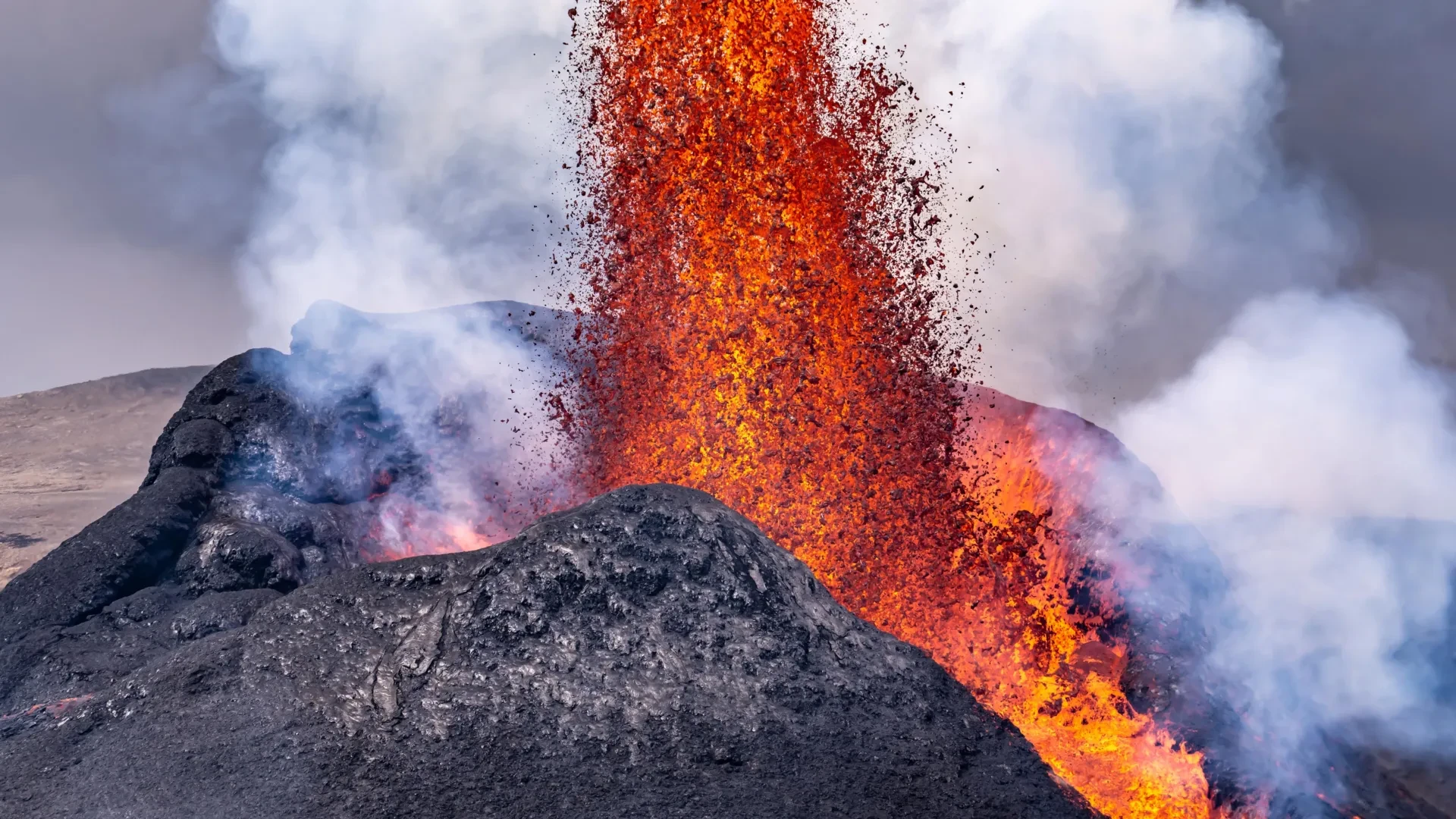
In a discovery that fundamentally challenges our understanding of planetary evolution, an international team of geoscientists has uncovered definitive proof that water was actively circulating through Earth’s interior more than three billion years ago. By analyzing exceptionally well-preserved volcanic rocks from Western Australia’s remote Pilbara Craton, researchers have demonstrated that surface water made its way deep into the primordial mantle, fueling explosive magmatic activity long before modern plate tectonics ever took hold.
The groundbreaking findings, recently published in the prestigious journal Nature Communications, bridge a massive gap in geochronology. They indicate that the deep-Earth recycling of water—a critical mechanism that drives volcanism, shapes continental landmasses, and moderates planetary habitability—was operational during the Archean eon. At a time when Earth was dramatically hotter, more chaotic, and fundamentally alien compared to the world we inhabit today, geochemical signatures locked within these ancient stones reveal a surprisingly dynamic planet.
Rather than relying on modern subduction zones—where tectonic plates collide and slide beneath one another—the young Earth appears to have utilized a different, more primitive mechanism dubbed "dripduction." In this scenario, dense, water-saturated parcels of the cooling outer crust literally sagged and dripped into the viscous mantle below. This revelation not only rewrites the timeline of Earth’s internal plumbing system but also offers profound implications for understanding how terrestrial planets transition from molten, chaotic fireballs into habitable, continent-bearing worlds.
Detailed Chronology
Unlocking the Pilbara Craton: A Geological Time Capsule
To understand how geologists arrived at these conclusions, one must examine the extreme rarity of the raw materials involved. Rocks dating back more than three billion years are vanishingly scarce. The relentless churning of plate tectonics, combined with surface erosion and weathering, has recycled nearly all of Earth’s primordial crust back into the mantle.
However, rare geologic sanctuaries known as cratons have survived this destructive planetary recycling machine. The Pilbara Craton in Western Australia is one of the premier geological archives on the planet. Spanning tens of thousands of square kilometers, its ancient greenstone belts preserve some of the oldest, least altered crustal fragments known to science.
For decades, researchers have scoured the Pilbara to read the chemical history of the Archean Earth. It was within this rugged terrain that lead author Dr. Eric Vandenburg and an international consortium of geochemists focused their attention. By harvesting micro-samples of volcanic rocks that solidified approximately 3.1 billion years ago, the team set out to interrogate the mineral grains for trace element concentrations and isotopic anomalies. These chemical signatures act as infallible proxies, recording the precise temperature, pressure, and fluid-rock interactions that occurred deep beneath the surface during the Archean.
The Paradox of the Young Earth’s Thermal Regime
To grasp the significance of the Pilbara discovery, scientists must contend with a fundamental paradox regarding the young Earth’s thermal state. Today, the Earth’s hydrological cycle is intimately tied to plate tectonics. Oceans of surface water pool above oceanic crust. As tectonic plates diverge, spread, and eventually collide, these water-laden plates are forced downward into subduction zones. As they plunge into the mantle, the extreme heat and pressure cause the minerals to dewater. This released water melts the surrounding mantle rock, generating silica-rich magma that ascends to feed the explosive arc volcanoes characteristic of the modern Pacific "Ring of Fire."
However, theoretical models and thermal calculations dictate that the Archean Earth was vastly hotter than it is today—driven by the radioactive decay of abundant short-lived isotopes and residual heat from planetary accretion. Because the lithosphere was inherently warmer, thinner, and more buoyant, it could not behave like the rigid, cold tectonic plates that plunge into subduction trenches today.
For generations, this thermodynamic constraint created a major dilemma for geologists. If modern-day subduction was physically impossible on the young Earth, how could surface water ever breach the crust and penetrate the deep interior? The prevailing consensus assumed that Earth’s early interior was largely isolated from surface waters, meaning that deep-mantle volatile recycling was a late-stage invention of modern plate tectonics. The Pilbara samples have shattered this long-standing assumption.
The Birth of "Dripduction": A Primitive Recycling Mechanism
Faced with chemical data that irrefutably pointed to deep-water involvement in Archean magma generation, Dr. Vandenburg’s team needed a plausible physical mechanism to explain how surface water crossed the crustal barrier. Their solution is a geodynamic process they have termed "dripduction."
Unlike modern subduction, which operates horizontally across thousands of kilometers of converging plates, dripduction is predominantly vertical and localized. According to the team’s models, the early Earth’s crust experienced episodes where certain regions became dense and heavy—often due to mafic crystallization and extensive hydrothermal alteration by primitive oceans. As these heavy blocks of cooler crust accumulated, they lost their buoyancy relative to the underlying, scorching mantle.
Unable to slide horizontally into a subduction trench, these heavy, water-soaked roots of the crust began to sag downward under their own weight. Over millions of years, these dense tectonic "roots" underwent gravitational instability, eventually detaching and dripping vertically down into the hot, convective mantle below.
As these massive lithospheric drips descended, they carried immense volumes of surface-derived water trapped within hydrated minerals. Upon reaching the scorching depths of the mantle, the dripping crustal fragments underwent profound metamorphic dehydration. The released water lowered the melting point of the surrounding mantle rock—a process known as flux melting—generating buoyant, volatile-rich magmas. These magmas then ascended through the crust, erupting in ancient volcanic chains that closely mirror the geochemical signatures of modern convergent margins.
Supporting Context & Metrics
Quantifying the Scale of Archean Volcanism
The implications of the Pilbara Craton study extend far beyond local mineralogy; they force a recalibration of global geodynamics. To appreciate the magnitude of this discovery, it is useful to examine the comparative metrics of modern versus Archean geological processes:
- Temporal Benchmark: The rocks analyzed date back approximately 3.1 billion years, placing them squarely in the Paleoarchean era, nearly a billion years before complex multicellular life emerged.
- Global Collaboration: The research was executed by an elite international task force drawing expertise from seven distinct institutions across three continents, including the University of Adelaide, Monash University, Curtin University, the Australian National University, the Geological Survey of Western Australia, Cardiff University, and Germany’s GEOMAR Helmholtz Center for Ocean Research.
- The Geochemical Fingerprint: Trace element ratios—specifically fluid-mobile elements like barium, rubidium, and strontium relative to heavy rare earth elements—revealed enhancements in the Pilbara volcanic suites that are diagnostic of aqueous fluid involvement during magma genesis.
- Thermal Differential: Models indicate that the mantle during the Paleoarchean was roughly 150°C to 200°C hotter than it is today, completely precluding the cold, steady-state subduction styles observed along modern plate boundaries.
The Broader Implications for Planetary Habitability
Water is the ultimate catalyst for geological and biological complexity. By demonstrating that water was cycling through the deep interior during the Archean, the study provides vital clues regarding the co-evolution of Earth’s geosphere, hydrosphere, and biosphere.
When water is driven deep into the mantle, it does more than just trigger volcanism. It acts as a lubricant for mantle convection, alters the viscosity of the interior, and moderates the chemical composition of outgassed volatiles—such as carbon dioxide, sulfur, and water vapor—that accumulate in the atmosphere. These volcanic outgassings played a pivotal role in stabilizing the early atmosphere and maintaining a greenhouse effect powerful enough to keep the young planet from freezing under a faint young Sun.
Furthermore, the cycling of water and the generation of volatile-rich, calc-alkaline magmas are essential prerequisites for building buoyant, continental crust. Unlike the basaltic oceanic crust, which is dense and prone to sinking, continental crust is enriched in lighter silicate minerals that rise above sea level, forming the stable landmasses upon which terrestrial life ultimately evolved. The Pilbara findings suggest that this crucial continent-building machinery was already operational via dripduction over three billion years ago.
Official Statements
The significance of the study has resonated deeply within the global geosciences community. In official releases accompanying the publication in Nature Communications, lead investigators elaborated on the paradigm-shifting nature of their work.
Dr. Eric Vandenburg, a geochemist from the University of Adelaide’s School of Physics, Chemistry and Earth Sciences and the principal architect of the study, emphasized how profoundly the new data alters our view of the early world:
"These rocks formed more than three billion years ago, when Earth was a very different place," Dr. Vandenburg stated. "The early Earth was too hot for plates to behave that way [like modern tectonic plates], so until now it has been unclear whether surface water could have made that journey more than three billion years ago, and if so, how. What surprised us was finding evidence that large amounts of water had already made their way deep into the Earth’s interior and influenced the formation of volcanic rocks."
Reflecting on the mechanistic shift from modern plate tectonics to the newly popularized concept of dripduction, Dr. Vandenburg added:
"The Earth wasn’t operating exactly as it does now, but it appears some of the key processes were already in place. The discovery addresses a major question in geology: how early did materials begin moving between Earth’s surface and its deep interior? By studying chemical signatures locked inside the rocks, we can now confirm that the young planet was surprisingly dynamic and was already recycling one of its most essential substances."
Co-researchers from the participating institutions have similarly praised the meticulous multi-proxy analytical approach. By combining high-precision mass spectrometry with rigorous field geology in the harsh Australian outback, the team was able to rule out secondary alteration—proving beyond a doubt that the water signatures were pristine relics of primary Archean magmatic processes rather than later contamination from groundwater seepage.
Future Outlook
The Next Frontier in Archean Geodynamics
While the discovery in the Pilbara Craton marks a monumental leap forward, it also opens up an expansive new frontier of scientific inquiry. Geologists are now tasked with testing whether "dripduction" was an isolated phenomenon unique to the ancient Western Australian crust, or whether it was a globally ubiquitous engine that drove early Earth evolution on a planetary scale.
To answer this, research teams are already turning their attention to other well-preserved Archean terranes across the globe. Locations such as the Kaapvaal Craton in South Africa, the Superior Province in Canada, and the Isua Greenstone Belt in Greenland are prime candidates for comparative geochemical analysis. By applying the same high-resolution trace element and isotopic screening used on the Pilbara samples, scientists hope to map out a global chronicle of Archean water recycling.
Implications for Exoplanetology and Astrobiology
Beyond our own world, these findings carry profound ramifications for the burgeoning field of exoplanetology. As space telescopes like the James Webb Space Telescope (JWST) and upcoming ground-based observatories characterize the atmospheres and potential surfaces of rocky exoplanets orbiting distant stars, astrobiologists are eager to understand what makes a planet truly habitable.
A central debate in planetary science concerns whether plate tectonics—or an equivalent crustal recycling mechanism—is an absolute prerequisite for long-term planetary habitability. If a planet’s interior is totally isolated from its surface oceans, volatile elements can become trapped, leading to runaway greenhouse states or total surface desiccation over geological timescales.
The revelation that Earth successfully maintained a deep-water cycle using a primitive, non-plate-tectonic mechanism like dripduction offers a glimmer of hope for worlds that may be too hot or too massive to support classical plate tectonics. It suggests that alternative geodynamic engines can effectively lubricate a planet’s interior, fuel volcanism, and circulate life-essential volatiles.
As geologists continue to decode the microscopic archives preserved within Earth’s oldest stones, the story of our planet’s youth becomes ever more fascinating. The harsh, alien Earth of three billion years ago was not a dead, static wasteland, but a remarkably resourceful laboratory—one that mastered the art of deep-Earth plumbing long before the first continents truly stood tall.
