

Executive Overview
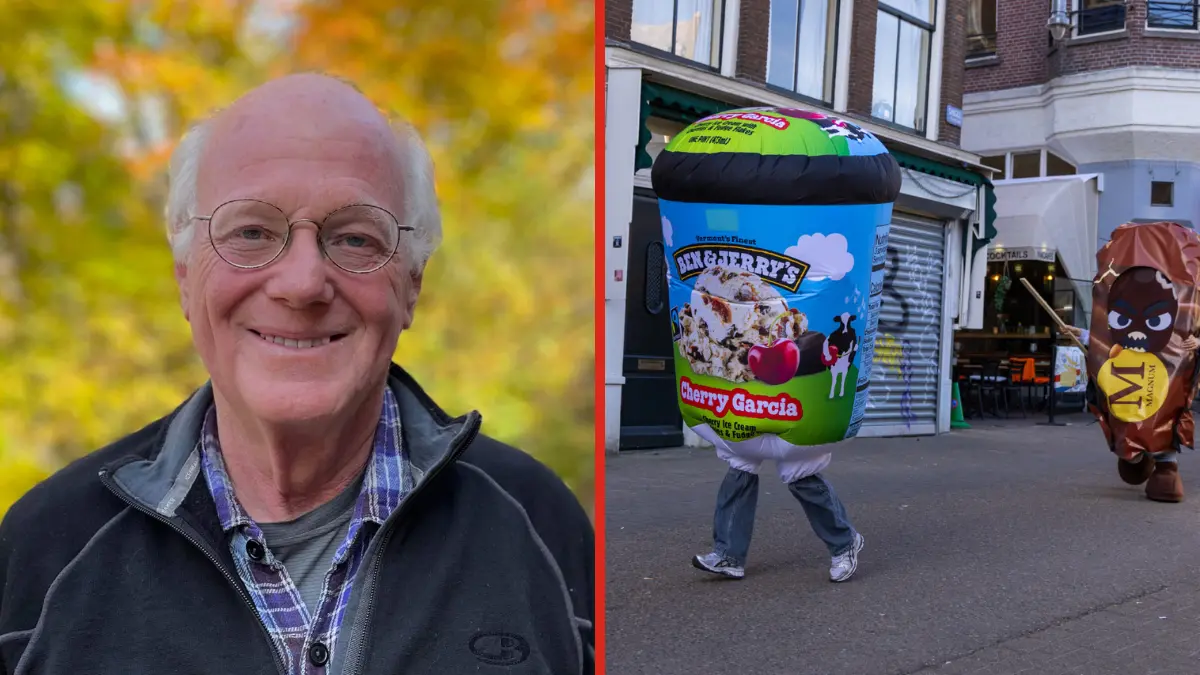
In a dramatic escalation of an ongoing corporate and ideological war, Ben Cohen—co-founder of the iconic ice cream empire Ben & Jerry’s—has taken his fight to the front lines of the advertising industry. Speaking on Wednesday at the Adweek Brandweek conference in Atlanta, Cohen delivered an impassioned, high-stakes creative brief to hundreds of the world’s top marketing professionals. His mission: to develop a low-cost, high-impact guerrilla marketing campaign capable of forcing The Magnum Ice Cream Company to divest its ownership of the brand.
The ultimate objective of Cohen’s campaign is nothing short of corporate liberation. For decades, Ben & Jerry’s has operated not merely as a commercial enterprise, but as a pioneering standard-bearer for progressive corporate social responsibility. However, following a series of turbulent corporate restructurings—most notably Unilever’s late-2025 spinoff of its ice cream division into The Magnum Ice Cream Company—the brand’s foundational ethos has found itself under existential threat.
Cohen characterized the current corporate leadership under Magnum not as stewards of a beloved institution, but as short-sighted asset extractors. In a vivid metaphor that resonated deeply with the Brandweek audience, Cohen warned, “What’s going on here is the goose that laid the golden egg. Magnum really likes those golden eggs, but they’re in the process of destroying the goose.”
By turning to the creative community, Cohen is hoping to bypass traditional corporate roadblocks and bring direct, grassroots pressure to bear on Magnum’s leadership in the United States and Amsterdam. With a modest budget cap, an aggressive timeline, and the ultimate reward of lifetime ice cream for the winning strategist, the "Free Ben & Jerry’s" campaign has officially entered its most aggressive phase yet.
Detailed Chronology: From a Vermont Gas Station to Global Corporate Warfare
The Humble Beginnings (1978)
The story of Ben & Jerry’s is deeply embedded in American entrepreneurial lore. In 1978, childhood friends Ben Cohen and Jerry Greenfield invested a modest $5,000—supplemented by a $12 correspondence course on ice cream making from Pennsylvania State University—to open their first scoop shop in a renovated gas station in Burlington, Vermont.
From day one, the duo rejected the conventional corporate playbook. They prioritized community engagement, environmental sustainability, progressive labor practices, and the belief that businesses have a moral obligation to give back to the society that sustains them. The brand’s chunks-and-swirls flavor profiles—such as Cherry Garcia and Chunky Monkey—became synonymous with a counter-cultural ethos that proved capitalism could possess a conscience.
The Unilever Acquisition (2000)
As the brand grew into an international phenomenon, it inevitably caught the eye of multinational conglomerates. In 2000, consumer goods giant Unilever acquired Ben & Jerry’s for $326 million.
Knowing that corporate integration could easily dilute the brand’s activist DNA, Cohen and Greenfield initially opposed the sale. However, they ultimately negotiated a groundbreaking and unprecedented corporate governance structure. Under the terms of the acquisition, Ben & Jerry’s retained an independent board of directors with legally binding authority over the brand’s social mission, product quality, marketing strategies, and trademark usage. Meanwhile, Unilever managed the operational and financial machinery behind the scenes. For roughly two decades, this delicate co-existence largely held.
The Fraying Relationship and Legal Battles (2023–2025)
The cracks in the foundation began to widen significantly in the years leading up to Unilever’s strategic pivot. Ideological friction intensified over political stances, public policy advocacy, and corporate governance disputes. Matters came to a head when Ben & Jerry’s initiated legal action against Unilever, alleging that the parent company had systematically attempted to silence the ice cream maker over its vocal positions on international geopolitics, particularly regarding the conflict in Gaza.
The Magnum Spinoff and the Ouster of Leadership
The situation deteriorated past the point of reconciliation in late 2025, when Unilever executed a long-planned spinoff of its entire ice cream division, creating an independent corporate entity known as The Magnum Ice Cream Company. With this corporate migration, ownership of Ben & Jerry’s transferred directly to Magnum.
The new parent company wasted little time in signaling a major shift in corporate culture. Magnum abruptly ousted longtime Ben & Jerry’s CEO Dave Stever, replacing him with a veteran executive from Magnum’s traditional corporate ranks.
The move was viewed by the brand’s founders as a direct repudiation of the independent spirit that made Ben & Jerry’s unique. Jerry Greenfield promptly stepped down from his remaining formal ties in protest, while Ben Cohen launched the external mobilization effort known as the "Free Ben & Jerry’s" campaign.
By mid-2026, the situation worsened further when Ben & Jerry’s announced that funding cuts imposed by Magnum would force the closure of the Ben & Jerry’s Foundation by the end of the year. The brand’s independent board alleged that Magnum leadership had flatly refused to meet with them, effectively rendering their legally mandated oversight authority null and void. Magnum, for its part, has maintained a rigid stance, repeatedly asserting to media outlets and stakeholders that Ben & Jerry’s is simply "not for sale."
Supporting Context & Metrics: The Anatomy of an Uprising
To understand the momentum behind Cohen’s call to action, one must look at the digital and public footprint the campaign has already amassed in a relatively short timeframe.

Grassroots Engagement and Digital Footprint
Since its inception, the Free Ben & Jerry’s movement has struck a powerful chord with consumers weary of corporate consolidation and the erosion of brand authenticity. Key metrics underscore the campaign’s reach:
- Petition Signatures: Over 200,000 individuals have formally signed the petition demanding Magnum divest from the brand.
- Social Media Following: The campaign has organically captured an aggregate audience of approximately 800,000 followers across major social media platforms.
- Geographic Focus: The new creative brief targets two primary operational theaters—the United States (the brand’s historic home market) and Amsterdam, the corporate headquarters of The Magnum Ice Cream Company.
The Economic Paradox of "The Goose That Laid the Golden Eggs"
Cohen’s critique of Magnum’s strategy highlights a classic corporate paradox: the acquisition of a purpose-driven brand for its high profitability, paired with the systematic dismantling of the very cultural attributes that generated that profitability in the first place.
Ben & Jerry’s has historically commanded premium pricing and unmatched consumer loyalty precisely because of its authenticity. When a parent company moves to muzzle a brand’s social voice, cut philanthropic funding, and replace visionary leadership with bureaucratic managers, it risks alienating the core consumer base that drives long-term brand equity. Magnum’s desire to extract "golden eggs" without feeding the "goose"—the unique social mission and independent board structure—threatens to kill the golden-laying mechanism altogether.
The Creative Brief: Rules of Engagement for Marketers
At Brandweek in Atlanta, Cohen laid out the explicit parameters for the guerrilla marketing competition. The brief is designed to be accessible yet challenging, calling on nimble, out-of-the-box thinkers to devise high-impact campaigns on a shoestring budget.
Core Requirements of the Brief
- Objective: Develop a low-cost, quick, and easy-to-execute guerrilla marketing campaign (either live experiential stunts or targeted digital/social initiatives) designed to heap relentless public pressure on Magnum to sell Ben & Jerry’s back to independent control.
- Geographic Scope: Activations must take place within the United States or in Amsterdam, Netherlands (Magnum’s home base).
- Budget Constraint: A strict maximum cap of $20,000, with the explicit caveat that "cheaper is better."
- Submission Deadline: October 7, 2026, at 11:59 PM.
- The Grand Prize: The winning creative strategist or team will receive free Ben & Jerry’s ice cream for life—contingent upon the company successfully regaining its independence.
In his address to the marketing elite, Cohen did not mince words regarding the severity of the situation. “Magnum doesn’t have a social mission. They don’t respect a legally binding agreement, and they got a lot of money and a lot of power,” Cohen declared. “Those policies represent the gravest attack on the values of Ben & Jerry since the company was founded.”
Official Statements & Industry Reactions
The collision between multinational corporate governance and activist brand building has sent shockwaves through both the consumer packaged goods (CPG) sector and the broader marketing community.
Industry analysts note that the Ben & Jerry’s dispute serves as a historic stress test for the viability of independent governance structures within massive corporate conglomerates. When Unilever acquired the brand in 2000, legal experts praised the unique governance model as a pioneering blueprint for how socially conscious companies could scale globally without losing their soul. The dismantling of this model under Magnum threatens to establish a chilling precedent for future socially driven mergers and acquisitions.
Legal scholars and corporate governance advocates are closely monitoring the standoff, particularly regarding the enforceability of the independent board’s authority over the trademark and social mission. If Magnum is permitted to bypass the board and slash foundational philanthropic budgets with impunity, it signals that corporate legal firewalls protecting social missions may be structurally vulnerable to aggressive parent company restructuring.
Meanwhile, representatives for The Magnum Ice Cream Company have remained steadfast. In response to ongoing protests, leadership statements reiterate that the brand remains an integral part of Magnum’s global portfolio and is not up for negotiation.
Future Outlook: What Lies Ahead for Ben & Jerry’s?
As the October 7, 2026 submission deadline for the guerrilla marketing brief approaches, the standoff enters a critical phase.
The immediate battleground will be played out on the streets of American cities and in Amsterdam, as creative strategists attempt to deploy high-visibility, low-cost disruptions that capture global media attention. Whether these grassroots interventions can successfully bend the will of a multinational corporate behemoth remains to be seen.
However, the broader implications of Ben Cohen’s crusade extend far beyond the freezer aisle. This conflict is rapidly evolving into a referendum on the nature of modern capitalism. It asks a fundamental question: Can a corporation dedicated to profit and operational efficiency successfully co-exist with a brand whose very identity is rooted in radical social justice and independent community governance?
For Ben Cohen, Jerry Greenfield, the independent board, and hundreds of thousands of devoted consumers around the world, the answer is an emphatic no. As Cohen continues to rally the troops, one thing is certain: the fight to save the iconic ice cream maker is far from over, and the corporate masters of Magnum are about to experience the full, unyielding force of a mobilized creative community.