

Executive Overview
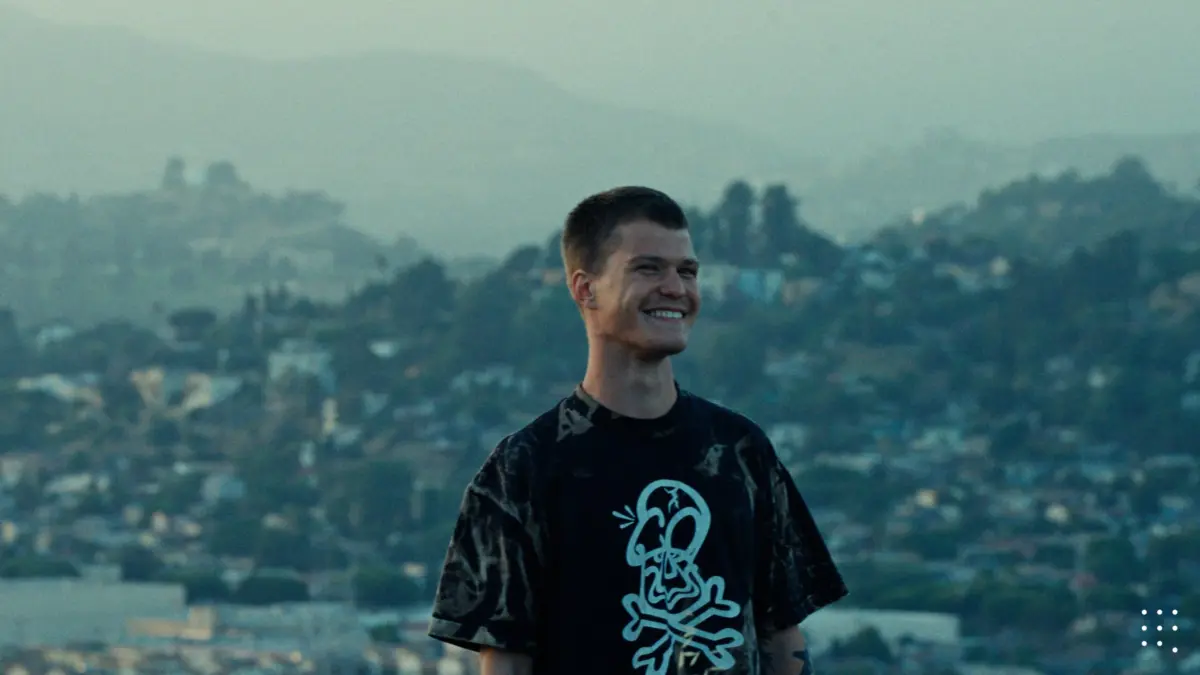
In the volatile digital landscape of the 21st century, the boundary between internet virality and commercial viability is often razor-thin. For every social media trend that ignites millions of screens, vanishingly few transform into sustainable, revenue-generating enterprises. Yet, against the backdrop of Los Angeles’s cutthroat creative scene, 23-year-old artist and designer Oskar Flodstrom has managed to achieve precisely that. Operating under the moniker Erik Oskr, Flodstrom has transitioned from living out of his car and teaching swim lessons to commanding a burgeoning design brand that grossed $150,000 in sales in just two weeks.
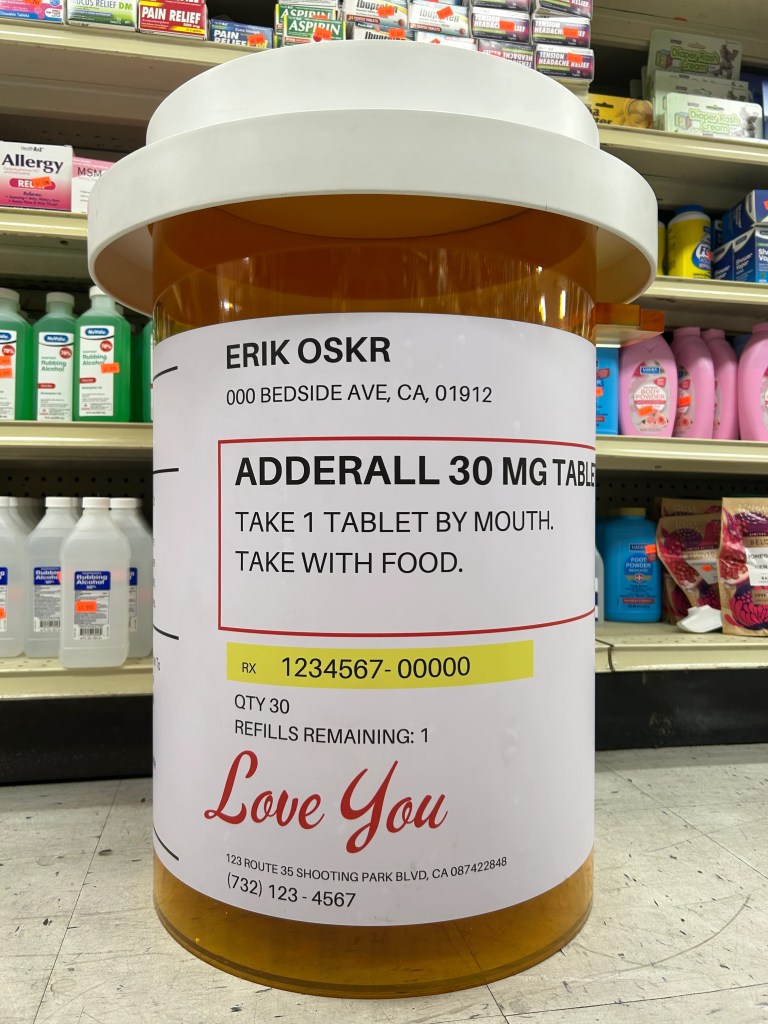
His breakout product—a quirky, oversized side table styled to look like an Adderall prescription pill bottle—captured the collective imagination of social media users, generating millions of views and rewriting the trajectory of Flodstrom’s life. Partnering with manufacturing-as-a-service firm NO LOGO, Flodstrom turned a discarded acrylic base scavenged from Facebook Marketplace into a commercial masterclass in modern digital entrepreneurship. This is the story of how resilience, unconventional creative vision, and a viral laundry basket video pulled a young artist out of precarious living conditions and into the ranks of emerging design founders.
Detailed Chronology: From High School Uncertainty to Car-Living and Creation
The Pandemic Pivot and the Search for Meaning
Oskar Flodstrom’s journey toward entrepreneurship was neither linear nor traditional. Growing up with an innate passion for drawing and creating, Flodstrom initially harbored doubts about the feasibility of pursuing art as a full-time profession. Seeking a compromise between financial stability and creative expression, he flirted with the idea of studying engineering.
However, reality quickly punctured that plan. "When I found out what an engineer actually was, it was kind of sad to me," Flodstrom reflects.
Compounding matters, the COVID-19 pandemic disrupted the conclusion of his high school career in 2020. Facing financial constraints and unconvinced that traditional higher education held the key to his artistic ambitions, Flodstrom made the consequential decision to forgo college entirely. Instead, inspired by the self-starter ethos of record producer and DJ Kenny Beats, Flodstrom pivoted toward music production and independent artistry.
"There is something to be said about being a self-starter and having that courage," Flodstrom notes, acknowledging the early psychological toll of his path. "It doesn’t give you the immediate return on investment. People kind of think you’re an idiot for a bit."
Surviving on Swim Lessons and Street Scavenging
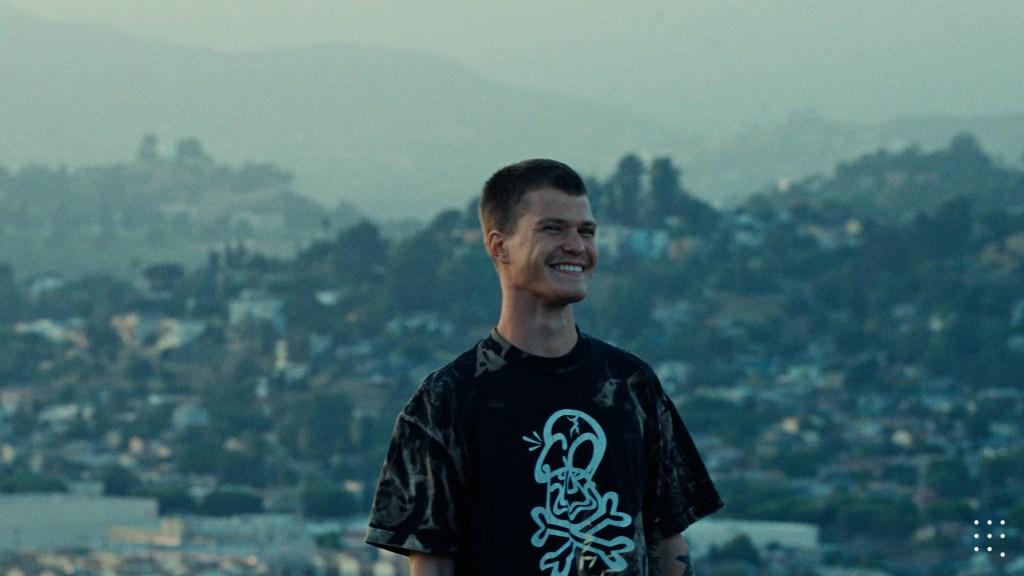
To pay his bills while pursuing his creative passions, Flodstrom took a job teaching swim lessons. The income was modest, leaving little room for luxuries—let alone high-end interior decor for his apartment.
True to the resourceful spirit of many young urban creatives, Flodstrom turned to online marketplaces and the streets of Los Angeles. In a city where transient residents frequently abandon functional items on the curb, scavenging became a secondary art form. On one occasion, Flodstrom sold a whimsical chair reminiscent of an avocado for roughly $500, a piece he had built using a discarded base found on the street.
His defining discovery, however, happened while scrolling through Facebook Marketplace in search of free items. A seller was listing a clear, rounded acrylic base. Recognizing its potential, Flodstrom visualized a piece of furniture. Lacking a car, he hauled the bulky object onto public transit, lugging it back to his apartment where it sat untouched for months.
"I didn’t touch it for months, honestly," Flodstrom recalls. "It was just sitting there. I did kind of know I wanted to make it [in the shape of] a pill bottle. I was going to either use wood or something else for the top. I finally just used foam."
Supporting Context & Metrics: Anatomy of a Viral Product
Scrappy Production and Low-Cost Prototyping
When Flodstrom finally decided to bring the pill bottle concept to life earlier this year, he operated on an exceptionally lean budget. The foundational acrylic base had cost him nothing via Facebook Marketplace. All-in, his out-of-pocket expenses for the remaining raw materials—high-density foam, specialized paint, and heavy-duty paper for the label—came to approximately $120.
His youthful, unassuming demeanor inadvertently aided his production process. Visiting a local Staples to print the oversized prescription label, Flodstrom’s unassuming presence disarmed the staff. "The Staples guy was pretty cool," he says. "I don’t think I come off very presumptuous, so I think sometimes people want to help me, maybe. I got that label for like 12 bucks, printed big. Usually it’s supposed to be $30."
Initially, Flodstrom considered using the oversized pill bottle merely as an eccentric prop in the background of his music videos. However, recognizing the rising consumer appetite for transparent, behind-the-scenes creator content, he chose to document the manufacturing process and publish it on TikTok, Instagram, and YouTube.
The Viral Tipping Point: Instagram AI and the Laundry Basket Pivot
The content strategy yielded immediate, explosive dividends. In June, the initial creation video went viral, capturing the attention of NO LOGO—an innovative manufacturing partner that helps independent creators scale product concepts without the burden of building physical factories. NO LOGO offered to produce a professional, stabilized sample of the table and assisted Flodstrom in setting up an e-commerce storefront via Shopify.
Yet, commercial success was not instantaneous. At the time the sample arrived, Flodstrom was experiencing severe financial instability, living out of a newly purchased car as he cycled between temporary living situations.
When the online store officially launched, momentum stalled. Compounding his frustration, Instagram’s automated content moderation algorithms flagged his promotional videos because the pill bottle design prominently featured an "Adderall" prescription label. Expecting an immediate rush of 10 to 15 sales on day one, Flodstrom watched in dismay as nearly 36 hours passed with only a trickle of orders.
"I was kind of panicking because the first couple of videos hadn’t done well," he admits.
Refusing to fold, Flodstrom relied on his innate creator instincts. He pivoted his marketing angle, filming a new piece of short-form content that demonstrated an alternative, highly relatable use case for the oversized side table: a chic, oversized laundry hamper.
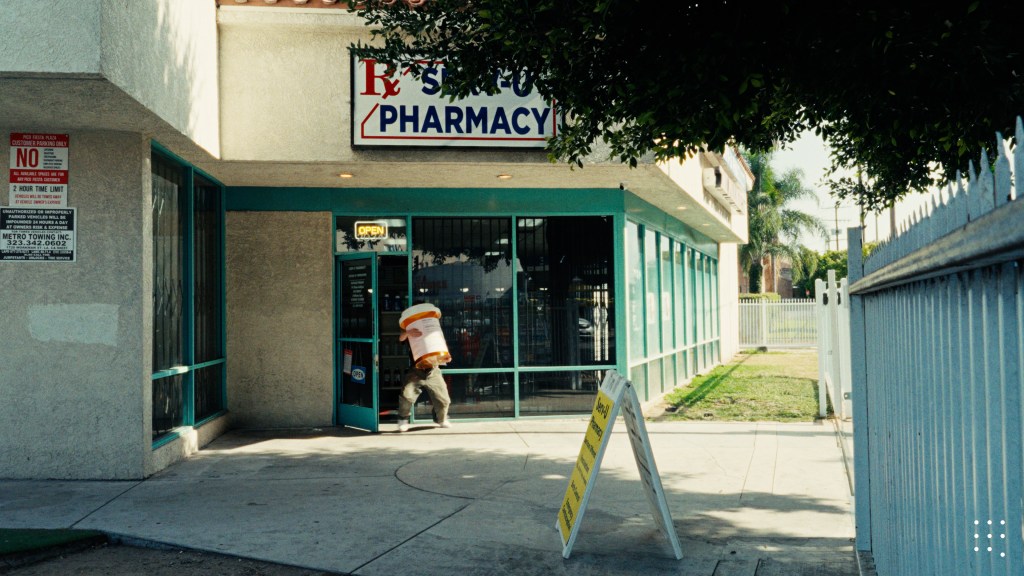
The resulting video achieved a velocity that even seasoned social media marketers rarely witness. "I made that little video of me using it as a hamper," Flodstrom says, "and I’ve still never seen Instagram do that—one million views per hour for like 10 hours straight. It was crazy. 200 sales. Still, I don’t think I’ve fully grasped it."
Official Statements & Financial Breakdown
The statistical reality of Flodstrom’s two-week sales surge reads like a Silicon Valley case study rather than an organic creator success story. Within 14 days of the viral laundry hamper video, the pill bottle side table grossed an astounding $150,000 in revenue.
According to Flodstrom, sales have since stabilized into a predictable cadence, typically generating between $1,500 and $4,000 per day, contingent on active social media ad pushes. Through their operational agreement, NO LOGO deducts a modest percentage to cover manufacturing and fulfillment expenses, leaving Flodstrom with robust profit margins roughly five times larger than his production costs.
Reflecting on the surreal nature of his overnight success, Flodstrom remains remarkably grounded. "I don’t feel like an artistic genius by any means," he reflects. "I still want to prove myself in that realm. So I don’t even know what to say most of the time. It feels like a fantasy. A daydream."
Future Outlook: Beyond the Pill Bottle
Despite securing enough capital to transition out of his car and into a new Los Angeles apartment, Flodstrom is intensely focused on long-term enterprise sustainability. His primary psychological hurdle is avoiding the "one-hit wonder" trap that frequently claims viral creators.
"I don’t really want to be known as the pill bottle guy," Flodstrom asserts. "I wanted that to be the start, but I have a bunch of cool ideas. A giant razor blade mirror that’s going to come out soon. A lava lamp out of a Sprite bottle. I just made a bong out of a milk jug."
To maintain this momentum, Flodstrom is aggressively diversifying his digital footprint. Beyond scaling his product line through Shopify and NO LOGO, he is doubling down on multi-platform content creation across TikTok, Instagram, and YouTube, while exploring affiliate monetization and live-streaming avenues to establish secondary income streams.
For a 23-year-old who started his entrepreneurial journey with a free piece of acrylic and a bus ride across Los Angeles, the enterprise represents something far greater than financial liberation. It is the validation of a self-taught artist learning, in real-time, how to transform chaotic creativity into a durable commercial institution.