

Executive Overview
In the literary and artistic landscape, grief is rarely captured with the delicate, devastating precision that defines the work of acclaimed Canadian cartoonist and author Kate Beaton. Best known for her New York Times bestselling webcomics and graphic novels—including Hark! A Vagrant and Step Aside, Pops—Beaton has turned her creative lens toward a deeply personal narrative in her latest children’s picture book, Rebecca.
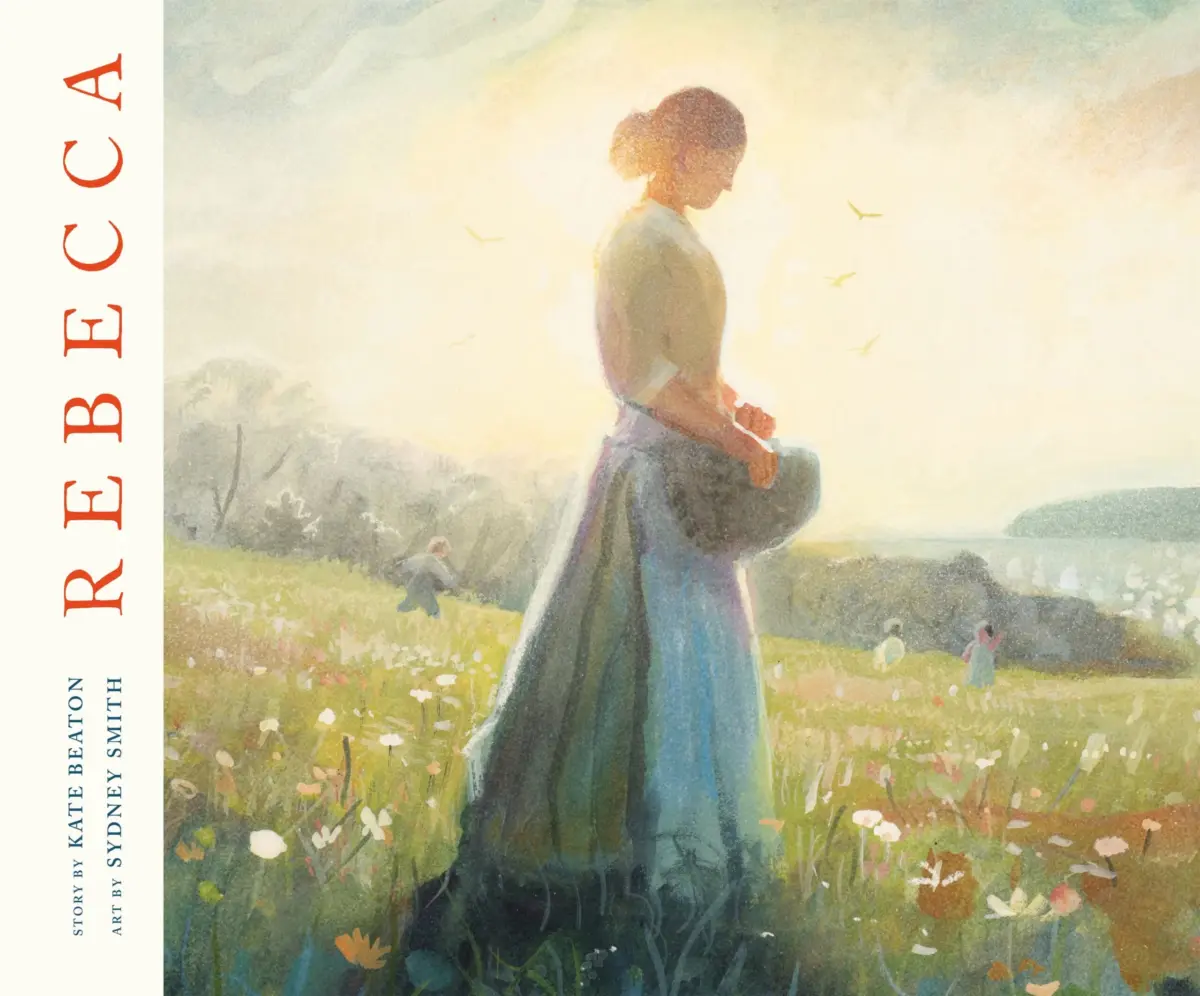
The book, published by Roaring Brook Press, bridges two defining tragedies separated by centuries: the 2018 passing of Beaton’s beloved older sister, Becky, after a grueling three-year battle with aggressive cervical cancer, and the harrowing 1789 death of their 18th-century ancestor, Rebecca Lombard Smith, whose whaling captain husband fell through the ice near Port Hood Island, Nova Scotia.
This comprehensive report explores the genesis of Beaton’s new book, examining how the author navigated the profound chasm of sibling loss, embraced early motherhood in the shadow of sorrow, and immortalized a legacy of female endurance that spans generations. Through an analysis of her essay, historical roots, and publishing milestone, this piece investigates how Rebecca defies conventional children’s literature norms to offer a timeless meditation on survival, memory, and love.
Detailed Chronology: From Ancestral Roots to Modern Tragedy
To understand the emotional architecture of Kate Beaton’s Rebecca, one must trace a timeline of loss, resilience, and creative catharsis that stretches from the rugged coast of Cape Breton to the quiet, darkened bedrooms of contemporary parenting.
The Names That Carry Us
Born and raised in Cape Breton, Nova Scotia, Beaton and her older sister shared a heritage embedded in their familial nomenclature. Named after their grandmothers, Becky and Katie stood at the head of a sibling group where their parents, having exhausted the pool of grandnames, pivoted to more contemporary choices for their two younger daughters. For Beaton, this name was more than an identifier; it was a physical thread connecting her to an unbroken chain of mothers, daughters, and ancestral matriarchs.
The Intermission: The Loss of Becky (2015–2018)
On May 14, 2018, Beaton’s life underwent a permanent fracture. Her sister Becky succumbed to cervical cancer after a harrowing three-year medical battle. In reflective essays, Beaton describes this period as a "bifurcated" existence—divided starkly into the life before Becky fell ill and the life that followed her passing.
The three years of illness formed a surreal "intermission," a period akin to a horror film where hope systematically eroded, leaving behind the stark, agonizing reality of watching a loved one waste away. The grief of losing a sibling to cancer—a relentless, helpless witness to physical decay—left an open wound that time could not immediately heal.
A Mother’s Day Miracle (2019)
The shadow of May 14 loomed large just one year later. Newly pregnant and navigating the profound emptiness left by her sister, Beaton anticipated a June due date. However, in the dark hours of Mother’s Day 2019, her water broke prematurely.
Racing to the hospital, Beaton engaged in a silent, desperate internal plea: Please, not May 14th. The psychological burden of sharing a death anniversary with a newborn’s birthday was a weight she prayed to avoid. Fortunately, the delivery was mercifully brief. Her daughter arrived on May 13, 2019. Holding her newborn, Beaton experienced an overwhelming paradox of emotion—tears of unmitigated joy colliding seamlessly with tears of enduring sorrow.
The Evening Quiet and the Birth of Rebecca
As Beaton’s family expanded to include a baby boy, the rhythm of daily life settled into the intimate rituals of parenting. Night after night, Beaton and her husband practiced the slow art of sleep-training, lying motionless in the dark beside their infants until the steady, musical sighs of deep slumber—Hummmm. Hummmm.—signaled it was safe to tiptoe away.
It was during these quiet, contemplative twilight hours that Beaton’s mind drifted to a story she needed to tell. Unable to write directly about Becky due to the rawness of her grief, Beaton redirected her focus toward the ancestral name they shared. She turned back the clock to the 18th century, finding her anchor in Rebecca Lombard Smith—her great-great-great-great-grandmother.
Supporting Context & Metrics: History, Geography, and Literary Defiance
The Legend of Rebecca Lombard Smith (1789)
History has traditionally centered the tragedy of March 1789 around Captain David Smith, a whaling captain who plunged through the treacherous ice off Port Hood Island, Nova Scotia. Most regional archives emphasize the devastating end of the patriarch.

However, Beaton’s perspective shifts the historical spotlight entirely to Rebecca Lombard Smith. Pregnant with her last child, Rebecca was left utterly isolated on a rugged island off the coast of Cape Breton to raise six sons and one daughter on her own. While the family tree branched out through multiple descendants, it was through the female line—the daughter’s lineage—that Beaton’s family inherited not just a name, but an ethos of unyielding survival.
During Becky’s illness, Beaton lived in Port Hood, watching the lonely silhouette of Port Hood Island across the freezing winter waves. Later, while pushing strollers and baby carriers past the Old Protestant Graveyard, she frequently visited Rebecca Lombard Smith’s final resting place. The weathered headstone, erected by her sons Lewis, Parker, and David, marks her death on November 30, 1821, at the age of 76—a testament to a woman who outlived her husband by decades and successfully guided every one of her children to survival.
Defying Publishing Norms
When Roaring Brook Press agreed to publish Rebecca, it represented a radical departure from conventional children’s literature. Publishing Director Connie Hsu noted the immediate sense of awe—and professional hesitation—the manuscript inspired:
- The Protagonist: The central figure is an adult, not a child.
- The Theme: The narrative confronts the complex, heavy realities of loss head-on.
- The Body Count: Two characters die within the scope of the story.
Despite these parameters defying traditional children’s book metrics, Hsu recognized the imperative to publish a work of such emotional magnitude and artistic integrity.
Official Statements and Industry Insights
The publication of Rebecca has generated widespread critical acclaim and profound industry discussion regarding how contemporary literature handles heavy emotional themes for young readers.
-
Connie Hsu, Publishing Director of Roaring Brook Press:
"My initial reaction to Rebecca was awe. My brain began to think about all the usual ‘rules’ about picture book publishing. Here, the main protagonist is an adult, the book is about loss, and two people die in the book! But I just had to publish it."
-
Kate Beaton, Author and Creator:
"Love is the greatest force in our lives, it is our greatest happiness and it is what hurts the most. Becoming a mother in the shadow of my greatest sorrow showed me many things. It showed me the strength that I had. It showed me that grief does not have an ending point; rather it is something that makes a space in your life and lives with you day to day."
Beaton’s reflections highlight a core pedagogical and therapeutic insight: grief is not an adversary to be vanquished, but an ongoing room within the human experience that one learns to inhabit alongside love, family, and daily survival.
Future Outlook: The Legacy of Rebecca and Therapeutic Storytelling
As Rebecca reaches bookstores globally, its impact extends far beyond commercial success. The book signals a shifting paradigm in children’s and cross-over literature, proving that young readers and their parents are hungry for authentic, unvarnished explorations of mortality, historical memory, and generational strength.
Key Implications for the Literary Landscape:
- Destigmatizing Grief in Literature: By addressing adult mortality and sibling loss through a historical lens, Beaton provides a framework for parents and educators to discuss difficult life transitions with children.
- Amplifying Matriarchal Histories: The book revitalizes local Canadian history, shifting historical narratives from male-centric exploits (such as whaling and seafaring disasters) to the under-documented resilience of pioneer mothers who held communities together.
- The Evolution of Beaton’s Oeuvre: Moving from satirical webcomics (Hark! A Vagrant) to autobiographical graphic memoir (Ducks: Two Years in the Oil Sands), and now to deeply personal picture books, Beaton solidifies her status as one of Canada’s most versatile and emotionally resonant contemporary writers.
Ultimately, Rebecca stands as a literary monument to those who are lost and those who remain. In the quiet moments between parenting, walking the coastal paths of Cape Breton, and listening to the rhythmic breathing of sleeping children, Kate Beaton has transformed individual sorrow into a universal song of endurance—proving that while love hurts, it is also the mechanism by which we carry our ancestors, and each other, forward.