

Executive Overview
The intersection of political power, legal friction, and digital transformation has created an unprecedented landscape for global journalism. In recent weeks, mounting legal confrontations, institutional restructuring, and high-profile departures have underscored the fragile state of press freedom and editorial independence. From President Donald Trump’s multi-billion-dollar lawsuit against the British Broadcasting Corporation (BBC) to escalating disputes over White House press pool access, the mechanisms of public information are under intense strain.
Concurrently, legacy institutions are grappling with structural and financial decline. Scientific American—the United States’ oldest continuously published magazine—is managing deep workforce reductions and changes in ownership amid allegations of political interference. Simultaneously, veteran journalism figures are passing the torch, highlighted by the death of former New York Times managing editor John Geddes and the planned departure of NPR Public Editor Kelly McBride.
This comprehensive report examines the multifaceted crises facing the media industry, mapping the legal vulnerabilities of litigious plaintiffs, the institutional erosion of traditional transparency, and the resilience of a profession navigating profound structural change.
Detailed Chronology
The BBC Lawsuit and the Threat of the Deposition
The legal battle between Donald Trump and the BBC stems from a documentary titled Trump: A Second Chance?, which aired in the lead-up to the 2024 presidential election. The program featured an edit that spliced together distinct segments of Trump’s January 6, 2021, speech, making remarks delivered nearly an hour apart appear as a single, continuous statement.
In the edited version, Trump seemingly declared: "We’re going to walk down to the Capitol and I’ll be there with you. And we fight — we fight like hell and if you don’t fight like hell, you’re not going to have a country anymore." In reality, the "fight like hell" remarks were made nearly an hour after his mention of walking to the Capitol. Although the BBC later issued an apology—acknowledging that the edit created the mistaken impression of a direct call for violent action—it maintained that the broadcast did not defame the former president.
Trump subsequently filed a $10 billion lawsuit against the network, alleging direct harm to his reputation and businesses. The BBC countered that Trump could not demonstrate tangible harm, emphasizing that the documentary did not air domestically in the United States and that Trump ultimately won the 2024 presidential race.
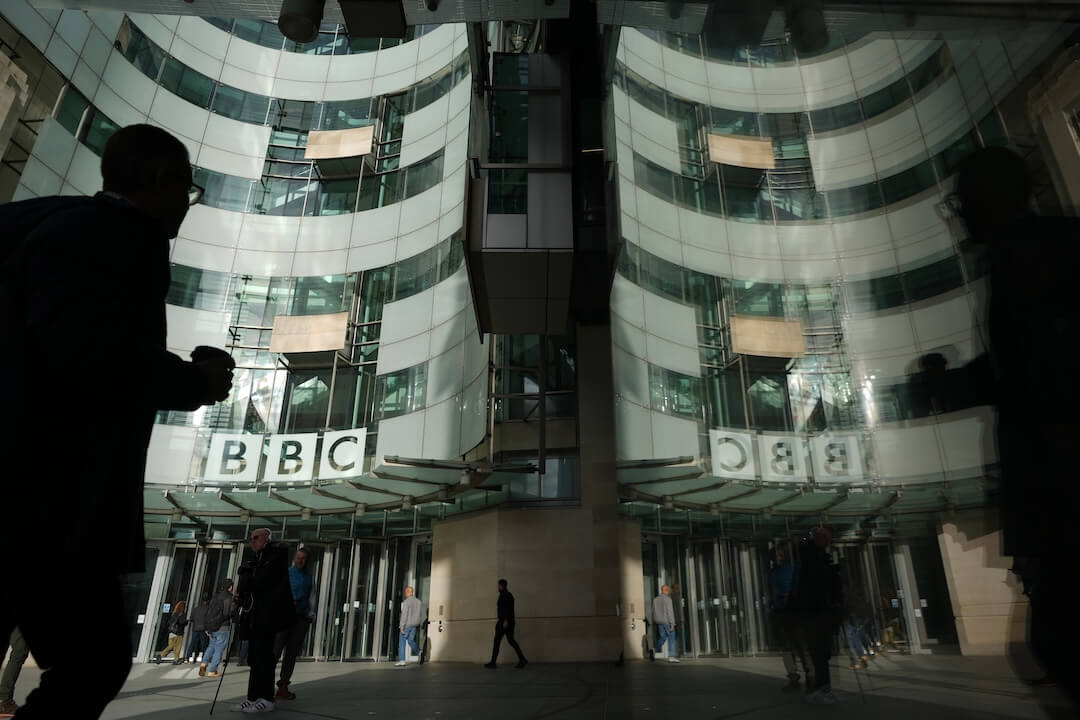
The litigation has placed Trump in a procedural corner familiar to high-profile plaintiffs: the obligation to testify under oath. Having initially missed an October 16 deposition—citing a matter of national importance while campaigning in Georgia and attending a fundraiser at Mar-a-Lago—Trump was ordered by U.S. Magistrate Judge Enjoliqué Lett to sit for a deposition by December 11 or face severe sanctions, up to and including the dismissal of his lawsuit.
White House Press Pool Exclusions and Escalating Rhetoric
Simultaneously, tensions between the executive branch and independent media outlets have reached a boiling point. For the third time in less than a week, the White House blocked a credentialed news outlet from traveling with the president on Air Force One.
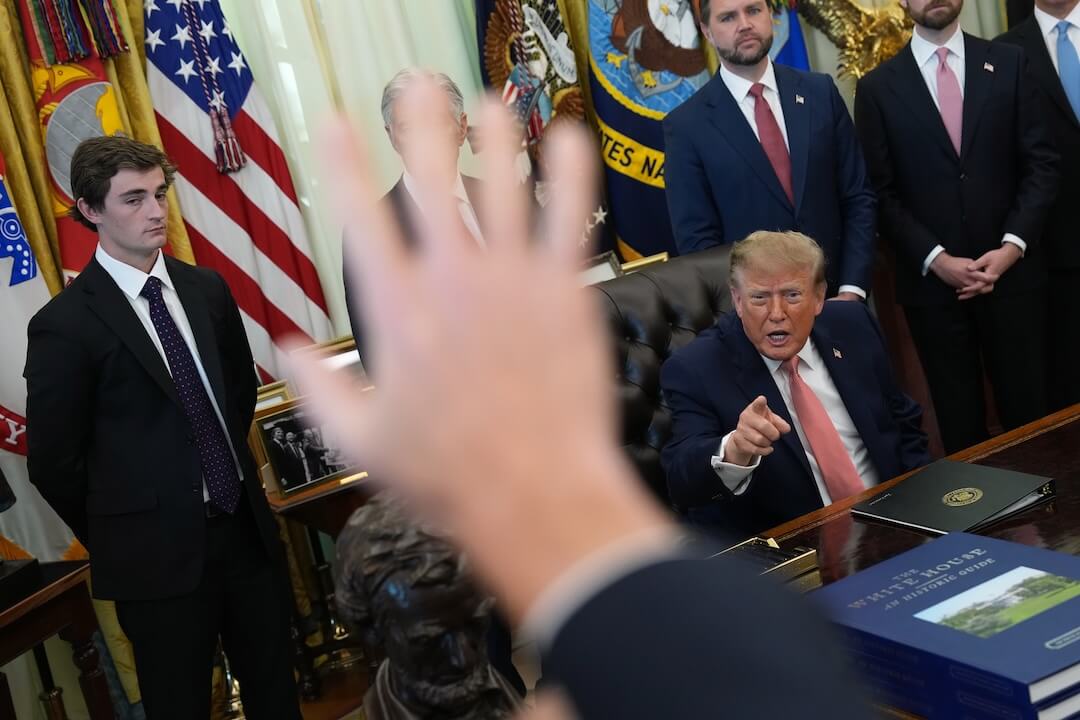
The most recent target was British newspaper The Independent, whose White House correspondent, Andrew Feinberg, was scheduled to serve as the primary print representative on a travel pool assignment to South Dakota. The exclusion followed an exchange in the Oval Office on October 20, during which Feinberg attempted to question the president regarding a whistleblower reward initiative. Trump grew visibly hostile, calling Feinberg a "sick person."
The administration’s subsequent messaging escalated the conflict. The official White House rapid response operation published derogatory remarks directed at the reporter, while the vice president labeled him an "imbecile" on social media. The White House press office subsequently dropped Feinberg from the travel pool without official explanation.
These actions form part of a broader pattern. Since the administration assumed control of the press pool rotation in February 2025—a responsibility previously managed independently by the White House Correspondents’ Association—several prominent news organizations have faced exclusion, including CNN, The Wall Street Journal, HuffPost, Politico, and The Associated Press. Several of these entities have responded with legal challenges against the executive branch over violations of constitutional access and press freedom.
Institutional Challenges at Scientific American
In the print and digital magazine sector, Scientific American has faced internal upheaval. Reporting by The Nation revealed that the country’s oldest continuously published magazine has shrunk significantly amid corporate pressure to soften its political coverage.
Previously owned by German publisher Springer Nature, the publication faced existential threats when the federal government scrutinized subscriptions and funding for academic journals essential to agencies like the National Institutes of Health. In response, Springer Nature leadership pressured editors to curtail political coverage, leading to the suspension of the magazine’s opinion section—which had published editorials critical of Trump—and the reassignment of editors.
Financial losses compounded these editorial pressures. Over an 18-month period, the publication shed at least 53 of its roughly 84 staff members through layoffs, resignations, and retirements. In April, staff announced plans to unionize with the Writers Guild to protect editorial independence. Shortly thereafter, Springer Nature sold the publication to LabX, sparking concerns among remaining staff regarding the future quality and rigor of the magazine’s investigative output.
Supporting Context & Metrics
The convergence of these events highlights a precarious fiscal and regulatory environment for American journalism:
- Litigation and Discovery: Trump’s legal strategy has frequently involved filing massive defamation and civil suits against news organizations, though plaintiffs often face mounting pressure during the discovery phase. Historical precedent, such as the voluntary dismissal of a $500 million lawsuit against former attorney Michael Cohen in 2023, illustrates how depositions are frequently avoided when campaign schedules or legal exposures intensify.
- Workforce Reductions: The downsizing of legacy outlets like Scientific American (loss of over 60% of staff over a brief window) reflects wider systemic contraction across science and investigative journalism sectors.
- Loss of Independent Ombudsmen: The impending departure of NPR Public Editor Kelly McBride underscores the rarity of independent audience advocacy in modern newsrooms. While NPR is preserving the role in a new institutional partnership with the University of Maryland’s Philip Merrill College of Journalism, the vast majority of media organizations abandoned the ombudsman model years ago to cut overhead costs.
Official Statements
The parties at the center of these unfolding narratives have issued strong defenses of their respective positions:
- The BBC Defense: Counsel for the BBC argued that the network’s post-broadcast apology addressed editorial errors without crossing the legal threshold of defamation, asserting that the plaintiff cannot prove damages in a jurisdiction where the disputed documentary never aired.
- The White House Perspective: Administration officials have defended the restructuring of press pool access as a matter of maintaining decorum and operational efficiency. Conversely, excluded journalists argue that the policy is designed to insulate the executive branch from rigorous questioning. Andrew Feinberg wrote in The Independent: "The press office has made sure that anytime Trump takes questions, many if not a majority of the ‘reporters’ present will be from ideologically-driven media outlets that are more or less dedicated less to reporting news than supporting Republicans and denigrating Democrats."
- Transparency Advocacy: Commenting on a separate federal lawsuit filed by The Marshall Project against Immigration and Customs Enforcement (ICE) to demand basic detainee tracking data, Managing Editor Jennifer Peter emphasized the core principle of accountability: "We are seeking the same transparency and access to information that have existed within the criminal justice system for centuries."
Future Outlook
As the media industry looks toward the close of 2026 and beyond, several structural trajectories are becoming clear:
- Legal Accountability vs. Political Posturing: The enforcement of Judge Lett’s order requiring Trump to sit for a video-recorded deposition by December 11 will serve as a critical test for the BBC lawsuit. Should the deposition proceed, it will provide rare public insight under oath into how the former president measures reputational and business damages in defamation claims against international broadcasters.
- The Battle for Access: The ongoing litigation brought by outlets like the Associated Press, CNN, and Politico against the White House will likely establish new constitutional precedents concerning executive control over press pool credentials and the First Amendment rights of independent journalists.
- The Evolution of Editorial Independence: The transition of Scientific American to new ownership and the relocation of NPR’s public editor program to the University of Maryland highlight an industry in transition. As corporate consolidation and digital pivots alter traditional newsroom economics, the survival of independent journalism will rely heavily on legal protections, unionization efforts, and institutional commitments to transparency.
Ultimately, the events of this month reinforce a timeless warning articulated by late New York Times managing editor John Geddes regarding the profession: anyone entering journalism “had better love doing it, because the odds are that sometime in the next few years, it might break your heart.” Yet, as Geddes and his contemporaries demonstrated, the enduring demand for rigorous, independent reporting remains the ultimate check against systemic decay.