

Executive Overview
The contemporary media and information ecosystem is undergoing a period of profound turbulence. Driven by escalating political pressures, regulatory interventions, and a rapidly shifting economic landscape, news organizations find themselves caught between foundational First Amendment protections and aggressive government oversight.
At the center of this storm is Federal Communications Commission (Commision) Chair Brendan Carr, whose recent warnings regarding "Fake Polls and Suppression Polls" have inserted the federal regulator directly into how broadcasters cover political polling ahead of high-stakes midterm elections.
Simultaneously, the institutional framework of journalism is being tested on multiple fronts. From high-stakes federal battles over broadcast license renewals—most notably Disney and ABC’s ongoing First Amendment lawsuit against the FCC—to massive legal penalties levied against big tech companies for privacy violations, the boundaries of digital and traditional media are being aggressively redrawn.
Yet, even as centralized institutions face existential questions regarding independence, regional journalism is proving remarkably resilient. Across vast, resource-constrained landscapes like Alaska, newsrooms are pioneering unprecedented collaborative models to ensure voters remain informed. This comprehensive report breaks down these developments, examining the structural changes, official statements, and legal showdowns shaping the future of global and domestic media.
Detailed Chronology & Core Events
The FCC Polling Warning and the "Wedgewood" Fallout
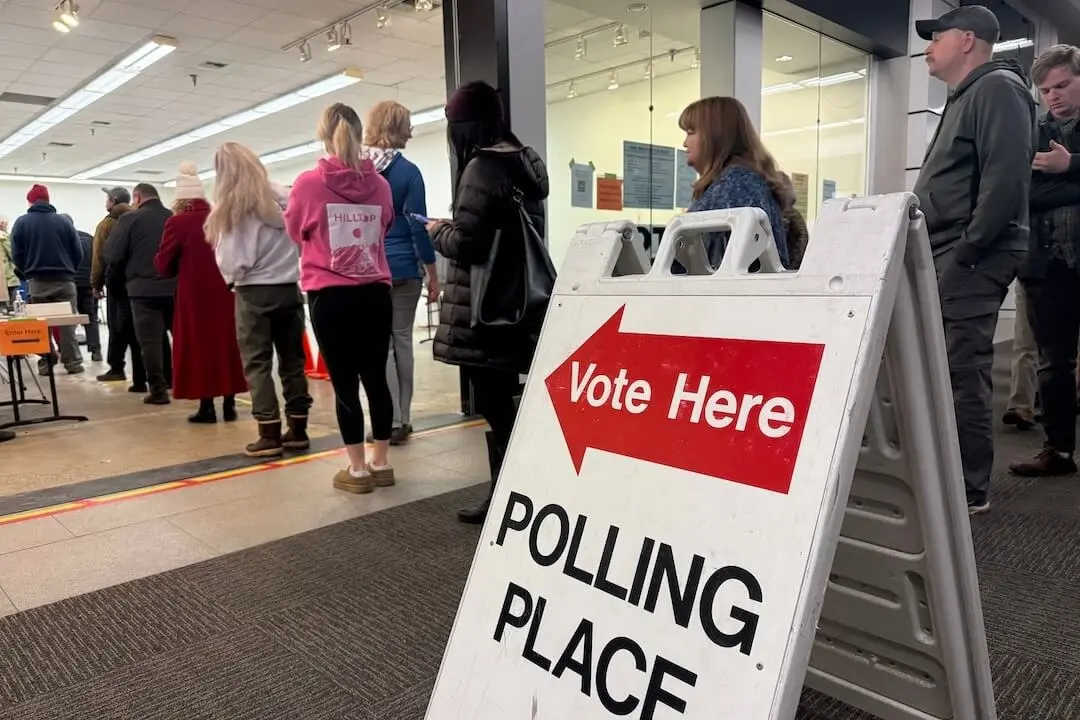
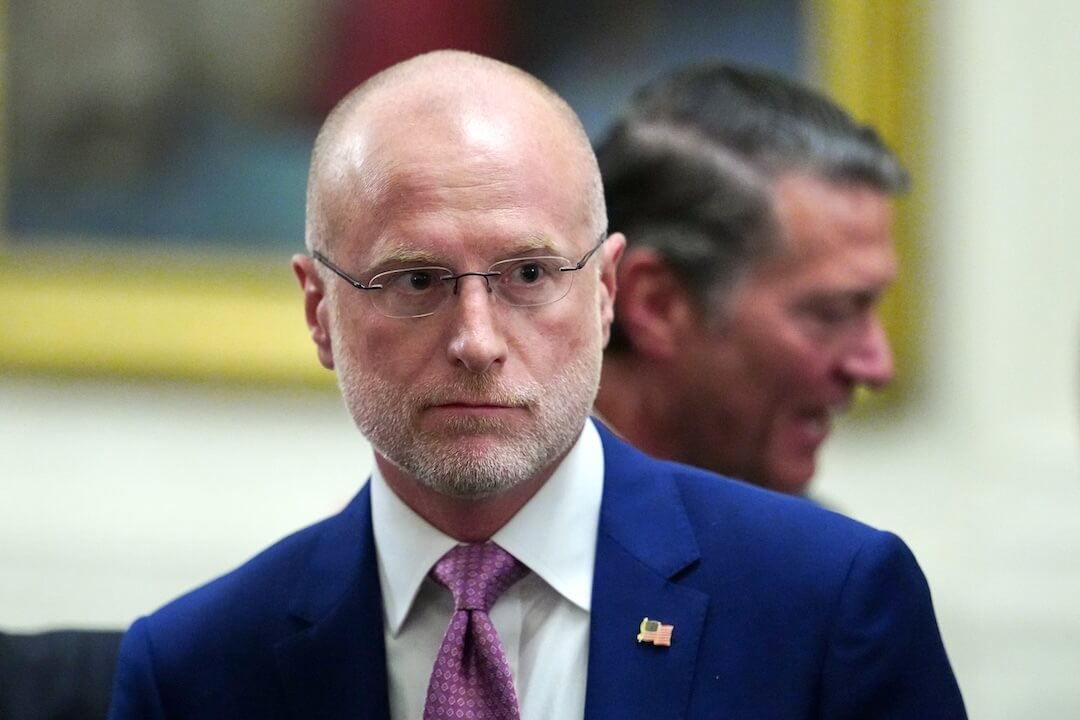
The friction over political polling erupted less than two weeks before the midterm elections, when FCC Chair Brendan Carr issued a direct warning to broadcasters. Carr asserted that airing "Fake Polls and Suppression Polls" could directly violate a station’s regulatory obligations and put their federal broadcast licenses in jeopardy.
While Carr refrained from naming specific networks or polls, the timing of his warning aligned with a major disclosure by Wedgewood Polls. The polling firm, launched earlier in the year, acknowledged that it had entirely fabricated political surveys. These manufactured data points had been picked up by mainstream news organizations and integrated into major polling aggregators before scrutiny forced their removal. Wedgewood characterized its actions as a "social experiment" designed to expose vulnerabilities within the polling industry.
Leveraging this controversy, Carr invoked FCC rules against news distortion and broadcast hoaxes. In a post on the social platform X, he claimed there had been a "significant surge" in manipulated polls engineered to alter voter turnout and enthusiasm. "Many journalists and broadcasters have been amplifying or airing these Polls without regard to basic journalistic ethics and without informing the public that those Polls lack a scientific, accurate, or even real basis," Carr wrote.
Legal Battles: ABC, Disney, and the Question of Regulatory Independence
Carr’s polling warning is part of a broader pattern of regulatory friction that has alarmed press freedom advocates. In August, ABC and its corporate parent, The Walt Disney Co., filed a landmark federal lawsuit against the FCC. The legal action alleges that the agency violated the company’s First Amendment rights by weaponizing the licensing process—specifically calling up the licenses of eight ABC-owned stations for early review and renewal years ahead of schedule—to appease President Donald Trump and punish the network for its news coverage, comedy, and daily programming.
Tensions reached a fever pitch at a recent media industry event in New York City, where Democratic FCC Commissioner Anna Gomez offered a blunt assessment of the agency’s trajectory. Gomez predicted that ABC would likely prevail in its First Amendment lawsuit, praising Disney for finding the courage to fight back. "Capitulation breeds capitulation, but courage inspires courage," Gomez stated, adding that she had "never seen an FCC that’s less independent than this FCC."
Meta Hit with Historic $25 Billion Privacy Penalty
Beyond traditional broadcast and political disputes, the legal reckoning for big tech reached a historic milestone. A New Mexico judge ordered Meta to pay a staggering $25 billion penalty following a jury verdict finding the company liable for 43 million violations of state consumer protection laws related to the Cambridge Analytica data privacy scandal.
Presiding over the case, the judge excoriated Meta for engaging in a "systematic pattern of deception at the core of Facebook’s business model." The penalty eclipses the record-setting $5 billion settlement Facebook reached with the Federal Trade Commission (FTC) in 2019 and stands as one of the largest corporate fines in technology history. Legal experts suggest the ruling could establish a vital legal blueprint for other states seeking to leverage local consumer protection statutes to hold major tech conglomerates accountable. Meta has announced its intention to appeal the verdict.
Supporting Context & Metrics
Polling Integrity and the Political Climate
The debate over polling accuracy unfolds against a backdrop of intense public skepticism regarding data methodologies. President Donald Trump has repeatedly targeted polling organizations amid reports showing low approval ratings. Notably, a Reuters/Ipsos poll released during the height of the controversy found that 31% of Americans approved of Trump’s performance in office—marking the lowest level recorded during either of his presidential terms.
Responding to reporters outside the White House, Trump dismissed the data out of hand: "A lot of the polls are rigged. Just like the journalists are rigged."
Christianity Today and the Erosion of Editorial Independence
Print and digital journalism are experiencing internal institutional crises as well. Over a 14-month period, evangelical publication Christianity Today lost more than half of its staff to layoffs and resignations. Former staff members spoke with The New York Times, detailing how financial pressures and executive leadership—specifically CEO Nicole Massie Martin and COO Thomas Addington—pushed the magazine to soften its reporting and shy away from controversial investigations.

Former deputy editor Bonnie Kristian published an essay on her Substack detailing an eroding sense of editorial independence. Kristian noted that the magazine’s leadership exhibited "discomfort with, disinterest in, and sometimes even distaste for journalists and our work," driven primarily by a fear of reputational and financial loss. With the subsequent departures of top personnel, the once-prominent publication now operates with zero dedicated staff writers and a severely constrained editorial corps.
Collaborative Resilience in Alaska
Conversely, remote and regional media markets are demonstrating the power of cooperation. In Alaska—a state physically larger than California, Texas, and Montana combined—newsrooms face severe logistical hurdles and budgetary constraints. Rather than competing aggressively, outlets like the Alaska Beacon, The Anchorage Press, and the Anchorage Daily News have embraced radical collaboration.
Through platforms like the Alaska News Coalition, newsrooms routinely share reporting memos, co-host political debates, and cross-publish thousands of stories. This cooperative framework has proven essential for covering high-stakes political contests, such as the fiercely watched Senate race complicated by unique local ballot dynamics. Despite logistical barriers—such as the fact that roughly 80% of Alaskan communities are entirely disconnected from the road system—the state’s journalists are proving that resource-pooling can preserve local accountability journalism.
Official Statements & Legal Arguments
The clash between federal regulators, media executives, and press freedom watchdogs hinges on deeply conflicting interpretations of the law, the Constitution, and regulatory overreach.
- Brendan Carr, FCC Chair: Defending his intervention on political polling, Carr emphasized the agency’s mandate: "Broadcasters are prohibited by the terms of their federal licenses from engaging in News Distortion or promoting Broadcast Hoaxes. It is important that broadcasters comply with their public interest obligations."
- Seth Stern, Freedom of the Press Foundation: Strongly condemning Carr’s warning, Stern argued that the threats fundamentally undermine constitutional protections: "FCC policies about hoaxes and distortions must be applied narrowly to avoid clashing with the Constitution, if they can be constitutionally applied at all… The law under which the FCC operates expressly prohibits censorship and meddling with free speech."
- Anna Gomez, FCC Commissioner: Underscoring the unprecedented nature of the commission’s actions against broadcasters, Gomez noted that violating news distortion policies requires a deliberate, significant misrepresentation—a standard that simple journalistic error or inaccurate polling data cannot meet. On the broader trajectory of the agency, Gomez stated: "Clearly everything is at the direction of the White House, and that’s really problematic."
Future Outlook
As the media landscape moves past the midterms and toward the latter half of the decade, the structural pressures facing journalism and information-sharing show no signs of abating.
- Regulatory Scrutiny vs. First Amendment Protections: The outcome of ABC and Disney’s federal lawsuit against the FCC will likely serve as a watershed moment for American media regulation. Should the courts rule in favor of the network, it could establish hard legal limits on the executive branch’s ability to use regulatory bodies to influence media content. Conversely, a ruling favoring the FCC could permanently alter the relationship between broadcasters and the federal government.
- The Evolution of Digital Accountability: The $25 billion penalty levied against Meta in New Mexico signals an aggressive new frontier for state-level enforcement of data privacy. As state attorneys general increasingly bypass federal gridlock to penalize tech giants, big tech will face mounting legal and financial liabilities.
- The Survival of Regional Models: Amid institutional contractions and corporate management battles seen at outlets like Christianity Today, the cooperative frameworks pioneered in regions like Alaska offer a viable blueprint for local news sustainability. By prioritizing information-sharing over cutthroat competition, regional journalists are charting a pragmatic path forward for public-interest reporting.