

Executive Overview
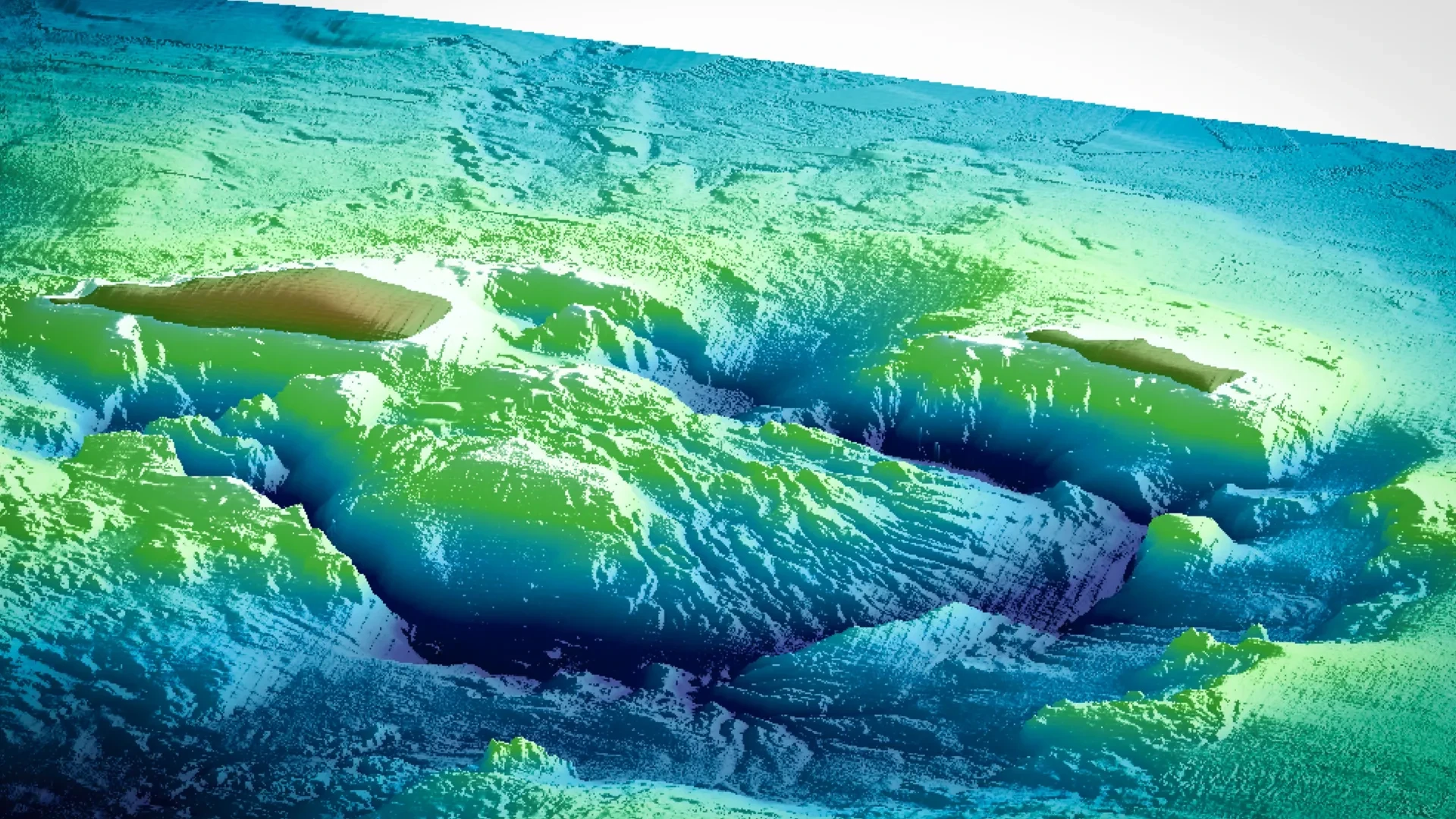
Deep beneath the sapphire-blue waters south of Kyushu, Japan, a sleeping geologic titan is slowly stirring back to life. Millennia after unleashing one of the most cataclysmic volcanic events in human history, Japan’s submerged Kikai caldera is actively refilling its vast underground magma chambers.
A groundbreaking study led by geophysicists at Kobe University, conducted in collaboration with the Japan Agency for Marine-Earth Science and Technology (JAMSTEC) and published in Communications Earth & Environment, has confirmed the presence of a massive, fresh pool of molten rock gathering in the ancient plumbing system of the caldera.
Using advanced marine seismic imaging, researchers have mapped an enormous reservoir of magma resting thousands of meters beneath the ocean floor. Crucially, geochemical and seismic data indicate that this is not merely the stagnant, cooling residue of a prehistoric disaster. Instead, it is fresh magma—newly injected from the depths of the Earth’s mantle—gradually rebuilding the volcano’s subterranean explosive potential.
While volcanologists stress that this finding does not signal an imminent cataclysm, it offers an unprecedented window into the multi-millennial life cycle of supervolcanoes. By decoding how systems like Kikai recover, scientists are gaining critical insights into other globally significant supervolcanoes, including Yellowstone in the United States and Toba in Indonesia. Ultimately, this research paves the way for enhanced monitoring frameworks, transforming our understanding of how Earth’s most formidable geological hazards recharge, evolve, and threaten life on our planet.
Detailed Chronology
The Holocene’s Greatest Cataclysm: The Akahoya Eruption
To understand the significance of what is happening beneath the Kikai caldera today, scientists must look back approximately 7,300 years to the Holocene epoch. During this era, Kikai—primarily a submarine volcanic complex situated along the Ryukyu Island arc—produced the Akahoya eruption, the largest explosive volcanic event of the current geological epoch.
The scale of the Akahoya eruption defies ordinary human imagination. The volcano evacuated a staggering volume of magma in a remarkably short geological timeframe. Pyroclastic flows raced across the sea, annihilating early human settlements on southern Kyushu and blanketing vast swaths of the Japanese archipelago in thick layers of volcanic ash. The atmospheric and climatic repercussions of the eruption likely triggered prolonged regional winters, impacting ecosystems and human populations across East Asia.
When such an unimaginably vast quantity of molten rock escapes from the crust in a single pulse, the structural integrity of the underlying architecture fails. Deprived of the immense internal pressure that once supported it, the roof of the emptied magma chamber collapses inward. This catastrophic subsidence created the Kikai caldera—a massive, ring-shaped depression measuring roughly 20 kilometers across, most of which now lies submerged beneath the sea.
The Long Silence and Post-Caldera Revival
Following the Akahoya catastrophe, the Kikai caldera did not remain entirely dormant. Volcanic systems of this magnitude possess deep, persistent connections to the Earth’s mantle, ensuring that thermal and geological activity continues long after the main event.
Over the ensuing millennia, the volcano began the painstaking process of recovery. Approximately 3,900 years ago, volcanic activity resumed near the center of the sunken caldera, giving rise to the Iodojima lava dome. Unlike the explosive, silica-rich gas-charged magma that drove the Akahoya cataclysm, this subsequent activity involved more viscous, sluggish lava that slowly extruded to form physical structures around the vent rather than blowing the landscape apart.
Successive eruptions and hydrothermal activity built up the underwater architecture of the caldera over the centuries. Yet, despite clear evidence of surface restlessness, the subterranean anatomy of the system—specifically the size, depth, and exact nature of the magma reservoir feeding these post-caldera domes—remained shrouded in mystery. Direct observation of sub-seafloor chambers is notoriously difficult, leaving geophysicists with an incomplete picture of how Kikai was fueling its modern manifestations and whether it retained the capacity for future super-eruptions.
The Kobe-JAMSTEC Breakthrough
The turning point came when a dedicated team of researchers from Kobe University and JAMSTEC teamed up to look beneath the ocean floor. Recognizing that Kikai’s underwater setting—while challenging—actually provided a unique advantage for wide-area seismic surveys, the research consortium deployed specialized research vessels equipped with high-powered airgun arrays.
By releasing controlled, high-energy pulses of sound beneath the water’s surface, the survey team sent seismic waves plunging deep into the oceanic crust. As these waves traveled through different geological formations—moving from solid rock to fractured zones and molten pockets—their velocities and trajectories altered.
A dense array of ocean-bottom seismometers deployed across the caldera meticulously recorded these acoustic signatures. Back in the laboratory, advanced seismic tomography allowed the researchers to translate these wave patterns into a high-resolution, three-dimensional model of the subsurface.
The results were definitive: directly beneath the site of the ancient Akahoya eruption, the data revealed a massive, distinct anomaly—a voluminous sub-seafloor reservoir teeming with a high proportion of molten rock. The spatial footprint and structural position of this newly mapped chamber confirmed that it occupies the exact same geological plumbing system responsible for the prehistoric super-eruption, proving that Kikai’s ancient engine room is not only intact, but currently active.
Supporting Context & Metrics
The Scale of Supervolcanoes
To contextualize the findings at Kikai, it is helpful to understand the sheer scale of supervolcanoes compared to standard volcanic systems. While typical volcanoes—such as Mount St. Helens or Mount Fuji—pose severe regional hazards, supervolcanoes belong to a vastly different tier of geological phenomena, generally classified by their ability to eject a Volcanic Explosivity Index (VEI) 8 magnitude event, releasing over 1,000 cubic kilometers (240 cubic miles) of material.
To visualize the volumetric scale of a super-eruption:
- The Central Park Metric: The amount of magma expelled during an event like Kikai’s Akahoya eruption is staggering. If gathered into a single solid mass, the magma would be sufficient to bury New York City’s Central Park beneath a monolithic layer of rock roughly 12 kilometers (7.5 miles) thick—reaching well into the stratosphere.
- Caldera Depressions: The depressions left behind by these colossal events are immense. Kikai’s caldera spans roughly 20 kilometers across, creating a submerged basin that dwarfs typical volcanic craters. Other global analogs, such as Yellowstone caldera in Wyoming (measuring roughly 55 by 72 kilometers) and Indonesia’s Lake Toba (spanning 100 by 30 kilometers), demonstrate the staggering geographic footprint of these systems.
The Mechanics of Magma Re-injection
One of the most profound scientific contributions of the Kobe-JAMSTEC study is its illumination of the magma re-injection model. For decades, volcanologists debated how giant calderas manage to accumulate the staggering volumes of magma required to fuel repeat super-eruptions.
The traditional view often assumed that magma chambers either remained as massive, lingering pools of partially molten mush for tens of thousands of years or that they cooled completely before being replaced by entirely new systems. However, Kikai’s chemical and seismic profiles suggest a more dynamic reality:
- Chemical Differentiation: Geochemical analysis of rocks collected from the Iodojima lava dome and subsequent post-caldera activity reveals a distinct chemical composition compared to the material ejected during the Akahoya super-eruption. The newer lavas show variations in trace elements and mineral signatures that cannot be explained by simply melting the leftover dregs of the ancient reservoir.
- Deep Mantle Supply: These compositional differences strongly indicate that fresh, volatile-rich magma is actively ascending from deeper within the Earth’s crust or upper mantle.
- Reservoir Recharge: This newly injected molten rock does not erupt immediately. Instead, it feeds into the shallow pre-existing reservoir, mixing with resident material, driving ongoing hydrothermal systems, and gradually inflating the sub-seafloor chamber over thousands of years.
Global Implications: Yellowstone and Toba
The confirmation of this recharge mechanism at Kikai has profound implications for volcanology on a global scale. Similar geophysical anomalies—specifically vast, shallow reservoirs of partially molten rock—have been detected beneath other iconic supervolcanoes, including Yellowstone in the United States and Toba in Sumatra.
For years, scientists have grappled with why systems like Yellowstone maintain such enormous quantities of melt relatively close to the Earth’s surface without erupting continuously. The Kikai study provides a unifying model: continuous, episodic injections of fresh mantle-derived magma into aging crustal chambers may be the universal engine that keeps supervolcanoes primed over evolutionary timescales. By understanding the timeline and volume thresholds of Kikai’s recharge, researchers gain a conceptual blueprint that can be applied to evaluate the stability and long-term behavior of supervolcanoes worldwide.
Official Statements
The implications of this discovery have drawn commentary from the leading researchers spearheading the investigation. Emphasizing both the scientific breakthrough and the need for tempered public interpretation, Kobe University geophysicist Nobukazu Seama shared detailed insights into the study’s findings:
Addressing the necessity of studying underwater caldera systems, Nobukazu Seama noted:
"The underwater location allows us to implement systematic, large-scale surveys. We must understand how such large quantities of magma can accumulate to understand how giant caldera eruptions occur."
Commenting on the direct continuity between the ancient cataclysm and the modern structure, Seama explained:
"Due to its extent and location it is clear that this is in fact the same magma reservoir as in the previous eruption."
Clarifying the source of the material fueling the modern caldera, Seama added:
"This means that the magma that is now present in the magma reservoir under the lava dome is likely newly injected magma."
Finally, placing the discovery within a global geological context, Seama highlighted its relevance to other major systems:
"This magma re-injection model is consistent with the existence of large shallow magma reservoirs beneath other giant calderas like Yellowstone and Toba. Our ultimate goal is to become better able to monitor the crucial indicators of future giant eruptions."
Future Outlook
What This Means—and What It Doesn’t Mean
In an era sensationalized by disaster headlines, discoveries regarding supervolcanoes frequently trigger public anxiety. However, geophysicists emphasize an essential distinction: the replenishment of a magma reservoir does not equate to an imminent super-eruption.
The process of magma accumulation beneath Kikai is a slow, methodical geological cycle unfolding over thousands of years. A magma reservoir can sit in a state of continuous recharge for millennia without reaching the critical pressure thresholds, gas saturations, or structural failures necessary to trigger a catastrophic eruption. The discovery does not suggest that Kikai is about to repeat the Akahoya event tomorrow, next year, or even within the next several centuries.
Instead, the true value of the research lies in hazard preparedness and fundamental Earth science. By mapping the anatomy of a recharging supervolcano, scientists are establishing a baseline for what a "healthy" or "recharging" magma system looks like.
Next Steps in Sub-Seafloor Volcanology
Armed with the success of their initial marine seismic campaign, the Kobe University and JAMSTEC research teams are already looking toward the future. Their primary objective is to refine and expand the seismic techniques used at Kikai to achieve even higher resolution imaging of the sub-seafloor environment.
Future research phases will focus on:
- High-Resolution Temporal Monitoring: Tracking changes in the volume and state of the magma reservoir over time to detect shifts in the rate of magma injection.
- Gas and Hydrothermal Tracking: Combining seismic data with geochemical analyses of seafloor hydrothermal vents to monitor the release of volcanic gases, which often serve as early indicators of changing subterranean pressure.
- Global Model Integration: Applying the Kikai re-injection framework to comparative studies at Yellowstone, Toba, and Taupo in New Zealand to build a universal forecasting model for supervolcanoes.
Conclusion
Earth’s supervolcanoes are among the most awe-inspiring and potentially devastating features of our dynamic planet. They represent immense stores of thermal and mechanical energy capable of altering global climates and reshaping human history.
The new discoveries at Japan’s Kikai caldera strip away some of the mystery surrounding these sleeping giants. By proving that ancient magma systems can be quietly, steadily revitalized by fresh injections from the Earth’s mantle, scientists have taken a monumental step forward. While an eruption remains a distant, long-term geological prospect, the knowledge gained from Kikai brings humanity closer than ever to reading the subtle warning signs of the planet’s most powerful subterranean engines—turning the unknown into the measurable, and ultimately, the manageable.
Funding for this research was generously provided by the Ministry of Education, Culture, Sports, Science and Technology (MEXT) under the Third Earthquake and Volcano Hazards Observation and Research Program (Earthquake and Volcano Hazard Reduction Research), as well as the Japan Society for the Promotion of Science (Grant 20H00199). The project was executed in close collaboration with the Japan Agency for Marine-Earth Science and Technology (JAMSTEC).