

Executive Overview
Deep beneath the turquoise waters of the East China Sea, one of Earth’s most formidable and destructive geological engines is quietly stirring back to life. Millennia after unleashing a cataclysmic event that reshaped the planet’s climate and geography, Japan’s submerged Kikai caldera is actively refilling its massive underground magma reservoir.
A groundbreaking study led by geophysicists at Kobe University, in close collaboration with the Japan Agency for Marine-Earth Science and Technology (JAMSTEC), has captured unprecedented seismic evidence of fresh, molten rock accumulating deep within the sunken volcanic system. Published in the journal Communications Earth & Environment, the findings offer a rare, high-resolution look at the mechanics of supervolcano recovery.
While the discovery does not signal an imminent global catastrophe, it provides critical missing pieces to a long-standing geological puzzle: how ancient calderas manage to rebuild the staggering volumes of magma required to fuel civilization-ending eruptions. By mapping the subterranean plumbing system of Kikai, scientists are gaining foundational insights that could ultimately transform how humanity monitors iconic supervolcanoes worldwide—including Yellowstone in the United States and Lake Toba in Indonesia.
Detailed Chronology: The Life Cycle of a Supervolcano
To comprehend the significance of the new findings at Kikai, scientists must look back through deep time, tracing the catastrophic milestones and protracted recovery periods that define supervolcano activity.
The Holocene’s Greatest Cataclysm (c. 5300 BCE)
Roughly 7,300 years ago, the Kikai caldera—situated approximately 50 kilometers (31 miles) south of Kyushu, Japan’s southernmost main island—was the site of the Akahoya eruption. It stands as the largest known volcanic eruption of the Holocene epoch, the current geological period that began around 11,700 years ago.
The scale of the Akahoya event defies ordinary human imagination. The volcano ejected an immense volume of pyroclastic material—enough to fill New York City’s Central Park to a crushing vertical depth of roughly 12 kilometers (7.5 miles). Pyroclastic flows raced across the sea and devastated southern Kyushu, wiping out prehistoric Jōmon cultures. The eruption cast an estimated 150 cubic kilometers of dense rock equivalent into the atmosphere, spewing massive ash plumes and sulfur aerosols that likely triggered a temporary drop in global temperatures, casting a pale shroud across prehistoric skies.
Collapse and Submarine Isolation
When such colossal quantities of magma evacuate a subterranean chamber in a matter of hours or days, the structural integrity of the Earth’s crust fails. Deprived of internal pressure, the overlying land collapses into the emptied void.
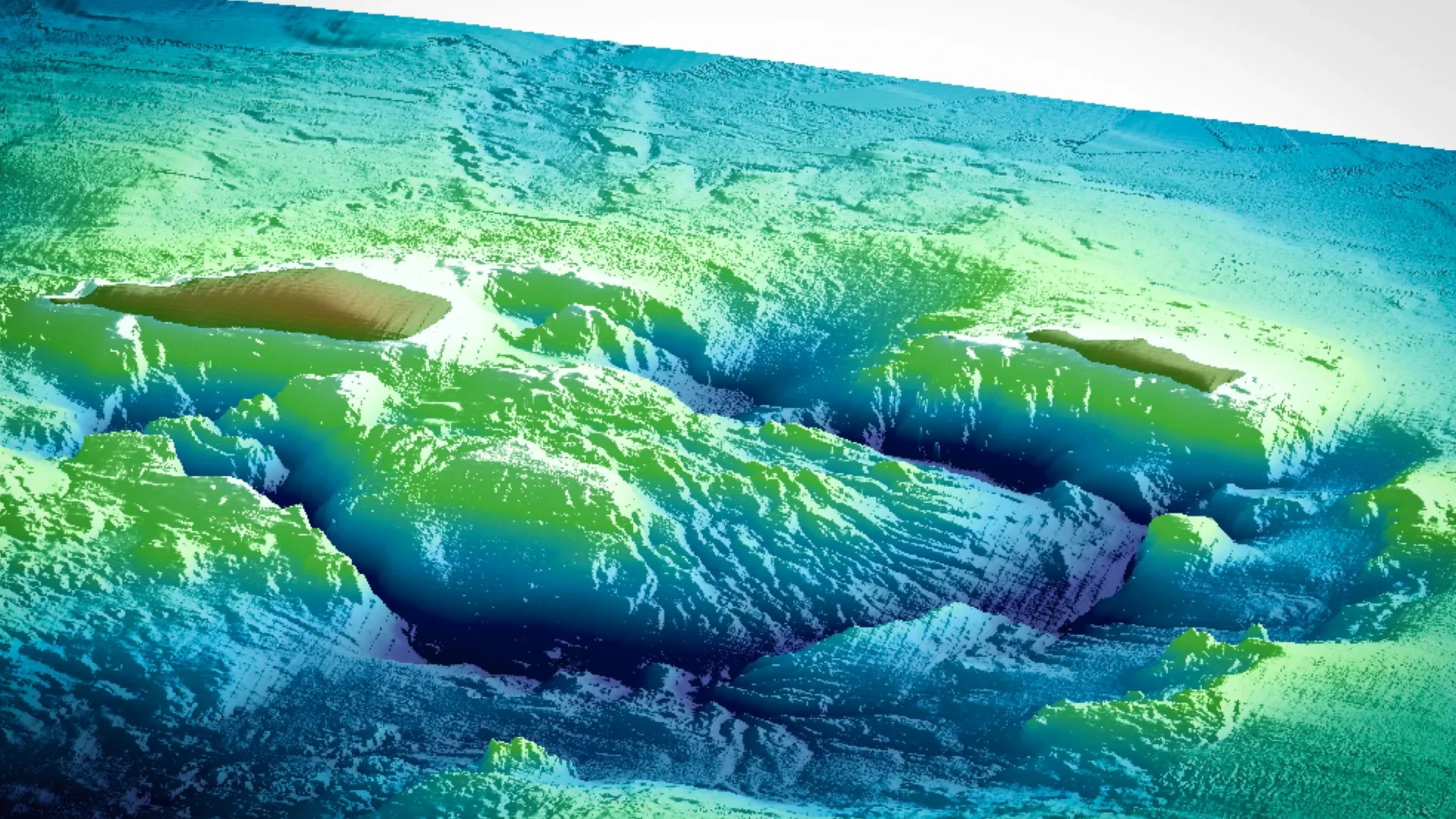
At Kikai, this catastrophic roof-collapse formed a massive caldera measuring approximately 20 by 17 kilometers (12 by 10.5 miles). Because the vast majority of this structural depression lies submerged beneath the ocean, subsequent geological activity has been hidden from direct surface observation, making it a challenging environment for traditional volcanological studies.
The Millennia-Long Recharging Phase
Following the Akahoya disaster, the Kikai system entered a prolonged phase of quiet recovery. However, "quiet" in geological terms does not mean inert. Previous archaeological and geological investigations have revealed that approximately 3,900 years ago—more than three millennia after the main collapse—a new lava dome began forming near the center of the caldera.
This post-caldera activity signaled that the volcanic engine was far from dead. Viscous lava continued to extrude over subsequent centuries, building the subterranean and submarine structures that modern researchers are only now beginning to peer into. The recent seismic surveys by Kobe University and JAMSTEC confirm that this post-caldera dome-building phase is directly tied to an ongoing, active resupply of fresh magma from deep within the Earth’s mantle and lower crust.
Supporting Context & Metrics: Mapping the Subterranean Monster
Studying an underwater supervolcano presents immense logistical hurdles. Yet, Kikai’s marine environment ultimately provided researchers with a unique scientific advantage.
Leveraging the Seafloor for Large-Scale Surveys
"The underwater location allows us to implement systematic, large-scale surveys," notes Kobe University geophysicist Nobukazu Seama. Without the interference of human infrastructure, dense vegetation, or rugged terrestrial topography, the flat expanses of the surrounding seafloor offered an ideal laboratory for controlled-source seismology.
To peer inside the volcano’s dark interior, the research team deployed advanced marine seismic profiling techniques. Powerful airgun arrays towed behind research vessels generated low-frequency sound pulses. These acoustic waves traveled down through the water column, penetrated the ocean floor, and propagated deep into the Earth’s crust beneath the caldera.
Decoding Seismic Velocities
As the seismic waves traveled through various rock layers, they encountered zones of solid rock, fractured strata, and pockets of molten or partially molten material. Because seismic waves travel significantly slower through liquid and semi-liquid magma than through rigid, cold crystalline rock, the arrival times and wave patterns recorded by instruments told a vivid story.
A network of advanced ocean-bottom seismometers (OBS) strategically deployed across the seafloor meticulously recorded the returning echoes and refractions. When the researchers analyzed this massive dataset, a startling picture emerged: directly beneath the site of Kikai’s ancient super-eruption lay a substantial, continuous region characterized by seismic velocity drops indicative of a high proportion of magma.
Chemical Signatures of Fresh Magma
Seismic imaging alone, however, cannot definitively prove the origin of the molten rock. Could this subterranean reservoir simply be stagnant, cooling residue left over from the cataclysm 7,300 years ago?
To answer this, the research team integrated their geophysical findings with geochemical data compiled from previous studies of Kikai’s post-caldera lava domes. Chemical analyses of the rocks extruded over the past 3,900 years revealed a distinct compositional fingerprint. The minerals and trace elements found in these younger rocks differed significantly from the material ejected during the ancient Akahoya super-eruption.
This geochemical mismatch provided the smoking gun. If the magma chamber were merely holding leftover sludge from the original eruption, its chemical composition would remain largely homogenous or evolve uniformly through fractional crystallization. Instead, the distinct composition of the modern material indicates that fresh, chemically distinct magma is actively migrating upward from deep crustal or mantle sources, continuously recharging the ancient reservoir.
Official Statements and Expert Insights
The implications of the Kikai discovery extend far beyond regional Japanese geology, touching on fundamental questions about how Earth’s most dangerous volcanic systems operate on a global scale.
"We must understand how such large quantities of magma can accumulate to understand how giant caldera eruptions occur," emphasizes lead researcher Nobukazu Seama. The difficulty in predicting super-eruptions has historically stemmed from our profound ignorance of the subterranean timescales and volume thresholds required to prime a supervolcano.
Crucially, Seama stresses that the discovery of active magma accumulation does not mean disaster is looming. "This replenishment process does not mean that another catastrophic eruption is imminent," he explains. Rather, it reveals the long-term metabolic cycle of a supervolcano—how a reservoir can spend millennia quietly recharging its energy reserves without triggering an immediate surface explosion.
Furthermore, the mechanisms uncovered at Kikai are expected to cast light on other titanic volcanic systems across the globe.
"This magma re-injection model is consistent with the existence of large shallow magma reservoirs beneath other giant calderas like Yellowstone and Toba," Seama notes. For decades, volcanologists studying Yellowstone in the United States and Lake Toba in Indonesia have puzzled over how these massive systems maintain vast, shallow pockets of molten rock beneath their crust without cooling entirely. The Kikai study provides a compelling, field-tested model of continuous deep-mantle recharge that could apply universally to all major supervolcanoes.
Future Outlook: Towards Predictive Volcanology
Armed with the insights gained from Kikai, the Kobe University and JAMSTEC research collective are already planning the next phase of their investigations. The success of the recent seismic surveys has proven the efficacy of combining marine controlled-source seismology with geochemical profiling, opening the door for more refined, high-resolution studies.
Refining High-Resolution Seismic Methods
The ultimate objective of the research team is to dramatically improve the precision of these seismic techniques. By deploying denser grids of ocean-bottom seismometers and utilizing more sophisticated acoustic wave-form inversions, scientists hope to map the internal architecture of magma reservoirs down to the individual chamber level.
"We want to refine the methods that have proved to be so useful in this study to more deeply understand the re-injection processes," Seama states. "Our ultimate goal is to become better able to monitor the crucial indicators of future giant eruptions."
Global Implications for Disaster Preparedness
Supervolcano eruptions represent one of the few natural disasters capable of altering the course of human civilization on a global scale, threatening agricultural collapse, severe climate disruption, and mass displacement. Yet, because their recurrence intervals span tens of thousands of years, capturing them in an active state of preparation has historically seemed impossible.
By demystifying the hidden recharge phases of systems like Kikai, Yellowstone, and Toba, researchers are shifting the paradigm of volcanology from reactive disaster management to proactive observation. While humanity cannot stop a supervolcano from refilling, understanding the delicate balance between deep-mantle injection, crustal storage, and eventual eruption brings science one step closer to decoding Earth’s most profound subterranean rhythms—turning terrifying unknowns into measurable, monitored phenomena.
Funding for this pivotal research was generously provided by the Ministry of Education, Culture, Sports, Science and Technology (MEXT) under "The Third Earthquake and Volcano Hazards Observation and Research Program (Earthquake and Volcano Hazard Reduction Research)," alongside support from the Japan Society for the Promotion of Science (grant 20H00199). Field operations and technical data acquisition were conducted in direct partnership with the Japan Agency for Marine-Earth Science and Technology (JAMSTEC).