

Executive Overview
The landscape of American journalism is experiencing a profound institutional and technological upheaval. At the center of this turbulence is a compounding crisis of press freedom inside the federal government, driven by the Trump administration’s aggressive strategy to reshape the composition, physical access, and structural presence of the White House press corps.
Parallel to these direct confrontations between the executive branch and major media organizations, structural shifts in media consumption continue to redefine how the public digests information. A new Pew Research Center analysis reveals that 1 in 5 Americans now regularly relies on TikTok for news, underscoring a generational and demographic divergence in information gathering. Simultaneously, prominent literary and journalistic conflicts—such as the fierce public discourse surrounding The New York Times Magazine essay by Nikole Hannah-Jones—demonstrate that the introspection within newsrooms matches the volatility of the external media ecosystem.
This report provides an in-depth synthesis of these converging developments, tracing the legal showdown between CNN and the Department of Justice, the Trump administration’s proposals to dismantle the traditional press briefing room, and the broader macro-trends reshaping the modern Fourth Estate.
Detailed Chronology: The Escalating Press Access Crisis
The ongoing standoff between the White House and major news organizations represents one of the most fraught periods in modern executive-press relations.
The September 18 Ban and Preliminary Injunction
The current crisis escalated sharply on September 18, when the White House instituted a sweeping ban targeting CNN, Politico, and MS NOW, restricting their reporters from accessing key facilities within the White House complex. In response, the affected outlets launched a joint federal lawsuit against the administration, arguing that selective exclusion violates statutory and constitutional protections governing equal access for the press.
A federal judge subsequently issued a preliminary injunction, forcing the administration to restore certain baseline privileges. However, the enforcement of that ruling has remained a point of severe contention. While physical entry to the White House grounds has been partially regularized, access to vital mobile reporting spaces—most notably Air Force One and the Oval Office—has continued to face systematic obstruction.
The Weekend Exclusions and Pool Vacancies
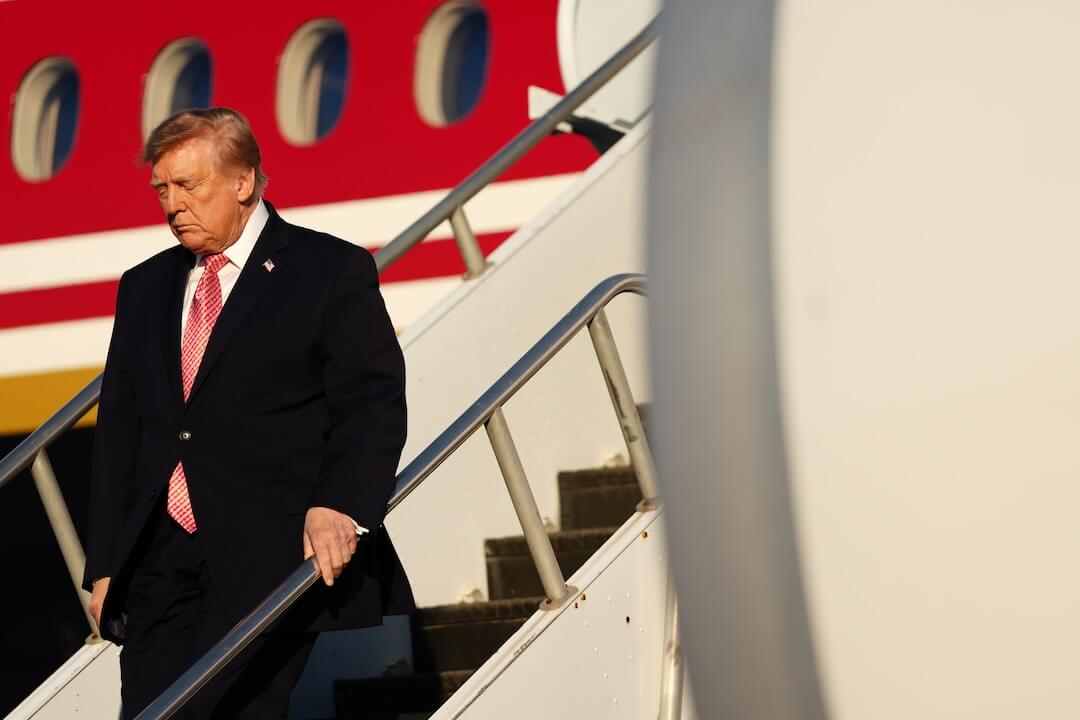
Over a recent weekend, the enforcement of these restrictions was on full display. CNN was barred from traveling with President Donald Trump on a trip to Georgia and Florida.
In keeping with the operational norms of the White House press pool—a rotating coalition of journalists whose reports are shared across the broader press corps—the remaining major broadcast networks were offered the vacant spot. In a show of solidarity or logistical alignment, ABC, CBS, Fox, and NBC declined to fill CNN’s rotational position. Consequently, the president traveled without mainstream television representation.
Instead, television pool coverage defaulted to conservative network Real America’s Voice. Under current administrative procedures, Real America’s Voice occupies the "secondary TV" slot—a privilege routinely activated whenever mainstream outlets are barred from fulfilling their pool duties.
The Legal Ultimatum
With informal resolutions failing, CNN’s outside counsel, Ted Boutrous—who also represents Politico and MS NOW in the joint litigation—escalated the legal pressure. In a formal letter addressed to the Department of Justice on Monday, Boutrous characterized the administration’s ongoing maneuvers as "mistaken, counterproductive, and unlawful."
The legal correspondence issued a strict ultimatum: the Department of Justice must formally confirm by Thursday evening that the White House will completely abandon any policy of excluding CNN from the Oval Office and Air Force One. Boutrous warned that failure to comply would trigger immediate, additional legal action. As of Tuesday, the Department of Justice had declined to provide a public comment on the matter.
Supporting Context & Metrics
To fully understand the gravity of the White House travel bans, one must examine the spatial geography of executive branch accountability.
The Geography of Access
According to legal filings and media tracking data, the Oval Office and Air Force One have effectively become the primary arenas where the president interacts with journalists. Since the commencement of his second term, President Trump has engaged directly with the press—answering more than 4,700 questions—across those specific mobile and localized spaces, as well as on airport tarmacs.
By contrast, the traditional White House press briefing room has hosted a mere 150 questions over the same timeframe. By restricting access to the tarmac, the Oval Office, and Air Force One, the administration effectively throttles the capacity of disfavored organizations to question the executive in high-frequency, unscripted environments.
The "New Media" Restructuring
The systematic reconfiguration of the press pool extends far beyond individual outlet bans. The Trump administration has seized direct control over the management of the press pool—a logistical function historically administered independently by the White House Correspondents’ Association (WHCA). By determining who enters the rotating cohort, the administration has systematically sidelined outlets such as The Associated Press, CNN, Politico, and MS NOW.
Simultaneously, the administration has curated alternative voices within the physical briefing room. Last October, the White House restricted access to West Wing corridors by requiring formal appointments for senior communications staff offices. More visibly, it established a dedicated "new media" seat in the press briefing room, distributing credentials to nonpartisan digital commentators, independent digital platforms, and conservative podcasts.
Shifting Consumption: 1 in 5 Americans Turn to TikTok
While institutional press corps battle for physical access in Washington, the public’s consumption habits continue to fracture along generational lines. A comprehensive Pew Research Center survey released in October 2026 reveals that 20% of all American adults now regularly get their news on TikTok—a staggering rise from just 3% six years prior.
- Age Demographics: The platform’s dominance is heavily concentrated among younger audiences. Approximately 39% of Americans aged 18 to 29 report regular news consumption on the platform, compared to 25% of those aged 30 to 49, 11% for ages 50 to 64, and a mere 4% for those 65 and older.
- Demographic Variations: The Pew analysis found notable ethnic and racial divergences, with approximately one-third of Black (32%) and Hispanic (35%) adults regularly sourcing news on TikTok, compared to 14% of both White and Asian adults.
- Partisan Splits: Minor political variances were also recorded, with Democrats and Democratic-leaning independents (22%) slightly more likely than Republicans and Republican-leaning independents (15%) to utilize the short-form video application for news updates.
Official Statements & Institutional Perspectives
The friction between the executive branch and the institutional press has generated a broad spectrum of official responses, ranging from legal declarations to provocative proposals regarding the physical workspace of journalists.
The White House and the Briefing Room Proposal
The administration’s ambitions regarding the press corps extend beyond pool management to the physical architecture of the White House itself. Reports surfaced indicating that President Trump has repeatedly urged former White House press secretary Karoline Leavitt to consider evicting journalists from the White House briefing room entirely, suggesting that such a move could serve as her defining legacy.
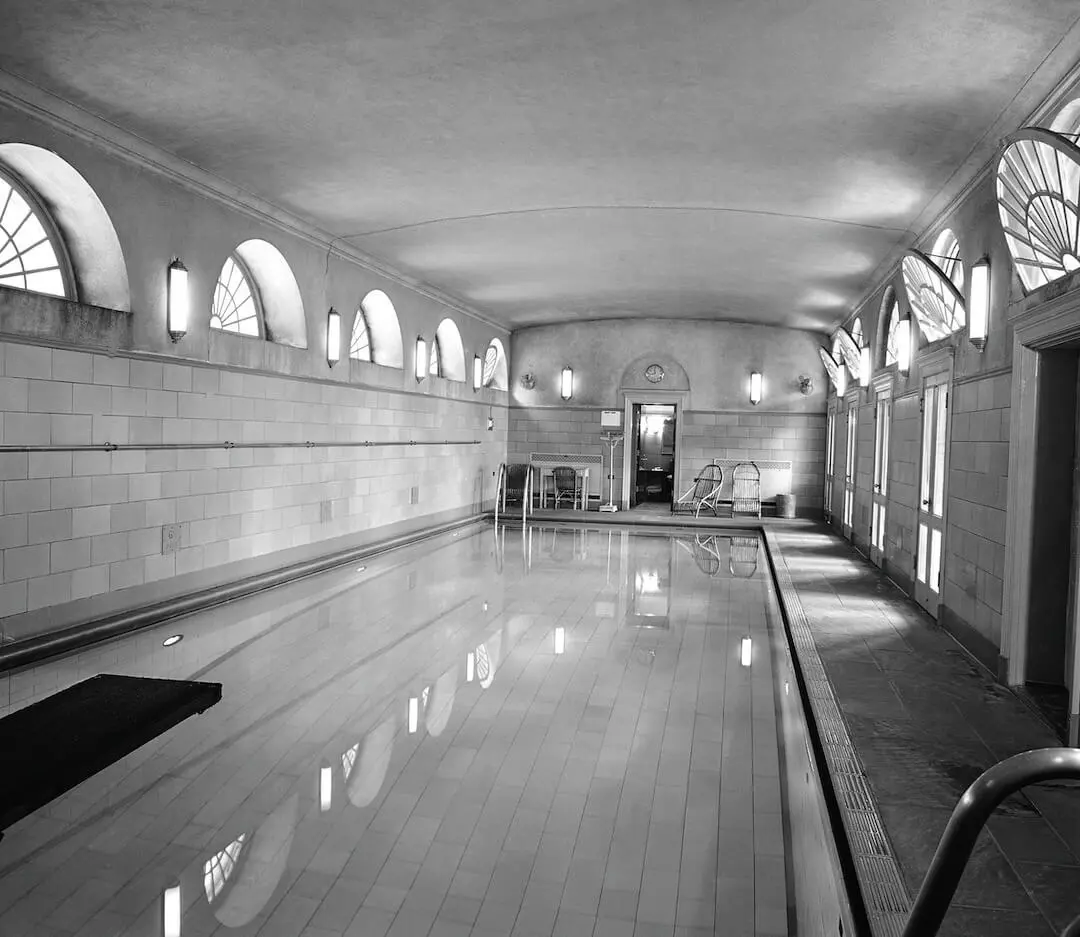
The briefing room space—originally an indoor swimming pool commissioned by President Franklin D. Roosevelt and later converted by President Richard Nixon into a press briefing facility—has become a frequent target of presidential ire. While previous administrations, including a floated proposal by First Lady Hillary Clinton during the Bill Clinton presidency, briefly considered restoring the swimming pool, pushback historically halted those plans.
When questioned about the current administration’s intentions regarding the briefing room, White House communications director Steven Cheung offered a concise and open-ended response to reporters:
"All options remain on the table, and we will make an announcement when appropriate."
Journalistic Reflection: The Hannah-Jones Essay Controversy
Internal media introspection has been equally intense. Last month, The New York Times Magazine published an 8,000-word essay by staff writer and 1619 Project creator Nikole Hannah-Jones, titled "In Fighting For Every Child, Did I Betray My Own?"
The deeply personal piece detailed the emotional and logistical toll she and her husband faced when enrolling their daughter, Najya, in predominantly Black, low-income public schools in New York City—a follow-up to her widely discussed 2016 essay on the same subject. The piece sparked immense national debate among parents navigating school choice and systemic segregation.
In a subsequent Times Insider interview with assistant managing editor Patrick Healey, Hannah-Jones reflected on the ethical dilemma of turning a journalistic lens toward her own family:
"When I wrote the first piece 10 years ago, so many people responded to that story, that story meant so much to them. And here was my child saying, I had a different experience. And so, as a journalist, as just a person who tries to walk through the world with integrity, I felt I had to be honest about how it went."
Later, in an appearance on PBS News’ "Settle In" with Geoff Bennett, Hannah-Jones emphasized that the follow-up was an obligation to her daughter, who had inadvertently become a public symbol of school integration struggles:
"My daughter has been kind of this symbol ever since she appeared on the cover of the magazine, and her experience… she was the one who had to live it. And so I felt she deserved to have a say. And she deserved for me to be honest about—that she did bear a cost."
Future Outlook
As the legal deadline set by CNN’s legal counsel approaches, the trajectory of executive-media relations points toward prolonged courtroom battles and deeper institutional realignments.
- The Legal Threshold: If the Department of Justice fails to provide assurances by Thursday evening regarding the normalization of CNN’s access to Air Force One and the Oval Office, federal courts will likely be asked to enforce or expand upon the existing preliminary injunctions. Such a step would test the judiciary’s willingness to dictate the logistics of presidential travel and security pools.
- The Fate of the Briefing Room: While talk of converting the press briefing room back into a swimming pool remains largely symbolic, it underscores a deliberate strategy to marginalize traditional journalistic entities. Should the administration move forward with structural alterations to the West Wing workspace, it would mark an unprecedented escalation in the decoupling of the executive branch from the institutional press corps.
- The Digital Transformation: Concurrently, the steady migration of news consumers toward algorithmic, short-form video platforms like TikTok signals that the structural power of legacy print and broadcast organizations is being challenged from both ends: politically by hostile executive strategies, and technologically by shifting consumer habits.
Ultimately, the ongoing conflicts over press pools, White House access, and media ethics are not merely administrative disputes; they are foundational arguments over the role of a free and accessible press in a constitutional democracy.