

Executive Overview
In the high-stakes theater of modern American politics, few contests match the intensity of the 2026 Texas Senate race. Pitting Democratic state Representative James Talarico against Republican Attorney General Ken Paxton, the marquee matchup was tracking as a tightly contested neck-and-neck race. For weeks, public interest, search metrics, and voter enthusiasm were roughly evenly split between the two camps—a rare baseline for a statewide contest in a historically deep-red state.
That dynamic imploded overnight due to a manufactured political hoax.
In mid-October 2026, a constellation of right-wing influencers, high-profile MAGA media figures, and elected officials weaponized a routine nine-day campaign absence—caused entirely by a bout of the flu—into an elaborate, malicious conspiracy theory. They claimed Talarico had secretly checked into an Ohio psychiatric facility. Although the lie collapsed with embarrassing speed under basic journalistic scrutiny, its primary political objective had already been secured.
By the time the dust settled, the social media ecosystem had successfully transformed a candidate’s temporary illness into a national spectacle. A digital feeding frenzy devoured the news cycle, burying a damaging Wall Street Journal investigative report detailing Ken Paxton’s financial ties to fugitive donors and federal indictees. This incident serves as a textbook case study of the "rage economy"—an attention-driven informational ecosystem where accuracy is penalized, viral outrage is monetized, and political accountability is neatly sidestepped.
Detailed Chronology: The Birth, Rise, and Collapse of the Ohio Hoax
Phase 1: The Weaponization of an Absence
The controversy took root during a standard campaign lull. State Representative James Talarico stepped away from the campaign trail for nine days to recover from a severe case of the flu. There was never any genuine mystery surrounding his whereabouts; Talarico had appeared virtually at a public event in early October to inform constituents and attendees that he was battling the illness.
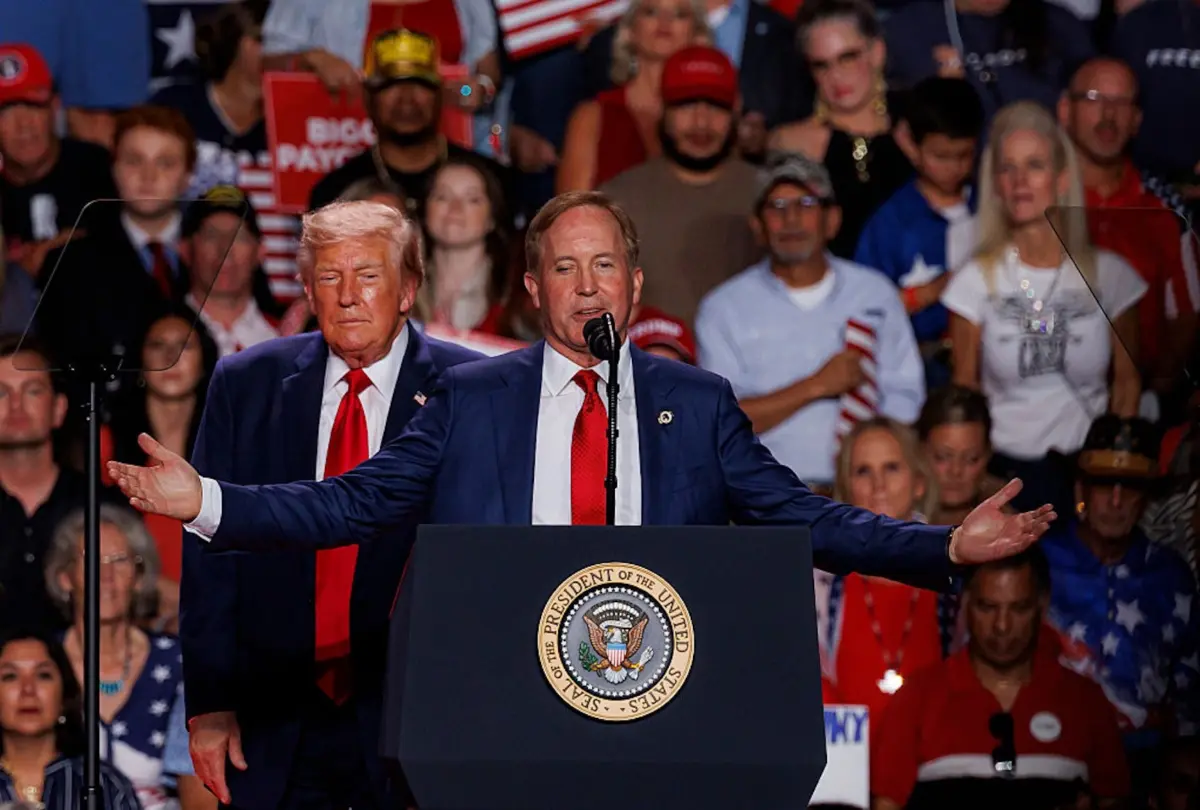
Sensing a political opportunity, Attorney General Ken Paxton and his allies moved aggressively to exploit the temporary absence. Paxton demanded "proof of life" from his opponent, set up a partisan tip line dedicated to tracking Talarico’s whereabouts, and openly led a chant of "Where is James Talarico?" at a campaign rally. Shortly after, Donald Trump amplified the offensive on Truth Social, branding the Democrat "James TalaFREAKo" and declaring him "MISSING IN ACTION."
Phase 2: The Escalation by MAGA Influencers
As mainstream political figures laid the groundwork, right-wing social media influencers supplied the narrative’s more malicious details. Former Los Angeles mayoral candidate Spencer Pratt claimed via social media that he had "sources" placing Talarico in a psychiatric facility.
By Sunday afternoon, the rumor found its fabricated smoking gun. Nick Sortor—a conservative influencer known for filming confrontations outside immigration facilities—and self-described "right-wing provocateur" Rhein Amacher claimed they had spoken with an employee at the Lindner Center of Hope in Mason, Ohio. The influencers alleged that the employee confirmed Talarico had just been discharged from the facility. Sortor published a short audio clip of the alleged phone call, and tech billionaire Elon Musk repeatedly amplified the claim from his personal account on X (formerly Twitter).
The algorithmic amplification was immediate and catastrophic. According to data cited in post-mortem analyses of the incident, 50 coordinated accounts pushed the claim within a 20-minute window, accumulating an astonishing 9.3 million views. One account posted the exact same text 83 times in under two hours.
Phase 3: The Rapid Collapse of the Narrative
The conspiracy theory disintegrated under the weight of basic verification. The full recording of the phone call, subsequently obtained and published by The Bulwark, revealed that the hospital employee on the other end of the line repeatedly and explicitly denied that anyone named James Talarico was or had ever been in their hospital system. Furthermore, Talarico confirmed he had never even traveled to Ohio.
The timeline presented by the influencers was physically impossible. Amacher claimed he made the calls on Saturday evening, yet public records, media appearances, and security footage proved Talarico had appeared at the Austin City Limits Music Festival on Friday and attended a Kacey Musgraves concert the following day. He could not possibly have been discharged from an Ohio psychiatric facility on Saturday when he was visibly and verifiably back in Texas.
By Sunday evening, the Lindner Center of Hope issued an official public statement confirming that Talarico had never been a patient.
Phase 4: Resistance to Correction
In a functional information ecosystem, an official hospital denial and a proven geographic impossibility would end a story. However, the right-wing ecosystem operates under different incentives.
Because Elon Musk had supercharged the original claim, millions had already absorbed the falsehood. Media figures such as Megyn Kelly continued demanding answers even after the hospital’s official rebuttal. White House deputy chief of staff Stephen Miller continued posting insinuations long after The New York Times published time-stamped security images proving Talarico was safely at his home in Austin during the disputed window.
Supporting Context & Metrics: The Mechanics of the "Rage Economy"
The Talarico hoax highlights a fundamental structural shift in political communications: the triumph of the "rage economy." In a traditional, verification-based media environment, a claim’s credibility increases as supporting evidence accumulates. In the modern attention economy, however, a claim gains influence simply because millions of people have been forced to look at it.
The Amplification Velocity
- The Launch: Within 20 minutes of the initial coordinated push, 50 hyper-partisan accounts disseminated the narrative.
- The Reach: Those initial posts generated 9.3 million views before any meaningful journalistic pushback could take root.
- The Bots & Multipliers: Single accounts executing automated behavior—such as posting identical text dozens of times in under two hours—successfully gamed platform algorithms to trend the falsehood globally.
The Broader Pattern of Personal Attacks
The psychiatric facility hoax was not an isolated incident; it belonged to a broader, coordinated campaign designed to frame Talarico as abnormal, untrustworthy, and unfit for office.
- Targeted Caricatures: A pro-Paxton super PAC ran television advertisements superimposing the Democrat’s face onto a cutout wearing a dress.
- Questioning Identity: Trump allies spent months making veiled and explicit insinuations regarding Talarico’s masculinity, marital status, and sexuality. Notably, during an October rally for Paxton in Tyler, Texas, Vice President JD Vance openly suggested that Talarico is gay.
- Absurd Cultural Framing: In an effort to "other" the candidate, right-wing media outlets repeatedly attempted to attack Talarico for being a vegan—a claim that was easily disproven, yet served its purpose of creating a caricature ("Talafreako") to distract from substantive policy debates.
Official Statements and Media Fallout
The fallout from the fabricated scandal drew sharp rebukes from media watchdogs, political analysts, and Talarico himself.
During a CNN town hall appearance, Talarico directly addressed the phenomenon:
"We have built a system in which conspiracy theorists collect clicks, social media platform owners collect profits, and the public gets angrier without becoming any better equipped to solve the country’s problems."
Meanwhile, major journalistic institutions turned their lenses away from the social media circus to focus on the real-world events that the hoax successfully obscured. On the very Monday the psychiatric rumor reached its fever pitch, The Wall Street Journal published an explosive investigative report detailing Ken Paxton’s financial entanglements with indicted figures and international fugitives.
According to The Wall Street Journal, just days after being indicted for embezzlement, a fugitive donated $25,000 to Attorney General Paxton’s campaign fund. Furthermore, financial records and investigative reporting revealed that Paxton rang in the New Year at an exclusive party in Dubai attended by two men under federal indictment for allegedly looting millions of dollars from an Illinois hospital. One of those men, Anosh Ahmed, reportedly contributed $190,000 to Paxton’s political campaigns between 2022 and 2024 via the Texas Ethics Commission records.
In a normal political climate, an attorney general accepting hundreds of thousands of dollars from individuals accused of looting healthcare infrastructure would constitute a career-ending scandal. Instead, the story was entirely swallowed by a manufactured panic over a nonexistent psychiatric stay in Ohio.
Future Outlook: The Normalization of Strategic Falsehoods
The implications of the 2026 Talarico hoax extend far beyond a single Texas Senate race. They signal a grim maturity in modern political warfare: the perfection of disinformation as a defensive shield.
Political campaigns have learned a powerful lesson from the Trump era of politics—there is virtually no institutional or social penalty for being demonstrably wrong in public, provided the falsehood is deployed at scale, repeated at high volumes across captured platforms, and timed with military precision to drown out genuine investigative journalism.
As long as platform algorithms continue to monetize high-velocity outrage over verified facts, the "rage economy" will remain the primary battleground of American elections. The architects of the Talarico smear did not need a sophisticated lie; they needed a fast one. And until accountability catches up to algorithmic amplification, real corruption will continue to slip quietly beneath the waves of manufactured chaos.