

Executive Overview
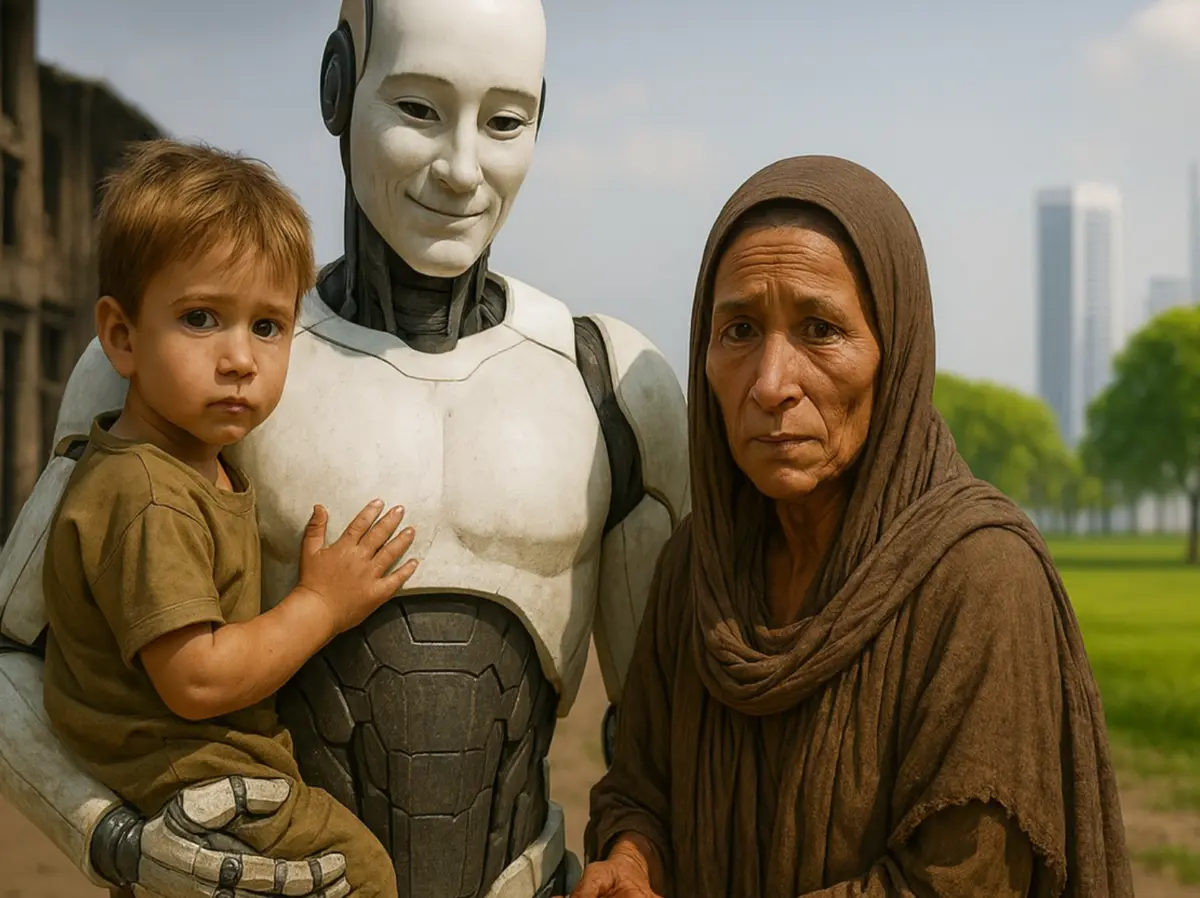
The era of humanoid robots acting merely as publicity stunts or sluggish laboratory curiosities has officially ended. For decades, science fiction shielded humanity with the comforting assumption that an advanced android revolution was a distant, theoretical milestone. Today, that fiction is materializing at an unprecedented velocity. Powered by the convergence of hyper-advanced electromechanical engineering and foundational artificial intelligence, modern humanoid robots are transitioning from controlled testing grounds to active, commercial environments.
This technological leap forces a profound psychological, economic, and existential shift upon global society. When machines achieve the capacity to walk, speak, work, and eventually mirror human appearance and emotion with seamless precision, the traditional boundaries defining humanity begin to dissolve. We are no longer merely building tools; we are engineering entities that reflect our physical and cognitive likeness without any biological history. This editorial explores the rapid evolution of humanoid robotics, examining the industrial landscape, the psychological and economic ramifications, the potential for malicious exploitation, and the urgent regulatory frameworks required to protect our collective future.
Detailed Chronology: From Clunky Prototypes to Autonomous Platforms
To understand the current state of humanoid robotics, one must trace its technological lineage. The journey from rudimentary mechanics to autonomous, learning agents highlights an exponential acceleration in hardware and software capabilities.
1. The Era of Public Relations and Mechanical Novelties (2000–2015)
At the turn of the millennium, humanoid robotics was defined by painstaking, rigid programming. Honda’s debut of the ASIMO robot in November 2000 was celebrated globally. ASIMO could walk up stairs, recognize moving objects, and interpret postures—feats that were groundbreaking for the era. However, every movement relied on millions of lines of strict, unchangeable code. These early robots were marvels of engineering, yet they were fundamentally brittle; a slight environmental variance could cause a catastrophic fall. They existed primarily as public relations flagships and academic testbeds rather than functional assets.

2. The Cognitive Leap and Industrial Integration (2016–2025)
The introduction of commercial icons like Hanson Robotics’ Sophia in 2016 captured the public imagination, showcasing advanced facial tracking and conversational capabilities, though often plagued by the unsettling dissonance of the "Uncanny Valley." Simultaneously, underlying software architectures underwent a seismic shift.
The integration of advanced neural networks—such as NVIDIA’s GR00T and Figure AI’s Helix foundation models—transformed robots from programmed automata into learning agents. Instead of manual line-by-line coding, modern humanoids utilize observation and reinforcement learning. By watching human operators fold laundry, sort components, or load dishwashers, these robots synthesize context, mimic actions, and independently optimize performance.

This software revolution enabled a rapid transition from the lab to the factory floor. Figure AI’s Figure 02 model successfully completed a multi-month deployment at BMW’s Spartanburg manufacturing plant, actively contributing to the assembly of over 30,000 vehicles by handling delicate sheet metal and complex logistical components. Concurrently, Tesla began testing early iterations of its Optimus humanoids inside its Gigafactories, setting the stage for industrial-scale mass deployment.
3. The Horizon of Consumer and Public Integration (Present and Beyond)
As manufacturing costs decline through intense global market competition, the deployment horizon is expanding. Industry forecasts project that over the next decade, humanoids will transition from structured industrial facilities into less predictable environments: retail spaces, hospitals, airports, and eventually, private residential homes. This impending migration represents the ultimate threshold, bringing humanity face-to-face with machines designed to be indistinguishable from our peers.

Supporting Context & Metrics: The State of the Global Humanoid Market
The global humanoid robotics market is undergoing a structural shift from a pilot-project ecosystem to a high-growth commercial platform. Investment momentum continues to intensify across North America, Asia, and Europe, driven by a combination of labor shortages and technological breakthroughs.
- Market Transition: Venture capital and corporate investment in humanoid robotics have surged past tens of billions of dollars, with automotive and logistics giants leading initial adoption phases.
- Demographic Pressures: Nations experiencing acute demographic contractions—such as Japan, South Korea, and several European countries—are viewing humanoids not merely as productivity multipliers, but as essential infrastructure to support rapidly aging populations.
- Technical Bottlenecks: Despite software triumphs, physical engineering still faces hurdles. State-of-the-art battery technologies generally limit active operation to a few hours before demanding recharges. Furthermore, dynamic bipedal navigation in unstructured, chaotic human environments—such as crowded sidewalks or cluttered residential rooms—remains an ongoing engineering challenge.
Official Statements and Industry Perspectives
The rapid commercialization of humanoids has prompted sharp dialogue among technologists, economists, and ethicists regarding the trajectory of human labor and societal norms.

- On Industrial Utility: Brett Adcock, founder of Figure AI, has consistently emphasized that the immediate value of humanoids lies in addressing labor constraints in repetitive, hazardous environments. "We are building general-purpose humanoid robots to address labor shortages and support economic growth where human labor is scarce," notes industry reporting from CraneShares and ThomasNet.
- On Mental Health and Therapeutic Applications: Researchers exploring the deployment of hyper-realistic robotic platforms in countries like China and the United Kingdom point to their potential utility in eldercare and psychotherapy. Proponents argue that expressive, empathetic robotic interfaces can mitigate the crushing psychological toll of isolation among senior citizens.
- On Economic Disruption: Labor economists, however, urge caution. Analysts tracking the intersection of artificial intelligence and workforce dynamics warn that the rapid displacement of manual and service-sector workers could destabilize traditional economic models if governments fail to implement proactive policy safeguards, such as robotic taxation or Universal Basic Income (UBI) frameworks.
Future Outlook: Promises, Perils, and the Uncanny Valley
As we look toward a future populated by entities that mirror our physical form without sharing our biological history, we must weigh the anticipated benefits against profound existential threats.
The Promised Horizons
The integration of lifelike humanoids promises revolutionary advantages:

- The Eradication of the "3D" Jobs: Robots can absorb Dull, Dirty, and Dangerous tasks—ranging from deep-underground mining and toxic waste management to high-voltage electrical grid maintenance—effectively sparing human workers from fatal occupational hazards.
- Healthcare and Elderly Care Solutions: In aging societies, empathetic robotic companions can provide physical mobility assistance, continuous health monitoring, and social engagement for isolated individuals.
- Economic Abundance: By delegating rigorous physical labor to autonomous machinery, the marginal cost of manufacturing, agriculture, and construction could plummet, potentially ushering in an era of unprecedented material abundance.
The Darker Realities
Conversely, the widespread adoption of human androids introduces severe psychological and societal hazards:
- Deep Human Isolation: If individuals can purchase perfectly agreeable, patient, and compliant robotic companions, many may withdraw from the messy, vulnerable, and effort-intensive landscape of authentic human relationships, accelerating the erosion of community structures.
- Rapid Economic Polarization: The transition phase threatens millions of blue-collar workers—drivers, warehouse personnel, and retail clerks—with sudden displacement, exacerbating wealth gaps between tech-monopoly owners and the displaced workforce.
- The Erosion of Trust: When artificial beings become visually and behaviorally indistinguishable from humans, the baseline of societal trust collapses. Verifying the authenticity of individuals in public spaces, legal contracts, or digital interactions becomes nearly impossible.
Possible Misuse by Individuals and Nations
Beyond passive societal shifts, hyper-realistic humanoids present terrifying avenues for malicious exploitation by bad actors and nation-states alike.

- Identity Theft and Advanced Scams: An indistinguishable android could be weaponized for targeted corporate espionage or physical infiltration. Criminals could deploy a robot modeled after a corporate executive, politician, or family member to bypass biometric or physical security checkpoints.
- Synthetic Empathy Manipulation: Commercial entities could program household robots to simulate genuine emotional attachment ("love" or deep care) toward children and families, subtly coercing consumers into purchasing specific products or adopting ideological worldviews.
- Geopolitical and Military Weaponization: On a national scale, autonomous humanoid units integrated with advanced combat AI could redefine modern warfare, introducing ethical nightmares regarding accountability, collateral damage, and autonomous lethality on the battlefield.
Preserving What Makes Us Human: The Mandate for Global Guardrails
Can we stop technological progress? History resoundingly answers in the negative. A total global ban on humanoid robotics is neither feasible nor ultimately desirable, given their potential to eradicate extreme poverty, solve labor shortages, and eliminate industrial deaths.
However, marching blindly into this future is an existential gamble. To survive the humanoid transition, society must establish strict global regulatory frameworks immediately. Essential guardrails must include:

- Mandatory Digital and Physical Watermarking: Enforcing clear, tamper-proof signifiers (such as infrared signatures, acoustic tags, or mandatory visual identifiers) that instantly reveal an entity’s robotic nature.
- Strict Liability and Ethics Frameworks: Holding manufacturers and deploying corporations legally accountable for the actions, psychological impacts, and security vulnerabilities of autonomous humanoids.
- Economic Safety Nets: Implementing proactive taxation models on automated labor to fund retraining programs, social safety nets, and economic stability structures for displaced workers.
In the final analysis, the rise of lifelike humanoid robots will serve as an ultimate mirror for humanity. For centuries, our species has defined its identity through intellect, speech, tool usage, and emotional expression. As machines master these exact capabilities, they compel us to look deeper inward to discover what truly constitutes our uniqueness.
This technological shift does not have to spell our obsolescence. By delegating dangerous and monotonous chores to silicon surrogates, humanity is presented with a rare, historic opportunity to refocus our collective energy on philosophy, art, scientific discovery, and authentic human connection. Our ultimate task as creators is not simply to make robots smarter, faster, or more human-like, but to establish the rigorous ethical boundaries that ensure they enhance, rather than eclipse, our humanity.