When a high-stakes corporate branding initiative fails, the post-mortem rarely points to a lack of technical talent in Figma or Adobe Illustrator. Instead, the breakdown invariably traces back to the strategy phase—specifically, the uncritical acceptance of ambiguous adjectives. Words like modern, trustworthy, premium, friendly, and disruptive are routinely thrown into creative briefs as baseline requirements, yet they are left profoundly undefined.
This linguistic ambiguity creates a dangerous chasm between what a brand actually needs to communicate and what a designer is left to interpret. To bridge this gap, creative teams and brand strategists must master the "pre-concept" phase—the intensive period of discovery, stakeholder alignment, and contextual research that occurs after the initial kickoff meeting but well before a single original visual asset is crafted.
By systematically uncovering hidden assumptions, mapping competitive landscapes, and establishing a shared visual foundation through structured exercises like Competitor Perception Mapping and Visual Brand Drivers, teams can transform abstract strategic goals into concrete design parameters. The result is a more resilient brand architecture where the first concept presentation is not a blind guess, but a logical evolution of a shared vision.
Detailed Chronology: The Anatomy of the Pre-Concept Phase
The journey from a vague brand strategy to a rigorous visual direction is not linear; it requires a disciplined, chronological approach to deconstructing stakeholder assumptions and rebuilding them into actionable design codes.
Stage 1: Researching and Refining the Brand Context
A standard discovery workshop typically covers business goals, target audiences, and the competitive environment. However, the pre-concept phase demands a laser-like focus on perception. As legendary brand strategist Marty Neumeier notes in The Brand Gap, "A brand is a person’s gut feeling about a product, service, or company."
Because a brand ultimately exists in the minds of its audience, the workshop must establish what perception the team is actively trying to engineer. This requires interrogating common buzzwords. For example, when a health tech startup claims it wants to appear "disruptive," a superficial interpretation might push designers toward rebellious, loud, or avant-garde aesthetics.
However, when contextualized against the reality of their primary clients—large, highly conservative government medical institutions—true "disruption" must be communicated through exceptional clarity, operational efficiency, and quiet confidence. A visually rebellious brand would immediately shatter trust in this specific sector. Defining context means asking: What kind of modern? Trustworthy in what specific way? And how far can the brand deviate from category norms before alienating its core audience?
Stage 2: Facilitating Stakeholder Buy-In Through Interactive Exercises
Passively handing a strategy presentation to stakeholders invites complacency. Clients may nod along during a meeting without realizing the personal, often conflicting biases they are injecting into the process. To surface these hidden discrepancies early, strategists must employ active, participatory exercises.
Competitor Perception Mapping: By mapping competitors across two strategic axes (e.g., understated to bold or accessible to exclusive), the design team can observe how stakeholders mentally categorize the market. Disagreements that surface here—such as one stakeholder viewing a competitor as progressive while another sees it as generic—expose foundational ambiguities about what constitutes innovation or credibility in that industry.
Visual Brand Driver Exercise: Moving inward from the category, stakeholders are asked to assign the company to unrelated categories (transport, typography, animals, architecture, or furniture) based on perception rather than personal preference. Explaining why a company resembles a high-speed train versus a quiet electric vehicle forces the team to rely on metaphor and association, revealing deep-seated patterns and contradictions about the brand’s character.
Stage 3: Translating Strategy into a Visual Foundation
Once assumptions are unpacked, the next milestone is bridging the gap between verbal strategy and visual execution. This intermediate layer prevents designers from operating in a vacuum and stops clients from evaluating work purely on subjective taste. It is typically structured around three core pillars:
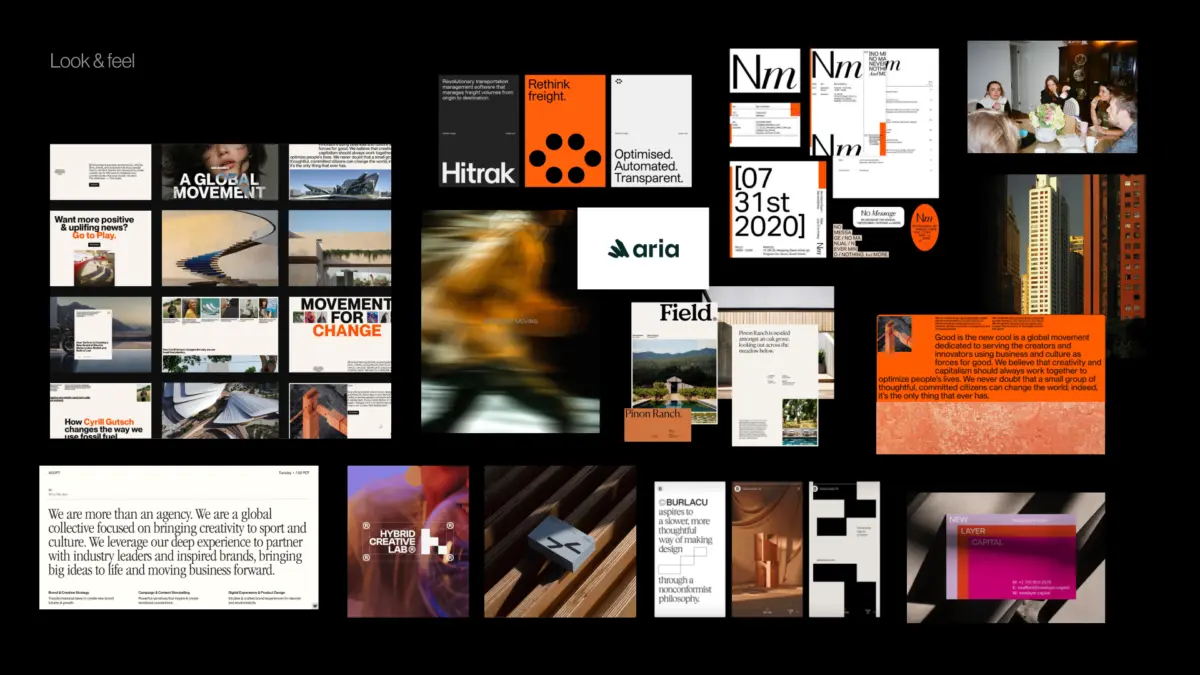
Look and Feel Boards: Curated not as aesthetic moodboards of things the team "likes," but as perception boards that test emotional resonance and category tension.
Design Code: Translating core brand narratives into actionable visual principles. For instance, a brand promise of "research-backed support for real life" might be translated into editorial data snapshots, clean infographics, and professional documentation styles rather than abstract, whimsical illustrations.
Brand Asset Direction: Establishing early boundaries for typography, color palettes, photography styles, and logo territories, ensuring the subsequent design phase has clear guardrails.
Supporting Context & Metrics: Why Pre-Concept Work Matters
The financial and operational costs of skipping the pre-concept phase are well-documented across the design and product development industries. When branding initiatives lack a shared visual foundation, projects suffer from cyclical revisions, ballooning budgets, and delayed time-to-market.
The Ambiguity Tax: Industry data consistently shows that up to 60% of design revisions stem from misaligned stakeholder expectations established during the brief phase. When adjectives like "premium" are left undefined—interpreted by one stakeholder as minimalist and by another as ornate—design teams waste countless hours producing contradictory concepts.
The Power of Constraint: According to human-centered design frameworks (such as GV’s Brand Sprint methodology), converting abstract brand attributes into concrete visual metaphors reduces stakeholder subjective bias by over 40%. When participants are forced to choose visual representations through structured exercises, they evaluate subsequent design concepts based on objective strategic alignment rather than arbitrary personal preference.
Category Differentiation: Research into digital product branding indicates that brands failing to map their competitive perception space often fall into "category mimicry"—unintentionally adopting the visual tropes of their rivals. Pre-concept mapping explicitly highlights open visual territory, allowing brands to stand out safely without sacrificing audience trust.
Official Perspectives and Industry Insights
Leading voices in brand identity and product design emphasize that the value of a pre-concept phase lies in transforming how stakeholders converse about design.
"The point of these exercises is to make the abstract idea of ‘our brand’ into something concrete," explains design partner Jake Knapp, highlighting the necessity of turning intangible business goals into tangible reference points.
Design leaders note that the ultimate victory of a robust pre-concept phase is changing the nature of feedback during concept reviews. When a team establishes clear brand boundaries—explicitly naming what the brand is not (e.g., too cold, too playful, too conservative, or too loud)—the dialogue shifts fundamentally.
Instead of unproductive expressions of personal taste ("I like this color" or "I don’t like this font"), stakeholders are equipped to ask the only question that truly matters: "Does this visual direction accurately express the strategic brand foundation we collectively agreed upon?"
Future Outlook: The Evolving Role of Strategy in Design Systems
As digital products become increasingly complex and brand identities must adapt dynamically across omnichannel ecosystems—from responsive mobile interfaces to spatial computing environments—the pre-concept phase will only grow in importance.
In the future, the boundary between brand identity design and product design will continue to blur. Automated tools and AI-driven asset generation will make the production of logos and color palettes faster than ever before. However, automation cannot uncover a company’s institutional psychology, resolve stakeholder contradictions, or define the nuanced emotional perception required to build authentic human trust.
Consequently, the strategic rigor of the pre-concept phase will transition from an optional best practice to an indispensable core competency. Brand architects and digital product teams who invest upfront in contextual research, perception mapping, and design coding will find themselves uniquely positioned to build enduring, resilient brands that survive both market shifts and technological disruptions.