

Executive Overview
For centuries, the collective historical memory of humanity has associated the plague with the grim specters of the Middle Ages: narrow, filth-strewn urban alleys, desperate populations living cheek-by-jowl, panic-stricken towns overrun by rats, and the terrifying speed of the Black Death sweeping across medieval Europe. Conventional historical consensus long held that Yersinia pestis—the catastrophic pathogen responsible for these sweeping pandemics—was a byproduct of civilization itself. The narrative maintained that as human societies transitioned from nomadic egalitarian bands to densely packed agricultural settlements and expanding cities, they created the ideal ecological incubators for zoonotic pathogens to mutate, spread, and devastate civilization.
Now, groundbreaking research published in the prestigious journal Nature has completely upended this foundational historical paradigm.
An international, multidisciplinary team of geneticists, archaeologists, and anthropologists has recovered and analyzed ancient DNA from human remains buried at four hunter-gatherer burial sites in the Lake Baikal region of East Siberia. Their findings reveal a stunning reality: Yersinia pestis was already a terrifyingly lethal threat an astonishing 5,500 years ago. At a time when humans lived in small, highly mobile, widely dispersed hunter-gatherer bands—long before the advent of farming, urbanization, or the crowded conditions traditionally blamed for major outbreaks—the plague was actively culling prehistoric populations.
This comprehensive genetic and archaeological investigation demonstrates that early strains of the bacterium carried potent virulence factors, including a unique toxin-producing superantigen absent from later historical strains. This genetic profile allowed the pathogen to devastate communities, wiping out entire family units and disproportionately killing children and young teenagers in compressed windows of time. By bridging the gaps between paleogenomics, radiocarbon dating, and field archaeology, this study rewrites our understanding of deep-history epidemiology, proving that humanity’s most feared biological enemy did not wait for the rise of cities to launch its deadly campaigns.
Detailed Chronology: Unraveling a 5,500-Year-Old Biosafety Mystery
The Lake Baikal Puzzle
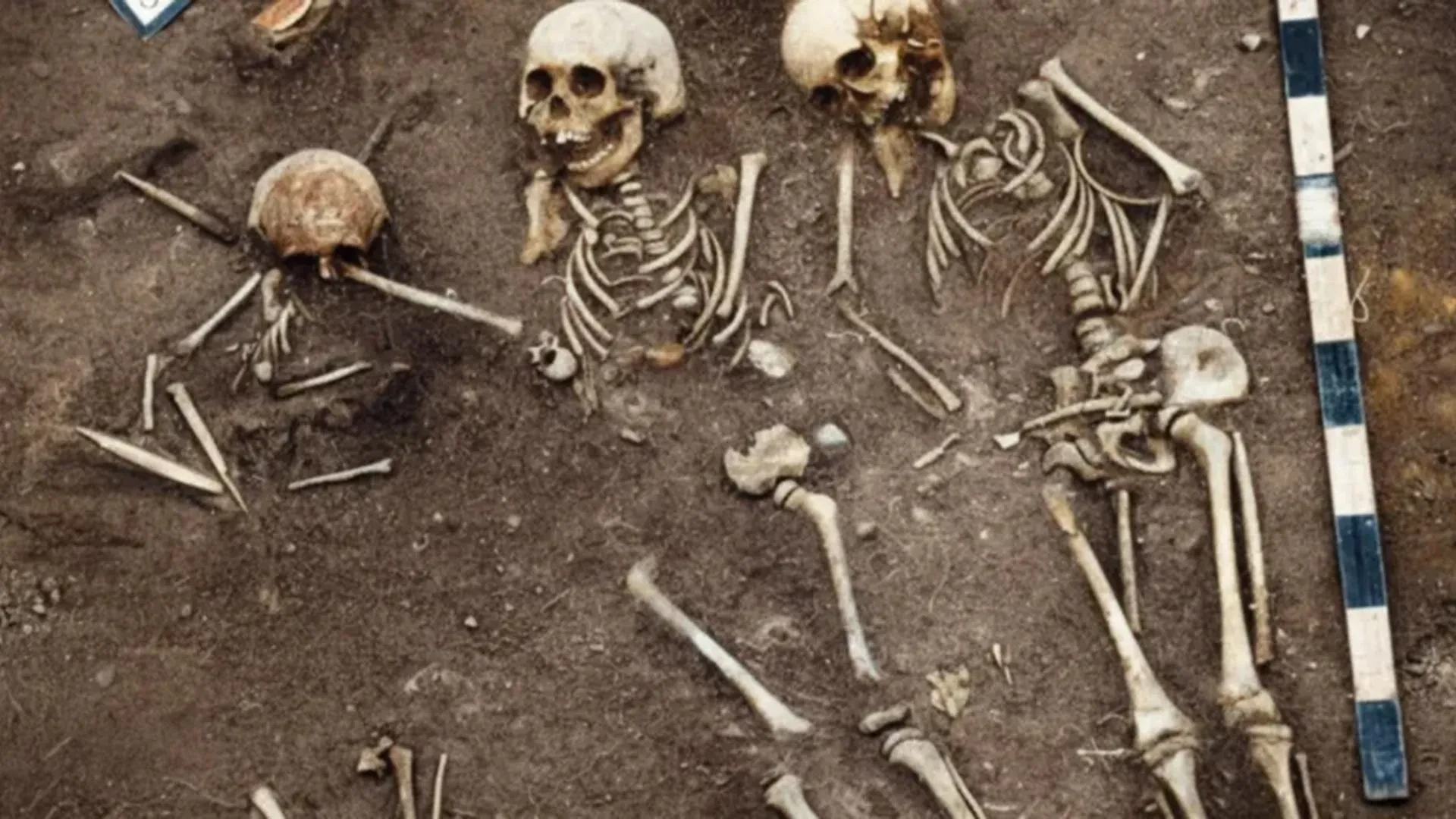
For decades, archaeologists excavating prehistoric cemeteries around the stunning, crystal-clear expanse of Lake Baikal in East Siberia wrestled with a perplexing demographic anomaly. Across multiple burial sites associated with ancient hunter-gatherer communities, excavations consistently yielded an unusually high concentration of children and young teenagers among the deceased. Furthermore, the interment patterns suggested that these deaths had not occurred steadily over long periods, but rather had clustered tightly within short, sharp temporal windows.
For field archaeologists, this phenomenon defied easy explanation. Traditional models of hunter-gatherer health generally assumed that while small populations certainly faced environmental hazards, malnutrition, and interpersonal violence, infectious epidemic diseases of this magnitude were largely products of later, high-density urban environments. For over thirty years, researchers struggled to formulate a coherent hypothesis that could account for the demographic profile of the Baikal cemeteries.
The Breakthrough in the Teeth
The turning point came when an international research team decided to apply cutting-edge paleogenomic techniques to the problem. Rather than relying solely on deteriorating osteological evidence, the scientists targeted human teeth recovered from four distinct hunter-gatherer burial sites in the Baikal region. Teeth act as natural, hermetically sealed vaults for biological material; the dense enamel protects the pulp cavity, preserving trapped microbial DNA for millennia.
By extracting and sequencing genetic material from these dental remains, the team successfully reconstructed ancient bacterial genomes. To their profound astonishment, they identified the distinct genetic signature of Yersinia pestis embedded within the ancient samples. Out of 46 individuals tested across the sites, a staggering 18 yielded positive results for the plague bacterium.
This meant that nearly 40 percent of the tested prehistoric individuals carried direct genetic evidence of plague exposure. To put this figure into perspective, this detection rate is equal to—and in some cases even exceeds—the pathogen prevalence recovered from burial sites associated with the height of medieval European plague epidemics.
Cross-Disciplinary Synthesis
To move beyond mere genetic detection and establish a comprehensive historical narrative, the research team synthesized their paleogenomic data with rigorous archaeological analysis and precise radiocarbon dating.
The integration of these methodologies yielded a chillingly clear picture of prehistoric epidemiological catastrophe. Radiocarbon dating confirmed that many of the plague-positive individuals had perished within remarkably narrow timeframes. When cross-referenced with the biological relationships reconstructed from the ancient DNA, the tragedy came into sharp focus: multiple graves contained siblings who had died simultaneously, alongside parents and children whose shared resting places whispered of household-wide devastation during single, acute outbreak events.
Supporting Context & Metrics: Challenging the Dogma of Vector Evolution
The Flea-Transmission Dogma
To fully appreciate the revolutionary nature of the Lake Baikal discovery, one must understand the long-standing scientific dogmas surrounding the evolutionary history of Yersinia pestis.
For years, genetic analyses of ancient and modern plague strains had revealed a distinct evolutionary trajectory. Earlier research demonstrated that ancient, branching strains of the bacterium lacked several key genetic adaptations—most notably the mutations necessary to block the gut of fleas, which forces the starving insects to aggressively bite hosts and efficiently transmit the pathogen. Because these early strains lacked the genomic toolset associated with modern bubonic transmission, mainstream scientific consensus assumed that these ancestral versions of the bacterium were relatively weak, incapable of driving severe, rapid epidemiological outbreaks.
The LakeBaikal findings completely shatter this assumption.
The Superantigen Factor
How could a pathogen lacking the classic flea-transmission mechanism cause such catastrophic mortality rates in small, mobile populations? The answer lay hidden within the structural genetics of the ancient strains.
Upon deep sequencing of the Siberian genomes, the researchers discovered that these prehistoric bacterial strains carried a distinctive superantigen—a potent, toxin-producing genetic factor entirely absent from historical and modern plague lineages.
Superantigens are notorious molecules that bypass normal immune system activation pathways. Instead of triggering a targeted response against an invading microbe, a superantigen binds simultaneously to T cells and major histocompatibility complex molecules, forcing a massive, hyper-inflammatory immune response. This systemic cytokine storm can lead to toxic shock, multi-organ failure, and rapid death.
The presence of this ancient superantigen provides a vital missing link in paleopathology. It proves that long before Yersinia pestis evolved the flea-driven transmission efficiency that characterized the Justinianic Plague or the Black Death, the bacterium possessed an alternative biological toolkit. This potent combination of virulence factors made infection intensely lethal, capable of tearing through immunologically naive hunter-gatherer groups with terrifying speed and devastating efficiency.
Quantifying the Impact: Key Study Metrics
- Temporal Depth: Plague was actively circulating and killing humans 5,500 years ago, deep within the prehistoric era.
- Sample Scale: Researchers tested human remains from 4 hunter-gatherer burial sites in the Lake Baikal region of East Siberia.
- Infection Prevalence: 18 out of 46 individuals tested positive for Yersinia pestis, yielding an infection detection rate of nearly 40 percent.
- Demographic Focus: The outbreaks exerted a catastrophic toll on children and young teenagers, solving a decades-old archaeological mystery regarding anomalous youth mortality in the region.
- Vector Dynamics: Outbreaks occurred millennia before the evolution of efficient flea-to-human transmission, driven instead by direct zoonotic spillover and potent ancestral virulence factors like specialized superantigens.
Official Statements: Perspectives from the Research Frontline
The publication of these findings in Nature has generated immense excitement across the global scientific community, prompting leading researchers to reflect on how this discovery fundamentally alters our understanding of human history and pathogen evolution.
"Whether the earliest forms of plague were mild or virulent has been a matter of debate for years, but our findings demonstrate unequivocally that these ancient strains were already highly lethal,"
— Eske Willerslev, Senior Author, Professor at the University of Copenhagen and the University of Cambridge.
Willerslev emphasizes that the discovery forces paleogeneticists to re-evaluate the baseline lethality of ancient zoonotic diseases. The assumption that pathogens must undergo a protracted, step-by-step evolutionary incubation within dense human populations before becoming true killers is no longer tenable.
The painstaking work of piecing together the human stories behind the genetic data fell to researchers like Ruairidh Macleod, who spearheaded the integration of the multifaceted datasets.
"Based on the plague DNA, the genetic relationships between the victims, the archaeological analysis, and high-precision radiocarbon dating, we’ve built a really clear, complete picture of what happened during these outbreaks,"
— Ruairidh Macleod, Lead Author, former PhD student at the University of Cambridge, and currently Research Fellow at the University of Oxford.
Macleod notes that the multidisciplinary approach allows modern science to do more than simply detect a pathogen in ancient bone; it permits researchers to reconstruct the exact social and familial dynamics of a prehistoric tragedy that unfolded over five millennia ago.
For field archaeologists who spent decades staring at anomalous excavation data in Siberia, the genetic revelation was both shocking and deeply clarifying.
"The unusually high number of children and the short timespan of burials was a real puzzle that we’ve been trying to solve since the 1990s,"
— Andrzej Weber, Archaeologist at the University of Alberta and Principal Investigator of the Baikal Archaeology Project.
"Finding out that plague was the cause is extraordinary, but looking back at the demographic data, it makes so much sense."
From a biochemical standpoint, the identification of the superantigen provided the theoretical mechanism required to explain the archaeological data.
"This finding changes our understanding of the earliest plague outbreaks,"
— Martin Sikora, Senior Author and Associate Professor at the University of Copenhagen.
"Even before the bacterium evolved efficient flea-borne transmission, these ancient strains appear to have carried a potent combination of virulence factors that could make infection highly lethal, particularly for the youngest members of these communities."
Future Outlook: Tracing the Rodent Reservoirs and the Roots of Zoonosis
The Marmot Connection and Modern Implications
As the scientific community digests the implications of the Lake Baikal study, attention is rapidly shifting toward the broader ecological context of these prehistoric outbreaks.
The archaeological record of the Baikal hunter-gatherers reveals intimate, daily contact with local wildlife—most notably marmots, large burrowing rodents that are native to the steppes and mountainous regions of Central and North-East Asia. Intriguingly, marmots continue to serve as natural reservoir hosts for Yersinia pestis today.
Researchers now strongly suspect that prehistoric outbreaks in Siberia may have been ignited through frequent, direct zoonotic spillover events. In these scenarios, hunter-gatherers processing, hunting, or living in close proximity to infected marmots contracted the bacterium directly from the animals, bypassing the need for an intermediate vector like the flea.
This hypothesis strengthens the broader theory that Central and North-East Asia served as the deep evolutionary crucible for Yersinia pestis, where the bacterium maintained stable reservoirs in wild rodent populations long before radiating across the Eurasian landmass.
The Road Ahead for Paleogenomics
The success of the Lake Baikal study points toward a transformative future for infectious disease research. By demonstrating that high-resolution pathogen tracking is possible deep within prehistoric hunter-gatherer contexts, the research team has opened a new frontier in paleogenomics.
Future investigations will likely target other ancient burial sites across Eurasia and the Americas, searching for early genomic traces of Yersinia pestis and other lethal pathogens. By mapping the genetic mutations of ancient microbes across diverse geographical and ecological landscapes, scientists hope to construct a comprehensive evolutionary family tree of human disease.
Ultimately, the revelation that the plague was a ruthless hunter of children in the Siberian taiga 5,500 years ago serves as a humbling reminder of humanity’s enduring vulnerability to the natural world. Long before the rise of empires, cities, and global trade networks, humanity shared its world with a microscopic predator of terrifying power—a reality written indelibly in the ancient DNA of the Baikal dead, waiting millennia for modern science to finally read its story.