The landscape of content marketing has undergone a fundamental transformation. What once relied primarily on simple search engine optimization (SEO) and static corporate blogging has evolved into a multi-channel ecosystem shaped by artificial intelligence (AI), short-form media, algorithmic social distribution, and direct-to-consumer email ecosystems. As digital noise increases and search engine algorithms adjust to generative AI content, business leaders, growth marketers, and entrepreneurs face a critical challenge: identifying educational programs that deliver verifiable return on investment (ROI) rather than outdated practices.
A widespread issue in online content marketing education is the reliance on static curricula. Many legacy programs continue to sell video modules recorded prior to recent disruptions in search engine architecture and AI integration. While foundational principles regarding audience intent and storytelling remain relevant, tactical execution has shifted dramatically. Today’s most effective educational models prioritize actionable strategy, multi-format distribution (including personal branding on LinkedIn and X), and direct access to active practitioners through cohort-based feedback loops and specialized communities.
This report provides an evaluation of eight prominent content marketing courses and learning communities: Copyblogger Academy, HubSpot Content Marketing Course, Grow and Convert’s Customers From Content, Superpath, Ahrefs’ Blogging for Beginners, Semrush Academy, CXL Content Marketing Course, and Udemy’s Content Marketing Masterclass. By analyzing each platform against standardized criteria—instructor credibility, content formats covered, advice recency, feedback loops, community infrastructure, and pricing dynamics—this analysis offers a framework for selecting an educational resource suited to modern business growth.
Evaluation Framework: Criteria for Modern Program Selection
Evaluating educational options requires an analytical framework that goes beyond promotional claims and course syllabi. The six factors below outline the baseline standards necessary to assess modern marketing instruction:
Evaluation Factor
Strategic Importance
Operational Benchmark
Instructor Credibility
Ensures tactics stem from active real-world application rather than abstract theory.
Instructors currently manage profitable businesses, agency portfolios, or large-scale media properties with public metrics.
Content Formats Covered
Addresses modern consumption habits across multiple channels.
Curriculum spans SEO, long-form editorial, email marketing, personal branding, and multi-platform distribution.
Advice Recency
Guarantees playbooks account for search engine updates and generative AI tools.
Course material is actively updated or augmented by live mentorship to reflect current platform algorithms.
Feedback & Individual Support
Prevents execution bottlenecks by offering targeted constructive critiques.
Direct availability of personalized teardowns, live Q&As, or office hours with instructors.
Community Infrastructure
Provides peer networking, collaboration, and real-time knowledge exchange.
Dedicated peer forums, interactive networking spaces, or moderated channels for collaborative problem-solving.
Pricing Structure
Establishes cost efficiency relative to long-term enterprise utility and budget models.
Transparent, value-aligned pricing models ranging from free self-paced options to recurring subscription communities.
Operational Focus: Practical copywriting, multi-channel growth, SEO, personal branding, and monetized content systems.
Instructional Leadership: Managed by Tim Stoddart (CEO of Copyblogger and founder of Quantum Leads) and Charles Miller (personal branding expert with over 220,000 X followers and 140,000 LinkedIn followers). Both instructors remain active operators using content engines to power multi-million-dollar businesses.
Curriculum Structure: The Academy is structured around specialized training modules designed to take users from foundational execution to commercial monetization:
Copywriting Frameworks: Practical frameworks for high-converting sales and landing pages.
SEO & Content Systems: Organic search architecture tailored for steady lead generation.
Personal Branding: Audience-building systems across LinkedIn and X to establish market authority.
Email Marketing: List building, automated nurture sequences, and monetization workflows.
Client Acquisition: Practical blueprints for agency owners, consultants, and creators to close high-ticket clients.
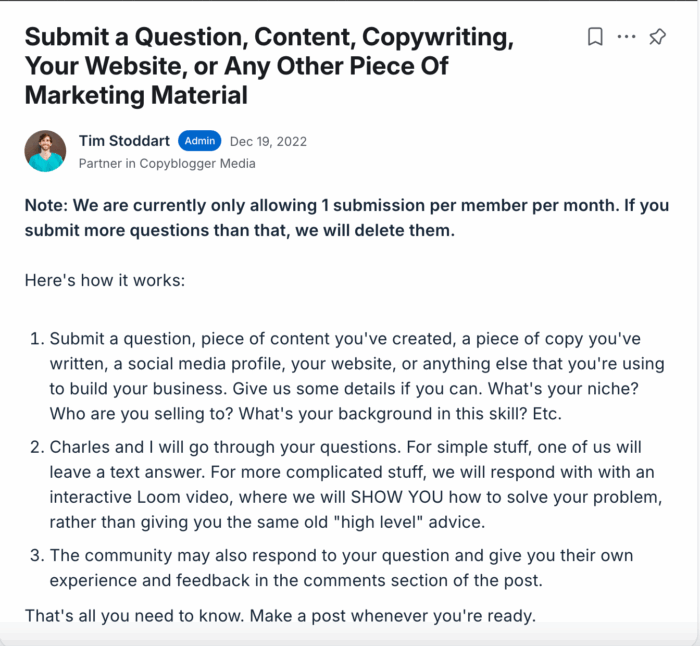
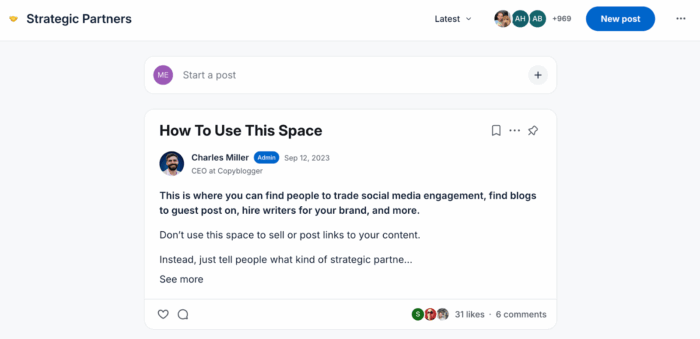
Feedback Infrastructure & Community: The platform features direct critique channels where members submit copy, sales pages, and editorial calendars for direct feedback from Stoddart, Miller, and peer members. Regular monthly mini-courses, active collaboration threads, and continuous advice updates address ongoing developments in generative AI and search updates.
Pricing Model: Entry accessible via a $1 trial, transitioning into an ongoing monthly membership structure.
2. HubSpot Content Marketing Certification Course
Operational Focus: Inbound marketing fundamentals, introductory strategy creation, content creation frameworks, and video promotion.
Instructional Leadership: Taught primarily by Justin Champion (HubSpot’s Global Head of Surround Sound Growth), alongside industry guest lecturers including Andy Crestodina (Orbit Media) and Matthew Howells-Barby.
Curriculum Structure: An 8.5-hour programmatic overview containing 14 lessons, 54 instructional videos, and 11 assessment quizzes. Key topics include strategic story creation, content ideation, blog creation, repurposing strategies, and video marketing.
Feedback Infrastructure & Community: Designed as a static, self-paced certification path. The platform contains no direct instructor interaction, assignment teardowns, or active discussion forum.
Pricing Model: Free access upon user registration, culminating in a shareable LinkedIn certification badge.
3. Grow and Convert’s "Customers From Content" Course & Community
Operational Focus: Bottom-of-funnel (BOFU) B2B content marketing, conversion-focused keyword research, ROI tracking, and lead-generating content systems.
Instructional Leadership: Created by Benji Hyam and Devesh Khanal, co-founders of the Grow and Convert agency. The agency is known for pioneering bottom-of-funnel search strategies that prioritize direct sales lead attribution over high-volume vanity traffic for brands like Patreon, Leadfeeder, and CrazyEgg.
Curriculum Structure: Organized across five strategic modules:
Customer Research: Extracting pain points to inform conversion-focused articles.
Content Creation: Tactical execution of in-depth, original industry analysis.
Promotion & Link Building: Targeted, non-spammy content distribution.
Analytics & ROI Attribution: Setting up precise conversion tracking in analytics platforms.
Feedback Infrastructure & Community: Operates within a private discussion forum where founders directly answer user-submitted strategy questions. Features live monthly Q&A calls and dynamic updates reflecting ongoing experiments from their active client work.
Pricing Model: Lifetime access available for a $699 one-time payment or six monthly installments of $135.
4. Superpath
Operational Focus: Advanced content strategy, career growth for senior marketers, content team management, and industry-wide operational benchmarks.
Instructional Leadership: Founded by Jimmy Daly, former VP of Content at Animalz. Strategic contributions are crowdsourced from senior content leads at enterprise SaaS organizations, including Shopify, Clearscope, Podia, and Intercom.
Curriculum Structure: Operates primarily as an advanced professional community supplemented by tactical assets rather than a single structured video course. Members gain access to teardowns, content planning templates, operational salary reports, and topic-specific mini-courses covering scaling, hiring, and distribution strategies.
Feedback Infrastructure & Community: Focuses on community interaction with over 400 active practitioners. Includes dedicated Slack channels, peer feedback threads, 1:1 networking matches, live expert AMAs, and peer-led strategy reviews.
Pricing Model: Offers a limited free community tier, a Pro membership starting at $50/month ($500/year), and an Advanced leadership tier at $1,000/year.
5. Ahrefs’ "Blogging for Beginners"
Operational Focus: Organic search strategy, keyword research, SEO blogging, link-building tactics, and blog monetization.
Instructional Leadership: Led by Tim Soulo, Chief Marketing Officer at Ahrefs. Features guest modules featuring online creators and growth operators such as Noah Kagan (AppSumo) and Bryan Harris.
Curriculum Structure: A 5-hour video curriculum featuring 40 focused lessons across 11 modules. Content centers on finding intent-driven keywords, structuring articles for search visibility, building backlinks at scale, and converting organic web visitors into product users.
Feedback Infrastructure & Community: Distributed freely as a linear video course on YouTube and Ahrefs Academy. Does not include interactive feedback, assignment reviews, or a private community space.
Instructional Leadership: Taught by Brian Dean, recognized SEO authority and founder of Backlinko and Exploding Topics (both acquired by Semrush).
Curriculum Structure: Covers two core courses:
Advanced Content Marketing: 21+ lessons covering content promotional campaigns, skyscraper execution, lead magnet design, and landing page optimization.
Content-Led SEO: 29 lessons detailing search intent mapping, scalable link outreach blueprints, and long-term search updates.
Feedback Infrastructure & Community: Self-paced video distribution with downloadable worksheets and execution templates. Direct mentorship or organized student forums are not included.
Pricing Model: Free.
7. CXL Content Marketing Research Course
Operational Focus: Enterprise content strategy, audience research, content auditing, and distribution systems.
Instructional Leadership: Taught by Derek Gleason, SEO and Content Lead at Shopify (formerly leading agency campaigns for Twitter and Virginia Tech).
Curriculum Structure: A targeted, six-lesson masterclass (~1 hour in duration) focused on strategy formulation. Key topics include audience analysis, competitive landscape audits, content mapping, distribution architecture, and performance tracking.
Feedback Infrastructure & Community: Hosted within the CXL Institute learning management system. Includes self-assessment materials but omits direct instructor feedback loops or external community spaces.
Pricing Model: Available via a single course purchase for $299 or through CXL’s full platform subscription ($289/month billed annually).
8. Content Marketing Masterclass (Udemy)
Operational Focus: Introductory digital marketing fundamentals, consumer persona mapping, basic copywriting principles, email marketing, and social media posting.
Instructional Leadership: Taught by Brad Merrill, media entrepreneur and CEO of Merrill Media.
Curriculum Structure: Features 3 hours and 46 minutes of video content split into 95 micro-lectures across 14 sections. Provides broad conceptual coverage of marketing sales funnels, basic web design considerations, the AIDA copywriting model, and multi-channel posting strategies.
Feedback Infrastructure & Community: Delivered via Udemy’s standard platform framework. Student interactions are confined to asynchronous platform Q&A boards, without ongoing live cohort support.
Pricing Model: Priced at $109.99 for standalone access, or included with the Udemy Personal Plan subscription.
Comparative Context & Performance Analysis
Selecting an appropriate program depends heavily on an individual’s operational focus, budget constraints, and desired level of support. The matrix below outlines how these eight programs compare across target audiences, operational formats, and learning support structures:
                      EDUCATIONAL OBJECTIVES MATRIX

  High Support / Community ┌──────────────────────────────────────────┐
                           │ Copyblogger Academy     Superpath        │
                           │                                          │
                           │ Grow and Convert                         │
                           │                                          │
  Low Support / Static     │ HubSpot    Semrush    CXL     Ahrefs     │
                           └──────────────────────────────────────────┘
                             Introductory / Broad   Advanced / Targeted
Program Name
Primary Target Audience
Core Format Emphasis
Support & Feedback Level
AI/Modern Trend Relevance
Pricing Model
Copyblogger Academy
Entrepreneurs, Freelancers, Creators
Multi-channel, SEO, Social, Email
High (Direct reviews from founders & peer group)
High (Continuously updated by active operators)
$1 Trial / Subscription
HubSpot Academy
Entry-Level Marketers, Students
General Inbound, Traditional Blogging
None (Self-paced video modules)
Moderate (Broad foundational updates)
Free
Grow & Convert
B2B Marketers, Agency Owners
Bottom-of-Funnel SEO, Conversion ROI
High (Forum Q&A + live monthly calls)
High (Updated agency playbooks)
$699 One-Time / Installments
Superpath
Senior Content Leads, SaaS Marketers
Career Strategy, Team Management
High (Peer-to-peer network & Slack channels)
High (Real-time community discussions)
Free / $50–$83/mo
Ahrefs Blogging
Beginner Bloggers, Affiliates
Pure SEO & Blog Writing
None (Static YouTube playlist)
Low (Legacy tactics recorded in 2020)
Free
Semrush Academy
Mid-Level Marketers, SEOs
Backlinking, Editorial Frameworks
None (Static videos & templates)
Moderate (Core search concepts recorded in 2022)
Free
CXL Institute
Enterprise Strategists, Directors
Strategy, Research, Distribution
None (Self-paced LMS video modules)
Moderate (Updated strategy fundamentals)
$299 One-Time / Subscription
Udemy Masterclass
Solo Business Owners, Beginners
General Marketing Overview
Low (Platform Q&A message board)
Low (Broad overview, limited modern trends)
$109.99 / Subscription
Strategic Insights & Industry Perspectives
An examination of practitioner perspectives highlights key shifts in modern content education:
1. The Shift Away from "Publish and Pray" SEO
Historically, content courses focused primarily on producing high volumes of top-of-funnel (TOFU) blog posts targeting low-difficulty keywords. However, industry operators point out that search engine generative answers and automated content scaling have rendered basic informational content less effective for driving actual pipeline revenue.
"Most content strategies focus on traffic metrics while completely ignoring revenue generation," notes Benji Hyam of Grow and Convert. "If content doesn’t capture high-intent buyers who are actively searching for solutions, high pageview numbers mean very little for a business’s bottom line."
2. The Rise of Personal Branding and Multi-Channel Ecosystems
B2B buying behavior has shifted heavily toward social channels and peer recommendation networks, making personal branding on platforms like LinkedIn and X a core component of digital marketing strategy.
"A corporate blog alone is no longer enough to build an audience," explains Tim Stoddart of Copyblogger. "Modern buyers build relationships with individuals, not faceless logos. Content strategies need to combine search engine organic visibility with direct personal authority across social platforms and email lists."
3. Static Videos vs. Live Feedback Loops
Another challenge in content marketing education is the short shelf-life of static video courses. With platform algorithms and AI capabilities updating continuously, educational frameworks must adjust in real time to remain useful.
"The true value of modern education isn’t just watching a pre-recorded lecture," says Jimmy Daly of Superpath. "It comes from real-time context—seeing what is working right now for other practitioners in the field, asking specific operational questions, and getting direct feedback on your work."
Future Outlook: The Next Era of Digital Content Education
As digital marketing environments continue to evolve, the criteria for choosing a content marketing curriculum will shift further away from passive video consumption toward interactive execution platforms. Several major trends are shaping the future of content marketing education:
Adaptation to Generative Search Engine Interfaces: As search engines increasingly answer simple informational queries directly in search results, educational programs must train marketers to produce high-intent content, direct customer research, primary data studies, and proprietary opinions that search engines cannot easily replicate.
Integration of AI-Assisted Workflows: The discussion around AI has shifted from whether to use it, to how to integrate it efficiently. Forward-looking courses now instruct marketers on using large language models (LLMs) for content research, outline generation, data analysis, and distribution workflows—while maintaining human editing, original insights, and brand voice.
Emphasis on First-Party Distribution Channels: Rising ad costs and declining organic reach on zero-click platforms make owned audience assets highly valuable. Successful educational programs place heavy emphasis on converting temporary platform attention into owned, monetized email lists and community hubs.
Demand for Direct Mentorship and Peer Accountability: As self-paced video content becomes increasingly commoditized and widely accessible for free, paid educational programs will differentiate themselves primarily through cohort-based accountability, personalized project teardowns, real-time strategy updates, and active peer communities.
Conclusion & Decision Framework
Selecting an effective content marketing educational resource requires aligning individual learning goals with the appropriate platform strengths:
For solo entrepreneurs, freelancers, and growth-focused creators looking for an all-in-one ecosystem covering social media personal branding, SEO, email list buildout, and copy critiques, Copyblogger Academy provides an active community model backed by current business operators.
For enterprise B2B teams and agency marketers focused strictly on measuring bottom-of-funnel lead attribution and ROI, Grow and Convert provides an established, agency-tested system.
For senior content directors and lead strategists seeking career growth, team management frameworks, and peer-level networking within enterprise SaaS, Superpath offers a high-value community environment.
For entry-level marketers or budget-conscious beginners needing an introduction to core terminology and foundational concepts, free resources like HubSpot Academy, Semrush Academy, and Ahrefs remain accessible entry points.
Ultimately, the most effective content marketing strategy is one designed for current search realities, executed across channels where target audiences actively spend time, and refined through continuous, real-world feedback.