

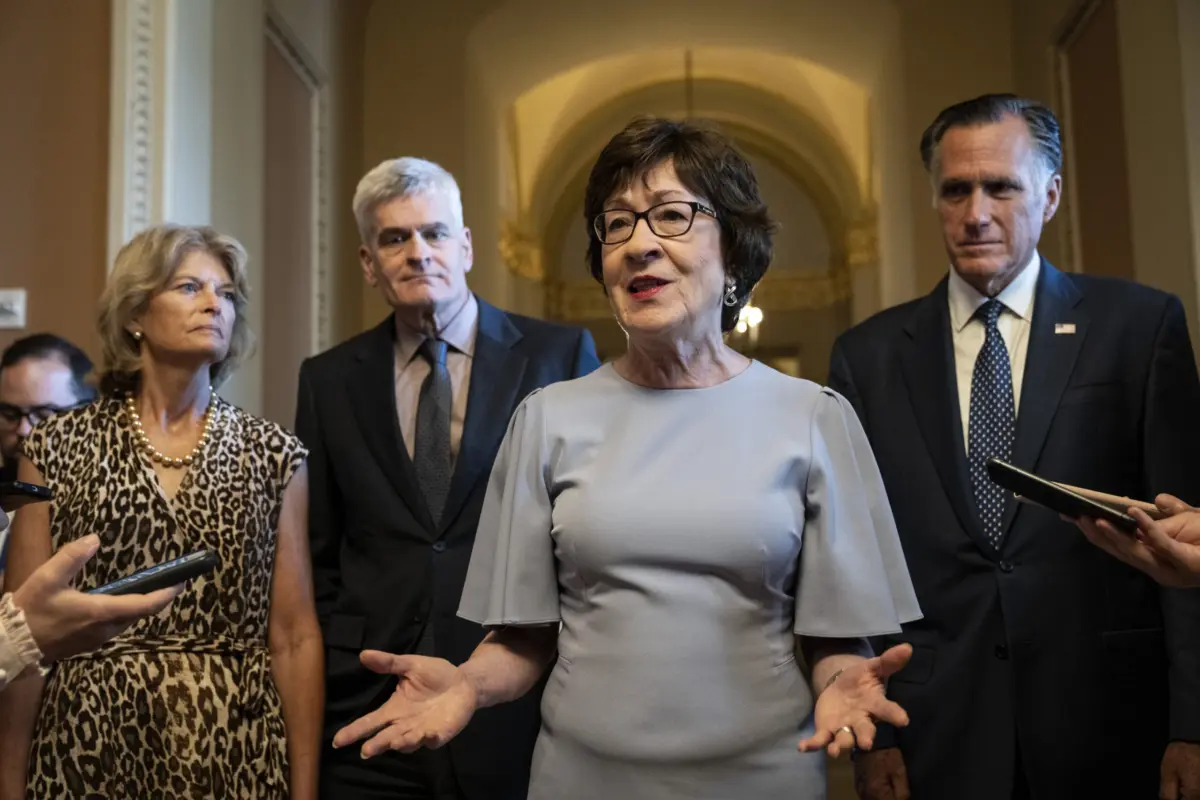
In the waning weeks of 2019, a high-stakes convergence of political vulnerability and corporate ambition played out inside a Washington, D.C. coffee shop. Scott Reed, the leader of a super PAC supporting Republican Senator Susan Collins of Maine, sat across from executives of Navatek, a Hawaiian defense contractor. With Collins facing the most perilous reelection battle of her two-decade Senate career—plagued by low state approval ratings and lagging fundraising—Navatek offered a lifeline. The contractor was hungry for millions in federal defense funding and sought a transactional arrangement: a massive infusion of campaign cash in exchange for guaranteed congressional appropriations.
What followed was a sprawling, multi-year federal investigation into an alleged pay-to-play scheme that quietly roiled Washington. Newly uncovered investigative records and confidential FBI interviews reveal that Navatek’s former CEO, Martin Kao, laid out a devastating account of systemic political corruption to federal law enforcement. Kao confessed that his company systematically traded campaign contributions for bespoke legislative line items, operating under a playbook known internally as "the method."
Despite gathering extensive evidence and establishing the groundwork for a sweeping bribery probe that could have ensnared lawmakers across the political aisle, the investigation was abruptly halted. Following the return of Donald Trump to the White House and the subsequent structural overhaul of the Department of Justice and the FBI, the anti-corruption teams spearheading the inquiry were dismantled. Key investigators were pushed out, career prosecutors resigned, and a potential roadmap to congressional corruption was effectively shelved. Today, the saga underscores the fragile nature of political oversight and the alarming ease with which legislative influence can be purchased in the nation’s capital.
Detailed Chronology: From Regional Engineering to Capital Influence
The Evolution of "The Method"
Before Martin Kao transformed Navatek into a vehicle for political influence peddling, the company was a relatively quiet Hawaiian engineering firm founded in 1978 by Steven Loui. Initially focused on experimental marine vessels like catamarans designed for choppy waters, Navatek relied heavily on the patronage of the late legendary Hawaii Senator Daniel Inouye. Known colloquially as the "King of Pork," Inouye utilized traditional earmarks to steer millions in federal research contracts to the state.
However, Inouye’s death in 2012, combined with Congress’s subsequent ban on earmarks, forced defense contractors to compete openly on the merits of their research. Recognizing this shift, Kao—who joined Navatek as chief financial officer in 2008 before eventually taking over as CEO—engineered a new strategy. If the company could no longer rely on a single legislative benefactor, it would cultivate a stable of them by targeting members of the House and Senate appropriations committees.
Kao’s playbook was systematic:
- Targeting Vulnerable States: Navatek identified small, coastal states with prominent senators sitting on appropriations committees who were eager to bring home high-tech jobs.
- University Partnerships: The company partnered with local state universities to pitch specialized research projects that appeared beneficial to the home state’s economy.
- The Lobbying Apparatus: Navatek deployed an expensive roster of well-connected lobbyists to schedule meetings with congressional staff, quietly drafting specific legislative language that ensured Navatek would be the sole logical recipient of multi-million-dollar funding lines.
- The Financial Exchange: Through a combination of direct campaign donations, bundled contributions, and super PAC gifts, Kao ensured that lawmakers understood support was fundamentally transactional.
The Maine Beachhead and Susan Collins
Navatek’s ambitions found a perfect partner in Senator Susan Collins. As a senior member of the powerful Senate Appropriations Committee, Collins built her political brand on her ability to direct federal dollars to Maine. Eager to expand operations to the East Coast, Navatek targeted Collins’s 2020 reelection campaign, which was facing unprecedented headwinds due to national political dynamics.
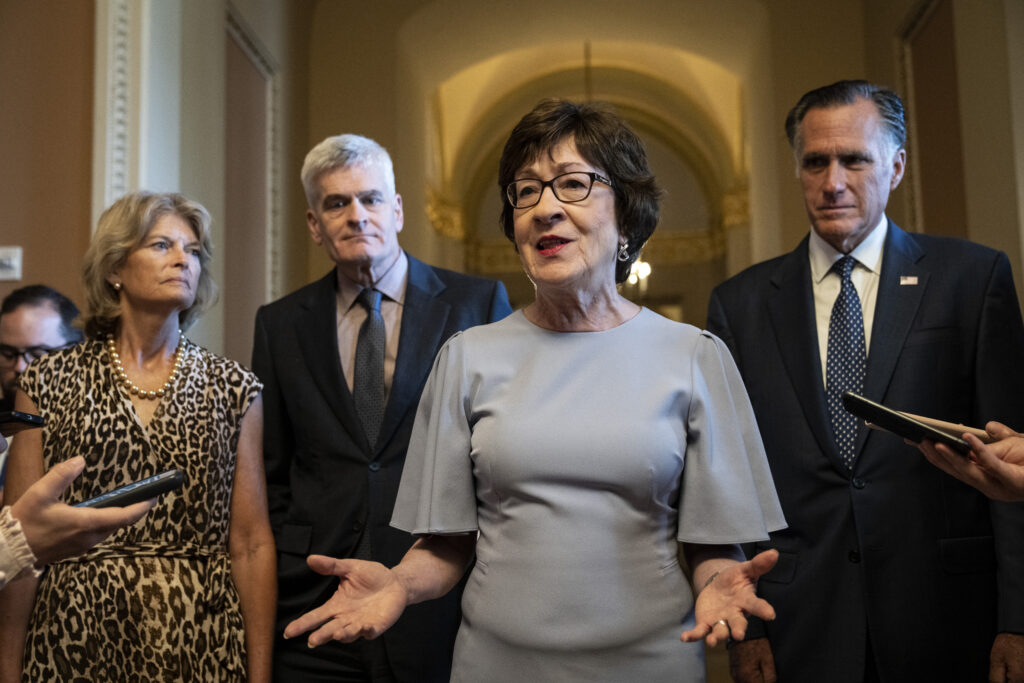
The relationship kicked off in earnest in 2018. According to FBI statements, Kao stated he had to pay for the privilege of meeting Collins, noting that face time was conditioned on campaign support. Working through lobbyists with deep ties to the Maine congressional delegation, Navatek pitched an $8 million boat hull research project. Shortly thereafter, Collins’s office steered the funds into the federal defense budget, while her campaign leaned on Kao to bundle contributions and host fundraisers.
By August 2019, Collins appeared at a high-profile publicity event at Navatek’s Maine headquarters, posing for photographs with an experimental boat model. Behind the scenes, Kao orchestrated over $40,000 in donations from extended family members, utilizing illegal straw-donor tactics to bypass individual contribution limits. In a private meeting preceding the event, Kao alleged that Collins told him, "You’ve seen me deliver."
The Corner Bakery Meeting and the Super PAC Ruse
As the 2020 election drew closer and the pressure mounted, Scott Reed, head of the Collins super PAC (the 1820 PAC), met with Kao and other Navatek executives at a Washington, D.C. Corner Bakery. With the super PAC facing an urgent need for cash, Reed requested a $500,000 contribution.
Because government contractors are legally banned from contributing to political campaigns and committees, Kao devised a scheme to funnel the money through a shell company—the Society of Young Women Scientist and Engineers (intentionally lacking an "s" in scientists). When Kao informed Reed of the shell company plan via email, Reed reportedly replied, "Super vague and very interesting… Thanks for doing this."
Shortly after the meeting, an initial $150,000 check cleared. Internal company emails reviewed by investigators noted that Collins’s office subsequently committed to securing up to $32 million in naval contracts for Navatek. A week after the super PAC cashed the check, a member of Reed’s staff emailed a Navatek lobbyist asking for Kao’s phone number, noting, "Senator Collins would like to call Martin to thank him."
The Collapse and FBI Confessions
The house of cards began to collapse in early 2020 when the Campaign Legal Center filed an FEC complaint regarding the suspicious $150,000 donation from the shell company. Investigative journalists quickly linked the LLC to Kao’s wife and Navatek. While attempting a clumsy cover-up—such as offering scholarship donations to women in STEM to launder the public narrative—Kao simultaneously defrauded the federal Paycheck Protection Program of $13 million.
Disgusted by Kao’s actions, company founder Steven Loui reported him to federal authorities. On September 30, 2020, the FBI raided Navatek’s offices and arrested Kao.
Facing decades behind bars for fraud and campaign finance violations, Kao pleaded guilty in 2022. Hoping to shave time off his eventual 87-month prison sentence, Kao sat down with elite FBI anti-corruption agents Michelle Ball and Kevin Gounaud for intensive, multi-day debriefings. Over the course of interviews lasting into late 2024, Kao delivered a comprehensive confession, backed by a 50-page document naming dozens of lobbyists, congressional staffers, and lawmakers who allegedly participated in the pay-to-play ecosystem.
Supporting Context & Metrics
- The Scale of Influence: Under Kao’s leadership, Navatek’s annual revenue surged from approximately $10 million to nearly $40 million by 2020, fueled primarily by taxpayer-backed government contracts that yielded little to no functional military technology.
- Lobbying Expenditures: In the second half of 2019 alone, Navatek funneled more than $500,000 into a roster of five distinct lobbying firms to maintain access to Capitol Hill.
- Straw Donor Schemes: Kao utilized illegal family-member bundling to inject tens of thousands of dollars into Collins’s campaign accounts, a practice flagged by federal agents as a clear violation of campaign finance laws.
- The "Valley of Death": Internal company documents revealed that Navatek’s research largely languished in what defense contractors call the "valley of death"—bureaucratic funding gaps where research is funded continuously without ever resulting in deployable products purchased by the military.
Official Statements & Legal Responses
The fallout from the investigation has prompted vehement denials from political figures and legal representatives, alongside structural critiques from former law enforcement officials.
- Senator Susan Collins’ Office: Annie Clark, Collins’s deputy chief of staff, issued a vigorous defense, labeling Kao’s allegations of bribery and pay-to-play "outlandish" and "wholly inaccurate." Clark emphasized that the campaign was not part of the discussions between Kao and the super PAC, noting that the campaign fully cooperated with the initial 2021 federal inquiry and voluntarily disgorged the illegal contributions made without their knowledge. "The fact that the FBI and Biden-led Department of Justice thoroughly examined the Navatek matter demonstrates this," Clark stated.
- The Federal Bureau of Investigation: FBI spokesperson Ben Williamson asserted that the agency investigated claims against Collins years ago and found no evidence implicating the senator or her campaign. Regarding the new 2024 investigation launched in the wake of Kao’s cooperation, Williamson declined to comment directly, maintaining that the current administration removes agents only if they have acted unethically or weaponized law enforcement.
- Lobbyists and Associates: Scott Reed stated via email that he never had any communication with Senator Collins or her staff regarding Martin Kao or Navatek. Similarly, former strategist Andy Winer maintained that all political contributions he discussed with Kao were understood to be lawful, denying any participation in or knowledge of illegal campaign exchanges or bribes.
- Navatek / PacMar Leadership: Reinstated founder Steven Loui condemned Kao’s tenure, stating that Kao’s "unethical and illegal method of winning contracts" was a complete departure from company standards and that PacMar has fully cooperated with federal authorities to restore its professional reputation.
Future Outlook: The Death of an Investigation
By late 2024, FBI agents Ball and Gounaud had compiled sufficient documentary evidence and testimonial proof to convince supervisors to approve a broad, sweeping public corruption probe into congressional bribery, extending inquiries into interactions with other lawmakers such as Senator Lindsey Graham.
However, the political landscape shifted dramatically with the return of Donald Trump to the White House. Prompted by an aggressive restructuring of the Department of Justice and the FBI under new leadership, specialized anti-corruption units—including the elite CR-15 unit—were systematically dismantled.
Agent Michelle Ball was terminated in October 2025 following allegations of "weaponizing" the DOJ due to her past work on sensitive election interference investigations, a firing she is currently challenging in court. Kevin Gounaud was pushed out shortly thereafter, and the Public Integrity Section suffered mass resignations after leadership was ordered to drop high-profile political cases.
According to former federal officials, the Department of Justice has effectively ceased pursuing political corruption cases in any meaningful capacity. Consequently, the comprehensive investigation sparked by Martin Kao’s inside roadmap to congressional influence peddling is dead. The informant who offered a clear window into the mechanics of Washington pay-to-play sits in a federal prison camp, while the systemic vulnerabilities that allowed taxpayer-funded defense contracts to be traded for campaign donations remain unaddressed.