

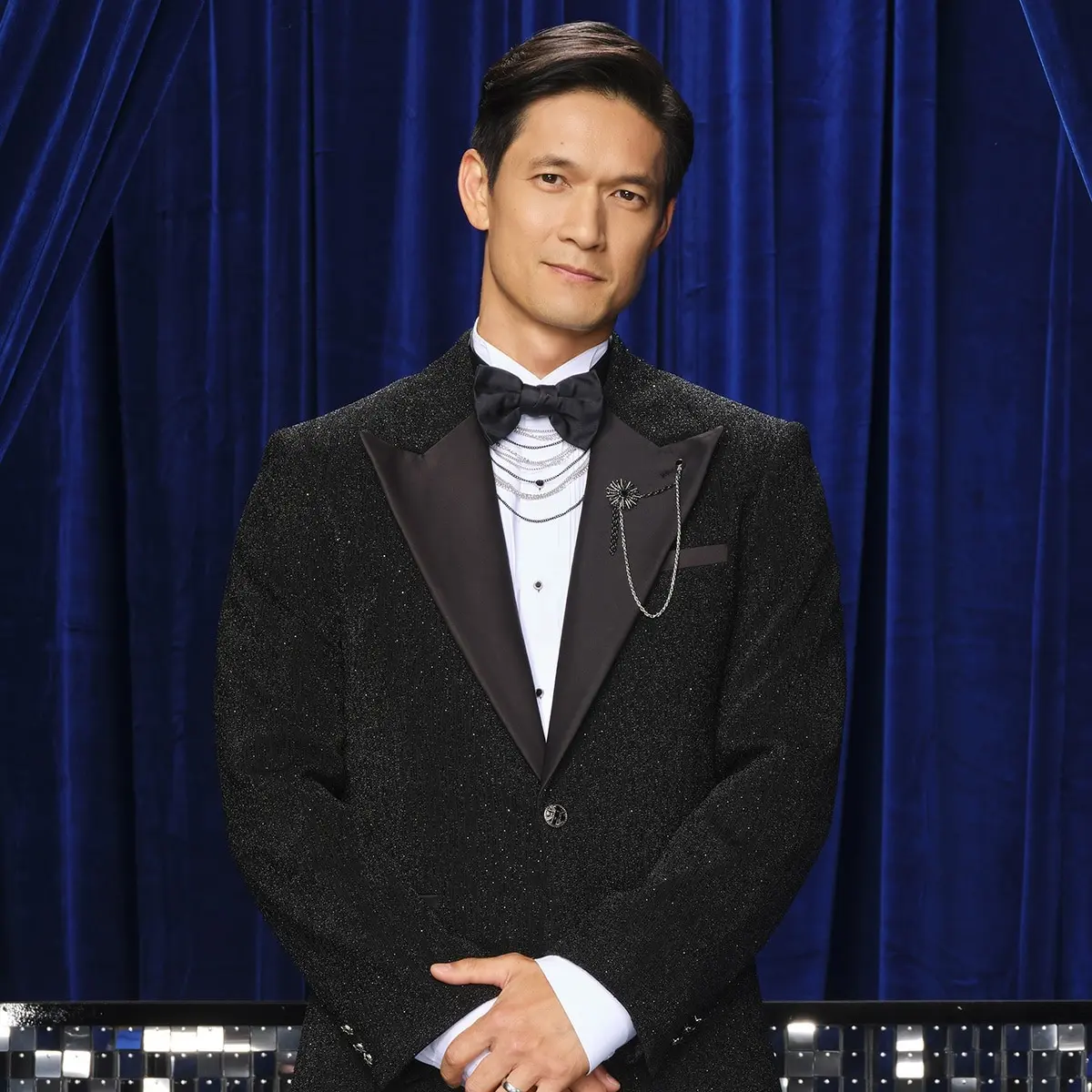
Executive Overview
The ballroom of Dancing with the Stars (DWTS) is routinely a theater of high stakes, exquisite costumes, physical exertion, and, inevitably, intense public scrutiny. Season 35 has been no exception, quickly establishing itself as one of the most competitive and emotionally charged iterations in the long-running reality competition’s history. However, the glittering surface of the show was recently ruffled by controversy following a routine performed by actor Harry Shum Jr. and professional partner Jenna Johnson.
During the show’s Super Bowl-themed episode on October 13, Shum and Johnson delivered a high-energy samba set to Usher’s hit track "Yeah!" While the performance electrified the live studio audience, it drew immediate, rigorous pushback from judge Carrie Ann Inaba. Inaba famously called out the pair for incorporating a prohibited "lift" into their routine, going so far as to read the strict technical definition of the move aloud from a prepared note.
The critique instantly ignited a digital firestorm, dividing fans, prompting defensive commentary from fellow pros—including Jenna Johnson’s husband, Val Chmerkovskiy—and generating a wave of toxic online discourse. Rather than fanning the flames of controversy or engaging in social media sparring, Shum opted for a masterclass in grace. Three days after the incident, the Glee and Crazy Rich Asians star took to Instagram to refocus the conversation. Eschewing bitterness, Shum published a poignant message emphasizing that dance is, fundamentally, a medium of joy and community. In doing so, he sparked a wider movement among his castmates to consciously replace internet negativity with mutual support, elevating the standard for sportsmanship in reality television.
Detailed Chronology: From the Ballroom Floor to the Social Media Shift
The October 13 Super Bowl-Themed Episode
The tension began during the height of Season 35’s competitive arc. Weeknights on Dancing with the Stars demand absolute precision, where every misstep, extra beat, or rule violation can spell the difference between survival and elimination. For the Super Bowl-themed evening, celebrities and their professional partners were tasked with delivering anthemic, high-impact routines suited for a stadium stage.
Harry Shum Jr. and Jenna Johnson chose the samba—a notoriously difficult Latin dance defined by rapid footwork, rhythmic hip actions, and strict traditional guidelines. Their performance of Usher’s "Yeah!" was visually stunning, leveraging Shum’s extensive background as a professional dancer and actor. However, the routine’s ambitious choreography crossed a strict boundary set by the competition’s rulebook: it featured a lift.
The Carrie Ann Inaba Critique
Following the performance, judge Carrie Ann Inaba did not mince words. Known for her vigilant policing of technical rules—particularly lifts, which are strictly forbidden in certain Latin and ballroom styles—Inaba addressed the duo directly. In a move that surprised both the audience and viewers at home, she pulled out a physical note and read the official definition of a lift to underscore the infraction.
The critique injected an undeniable chill into the ballroom. For Shum and Johnson, who had poured immense physical labor into the routine, the public reprimand was a bitter pill. Within minutes, the moment went viral. Digital platforms fractured into warring factions: critics argued that rules must be enforced uniformly to preserve the integrity of the dance styles, while supporters accused the judges of undue harshness and nitpicking. The online discourse quickly devolved into personal attacks, dragging in other cast members and their families, including a viral remark from fellow pro Val Chmerkovskiy.
The October 16 Paradigm Shift
Recognizing that the digital environment was eclipsing the joy of the competition, Harry Shum Jr. stepped up to reset the narrative. On October 16, he shared a deliberate, carefully crafted statement on Instagram designed to pierce through the noise.
"Reminder that this is a dance show. It is supposed to be joyous," Shum wrote. "People are suffering in the world already, so let’s celebrate each other with more love. I’ll go first."
True to his word, Shum used his platform not to defend his score or critique the judges, but to shine a spotlight on every single one of his fellow competitors. His post marked a turning point for the season, inspiring an immediate wave of digital solidarity across the cast.
Supporting Context & Metrics: Navigating the Pressures of Season 35
To understand the weight of Shum’s response, one must examine the uniquely diverse and high-pressure landscape of Dancing with the Stars Season 35. This year’s cast is a sprawling tapestry of talent, ranging from seasoned professional athletes and reality television veterans to actors, internet personalities, and Olympic champions. The cognitive and physical load required to sustain a run on the show is staggering, often underestimated by casual viewers.
The Physical and Mental Toll
The behind-the-scenes reality of DWTS involves grueling 6-to-8-hour rehearsal days, layered on top of the contestants’ existing professional and personal responsibilities. Shum’s acknowledgment of his co-stars highlights the invisible labor of the ballroom:
- Jackson Olson, the Savannah Bananas baseball player, famously juggled grueling travel schedules, live games, and complex choreography concurrently.
- Ezra Frech, a Team USA Paralympic track and field athlete, demonstrated elite athletic adaptability, translating his exceptional physical conditioning into ballroom mastery at just 21 years old.
- Amber Glenn, stepping straight from the ice as a 2026 Olympic figure skater, had to retrain her muscle memory from gliding on blades to grounding her center of gravity on a wooden floor.
- Tatyana Ali, balancing the immense responsibilities of motherhood, used her platform to champion working mothers everywhere.
When the digital discourse reduces these monumental human efforts to momentary technical infractions like a single misplaced lift, it strips away the vulnerability required to step onto a national stage. Shum’s pivot was a strategic and emotional reminder of the immense courage displayed by every contestant week after week.
Official Statements and Cast Reactions
The ripple effect of Shum’s message was immediate, prompting a cascading series of public commendations from fellow contestants who felt the collective exhaustion of internet toxicity.
Harry Shum Jr.’s Full-Circle Appreciation
In his landmark Instagram post, Shum systematically shouted out nearly every member of the cast, proving that his commitment to community superseded personal grievance.
- He praised recently eliminated Jimmy Kimmel Live! star Guillermo Rodriguez for reminding everyone what dance should fundamentally mean: pure, unadulterated celebration.
- He commended Grey’s Anatomy star Connor Wood for maintaining a "levelheaded perspective" amidst the chaos.
- Reflecting on his own journey alongside partner Jenna Johnson, Shum offered a quiet, firm validation: "Proud of you for not letting anyone take your light and spark away no matter how much they try. Keep being you."
Tyler Cameron’s Amplification of Positivity
Following Shum’s lead, Bachelor Nation star Tyler Cameron took to social media to deliberately combat the negativity plaguing the fandom. Sharing behind-the-scenes footage of Ezra Frech, Cameron explicitly called out the toxic shift in online spaces.
"I feel like DWTS online discourse has gotten very negative lately so let’s put some positivity out there," Cameron wrote on October 16.
Focusing his lens on the raw intensity of his peers, Cameron highlighted the mental fortitude required to compete at an elite level. "I took this video in awe of the 21-year-old man, mature beyond his years, making a name for himself on a stage that’s not normal to him and owning it."
Future Outlook: What the Lift Controversy Means for Season 35 and Beyond
As Season 35 of Dancing with the Stars pushes past its midpoint, the incident involving Harry Shum Jr., Jenna Johnson, and Carrie Ann Inaba serves as a critical case study in the evolving relationship between reality television contestants, judges, and digital fandoms.
1. Reframing Technical Strictness vs. Entertainment Value
The perennial debate in ballroom judging has always hinged on the tension between strict technical adherence and emotional performance value. While judges like Inaba are duty-bound to enforce rules—such as the prohibition of lifts in specific styles—the public reaction underscores a growing viewer fatigue with rigid pedantry that overshadows storytelling. Moving forward, the production faces the delicate task of balancing educational critiques of technique with an appreciation for the entertainment and emotional resonance that draws millions of viewers to the franchise.
2. The Power of Proactive Digital Leadership
Shum’s handling of the controversy establishes a new blueprint for reality TV stars caught in cross-fire. By weaponizing radical kindness rather than defensiveness, Shum successfully shifted the cultural momentum of the season. Instead of a news cycle dominated by fan wars and judge-bashing, the narrative pivoted to one of mutual respect, peer mentorship, and shared resilience.
3. Looking Ahead to the Mirrorball Trophy
With the competition entering its final, grueling stretches, technical margins will only grow razor-thin. Scores will tighten, eliminations will sting more deeply, and the temptation for online vitriol will inevitably rise. However, the collective stance taken by Shum, Cameron, and their fellow castmates has drawn a clear line in the sand. Season 35 will be remembered not just for the choreography executed on the ballroom floor, but for the class, dignity, and unwavering joy with which its stars chose to carry one another across the finish line.