

Executive Overview
The intersection of modern mass surveillance, law enforcement oversight, and the evolving landscape of American journalism has taken center stage following a series of high-profile developments. In the technology sector, Flock—a prominent operator of automated license plate reader (ALPR) networks across the United States—announced a sweeping overhaul of its data-access protocols. The move comes directly on the heels of a damning investigative report revealing widespread abuse of its camera network by police officers tracking civilian women without consent.
Concurrently, in the Pacific Northwest, the media industry faces its own internal crisis. Rob Curley, the long-serving executive editor of The Spokesman-Review in Spokane, Washington, has been placed on administrative leave following personnel complaints and a unanimous vote of no confidence from the newsroom’s bargaining unit. This leadership vacuum occurs at a delicate junction, as the century-old, family-owned newspaper navigates a historic transition toward a public-benefit, nonprofit ownership model facilitated by the Comma Community Journalism Lab.
Together, these stories underscore growing societal anxieties regarding accountability—whether concerning the unchecked tracking capabilities of automated surveillance infrastructure or the shifting paradigms of newsroom governance and labor relations in an era of industry transformation.
Detailed Chronology
The Flock Surveillance Controversy and Policy Shift
- Late July 2026: Public backlash against automated surveillance intensifies as civil unrest and protests break out nationwide. Critics decry the oversurveillance inherent in expansive camera networks, leading in some instances to the physical vandalism and destruction of Flock cameras. Reports also surface highlighting instances where algorithmic misidentifications erroneously flagged innocent motorists as driving stolen vehicles, resulting in high-stress, potentially dangerous police confrontations.
- Early August 2026: The Washington Post publishes an explosive investigative report detailing systemic privacy violations facilitated by Flock’s nationwide database. The investigation uncovers dozens of instances where law enforcement officers leveraged the camera network to stalk women. Most notably, the report highlights a police chief who queried his ex-girlfriend’s license plate upwards of 500 times, persistently weaponizing real-time location data against her without her knowledge or consent. Around the same time, separate reporting from outlets like 404 Media reveals that federal immigration enforcement agencies, including ICE, have tapped into the network’s AI-enabled data streams.
- Mid-August 2026 (Thursday): Responding directly to intense public scrutiny and media pressure, Flock announces a comprehensive set of new safety measures and technical guardrails designed to curb police abuse and tighten data retention policies across its expansive network.
The Spokesman-Review Leadership Crisis
- December 2025: In an interview with Saint George’s School’s production Across the Lawn, Executive Editor Rob Curley outlines his journalistic philosophy, emphasizing a hyper-local, community-centric focus designed to strip national news from the front page in favor of regional engagement.
- August 2026 (Tuesday): Publisher William “Stacey” Cowles releases a formal statement announcing that Rob Curley has been placed on administrative leave pending an independent investigation. The decision follows internal personnel complaints involving staff members from the Comma Community Journalism Lab—a nonprofit co-founded by Curley that is currently executing a takeover of the newspaper.
- Immediately Following the Announcement: The newsroom’s bargaining unit issues a vote of no confidence in Curley’s leadership. Managing Editor Lindsey Treffry is appointed to oversee daily newsroom operations while an outside investigator and legal counsel examine the circumstances surrounding the leave. Bill Simer, board chair of the Comma Community Journalism Lab, acknowledges to independent outlet Range Media that high professional conflict—exacerbated by exhaustion and intense reporting demands during the recent Spokane Complex fires—contributed to the newsroom friction. The ownership transition of the historic publication is slated to proceed despite the ongoing inquiry.
Supporting Context & Metrics
The Mechanics of Flock’s Surveillance Apparatus
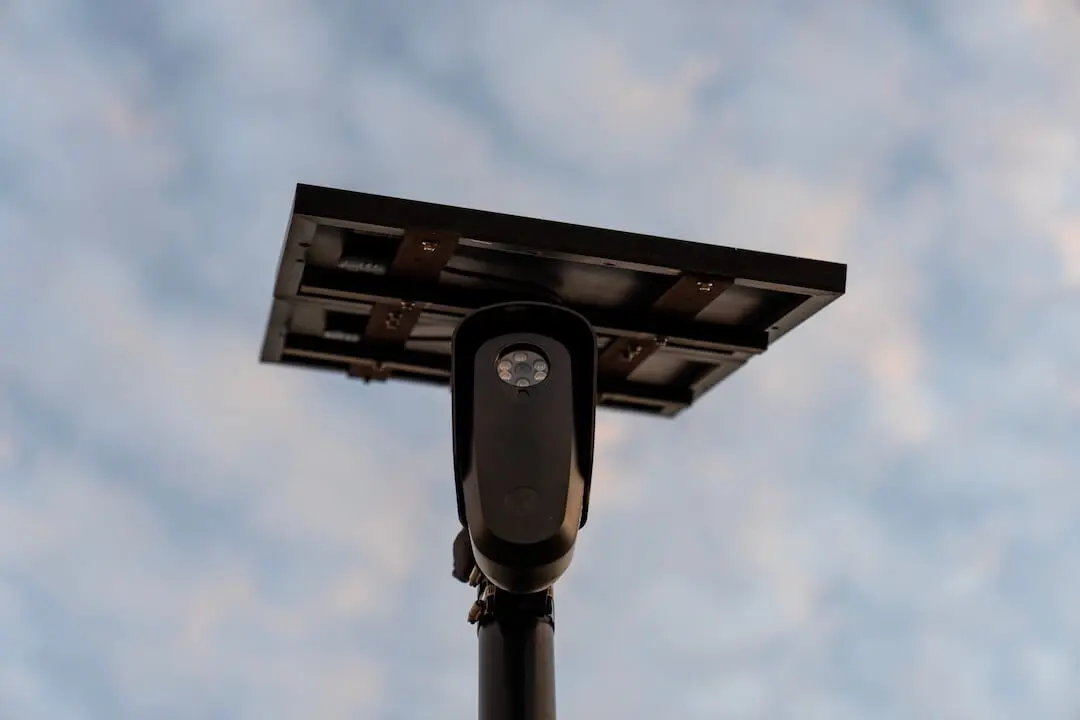
To understand the gravity of Flock’s policy reversals, one must examine the architecture of its network. Flock operates automated license plate reader (ALPR) cameras that passively capture high-resolution images of passing vehicles, logging timestamped geolocation data, license plate numbers, and vehicle characteristics (make, model, color, and unique identifying features like bumper stickers or roof racks).
This information is funneled into a centralized, nationwide cloud database accessible to subscribing law enforcement agencies and municipal customers. Police departments can run retrospective searches, establish real-time alerts for specific vehicles entering a geofenced area, and share data cross-jurisdictionally with minimal friction. While proponents argue that ALPR systems serve as vital force multipliers for solving violent crimes, stolen vehicle recoveries, and AMBER alerts, civil liberties advocates have long warned of a "function creep" that turns municipal streets into panoptical monitoring zones.
The Human Cost of Unfettered Access
The recent revelations by The Washington Post exposed a terrifying vulnerability in how municipal data access controls are enforced. By allowing individual officers broad querying privileges without robust auditing trails, agencies inadvertently created a digital stalking tool. The case of the police chief who utilized Flock’s database more than 500 times to track his former partner illustrates how easily state-sanctioned surveillance tools can be subverted for intimate partner harassment.
Furthermore, the integration of Flock data into federal immigration enforcement pipelines—documented by 404 Media—has alarmed immigrant advocacy groups. Many sanctuary cities and progressive municipalities discovered that local police data sharing agreements effectively bypassed local ordinances restricting cooperation with federal immigration authorities.
Newsroom Transformation in Spokane
The turmoil at The Spokesman-Review highlights the complex economic and operational pressures facing local journalism in the 21st century. Founded over a century ago and historically stewarded by the Cowles family, the newspaper represents a dying breed: a deeply rooted regional daily grappling with secular declines in print advertising and subscription revenues.
The transition to the Comma Community Journalism Lab—a public-benefit nonprofit entity designed to operate without private shareholders—was heralded as an innovative preservation strategy. However, the blending of nonprofit lab personnel with legacy newsroom staff has evidently catalyzed acute organizational strain. The clash over wildfire coverage reporting, described by board chair Bill Simer as an escalation of high-stress professional conflict, exposed underlying cultural fractures between visionary management styles and exhausted, unionized newsroom labor.
Official Statements and Regulatory Adjustments
Flock’s New Policy Framework
Under mounting pressure, Flock’s leadership has committed to a series of hard-coded platform changes scheduled to roll out fully by January 1. These measures include:
- Mandatory Case Number Labeling: Law enforcement users will be legally and technically required to associate every individual search query with an active criminal case number, creating an auditable paper trail for internal affairs and civil oversight bodies.
- Automated Anomaly Detection: The system will deploy algorithmic monitoring to flag "abnormal activity," such as high-frequency queries targeting a single license plate, anomalous after-hours access, or repetitive searches outside an officer’s assigned jurisdiction.
- Reduced Default Data Retention: The platform’s default storage window for captured license plate data will be slashed to seven days. Police departments wishing to extend this retention period up to one year will now be forced to secure explicit, affirmative approval from an elected official or governing body.
- Granular Inter-Agency Data Sharing Controls: Departments sharing their local camera feeds will gain the capability to place strict parameters on downstream use. For instance, a municipal government can explicitly authorize data sharing for violent crime investigations while blocking its use for immigration enforcement or minor civil infractions.
Institutional Responses in Spokane
Addressing the administrative leave of Rob Curley and the broader implications for the newspaper’s transition, publisher William “Stacey” Cowles emphasized a commitment to fairness and transparency:
"We are committed to conducting an independent and fair process to resolve conflicts, preserve the privacy of those involved and stay focused on the mission. The ultimate goal is to fulfill the vision that community journalism be rooted in the community, its schools, universities and institutions."
Bill Simer, board chair of the Comma Community Journalism Lab, contextualized the internal friction while speaking with Range Media, pointing to the grueling operational demands placed on reporters and editors during regional natural disasters:
"I do think it was a situation where professional conflict was high… I’d heard of people who had worked three days with very little sleep."
Meanwhile, Managing Editor Lindsey Treffry has stepped in to guide the newsroom through the multi-week investigation, while the unionized staff continues to demand greater institutional transparency and worker representation in governance.
Future Outlook
The Future of Automated Public Surveillance
Flock’s policy announcements mark a significant defensive pivot, yet legal scholars and digital rights organizations remain skeptical as to whether voluntary corporate self-regulation is sufficient to protect constitutional privacy rights. While mandatory case numbering and algorithmic anomaly detection provide friction against rogue actors, they do not resolve the fundamental constitutional questions surrounding mass, indiscriminate data collection on public roadways.
As cities nationwide re-evaluate their contracts with private surveillance vendors, municipal legislative bodies are expected to push for stricter local oversight, mandatory public hearings prior to camera deployment, and absolute bans on data sharing with federal immigration authorities. Furthermore, ongoing vandalism and community pushback suggest that the social license for ubiquitous automated surveillance is rapidly eroding.
The Road Ahead for The Spokesman-Review
For The Spokesman-Review, the independent investigation into Rob Curley’s conduct represents a critical test of resilience. The outcome will not only determine the future leadership of the newsroom but will also serve as a bellwether for the viability of nonprofit, community-owned journalism models attempting to rescue legacy print publications.
If the Comma Community Journalism Lab can successfully navigate this personnel crisis while maintaining labor trust and completing the ownership transition, it may provide a viable blueprint for saving community newspapers nationwide. Conversely, unaddressed internal alienation risks crippling the newsroom’s operational capacity precisely when rigorous, localized accountability reporting is most desperately needed.
Ultimately, both the Flock controversy and the Spokane newsroom shake-up reflect a broader societal reckoning: whether in the digital architecture of our public streets or the organizational structures of our free press, the demand for transparent, ethical, and accountable governance has never been more urgent.