

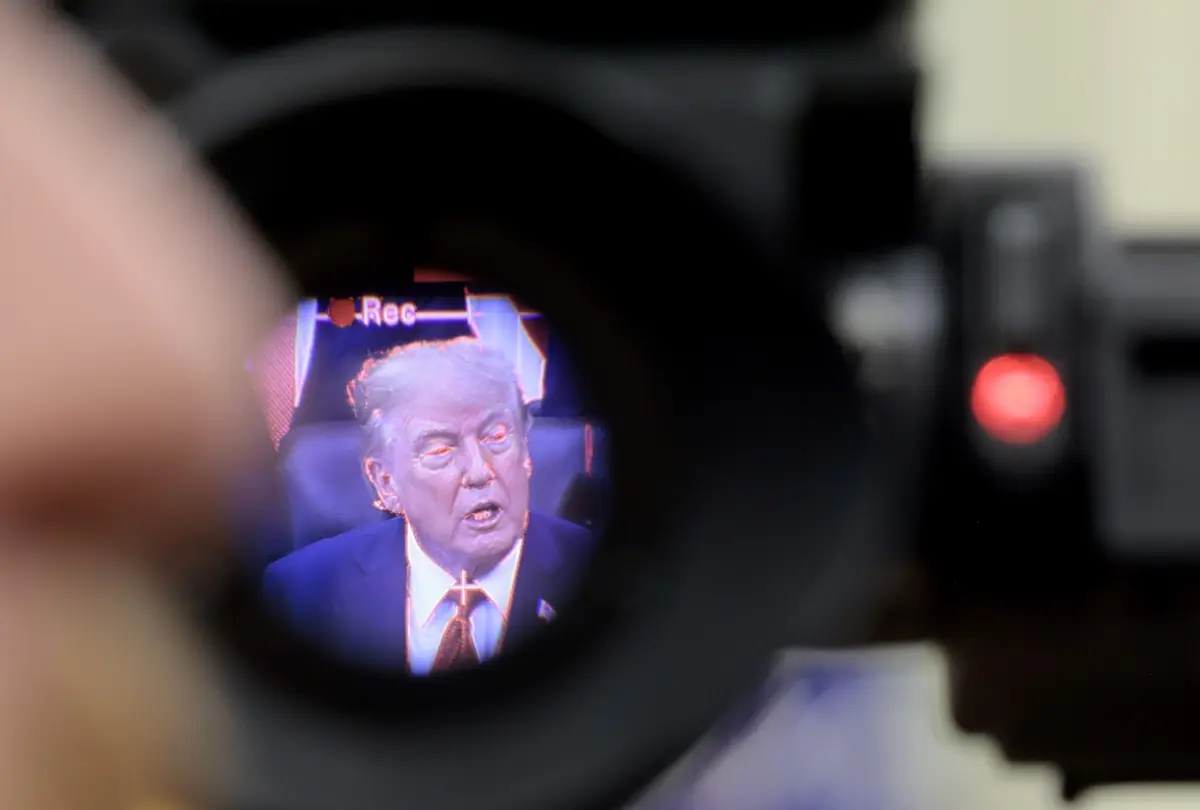
WASHINGTON — In an escalating war of narratives between the executive branch and the traditional American press corps, the Trump administration has taken a dramatic step toward institutionalizing state media. Dubbed "Trump TV," a newly minted 24/7 digital broadcasting initiative was launched on Monday, pitching itself as an unfiltered antidote to what the administration routinely dismisses as "fake news."
However, the rollout comes amid unprecedented chaos in the nation’s capital. The network’s debut follows a sweeping and controversial White House directive banning major news outlets from the premises, which in turn triggered a historic solidarity boycott by the broader television press pool. As legal battles loom and international comparisons fly, the launch of Trump TV has thrust the ongoing debate over executive power, censorship, and the First Amendment into uncharted territory.
Executive Overview
The genesis of Trump TV is inextricably tied to a total breakdown in relations between the White House and the Washington press corps. On the heels of an abrupt executive decision to bar outlets like CNN, MS Now, and Politico from White House grounds, major broadcasting networks—including ABC, CBS, NBC, and, notably, Fox News—staged a coordinated boycott of the White House press pool.
Facing a technical and public relations vacuum where traditional journalists refuse to participate in standard coverage, the administration pivoted inward. Utilizing the White House official mobile app and YouTube channel, officials rolled out a continuous livestream marketed as an "unfiltered" look at presidential accomplishments.
Yet, rather than marking a triumphant leap into direct-to-consumer digital governance, the network’s debut has been dogged by dismal viewership numbers, accusations of autocratic overreach, and sharp comparisons to the state-run media apparatuses of authoritarian regimes like North Korea, Russia, and Iran.
Detailed Chronology: From Press Bans to the Launch of "Trump TV"
The timeline leading to the creation of Trump TV highlights a rapidly deteriorating relationship between the administration and the media:
- Mid-September 2026: Tensions reach a boiling point when the White House announces an immediate and indefinite ban prohibiting journalists from CNN, MS Now, and Politico from accessing the White House complex. Administration officials cite persistent unfair coverage as the catalyst.
- Late September: Legal fallout is swift. The banned outlets file immediate lawsuits in federal court, arguing that the blanket exclusion violates foundational First Amendment protections guaranteeing freedom of the press and equal access to public officials.
- The Press Pool Boycott: In an unprecedented show of professional solidarity, the major television networks—ABC, CBS, NBC, and Fox News—pull out of the White House press pool rotation.
- The Blackout in Action: The practical consequences of the boycott quickly manifest during presidential events. During a Monday press conference, President Donald Trump’s audio feed is rendered completely inaudible to outside viewers. Simultaneously, public broadcasters like C-SPAN announce they cannot air a live presidential ribbon-cutting ceremony for a White House helipad because they are entirely dependent on the absent press pool’s technical feed.
- Monday Evening: To bypass the blackout and circumvent hostile coverage, the administration officially goes live with "Trump TV"—a continuous stream hosted on digital platforms featuring past speeches, administration highlights, and archival footage.
Supporting Context & Metrics: Viewership, Content, and the State-Media Comparison
While administration digital strategists frame Trump TV as a direct, unfiltered pipeline to the American people, independent metrics and media analysts paint a starkly different picture of the venture’s early days.
What is Playing on Trump TV?
According to reports from Variety, the network’s programming relies heavily on archival material and past campaign-style addresses rather than breaking daily news. Among the foundational pieces in rotation is Trump’s controversial July 3, 2026, address at Mount Rushmore. During that speech, the president explicitly categorized his political rivals as "godless" and "evil" communists—tone and rhetoric that critics argue underscores the partisan, propaganda-heavy nature of the newly minted channel.
The Numbers Game: Dismal Initial Ratings
Despite the immense gravity of the political backdrop, the network failed to capture a mass audience upon its launch. According to data highlighted by The Independent, Trump TV peaked at a modest 8,000 concurrent viewers on Monday night before quickly sliding downward to roughly 4,000 viewers. For a platform designed to bypass mainstream media and reach the masses, these figures represent an exceptionally weak start, trailing far behind even niche digital independent commentators on platforms like YouTube or Twitch.
International and Historical Parallels
The establishment of a dedicated government propaganda channel has drawn immediate comparisons to authoritarian governance models. Media watchdogs and political opponents alike have pointed out that institutionalized state-run television is a hallmark of foreign adversaries rather than Western democracies.
"It’s official, we live in North Korea," independent media commentator Dean Withers remarked shortly after the launch.
Stephanie Grisham, who served as White House press secretary during Donald Trump’s first term, added her voice to the chorus of critics on social media. Pointing out the obvious parallels, Grisham noted: "You know who else does this? Russia, China, and Iran to name a few…"
Official Statements and Political Reactions
The deployment of state-directed media and the ongoing press ban have elicited fierce condemnation from Democratic leaders, free-press advocates, and former administration officials alike.
Kaelan Dorr, the White House head of digital strategy, defended the initiative on social media, framing it as a necessary corrective to an inherently biased media landscape.
"The press, in some cases, reported inaccurately or not at all on the Administration’s many record breaking accomplishments on behalf of all Americans," Dorr wrote on X. "Trump TV is a 24/7 livestream of the Administration’s greatest hits, unfiltered."
Conversely, state and national political figures viewed the move through a much darker lens. California Governor Gavin Newsom took to social media to denounce the strategy in unequivocal terms.
"This is truly autocratic behavior from a failed President," Newsom posted on X, capturing the sentiment of widespread alarm rippling through the Democratic Party.
Civil liberties and press freedom organizations have similarly rallied behind the outlets currently suing the White House. Representatives from the Reporters Committee for Freedom of the Press warn that denying physical access to specific, disfavored news organizations sets a chilling constitutional precedent, effectively allowing the executive branch to hand-pick its critics and convert the people’s house into a partisan echo chamber.
Future Outlook: What Lies Ahead for the White House Press Corps
As the legal battles initiated by CNN, MS Now, and Politico work their way through the federal court system, the immediate future of White House press relations remains exceptionally murky.
If the courts rule that the blanket exclusion of specific media outlets violates the First Amendment, the administration could be forced to roll back its bans, potentially bringing an end to the television network boycott. However, should the executive branch successfully defend its authority to regulate press access to the White House grounds, a permanent schism in American journalism could take root.
In the interim, Trump TV stands as a monument to the modern era of political polarization. While its initial viewership numbers suggest it has failed to capture mainstream attention, its existence signals a profound structural shift: an executive branch increasingly willing to abandon traditional journalistic intermediaries altogether in favor of closed-circuit, state-managed messaging. Whether the American public will tune in—or push back—remains the defining question of this unprecedented media showdown.