

Executive Overview
For nearly a century, the final Thursday of November has been synonymous with a distinctly American sensory experience: the crisp autumn air of Manhattan, the rhythmic pounding of marching band drums, and towering inflatables casting shadows over the canyon-like streets of New York City. Yet, beneath the whimsical exterior of oversized cartoon characters and Broadway revues lies a hyper-competitive, high-stakes battlefield of modern corporate marketing.
As the Macy’s Thanksgiving Day Parade approaches its monumental centennial anniversary, the stakes for participating brands have never been higher. Following a watershed year that saw the 2024 spectacle crowned as the most-watched non-sports American entertainment telecast—pulling in a record-shattering 35.7 million viewers—the 2025 parade is shaping up to be a defining moment in experiential marketing.
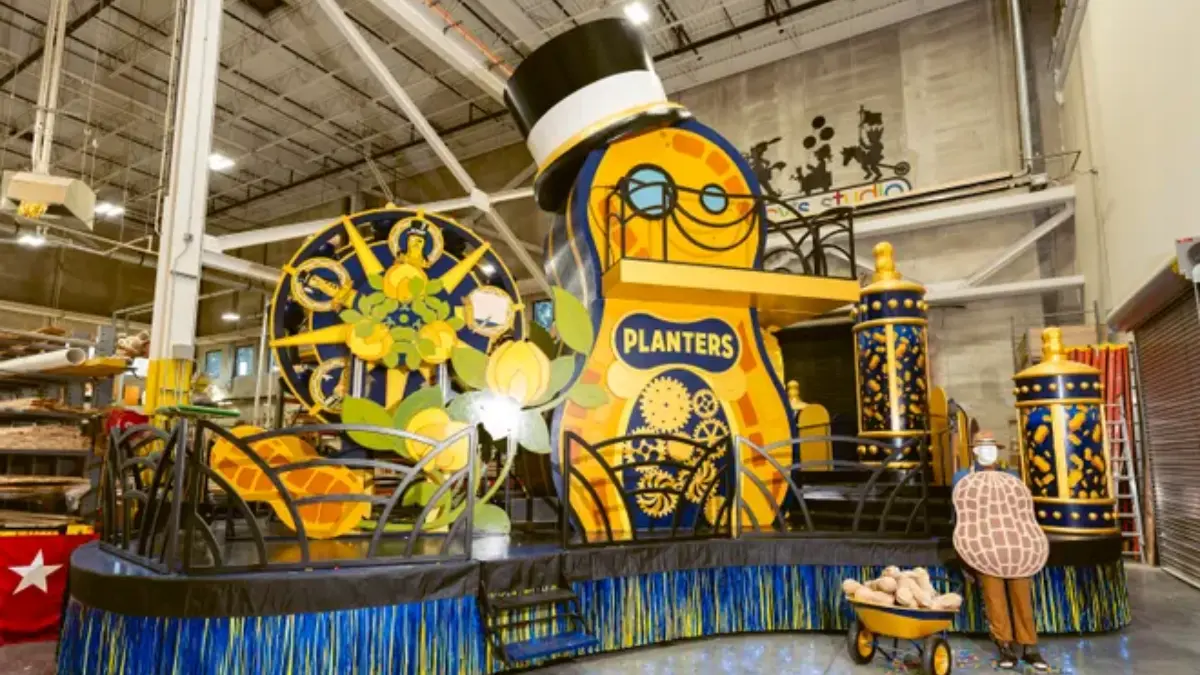
At the center of this year’s cultural conversation is the high-profile return of legacy icons, most notably Planters bringing its monocled, top-hat-wearing mascot, Mr. Peanut, back to the Manhattan route for the first time in a decade. But this centennial milestone is not merely a nostalgia trip for heritage brands. It also serves as a premier showcase for modern corporate heavyweights. Market leaders and digital-first disruptors alike—including Levi’s, DoorDash, and GEICO—are entering the fold for the very first time, joining a sprawling ecosystem of nearly 100 giant balloons, massive floats, and meticulously choreographed performances.
This comprehensive report examines the strategic evolution of the Macy’s Thanksgiving Day Parade, analyzing how economic pressures, shifting media consumption habits, and the relentless pursuit of consumer attention have transformed a holiday tradition into the ultimate branding crucible. Through a detailed chronology of the event’s commercialization, supporting viewership metrics, industry expert perspectives, and a look ahead at the future of experiential marketing, we explore why brands are investing millions to secure their place in the New York sky.
Detailed Chronology: From Retail Stunt to Global Media Empire
To understand the magnitude of the 2025 centennial parade, one must look back at the evolutionary trajectory of an institution that began as a clever local retail promotion and matured into an international broadcast phenomenon.
The Early Years: The Department Store Roots (1924–1939)
The parade’s origins trace back to 1924, when Macy’s employees—many of whom were first-generation immigrants—wanted to recreate the festive European street festivals of their homelands to celebrate the opening of the world’s largest store at Herald Square. Originally dubbed the "Macy’s Christmas Parade," the inaugural event featured live animals borrowed from the Central Park Zoo, floats built by professional theatrical designers, and employees dressed in vibrant clown and cowboy costumes.
The immediate public reception was overwhelming, drawing an estimated 250,000 spectators. Recognizing the immense promotional value, Macy’s quickly rebranded the event as the Thanksgiving Day Parade and instituted a tradition that would define holiday retail marketing for generations. By 1927, live animals were replaced by the event’s signature innovation: giant gas-filled balloons. Created by puppeteer Tony Sarg, Felix the Cat made his historic debut, floating above the crowd and establishing a visual template that would persist for the next century.
The Wartime Hiatus and Post-War Boom (1940–1979)
The parade faced its first existential threat during World War II. From 1942 to 1944, the event was suspended, and the parade’s rubber and helium resources were donated to the United States war effort—a massive civic sacrifice that temporarily halted the Manhattan tradition.
When the parade returned in 1945, it was met with unprecedented national euphoria. It was also during this post-war era that the event found its true medium: television. Broadcast locally in New York in 1948 and picked up by CBS for national syndication shortly thereafter, the parade transformed from a local urban spectacle into a living-room staple for millions of American families. Throughout the 1960s and 1970s, the inclusion of television variety stars, marching bands from across the country, and increasingly complex character balloons cemented the parade’s status as a cornerstone of American pop culture.
The Commercialization and Sponsorship Era (1980–1999)
As media landscapes shifted and television networks commercialized morning programming, the economic model of the parade underwent a radical transformation. What was once viewed primarily as a public relations expenditure for a single department store evolved into a cooperative marketing platform.
During the 1980s and 1990s, corporate brands recognized that sponsoring a float or a balloon offered unparalleled, family-friendly exposure on national television. Regulatory guidelines surrounding balloon sponsorship tightened, transforming the inflatables into mobile billboards for consumer packaged goods (CPG), entertainment conglomerates, and household name brands. The introduction of corporate sponsorship fees helped offset the skyrocketing costs of balloon engineering, parade permits, security logistics, and broadcast production.
The Digital Age and Multi-Platform Dominance (2000–Present)
Entering the 21st century, the parade faced the dual challenge of adapting to digital fragmentation while maintaining its traditional broadcast appeal. Rather than losing relevance, the event leveraged the rise of social media to extend its cultural footprint far beyond the live broadcast window.
Hashtags, real-time TikTok activations, and behind-the-scenes streaming content transformed the parade from a passive viewing experience into an interactive, multi-screen event. Brands no longer measured success solely by the number of eyeballs watching NBC on Thanksgiving morning; they tracked social engagement, user-generated content, viral moments, and long-term brand sentiment.
Now, as the parade stands at the threshold of its 100th anniversary, the historical arc comes full circle. The event is simultaneously a celebration of a century of American cultural history and a cutting-edge showcase for the future of brand storytelling.
Supporting Context & Metrics: The Economics of the Parade
The decision by major brands to invest heavily in the Macy’s Thanksgiving Day Parade is not driven by sentimentality alone; it is backed by staggering quantitative metrics that underscore the unmatched power of live, shared cultural events in an increasingly fragmented media landscape.
The 35.7 Million Viewership Benchmark
The financial viability of the parade is anchored by its extraordinary television audience. Last year’s event cemented its status as an absolute titan of linear television by drawing a record-shattering 35.7 million viewers, making it the single most-watched American entertainment program of the entire year.
In an era where traditional television viewership faces constant erosion from streaming services, video-on-demand, and algorithmic content feeds, live linear events that can aggregate massive, multi-generational audiences simultaneously are exceedingly rare. For advertisers, the parade offers a golden window: an engaged, captive audience sitting together on a national holiday, primed for emotional connection and receptive to brand messaging.
The Anatomy of Brand Investment: Balloons, Floats, and Logistics
Participating in the Macy’s Thanksgiving Day Parade is a complex, capital-intensive undertaking. While exact financial figures for balloon and float sponsorships are closely guarded corporate secrets, industry insiders estimate that producing a custom, regulation-compliant giant balloon and securing its flight rights requires an investment ranging from $300,000 to over $500,000, excluding the extensive costs associated with design, safety testing, handler training, and promotional media tie-ins.
For brands like Planters, returning after a decade-long hiatus, the investment is a strategic play to reclaim cultural relevance. Mr. Peanut is not merely drifting down the avenue; the balloon serves as the anchor for a comprehensive multi-channel marketing campaign spanning digital, social, and retail channels weeks before and after Thanksgiving morning.
Similarly, first-time participants such as Levi’s, DoorDash, and GEICO are leveraging the parade’s centennial gravity to launch major seasonal brand narratives.
- DoorDash utilizes the parade platform to reinforce its positioning as an indispensable holiday logistics partner, capable of delivering everything from forgotten turkey-basting ingredients to last-minute pie crusts straight to consumers’ doors.
- GEICO, known for its comedic and omnipresent advertising, views the parade as an extension of its newly heightened entertainment ambitions, aiming to translate its digital footprint into physical, jaw-dropping spectacle.
- Levi’s is tapping into the historic heritage of the parade to blend classic Americana styling with contemporary lifestyle marketing, capturing the attention of Gen Z and Millennial consumers who value brand authenticity and visual storytelling.
The Economic Impact on New York City
Beyond national television metrics, the parade serves as an economic powerhouse for New York City. Drawing an estimated 3.5 million spectators to the streets of Manhattan, alongside tens of millions watching globally, the event injects tens of millions of dollars into the local economy. Hotels, restaurants, Broadway theaters, and retail establishments in Midtown Manhattan experience a massive surge in foot traffic and revenue during what is traditionally the unofficial kickoff of the holiday shopping season.
Official Statements and Industry Insights
The convergence of heritage brands, digital disruptors, and historic viewership records has generated intense discussion across the marketing and advertising sectors. Industry leaders have offered critical perspectives on why the 2025 centennial parade represents a watershed moment for corporate brand strategy.
The Return of the Icon: Planters’ Strategic Calculus
When Planters announced that Mr. Peanut would rejoin the parade lineup after a ten-year absence, marketing analysts immediately recognized the move as a masterclass in heritage reactivation.
"Is it really even Thanksgiving if a giant, monocled peanut in a top hat doesn’t strut down the streets of Manhattan? This year, for Planters, the answer is no," notes the brand’s marketing team in strategic briefs outlining the comeback.
By reintroducing one of America’s most recognizable advertising icons to the physical parade route during its centennial year, Planters is capitalizing on deep-seated consumer nostalgia. In an economic environment where consumers increasingly seek comfort and familiarity through legacy brands, the visual of the giant peanut floating past Central Park acts as an instant trust-builder and emotional touchpoint.
The Value of Shared Cultural Moments
Advertising executives emphasize that as digital ad fraud, ad-blockers, and audience fragmentation continue to erode the effectiveness of traditional digital banner ads, physical experiential marketing has experienced a renaissance.
Industry analysts point out that the Macy’s Thanksgiving Day Parade offers something that programmatic digital advertising never can: unskippable, emotionally resonant, real-world community engagement. When a brand attaches its identity to a towering, hand-painted helium balloon that takes months to engineer and hours to pilot, it signals a long-term commitment to cultural permanence.
Furthermore, the integration of first-time brands like DoorDash, Levi’s, and GEICO demonstrates that the parade is not a static museum piece, but a dynamic, evolving platform capable of accommodating modern digital-first business models. These brands are using the physical scale of the parade to bridge the gap between digital convenience and tactile, real-world brand affinity.
Future Outlook: The Next Century of Experiential Marketing
As the Macy’s Thanksgiving Day Parade concludes its historic centennial celebration, the event’s organizers, participating brands, and media partners are already looking ahead to the next hundred years. The landscape of experiential marketing is undergoing rapid transformation, and the parade is uniquely positioned to adapt to these emerging trends.
The Convergence of Physical Spectacle and Immersive Tech
Looking toward the future, industry experts predict that the boundaries between the physical parade route and digital immersive technologies will continue to blur. While the core tradition of giant gas balloons and marching bands will remain sacred, augmented reality (AR) and mixed reality (MR) integrations are poised to redefine how consumers interact with the parade—both on the streets of Manhattan and from living rooms around the world.
Imagine a future parade where viewers at home can use their smartphones or spatial computing headsets to unlock interactive AR experiences linked to specific floats—bringing brand mascots to life in their own living rooms, unlocking exclusive holiday discounts via geofenced activations, or voting in real-time for their favorite marching bands. Brands that master the integration of physical scale with digital interactivity will capture the loyalty of upcoming generations of consumers who demand seamless, multi-platform brand experiences.
Sustainability and Environmental Consciousness
As corporate social responsibility becomes a core pillar of modern brand valuation, the operational logistics of the parade are also evolving. Organizers and corporate sponsors are facing increased scrutiny regarding the environmental footprint of massive events.
Future iterations of the parade are expected to place a heavier emphasis on sustainability—from exploring eco-friendly alternative materials for float construction and energy-efficient LED lighting systems to optimizing helium conservation and waste management along the parade route. Brands participating in the parade will increasingly need to demonstrate that their massive public spectacles align with broader corporate commitments to environmental stewardship.
The Enduring Power of Shared Tradition
Ultimately, the enduring success of the Macy’s Thanksgiving Day Parade proves that despite the relentless acceleration of digital media, humanity retains a deep, primal need for shared physical spectacles. In an increasingly polarized and isolated world, the image of millions of families gathering together—whether on the freezing sidewalks of New York City or around the television screen on a Thursday morning—to watch art, commerce, and community intersect remains an irreplaceable cultural anchor.
As Mr. Peanut tips his top hat to the crowds once more, and as first-time participants carve out their own chapters in the parade’s storied history, one thing remains certain: the Macy’s Thanksgiving Day Parade will continue to serve as the ultimate proving ground for brands daring to dream on a monumental scale.
