

Executive Overview
In the wake of Dolly Parton’s passing, the cultural landscape finds itself grappling with a profound void, yet it is simultaneously illuminated by the enduring magnitude of her legacy. Parton was more than the undisputed Queen of Country; she was a unifying force of nature, a prolific songwriter who estimated she composed or collaborated on more than 3,000 tunes, recording roughly 450 of them over a legendary career. Her unmatched output earned her 11 Grammy Awards—including a Lifetime Achievement honor—and 55 nominations.
Yet, the true measure of Parton’s cultural footprint extends far beyond charts and accolades. It lives on in the ways she touched humanity, marrying razor-sharp wit with deep empathy, and championing the dignity of the marginalized. While ranking her endless catalog of essential anthems—from the aching vulnerability of "Jolene" to the working-class rallying cry of "9 to 5" and the deeply personal storytelling of "Coat of Many Colors"—remains an impossible task for fans and scholars alike, her songs have taken on a life of their own.
This retrospective explores how Parton’s peerless songwriting has resonated across generations and genres. By examining radical reinterpretations, poignant duets, and heartfelt tributes by five distinct artists—Emmylou Harris, Miley Cyrus, Tina Turner, Sinéad O’Connor, and even Kermit the Frog—we uncover the boundless elasticity of Parton’s artistry. These performances demonstrate not only how deeply woven her music is into the American songbook, but how her distinct spirit continues to be channeled through voices as varied as country royalty, rock icons, and pop disruptors.
Detailed Chronology: A Tapestry of Influence Across Decades
To understand Dolly Parton’s vast structural impact on modern music, one must trace the timeline of how her compositions were adopted, recontextualized, and transformed by her contemporaries and successors.
1970s: The Roots of Reinterpretation
Long before modern tribute albums became industry standard, Parton’s songwriting was already reshaping the parameters of country and roots music. In 1976, she penned "To Daddy," a devastating narrative inspired by her own mother’s exhausted, long-suffering loyalty to a straying husband. Though Parton left the track off her 1976 album All I Can Do, it found its definitive voice a year later when Emmylou Harris recorded it. Harris’s 1977 rendition soared to No. 3 on the Billboard Hot Country chart, establishing a template for how female artists could inhabit Parton’s psychological landscapes with piercing authenticity.
During this same era, rock and R&B innovators began recognizing the raw power underlying Parton’s folksy veneer. In 1974, Ike Turner produced Tina Turner’s solo debut, Tina Turns the Country On. Seeking to bridge the gap between soulful R&B and Appalachian tradition, Turner selected Parton’s "There’ll Always Be Music." This radical cross-pollination laid early groundwork for recognizing country music’s deep, historical entanglement with Black musical traditions.
1980s: Variety Shows and Universal Messaging
As Parton transitioned into a multimedia icon in the 1980s, hosting her own television variety shows and conquering Hollywood box offices, her commitment to radical inclusivity took center stage. In a classic 1987 television moment, Parton teamed up with Kermit the Frog to perform Sly and the Family Stone’s "Everyday People." This whimsical yet ideologically fierce duet cemented Parton’s philosophy: that radical empathy, dignity, and acceptance should be extended to every corner of society, regardless of scale or species.
1990s to 2010s: Genre-Bending Valedictions
The subsequent decades saw Parton’s tracks mutate into vehicles for alternative and pop heavyweights. In the late 1990s and 2000s, artists like Sinéad O’Connor leaned into the subterranean sorrow of Parton’s catalog. O’Connor’s harrowing deconstruction of "Dagger Through the Heart" dropped the key of Parton’s upbeat track to mine the feral ache of heartbreak.
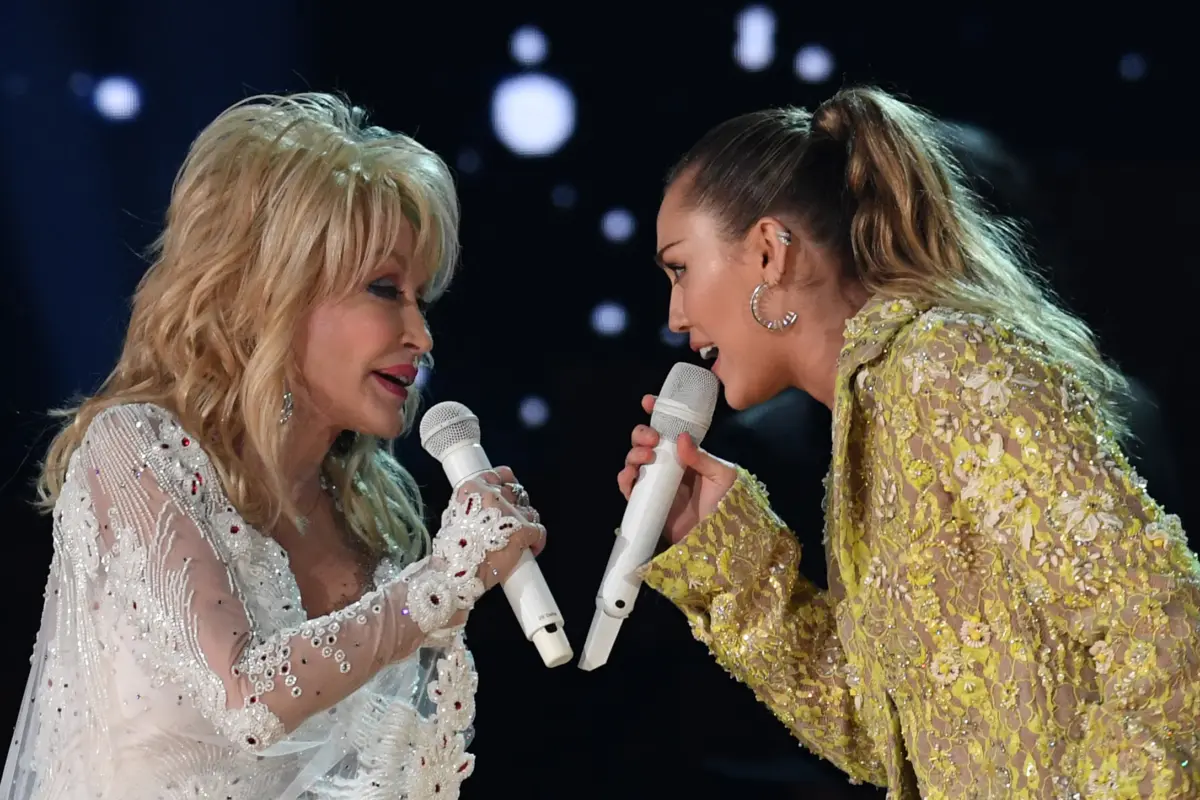
By 2017, the lineage came full circle when pop superstar Miley Cyrus—Parton’s goddaughter—enlisted the legend for the peppy, utopian anthem "Rainbowland" on her album Younger Now. The track featured Parton’s bubbly vocals interwoven with real voicemail messages left for Cyrus, bridging familial affection with a generational passing of the torch.
Supporting Context & Metrics: The Anatomy of Parton’s Catalog
To contextualize the weight of these five artistic interpretations, one must examine the staggering scale of Parton’s creative output and cultural resonance:
- The Numbers: Parton authored over 3,000 recorded and unrecorded compositions, securing her status as one of the most prolific songwriters of the 20th and 21st centuries.
- Accolades: Her career boasts 55 Grammy nominations and 11 wins, anchored by her 2011 Lifetime Achievement Grammy.
- Chart Dominance: Hits like "I Will Always Love You" achieved historic milestones twice—first when Parton topped the country charts in 1974 and 1982, and again when Whitney Houston transformed it into a global pop monolith in 1992.
- Cross-Genre Adoption: Parton’s music has crossed cultural boundaries into bluegrass, gospel, pop, R&B, and rock, proving that her lyrical themes—heartbreak, resilience, dignity, and joy—are entirely universal.
Official Statements and Cultural Legacy
The cultural shockwaves of Parton’s passing have prompted an outpouring of reflections from the artistic community, emphasizing that her legacy was built as much on her philanthropic and social stances as on her musical genius.
When Parton’s collaborative single with Miley Cyrus, "Rainbowland," faced censorship in 2023—after a Wisconsin elementary school banned first-graders from performing it due to its inclusive messaging and embrace by the queer community—the response from Parton’s camp was characteristically resolute. Though Parton maintained her characteristic grace, her extended creative family rallied aggressively. Cyrus’s nonprofit organization, the Happy Hippie Foundation, publicly uplifted the affected students with the message, "Keep being YOU," while committing financial backing to initiatives distributing age-appropriate LGBTQ literature to schools.
This incident underscored a vital truth about Parton’s catalog: her songs are living documents of inclusion. Whether defending the right of children to sing about a colorful, accepting world in "Rainbowland," or writing anthems that honor the working-class struggle in "9 to 5," Parton consistently used her platform to ensure that the underdog felt seen, protected, and loved.
Future Outlook: How Artists Will Continue to Channel the Queen of Country
As the music industry navigates a post-Parton era, the imperative to study, cover, and reinterpret her work has only intensified. The five tracks highlighted here—Harris’s crystalline reading of "To Daddy," Cyrus’s bubblegum-pop utopianism in "Rainbowland," Turner’s gospel-soaked soul transformation of "There’ll Always Be Music," O’Connor’s bruised lament of "Dagger Through the Heart," and the joyful egalitarianism of her duet with Kermit the Frog—serve as a masterclass in musical translation.
Future generations of musicians face a daunting challenge: how to capture lightning in a bottle the way Dolly Parton did for seven decades. Yet, as long as artists continue to seek out the deep emotional truths hidden within her lyrics, Parton’s spirit will endure. She did not merely write songs for her own time; she constructed a timeless architectural blueprint for emotional resilience, ensuring that whenever someone needs to understand the depth of human heartbreak or the giddy height of unadulterated joy, a Dolly Parton song will be waiting to lead the way.