

Executive Overview
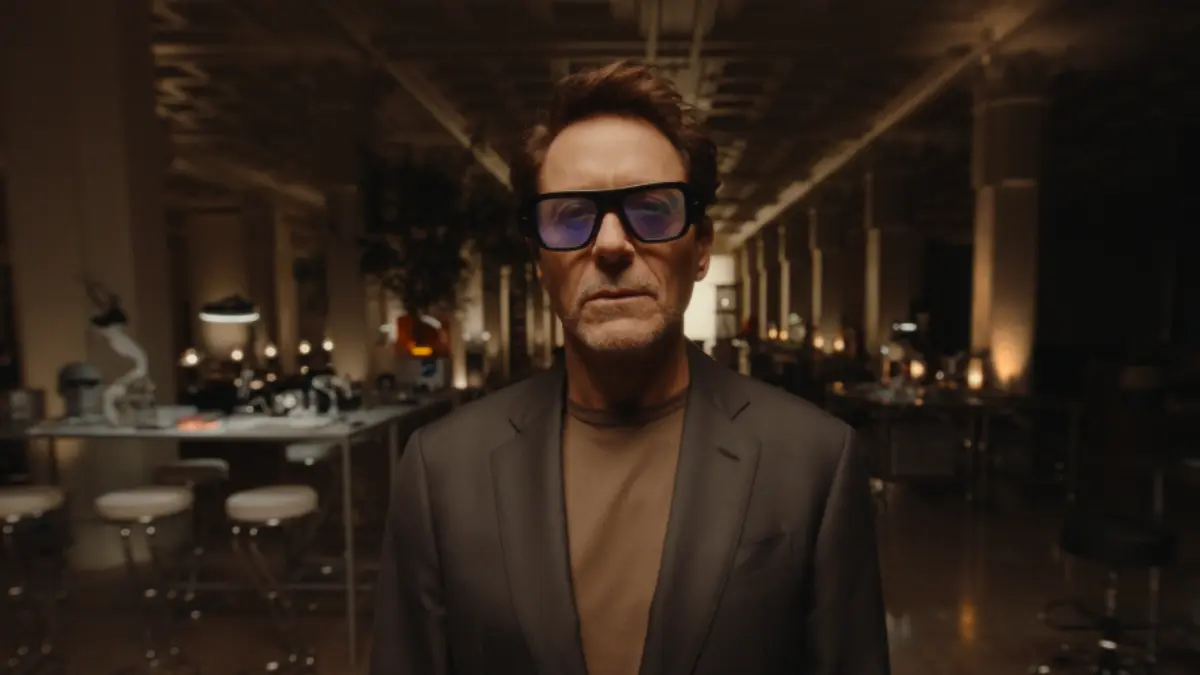
The race to mainstream augmented reality (AR) eyewear has officially transcended the boundaries of Silicon Valley engineering, entering the stratospheric realm of Hollywood star power. In a high-profile industry crossover that echoes his cinematic legacy of blending cutting-edge technology with charismatic showmanship, Academy Award-winning actor Robert Downey Jr. has officially partnered with Snap Inc.
The Marvel Cinematic Universe veteran has assumed the role of honorary chief customer experience officer for Snap’s flagship hardware division, Specs. This strategic alliance places Downey at the vanguard of Snap’s most ambitious hardware gamble to date: the impending commercial rollout of its fifth-generation, standalone augmented reality glasses.
Priced at a staggering $2,195, Snap’s new hardware is not designed for the mass-market consumer base that typically adopts lightweight smart glasses. Instead, these transparent AR spectacles are engineered as an enterprise-grade and developer-focused powerhouse. They allow users to seamlessly layer interactive applications, immersive games, expansive web pages, and an advanced multimodal artificial intelligence assistant directly onto the physical world.
By enlisting Downey—an icon universally synonymous with futuristic, high-tech interfaces—Snap is making a calculated bet. The company hopes to bypass the traditional tech-adoption curve, neutralizing the aesthetic skepticism that has historically plagued head-mounted displays.
As technology giants like Meta, Apple, and Google vie for dominance in the spatial computing sector, Snap’s gambit introduces a compelling human element. This in-depth investigative report examines the mechanics of the partnership, the technical specifications of the hardware, the broader macroeconomic implications for the AR industry, and what Downey’s involvement signals for the future of human-computer interaction.
Detailed Chronology: From Concept to Star-Studded Debut
To understand the weight of Robert Downey Jr.’s appointment, one must trace the arduous trajectory of Snap’s hardware division, which has spent nearly a decade evolving from a quirky social media novelty into a serious contender in spatial computing.
The Evolution of Snap Hardware
- 2016 (The Spectacles Genesis): Snap Inc.—then fresh off its rebranding from Snapchat—introduced Spectacles, a pair of sunglasses equipped with a rudimentary video camera designed to capture 10-second circular clips for the platform. While initially generating massive hype through gimmicky, yellow vending machines deployed globally, consumer enthusiasm quickly cooled, leaving Snap with millions of dollars in unsold inventory.
- 2018–2021 (Iterative Hardware Refinements): Undeterred by early losses, CEO Evan Spiegel doubled down on hardware. Spectacles V2 and V3 introduced higher-resolution photography, depth sensors, and dual cameras for stereoscopic 3D depth. However, these iterations remained tethered to the smartphone ecosystem, functioning primarily as content-creation tools rather than true computing platforms.
- 2021 (The True AR Milestone): Snap unveiled its first genuine AR Spectacles at the annual Partner Summit. Though restricted exclusively to a select cohort of vetted creators and developers rather than the general public, these glasses showcased a sweeping 42-degree field of view, dual 3D waveguides, and a lightweight magnesium alloy frame. They proved that Snap possessed the technical chops to build functional waveguides, even if the battery life—limited to roughly 30 minutes of continuous AR rendering—was insufficient for commercial viability.
- Late 2024 (The Strategic Pivot): Recognizing the limitations of closed-ecosystem developer previews, Snap executives began formulating a strategy to introduce their next-generation hardware to a broader, highly targeted audience. The company needed an evangelist who could transcend developer circles and translate complex spatial computing concepts into culturally resonant aspirations.
- The Present Day: Snap announces its official international rollout across the United States, the United Kingdom, and France this coming fall, anchored by the unexpected appointment of Robert Downey Jr. as honorary chief customer experience officer.
According to internal communications and corporate disclosures, Downey’s role will not be a passive, celebrity-endorsement front. Instead, the actor is slated to embed himself deeply across multiple operational pillars within Snap. These include product innovation sessions, experiential marketing design, the curation of original spatial content, hardware ergonomics testing, and high-profile in-person experiential events scheduled across major global tech and entertainment hubs.
Supporting Context & Metrics: Navigating the AR Landscape
Snap’s ambitious push into high-end augmented reality arrives at a watershed moment for the consumer technology sector. The wearable tech market is currently undergoing a brutalDarwinian sorting process, characterized by soaring research and development costs, supply chain vulnerabilities, and shifting consumer expectations.
The Competitive Battlefield
The spatial computing landscape is currently polarized into three distinct categories:
- Audio-First Smart Glasses: Exemplified by the Meta-Ray-Ban collaboration, these devices strip away complex visual displays entirely, focusing instead on integrated open-ear audio, localized AI assistants, and high-definition point-of-view cameras. Priced modestly—typically starting around $299—these glasses have achieved viral commercial success, particularly when boosted by cultural endorsements from public figures like Kylie Jenner.
- Immersive Mixed-Reality Headsets: Devices like the Apple Vision Pro and Meta Quest 3 prioritize maximum visual fidelity, spatial immersion, and computing power. However, their bulky form factors, tethered or heavy battery configurations, and isolating opaque visors restrict their use primarily to indoor workstations, creative studios, and dedicated living rooms.
- Transparent True-AR Spectacles: This is the holy grail of wearable tech—lightweight, transparent optical glasses that overlay digital graphics onto the natural world without obstructing the user’s peripheral vision or social presence. This is the precise category that Snap’s new Specs occupy.
Financial and Market Metrics
- The Price Barrier: At $2,195, Snap’s Specs are squarely positioned in the enterprise and luxury tier. For context, this is more than seven times the cost of Meta’s popular audio glasses, placing Snap’s hardware in direct economic competition with professional-grade enterprise tools rather than impulse-buy consumer gadgets.
- TAM (Total Addressable Market): Industry analysts project that enterprise adoption of AR hardware will grow at a compound annual growth rate (CAGR) of over 38% through 2030. By targeting high-end creators, software developers, and early-adopting industry professionals, Snap is deliberately prioritizing high-margin, low-volume distribution to refine its software ecosystem before scaling down to consumer-friendly price points.
- Global Rollout Footprint: The initial autumn launch will target three key cultural and technological epicenters: the United States, the United Kingdom, and France. These regions represent dense concentrations of software developers, creative agencies, and luxury tech consumers capable of absorbing the steep hardware investment.
Official Statements and Industry Analysis
The partnership between Snap and Robert Downey Jr. has generated significant commentary across financial markets, technology blogs, and cultural critique circles. The alignment of a tech platform historically associated with ephemeral messaging and teenage self-expression with an A-list cinematic icon known for playing the ultimate futuristic industrialist signals a profound brand maturation.
Corporate Perspectives
In an official corporate statement released by Snap Inc., executive leadership emphasized the philosophical alignment between Downey’s career trajectory and the mission of spatial computing:
"Robert joins us to guide customers to understand and imagine what’s possible with Specs. His unparalleled ability to bridge the gap between complex technological futures and compelling human storytelling makes him the ideal partner as we introduce our most advanced augmented reality platform to the world."
While Snap has kept strict confidentiality regarding the precise financial terms of the multi-year contract, industry insiders suggest the compensation package includes a blend of equity incentives, performance milestones tied to developer adoption rates, and dedicated production funding for original spatial media projects spearheaded by Downey’s production entities.
Industry Commentary and Skepticism
Financial analysts, however, have voiced a mixture of cautious optimism and pragmatic skepticism regarding the high-stakes launch.
"Snap is attempting a massive pivot," notes Sarah Jenkins, senior hardware analyst at TechPulse Global. "For years, they have positioned themselves as a nimble, mobile-first software company anchored by Snapchat. Pouring billions of dollars into proprietary optical waveguides and enterprise-tier hardware is a capital-intensive strategy. Enlisting Robert Downey Jr. is a brilliant marketing masterstroke to generate cultural buzz, but at $2,195, the hardware must deliver an extraordinarily frictionless user experience to justify the price tag to enterprise buyers."
Furthermore, privacy advocates have raised inevitable questions regarding data collection. Transparent AR glasses equipped with outward-facing cameras, spatial sensors, and constant AI processing raise complex regulatory challenges—particularly within the European Union (France being a primary launch market), where strict General Data Protection Regulation (GDPR) frameworks govern facial recognition, biometric data harvesting, and public recording devices.
Future Outlook: What the Robert Downey Jr. Partnership Means for Spatial Computing
As the technology industry looks toward the horizon, the success or failure of Snap’s Specs—and by extension, Robert Downey Jr.’s tenure as chief customer experience officer—will serve as a vital bellwether for the entire wearable tech sector.
1. Mainstreaming the Aesthetic Barrier
One of the greatest deterrents to wearable tech adoption has been the "dork factor"—the social stigma associated with wearing clunky, unnatural electronics on one’s face. By attaching his personal brand and aesthetic credibility to Snap’s hardware, Downey is actively working to normalize the appearance of smart glasses in professional and social settings. If consumers perceive AR glasses as a badge of sophisticated modernity rather than an awkward tech accessory, the cultural floodgates could open for competing manufacturers.
2. The Convergence of AI and Spatial Interfaces
Specs are not merely passive display screens; they are deeply integrated with an advanced multimodal AI assistant capable of interpreting the user’s physical environment in real time. Imagine walking down a street in London or Paris, pointing at a historic architectural landmark, and having an AI assistant—perhaps voiced or contextualized through Downey’s creative direction—instantly project 3D historical data, interactive translation layers, and gaming elements directly into your field of view. This convergence of generative AI and spatial hardware represents the next logical evolution of personal computing.
3. The Developer Ecosystem Race
Ultimately, the hardware is only as robust as the software running on it. Snap’s primary challenge over the coming months will not be marketing the device to Hollywood elites, but convincing thousands of independent developers to build compelling applications for the Specs platform. By leveraging Downey’s cultural cachet, Snap hopes to attract top-tier creative talent away from rival ecosystems like Apple’s visionOS and Meta’s Horizon OS.
Conclusion
Robert Downey Jr.’s partnership with Snap is far more than a clever marketing stunt; it is a calculated collision between cinematic aspiration and engineering reality. As Specs prepares to launch in the U.S., U.K., and France this fall, the world will be watching to see whether the man who brought Iron Man to life can successfully usher humanity into the transparent, augmented future. Whether enterprises and creators are willing to invest $2,195 to step into that future remains the definitive question of the spatial computing era.