

Executive Overview
In the high-stakes, hyper-competitive landscape of global luxury e-commerce, few names carry the pioneering weight of Net-a-Porter. Founded at the turn of the millennium, the platform revolutionized how affluent consumers acquire high fashion, bridging the gap between high-end editorial and seamless digital retail. However, decades of shifting market dynamics, corporate restructurings, and intensifying competition from nimble upstarts and legacy department stores alike took their toll. By the mid-2020s, the digital storefront found itself fighting to maintain its cultural relevance and financial dominance.
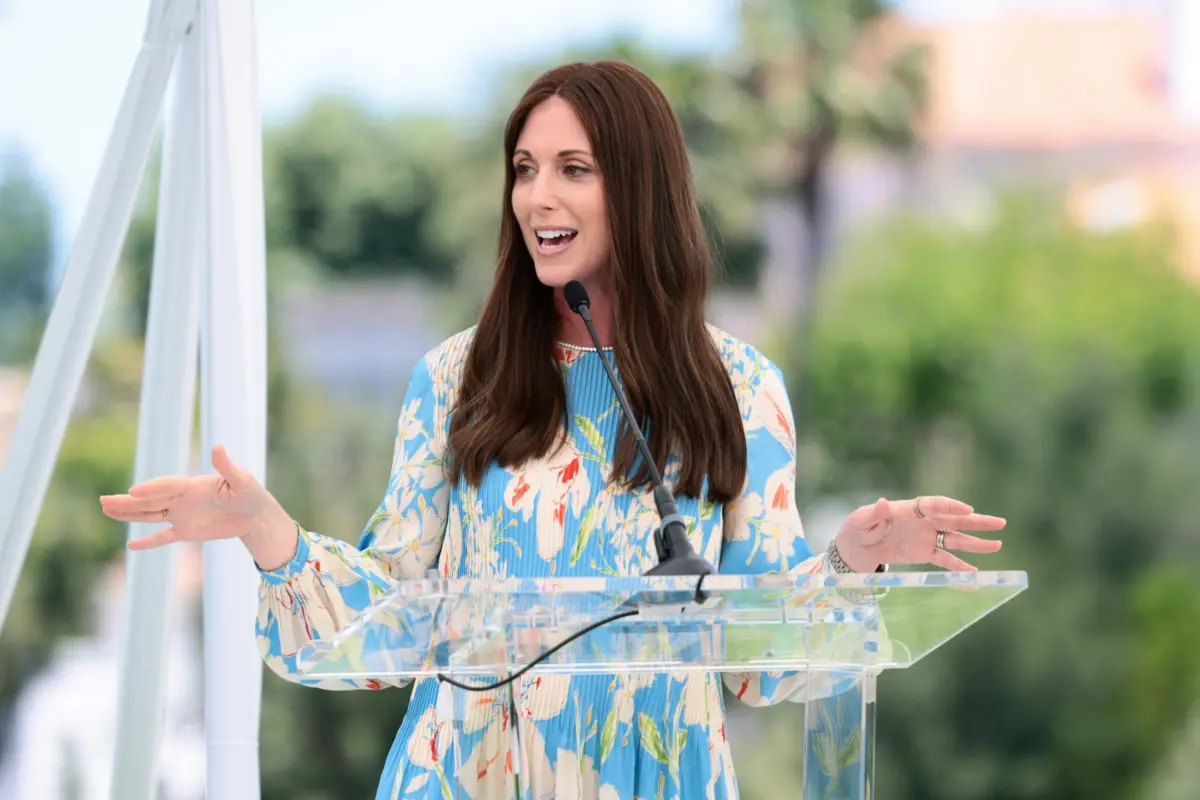
Enter Heather Kaminetsky. Appointed to the helm in April 2025, the luxury retail veteran stepped into the executive suite with a radical, yet disarmingly simple playbook: listen to the customer. While many corporate turnarounds rely on sweeping macro-strategies devised in closed-door boardroom meetings, Kaminetsky’s revival of Net-a-Porter is built on the granular, often brutal, and deeply illuminating reality of direct customer feedback.
Rather than viewing customer complaints and critiques as operational friction, Kaminetsky and her executive team weaponized them as the foundational blueprint for a comprehensive operational overhaul. By actively soliciting grievances—ranging from the mundane inconvenience of printing return labels to the aesthetic standards of delivery personnel—Net-a-Porter has engineered a masterclass in modern retail rehabilitation.
The strategy is already yielding quantifiable fruit. Recent financial disclosures point to a robust revitalization: quarterly revenue has climbed 4.3% year-over-year, buoyed by an impressive 13% surge in the critical U.S. market. Furthermore, the platform’s average order value (AOV) has ballooned to $1,016, marking a 9% increase over a 12-month period. This in-depth investigative report examines the chronology of Kaminetsky’s ascent, the mechanics of her feedback-driven transformation, the quantifiable metrics defining the brand’s resurrection, and the future outlook for a pioneer reclaiming its throne.
Detailed Chronology: The Making of a Turnaround
To understand Net-a-Porter’s current renaissance, one must examine both the timeline of Heather Kaminetsky’s career and the precise operational steps she took upon assuming the mantle of CEO. Kaminetsky is no stranger to the inner sanctum of the brand; her history with the company dates back to October 2013, when she originally joined as the vice president of marketing for the Americas. During her initial tenure, which lasted until 2016, she helped cement the retailer’s status as a digital styling authority.
Her departure in 2016 saw her hone her operational acumen across other formidable luxury landscapes, including stints at high-end European platform Mytheresa and direct-to-consumer footwear innovator M.Gemi. These formative years exposed her to the shifting expectations of the modern luxury consumer—a demographic increasingly demanding digital convenience without sacrificing the white-glove pampering historically reserved for brick-and-mortar flagship boutiques on Fifth Avenue or Avenue Montaigne.
When Kaminetsky officially returned to take over the company in April 2025, she inherited a business suffering from a phenomenon common to legacy digital brands: client attrition. As reported by The Wall Street Journal, Kaminetsky identified an urgent "opportunity to win back customers who had lapsed over the course of many years."
The diagnostic phase began immediately. Recognizing that a staggering concentration of value resided within a tiny fraction of the user base—specifically, that roughly 4% of Net-a-Porter’s shoppers account for nearly half of its overall sales—Kaminetsky deployed a hyper-targeted outreach campaign. She personally emailed the platform’s highest-value patrons, introducing herself and extending an invitation for unvarnished, radically honest critiques.
The response was overwhelming. High-net-worth consumers, accustomed to being treated as passive revenue streams rather than active stakeholders, rushed to share their pain points. Kaminetsky took these insights and operationalized them at lightning speed. Within months, structural changes began rolling out across the ecosystem:
- Logistical Friction Points: Customers highlighted the archaic nature of printing out digital return labels. Net-a-Porter responded by embedding pre-printed return labels directly into the packaging of every outgoing order.
- The Last-Mile Experience: Shoppers critiqued the inconsistent presentation of delivery drivers, who were previously permitted to wear standard dark clothing lacking a cohesive brand identity. The company quickly introduced bespoke, polished uniforms for its delivery fleet to match the luxury unboxing experience.
- Geographic Parity: High-net-worth individuals spending their summers at the Jersey Shore questioned why same-day delivery luxuries were afforded to their counterparts in the Hamptons but neglected across the water. Kaminetsky swiftly expanded the same-day delivery footprint to accommodate the Shore.
These chronological milestones underscore an essential philosophy: the luxury customer’s time is their most valuable asset, and any administrative friction in the digital journey represents a failure of the brand promise.
Supporting Context & Metrics: The Anatomy of a Retail Resurrection
A turnaround strategy, no matter how customer-centric, must ultimately prove its worth on the balance sheet. In the case of Net-a-Porter, the metrics surrounding Kaminetsky’s leadership tenure provide undeniable validation of her operational thesis.
The Power of the High-Value Cohort
In luxury retail, the Pareto principle—the idea that 80% of effects come from 20% of causes—is often skewed even further. At Net-a-Porter, the hyper-elite 4% of shoppers driving nearly 50% of the sales volume represent an existential priority. By focusing her direct-outreach strategy on this cohort, Kaminetsky ensured that the company’s limited resources were directed toward appeasing and retaining its most profitable clientele.
Tangible Financial Indicators
The financial turnaround is fully supported by empirical data from the company’s most recent fiscal disclosures:
- Overall Revenue Growth: Total quarterly revenue expanded by 4.3% year-over-year for the period ending June 30.
- Geographic Momentum: The United States market emerged as a primary growth engine, surging by more than 13% over the same timeframe.
- Basket Size Expansion: Perhaps the most compelling indicator of regained consumer trust is the average order value (AOV), which now stands at an impressive $1,016—representing a 9% expansion over the preceding 12 months. This demonstrates that not only are lapsed customers returning, but they are also displaying greater confidence in purchasing higher-priced items across ready-to-wear, fine jewelry, and accessories categories.
Beyond the Digital Screen: Experiential Retail
Recognizing that online algorithms alone cannot foster deep emotional brand loyalty, Kaminetsky aggressively scaled up Net-a-Porter’s physical and experiential calendar. In the year following her appointment, the company hosted more designer experiences and community-building events than it had in the prior three years combined.
These gatherings—ranging from intimate fireside chats pairing loyal shoppers with visionary designers and company executives to immersive pop-up environments—served a dual purpose. They built organic community among elite consumers while providing Kaminetsky with a physical forum to mingle directly with her audience, hand out her direct contact information, and solicit live feedback in real time.
Official Statements & Industry Perspectives
The strategy of weaponizing customer complaints has not gone unnoticed by retail analysts and industry observers, who view Kaminetsky’s approach as a refreshing antidote to corporate insularity.
In her dialogue with The Wall Street Journal and various fashion industry publications, Kaminetsky has consistently emphasized the democratizing nature of active listening. "At every moment she gets, she asks shoppers a simple question: How can we do better?" This egalitarian inquiry, coming from the chief executive of a multi-million-dollar luxury titan, has reshaped corporate culture from the top down.
Industry veterans point out that luxury brands have historically suffered from an elitist disconnect, often dictating trends and operational policies from ivory towers without accounting for the day-to-day realities of the digital consumer. Kaminetsky’s willingness to entertain—and act upon—even the most granular critiques has shattered that paradigm.
Consider the anecdote regarding a customer who desperately coveted a sold-out pair of Khaite’s half-calf leopard-print pants. Rather than offering a standard automated out-of-stock notification, Kaminetsky leveraged her personal industry relationships, contacting the CEO of Khaite directly. The intervention resulted in a one-off pair being manufactured exclusively for that single shopper. While such concierge-level dedication cannot be easily scaled to every single transaction, it establishes a cultural benchmark that ripples across the entire organization, proving that leadership is willing to go to extraordinary lengths to satisfy a client.
Of course, pragmatism remains a guiding principle. Not every customer proposition makes it past the executive filtering process. When one ambitious shopper suggested that deliveries be executed via private jet, Kaminetsky recognized the logistical absurdity and economic unsustainability of the proposal, politely setting it aside while embracing the spirit of boundary-pushing service that inspired it.
Future Outlook: Sustaining the Momentum in a Competitive Landscape
As Net-a-Porter looks toward the horizon, the central challenge shifts from staging a successful comeback to sustaining long-term, compounding momentum in a crowded and technologically evolving marketplace.
The luxury e-commerce sector faces persistent macroeconomic headwinds, including fluctuating consumer confidence among aspirational buyers, rising supply chain complexities, and the relentless march of technological innovation—ranging from generative AI personal shoppers to hyper-personalized digital styling platforms.
However, by anchoring its corporate identity in radical customer-centricity, Net-a-Porter has built a distinct moat. The operational agility demonstrated over the past year—manifested in everything from streamlined return labels to expanded regional same-day delivery networks—proves that the company can pivot faster than its legacy competitors.
Going forward, the roadmap for Kaminetsky and her team involves scaling these feedback loops without losing the intimate, white-glove touch that won back their most valuable clients. Integrating artificial intelligence to predict customer desires while maintaining human-led personal shopping interventions will be the tightrope walk of the next decade.
Ultimately, Net-a-Porter’s ongoing evolution serves as a vital case study for the entire retail sector. It demonstrates that when a company humbles itself, treats every customer complaint as a priceless data point, and executes operational changes with speed and conviction, even the most formidable retail legacy can be brilliantly, profitably revived.