In the hyper-competitive landscape of digital commerce, the traditional definition of copywriting is undergoing a profound structural shift. Historically viewed as a branch of creative writing or brand-building, modern copywriting has evolved into a highly analytical, data-driven discipline focused on direct customer acquisition and measurable return on investment (ROI).
Industry data reveals that the most lucrative digital marketing portfolios—including seven-figure agencies and established media brands like Copyblogger—rely not on literary eloquence, but on systematic frameworks designed to convert raw reader attention into transactional revenue. Written marketing channels, including search-engine-optimized (SEO) blog posts, targeted social media campaigns, and high-conversion email newsletters, continue to serve as the primary engines for customer acquisition in both business-to-business (B2B) and business-to-consumer (B2C) markets.
This investigative report analyzes the operational mechanics of high-performance copywriting. By examining the methodologies of leading digital growth strategists, this analysis breaks down the essential tactics of customer research, competitor reverse-engineering, systematic writing workflows, artificial intelligence (AI) integration, and quantitative attribution modeling that separate industry-leading copywriters from generalist content creators.
Detailed Chronology: The Evolution of Modern Copywriting Frameworks
To understand the current state of digital copywriting, it is necessary to trace the operational evolution of the discipline from passive content creation to aggressive, performance-based marketing.
[Traditional Creative Copywriting]
       │
       ▼ (Introduction of SEO & Digital Ad Networks)
[Content-Driven Traffic Era] (Focus: Pageviews & Organic Clicks)
       │
       ▼ (Rise of Attribution Tech & AI)
[Modern Revenue-First Copywriting] (Focus: Customer Psychology, Pain Points, and Direct ROI)
Phase 1: The Creative and Eloquent Era (Pre-Digital to Early Web)
Historically, copywriters operated primarily within creative agencies, prioritizing brand awareness, clever slogans, and aesthetic appeal. Success was measured by subjective peer approval, industry awards, and broad brand sentiment metrics rather than immediate direct-response conversions.
Phase 2: The Content Volume and Traffic Boom (Mid-2000s to 2010s)
With the rise of search engine algorithms and social media platforms, copywriting shifted toward high-volume content production. Brands chased vanity metrics such as "likes," "shares," and raw search traffic. However, this era exposed a critical flaw: high traffic volumes did not automatically translate into bottom-line revenue. Copywriters frequently produced content for generalized search queries rather than specific buyer intent.
Phase 3: The Revenue-First and Direct-Attribution Era (Present Day)
The modern era is defined by precise data tracking, conversion rate optimization (CRO), and direct customer research. Today’s elite copywriters construct written assets using systematic, repeatable frameworks. Writing is treated as an engineering problem: identifying customer pain points, systematically neutralizing objections, and deploying clear calls-to-action (CTAs) to drive specific business outcomes.
Supporting Context & Metrics: The Ten Operational Pillars of High-Conversion Copywriting
An investigation into the operational habits of top-tier copywriters reveals ten core pillars that drive consistent, seven-figure revenue across digital channels.
1. Empirical Customer Research and Pain-Point Mapping
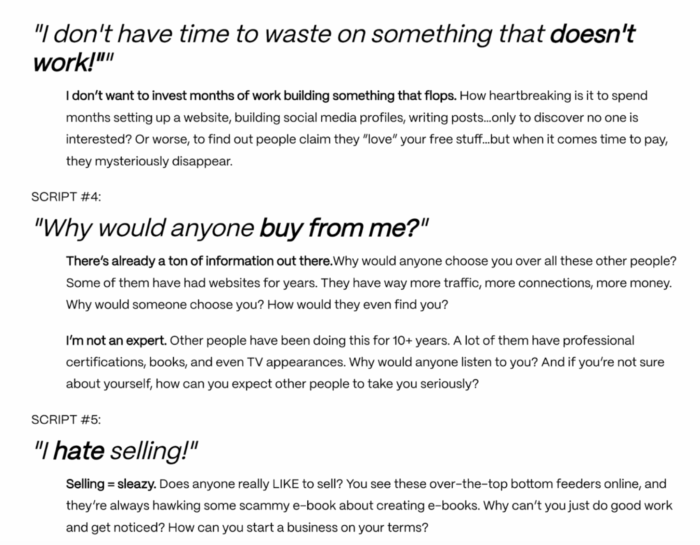
The fundamental law of high-conversion copywriting is that the writer must speak the exact language of the customer. Rather than inventing marketing angles in isolation, successful copywriters extract their messaging directly from their target audience.
Case Study: Ramit Sethi’s Earnable Landing Page
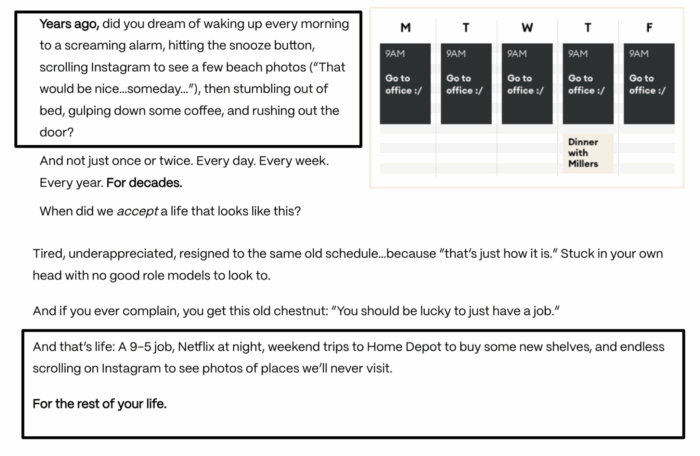
A critical analysis of high-performing sales pages, such as Ramit Sethi’s Earnable course, demonstrates the power of mirroring customer reality. Instead of relying on generic platitudes like "learn how to make more money," the copy mirrors the precise daily routines and internal anxieties of the prospect: working a nine-to-five job, watching streaming services at night, taking weekend trips to home improvement stores, and scrolling endlessly through social media.
[Customer Current Reality] ──► [Copywriter Mirrors the Pain Point] ──► [Builds Instant Trust]
By precisely detailing the prospect’s current reality, the copy proves to the reader that the creator understands their specific struggles, thereby lowering psychological barriers to purchase.
Tactical Research Methods
When direct customer interviews are not feasible, professional copywriters deploy alternative data-gathering methodologies:
Internal Sales Alignment: Interviewing active sales representatives to identify the most common objections and friction points encountered during live sales calls.
Transcript Analysis via Large Language Models (LLMs): Uploading anonymized sales call transcripts into AI tools to synthesize and categorize recurring customer pain points.
Digital Ethnography: Monitoring community forums such as Reddit, Quora, and specialized Facebook Groups to observe organic, unprompted discussions regarding industry problems and competing products.
2. Competitive Reverse-Engineering
High-performing copywriters do not write from a blank slate; they systematically analyze existing, proven marketing campaigns. Because major competitors spend millions of dollars testing copy variations, their active marketing assets represent highly optimized, validated data points.
Utilizing Ad Libraries for Intelligence Gathering
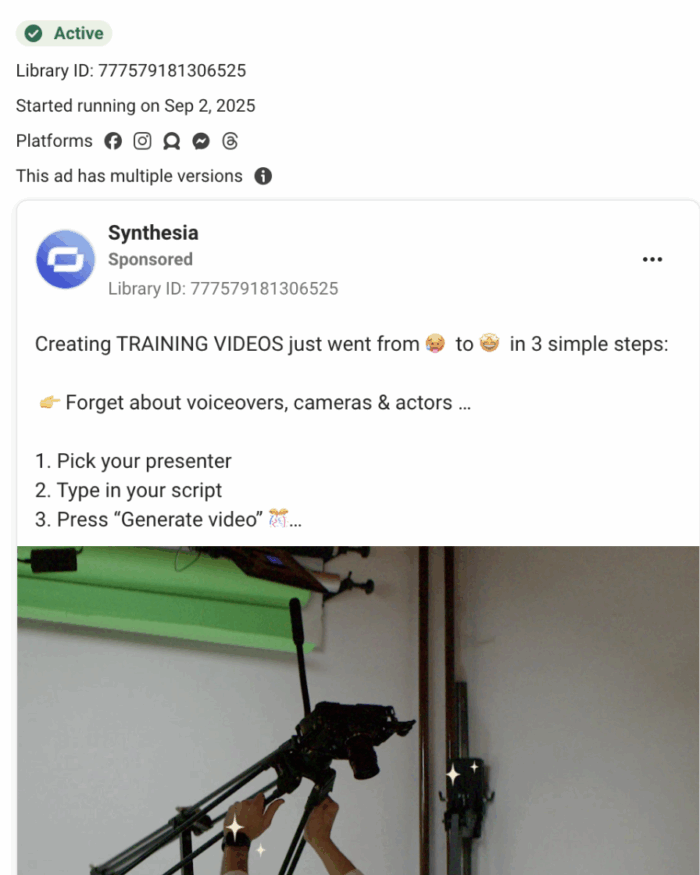
The Meta Ad Library and LinkedIn Ads Library serve as invaluable research repositories. By analyzing a competitor’s active ad campaigns, copywriters can identify:
The Longevity Metric: Ads that have been running continuously for several months are highly likely to be profitable. Consequently, the pain points and hooks featured in those ads represent validated customer motivators.
Specific Angle Analysis: For example, synthetic media platform Synthesia focuses heavily on the logistical pain of coordinating physical video shoots for corporate training. By isolating this specific angle, a copywriter can immediately identify a key market vulnerability to address in their own copy.
3. The Curation of Specialized Swipe Files
A "swipe file" is a curated digital archive of exceptionally persuasive headlines, sales pages, email sequences, and advertising creatives. Rather than copying these assets directly, professional copywriters study the underlying psychological frameworks of successful copy.
Industry authorities recommend utilizing both personalized archives and public databases, such as Neville Medhora’s SwipeFile.com, to observe how experienced copywriters structure layouts, transition between arguments, and present pricing options.
4. Establishing Repeatable Production Workflows
To avoid creative burnout and writer’s block, elite writers employ structured production pipelines. A standardized three-step workflow for high-impact blog content demonstrates this operational efficiency:
Step 1: Outlining & SEO Setup (Keywords, Heading Structures, Clear Intent)
                      │
                      ▼
Step 2: Rapid Draft Execution (Focus on raw information flow, no self-editing)
                      │
                      ▼
Step 3: Systematic Polishing (Formatting, Conversational Tone, CTA Placement)
By separating the cognitive demands of structural planning, drafting, and editing, writers can significantly accelerate production speeds while maintaining rigorous quality control.
5. Practical Application Through Proprietary Projects
The fastest path to mastering copywriting is managing direct-response campaigns where the writer has financial skin in the game. Building personal digital assets—such as a personal brand on LinkedIn, an SEO affiliate niche site, or a micro-SaaS tool via low-code platforms—forces the writer to connect words directly to revenue.
The Lesson of "Purchase Intent" vs. "Traffic Volume"
A classic case study in copywriter development involves a niche dropshipping store selling cuckoo clocks. An up-and-coming copywriter wrote extensive guide articles detailing how to repair cuckoo clocks. While the articles successfully generated significant web traffic, they primarily attracted DIY hobbyists looking for free advice rather than active buyers. This highlighted a vital copywriting lesson: content must be optimized for purchase intent, not raw traffic volume.
6. Tactical Integration of Artificial Intelligence
Modern copywriting requires a balanced relationship with AI. While LLMs are notoriously poor at writing nuanced, deeply human long-form narratives, they excel as operational assistants when guided by precise prompting.
High-Impact AI Prompt Frameworks
For Sentence Clarification and Flow:
"Can you rewrite this passage to maximize clarity and brevity, removing passive voice while maintaining an authoritative tone?"
For Finding Expert Perspectives:
"Analyze public discussions on [Platform/LinkedIn] regarding [Topic]. Identify and summarize three contrasting viewpoints from active industry practitioners."
AI is not used to replace the writer’s voice, but to accelerate the research, formatting, and structural editing phases of production.
7. Platform Monopolization and Algorithmic Alignment
Copywriting cannot exist in a vacuum; it must adapt to the technical realities of its distribution channel. Writers must master the specific structural requirements of their chosen medium:
Platform
Core Content Style
Algorithmic Optimization Lever
Primary Conversion Goal
Search Engines (SEO)
Comprehensive, actionable, how-to guides
Search intent alignment, semantic keyword density, user dwell time
Newsletter sign-ups, lead magnet downloads
Social Media (LinkedIn/X)
Concise, thought-leadership hooks, personal narratives
Immediate engagement (comments, shares), click-through rate on "see more"
Subject line open rates, reader reply-backs, link click-through rates
Direct sales, product purchases, webinar registrations
8. Quantitative Performance Attribution
A copywriter’s market value is directly tied to their ability to prove the financial impact of their words. Professional copywriters move past subjective client feedback by actively tracking key performance indicators (KPIs) across different channels:
For Social Media Ghostwriting: Tracking the job titles and seniority of those engaging with the content to ensure the message is reaching high-value decision-makers. Additionally, deploying "How did you hear about us?" fields on demo forms helps attribute revenue directly to social channels.
For SEO and Blog Content: Setting up conversion-tracking funnels in Google Analytics 4 (GA4) to trace a reader’s journey from their initial search landing page to a completed transaction or lead submission.
For Direct-Response Email Funnels: Evaluating clear transactional metrics, such as immediate revenue per recipient (RPR) and long-term customer lifetime value (LTV).
[User Lands on SEO Blog] ──► [Reads Conversion-Optimized Copy] ──► [Fills Out GA4-Tracked Lead Form] ──► [Attributed Revenue]
9. Collaborative Feedback Loops and Communities
The isolation of freelance writing often stunts professional growth. Elite copywriters actively participate in structured professional communities—such as the Copyblogger Academy—to exchange peer reviews, share job referrals, and obtain direct feedback from seasoned seven-figure marketers.
Crucially, when receiving feedback, writers must weigh the source: critiques from proven, high-earning operators are prioritized over the subjective opinions of novice writers.
10. The Strategic Patience Equation
Borrowing a core philosophy from investor Naval Ravikant, copywriters are advised to be "impatient with action, but patient with results."
┌──────────────────────────────────────────────┐
│  Daily Operational Level: High Velocity      │
│  - Write, publish, and test copy every day   │
└──────────────────────┬───────────────────────┘
                       │ (Compounding Effect)
                       ▼
┌──────────────────────────────────────────────┐
│  Macro Career Level: Strategic Patience      │
│  - Expect compounding results over months    │
└──────────────────────────────────────────────┘
The compounding effects of SEO rankings, audience growth, and email list health require months of consistent, high-velocity output before generating substantial financial returns.
Official Statements and Industry Perspectives
The Shift to Quantitative Copywriting
Industry experts emphasize that the era of the isolated, purely creative writer is drawing to a close. In an official statement regarding the launch of Copyblogger Academy, growth strategists emphasized:
"The market no longer rewards writers who simply write beautifully. The modern business landscape demands copywriters who act as strategic partners in customer acquisition. If you can build a systematic framework that converts reader attention into predictable cash flow, you will never struggle to find clients, and you can command premium pricing."
The Co-Pilot Model of AI Integration
In discussions regarding the disruptive impact of generative AI on the writing profession, Charles Miller, a prominent personal branding and copywriting authority, noted:
"AI is not going to replace copywriters who know how to think, research, and connect with human psychology. Instead, copywriters who use AI as a high-powered research partner and editor will inevitably replace those who refuse to adapt. The tool is an accelerator, not a replacement for human empathy and strategy."
Future Outlook: The Intersection of Copywriting and No-Code Development
As the digital economy matures, the boundaries between copywriting, product design, and software engineering are beginning to blur. The emergence of highly accessible "vibe coding" platforms—such as Lovable.dev—allows copywriters to quickly build functional web applications and software tools without deep programming knowledge.
This technological democratization presents an unprecedented opportunity for modern copywriters. By combining high-conversion copywriting with rapidly deployed software tools, copywriters are transitioning from service providers into self-sufficient digital entrepreneurs.
The future of the profession belongs to the full-stack digital builder: individuals who can identify a market pain point, develop a functional digital solution, and write the persuasive copy required to market and sell it directly to a global audience. Under this new paradigm, copywriting remains the ultimate foundational skill, serving as the critical link between product creation and market monetization.