

Executive Overview
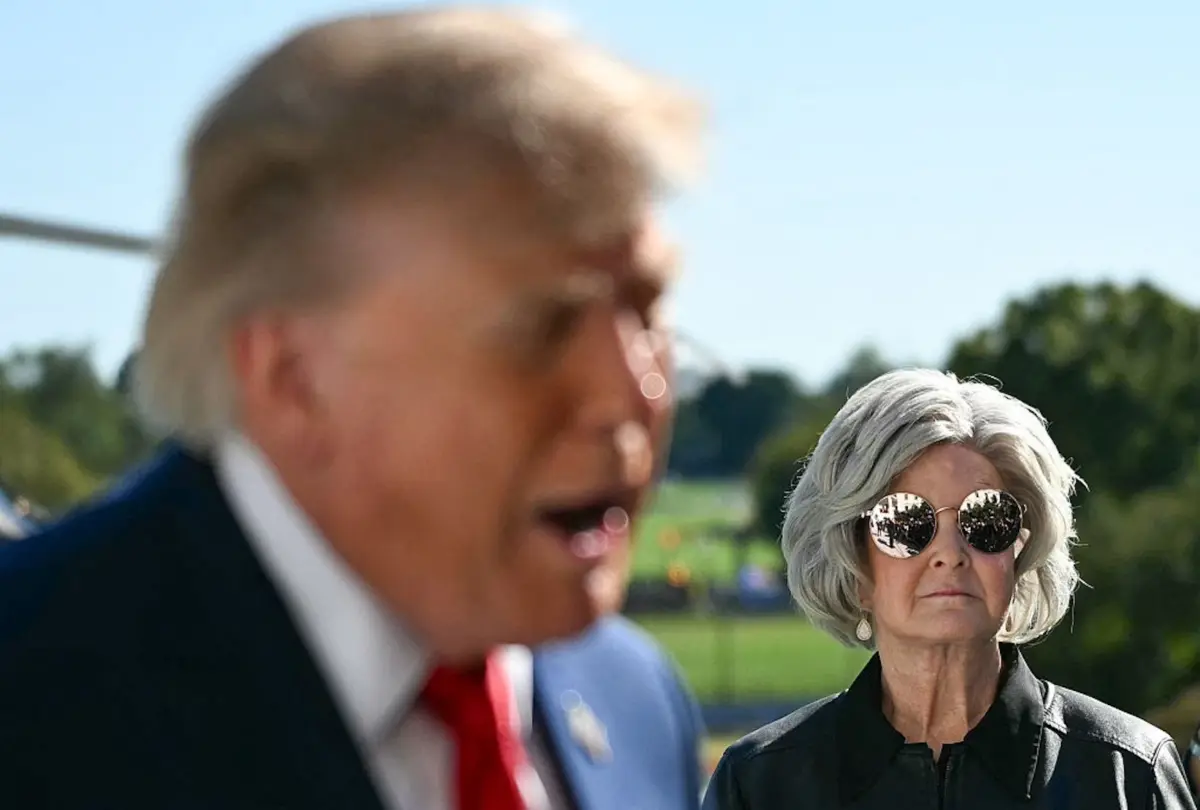
Washington insider circles are currently abuzz with reports that President Donald Trump is quietly searching for a scapegoat to take the fall for the Republican Party’s projected catastrophic losses in the upcoming 2026 midterm elections. At the center of this brewing political storm is White House Chief of Staff Susie Wiles—the seasoned operative who engineered Trump’s historic 2024 political comeback and became the longest-tenured chief of staff of his political career.
Despite her reputation as the "ice maiden" who successfully navigated the turbulent waters of Trump’s second term by enforcing strict operational discipline, Wiles now finds herself in the presidential crosshairs. As historical data warns of a punishing midterm wave driven by deeply depressed approval ratings and policy overreaches, the president is reportedly testing the waters among confidants about replacing her.
This unfolding drama highlights a well-documented behavioral pattern in Trump’s political life: when the public turns against his administration, he rarely looks inward to correct his own course. Instead, he delegates the blame, isolates key enablers, and cycles through personnel in a desperate bid to rebrand a sinking ship. With potential replacements ranging from sycophantic loyalists to hardline ideologues, the ouster of Susie Wiles would not merely signal another staffing shakeup; it would mark a pivotal inflection point for an administration grappling with political vulnerability and internal power struggles.
Detailed Chronology: The Rise and Looming Fall of Susie Wiles
To understand the precariousness of Susie Wiles’ current position, one must trace the trajectory of Trump’s second administration, which began with a calculated emphasis on loyalty over institutional experience.
The 2024 Mastermind
Following a first term plagued by an unprecedented 92% turnover rate among his top-tier staff—according to Brookings Institution tracking—Trump’s second-term transition team prioritized ideological alignment and unyielding personal fealty. Wiles, who masterminded the 2024 campaign strategy that returned Trump to the Oval Office, emerged as an indispensable anchor. Appointed as White House chief of staff, she adopted a pragmatic survival strategy: managing the president’s impulses by avoiding direct friction and catering to his aversion to bad news. As Wiles herself once candidly noted regarding moments when aides might feel compelled to correct the president on legal or moral bounds: "These seminal moments where you have to go in and tell the president what he wants to do is unconstitutional or will cost lives. I don’t have that."
The Second-Term Purge
Despite this protective insulation, the administration has steadily shed high-profile officials—disproportionately targeting women who allegedly failed subjective loyalty tests. The high-stakes departures began with billionaire Elon Musk, who exited his post leading the Department of Government Efficiency (DOGE) after a volatile honeymoon period. Musk was followed by a string of high-profile dismissals and forced resignations:
- Attorney General Pam Bondi
- Department of Homeland Security Secretary Kristi Noem
- Centers for Disease Control Director Susan Monarez
- Labor Secretary Lori Chavez-DeRemer
- Director of National Intelligence Tulsi Gabbard
- Ambassador to Greece Kimberly Guilfoyle
- White House Press Secretary Katie Zacharia (dismissed after just days on the job)
While male staffers implicated in incompetence or ethical controversies have frequently been shielded, rewarded, or transferred, female officials have routinely borne the brunt of administrative resets.
The Midterm Panic
By October 2026, as polls began forecasting a devastating electoral shellacking for the GOP in the midterms, the internal dynamic at the White House shifted dramatically. Trump began making informal calls to outside friends and advisers to sound them out on Wiles’ performance—a classic precursor to a high-level firing. According to reporting by POLITICO, a network of internal detractors who felt sidelined by Wiles’ rigid gatekeeping quickly moved in, with one close associate noting, "She’s burned a lot of people." Tasked once again with delivering electoral miracles alongside partners James Blair and Chris LaCivita, Wiles now stands accused by a defensive West Wing of failing to shield the president from the political fallout of his own deeply unpopular agenda.
Supporting Context & Metrics: The Anatomy of a Doomed Midterm
The panic gripping the West Wing is rooted in hard political reality rather than mere internal intrigue. Historically, a newly elected or returning president’s party almost always faces headwinds during midterm cycles, but the 2026 cycle is shaping up to be an outlier of historic proportions.
- Approval Ratings: President Trump’s public approval ratings languish near historic lows, driven by voter fatigue, economic anxieties, and a series of controversial executive overreaches. Concerns are mounting among legacy-conscious advisers that Trump risks leaving office with a personal reputation trailing even Richard Nixon’s post-Watergate nadir and an administrative failure rate rivaling Jimmy Carter’s single term.
- Turnover Precedent: Trump’s first-term administration set modern records for administrative instability, cycling through chiefs of staff (including Reince Priebus, John Kelly, and Mick Mulvaney) and high-level cabinet secretaries at a dizzying pace. The dismissal of Rex Tillerson via a printed tweet and the public airing of grievances via social media established a template where personal loyalty instantly transforms into public vitriol the moment an official outlives their utility.
- The Legislative and Policy Stalemate: Despite a loyal sycophantic circle, the administration has struggled to convert its legislative priorities into sustainable public support. With few structural mechanisms available to shift public opinion—largely because the president refuses to alter his messaging or moderate his policies—blame has inevitably trickled down to the operational architects. Wiles, as chief of staff, is the ultimate target for grievances over a campaign strategy that failed to stem the rising tide of public opposition.
Official Statements and Insider Perspectives
The potential ouster of Wiles has triggered a fierce proxy war within conservative circles, with prospective replacements positioning themselves to capture the president’s ear. According to reports from POLITICO and Yahoo News, three primary figures have emerged as potential successors, each representing a distinct faction of the modern Republican ecosystem:
- Bill Pulte: Currently heading the Federal Housing Finance Agency and chairing Fannie Mae and Freddie Mac, Pulte has aggressively courted Trump’s favor by supplying viral memes and political pitches on large white poster boards during meetings. Described by critics as dramatically unqualified, Pulte represents the ultimate manifestation of second-term cronyism.
- Kevin McCarthy: The disgraced former House Speaker—who famously earned the moniker "My Kevin" by strategically packing jars with red Starburst candies because he noticed they were the president’s favorite—remains a contender. McCarthy’s deep institutional familiarity combined with demonstrated subservience makes him an appealing option for a president who values personal obedience above all else.
- Stephen Miller: Serving currently as a senior adviser with broad-reaching influence, Miller represents the most radical and consequential alternative. Operating as a de facto shadow president, Miller shares Trump’s fierce appetite for political vengeance and institutional disruption.
Insiders close to the administration note that while Wiles maintained a semblance of traditional corporate hierarchy, her replacement by any of these three figures would accelerate the administration’s authoritarian tendencies. Critics argue that none of the prospective candidates possess the administrative leverage or desire to moderate the president’s worst impulses; instead, they are positioned to amplify them.
Future Outlook: The Stakes of a West Wing Shakeup
As the 2026 midterm elections approach, the potential removal of Susie Wiles carries profound implications for the remainder of Trump’s term and the broader trajectory of the American political landscape.
If Wiles is forced out, the immediate aftermath will likely see a chaotic scramble for control within the West Wing. Should a hardline ideologue like Stephen Miller assume the chief of staff position, the administration could pivot toward an aggressively punitive policy agenda, utilizing the full machinery of the federal government to exact retribution against political opponents. Such a move might temporarily satisfy the president’s personal grievances, but it risks further alienating moderate and independent voters, locking the GOP into a cycle of deep electoral alienation.
Conversely, installing a loyalist lightweight like Bill Pulte or Kevin McCarthy would likely plunge White House operations into administrative disarray, compounding existing vulnerabilities as the party struggles to recover from anticipated midterm losses.
For the Democratic opposition, the transition offers a critical strategic opening. Political analysts argue that Democrats must immediately begin tying potential successors—particularly figures like Miller—to the broader unpopularity of the administration’s platform. Framing a newly empowered chief of staff as the architect of an increasingly authoritarian agenda could galvanize the electorate and define the parameters of the national debate leading into the next presidential cycle.
Ultimately, Susie Wiles’ impending exit underscores a timeless political truth in Trump’s orbit: loyalty is a one-way street. When the political winds turn hostile, even the most effective architects of victory are easily discarded to preserve the myth of presidential infallibility.