

Executive Overview
Deep within the fossil-rich sedimentary layers of southern Brazil lies a window into one of Earth’s most profound biological reorganizations. Roughly 240 million years ago, during the Middle Triassic period, the planet was slowly pulling itself back together from the brink of total annihilation. The Permian-Triassic extinction event—frequently termed "The Great Dying"—had wiped out up to 96% of marine species and roughly 70% of terrestrial vertebrate species some 12 million years earlier, leaving behind vast, ecologically shattered landscapes.
From this planetary devastation emerged an array of experimental, highly adaptive reptile lineages. Among them were the archosauriforms, a diverse group of diapsid reptiles that would eventually give rise to the Archosauria—the grand evolutionary lineage encompassing modern birds, crocodilians, and the extinct non-avian dinosaurs.
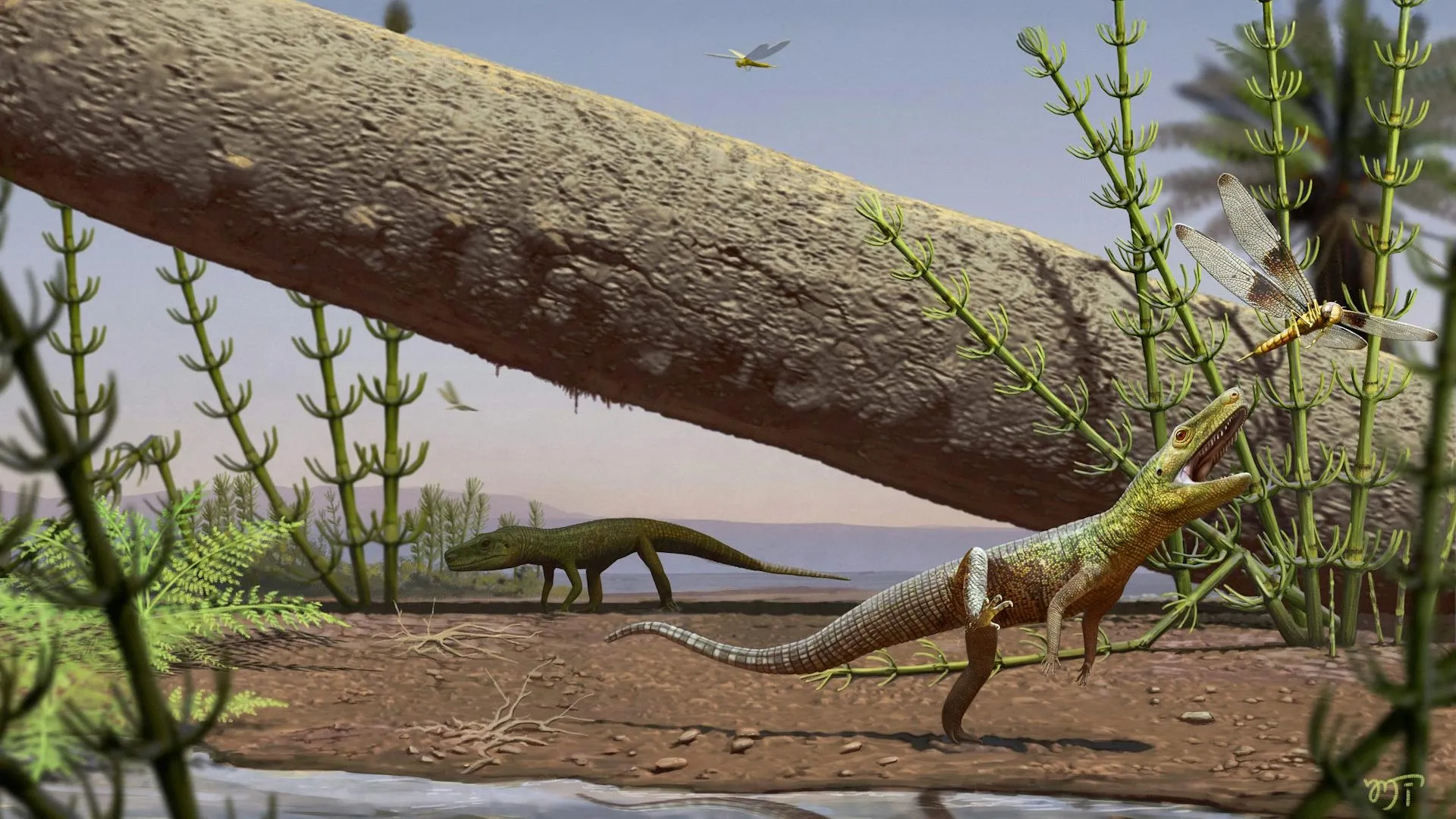
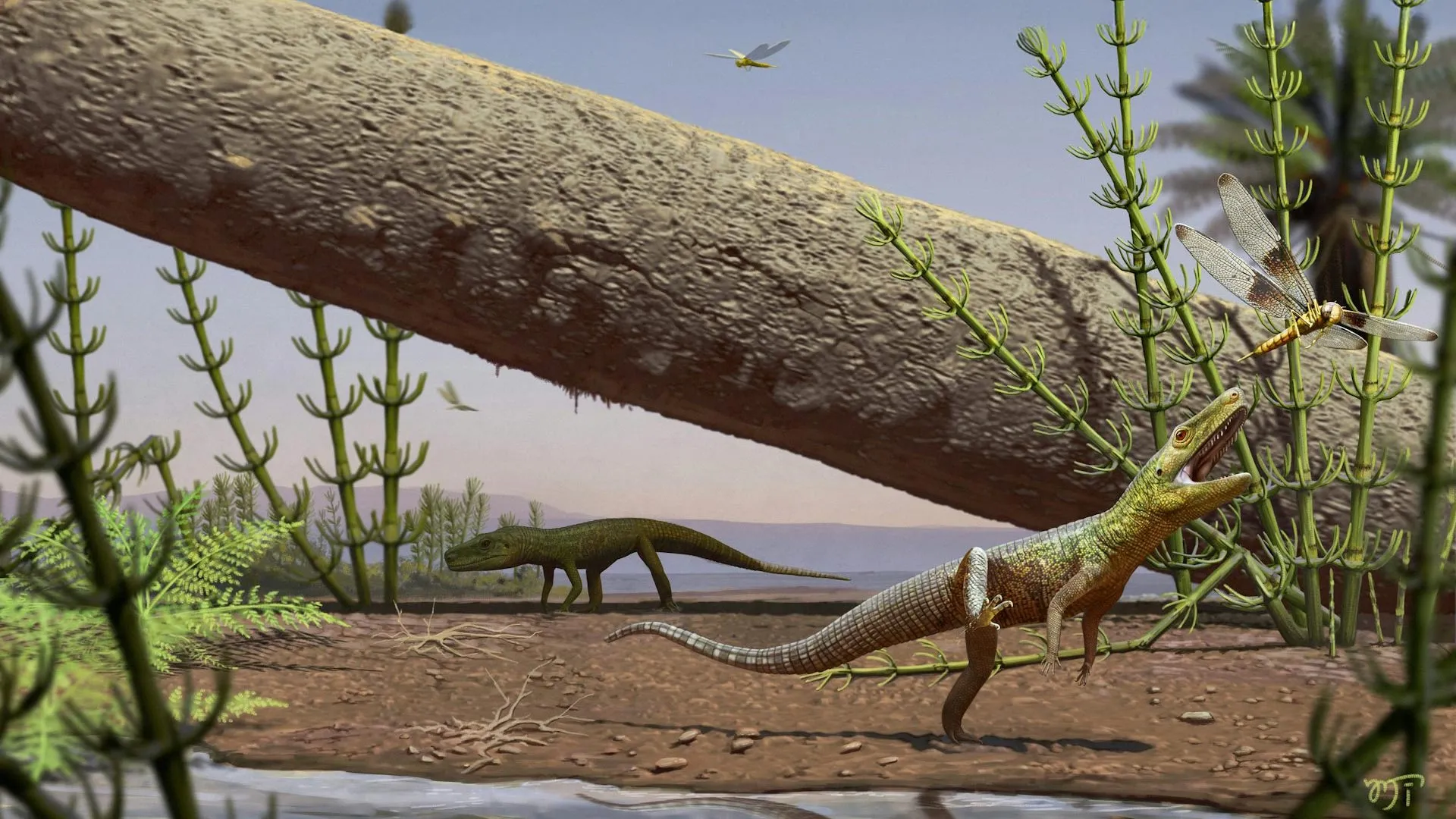
Enter Silescelida acristata, a newly described, slender, four-legged predator roughly comparable in size to a modern small alligator. Unearthed in the rural municipality of Dona Francisca, within the UNESCO Quarta Colônia Geopark in Rio Grande do Sul, this modest reptile is punching well above its weight in the global paleontological community. Published in the scientific journal Scientific Reports, a collaborative study led by researchers from the Quarta Colônia Center for Paleontological Research at the Federal University of Santa Maria (CAPPA/UFSM), alongside colleagues from the Federal University of Rio Grande do Sul (UFRGS) and the Pontifical Catholic University of Rio Grande do Sul (PUCRS), reveals that Silescelida is far more than just another prehistoric bone.
Featuring a fascinating two-decade "lost and found" narrative, a rare phylogenetic link to the enigmatic Euparkeriidae family, and crucial anatomical clues regarding early semi-erect locomotion, Silescelida acristata is bridging critical evolutionary gaps. By demonstrating that close relatives of euparkeriids roamed South America during the Middle Triassic, the discovery dramatically expands the known geographic range of these rare reptiles, cementing Brazil’s central highlands as an indispensable laboratory for understanding the dawn of the Age of Dinosaurs.
Detailed Chronology: From Extinction to Rediscovery
To truly appreciate the significance of Silescelida acristata, one must trace a timeline spanning hundreds of millions of years of geological upheaval, followed by a remarkably serendipitous modern archival detective story.
The Triassic Crucible (252 to 240 Million Years Ago)
- 252 Million Years Ago (The Permian-Triassic Boundary): Catastrophic volcanic activity, likely driven by the Siberian Traps, triggers massive greenhouse gas emissions, ocean acidification, and anoxia. Terrestrial ecosystems collapse entirely.
- 240 Million Years Ago (Middle Triassic / Anisian-Ladinian Epoch): Life is in full swing recovery mode. Terrestrial environments in what is now South America—then part of the supercontinent Pangea—host an array of competing tetrapods. Diverse archosauriforms begin experimenting with novel body plans, metabolic rates, and locomotory postures. It is within this humid, rapidly shifting ecosystem that Silescelida acristata hunts small prey across the river floodplains of southern Brazil.
The Modern Detective Work (2002 to 2026)
- Early 2000s: Initial field excavations recover fragmentary limb bones from fossiliferous beds in Dona Francisca, Rio Grande do Sul. However, the vital matrix fragment containing precise provenance and stratigraphic data becomes separated from the main collection, effectively disappearing into administrative or archival limbo.
- More Than Two Decades in Limbo: The bone fragments remain cataloged as unclassified or forgotten material. During this "silent" period, the physical specimens sit in storage drawers, their evolutionary importance completely unrecognized.
- 2022 (The Rediscovery): During a routine technical visit and curation sweep of the scientific collections at the Pontifical Catholic University of Rio Grande do Sul (PUCRS), researchers stumble upon the missing fragment. The discovery of the long-lost piece allows scientists to definitively trace the specimen’s original geographic and stratigraphic provenance, unlocking its context.
- 2026 (Formal Description): Following exhaustive phylogenetic analyses, anatomical comparisons, and high-resolution imaging, the research team formally publishes the description of Silescelida acristata in Scientific Reports, transforming a forgotten fossil fragment into a globally recognized taxonomic milestone.
Supporting Context & Metrics: Anatomy, Phylogeny, and Geography
While complete skeletons capture the public imagination, paleontology is largely built upon the rigorous analysis of fragmentary remains. Silescelida acristata proves that even isolated limb bones can rewrite textbook paradigms when analyzed with modern technological and phylogenetic rigor.
Morphological Metrics and Locomotion
- Estimated Size: Comparable to a modern small alligator or a robust monitor lizard; a slender, quadrupedal body plan adapted for navigating dense underbrush and uneven terrain.
- Dietary Niche: Small carnivore/insectivore. Its dentition and jaw mechanics suggest it preyed upon insects, early amphibians, and small synapsids, functioning as a mid-tier predator in a recovering food web.
- The Femur and Posture: The holotype preserves key elements of the hindlimbs, most notably the femur (thigh bone). Unlike sprawling primitive tetrapods, Silescelida possessed a semi-erect limb posture, positioning its legs lower beneath the body rather than splayed out to the sides. This reduced mechanical drag and increased locomotory efficiency—a crucial evolutionary stepping stone toward the fully erect, pillar-like stances that would eventually propel dinosaurs and rauisuchians to global dominance.
- Etymology of the Name:
- Silescelida: Derived from words signifying "silence" (referencing the two decades the fossil spent lost and forgotten in storage) and "leg" (referencing the predominantly limb-based nature of the preserved material).
- acristata: Latin for "without a crest," highlighting the distinct absence of a prominent femoral trochanter (a raised bony ridge for tail muscle attachment) seen in almost all of its closest evolutionary relatives.
Geographic Expansion of the Euparkeriidae
Phylogenetic analyses place Silescelida acristata in close proximity to the Euparkeriidae, a notoriously rare and poorly understood family of archosauriforms. Prior to this discovery, fossil evidence for euparkeriids was overwhelmingly restricted to the Old World—primarily Africa, Asia, and Europe.
| Region | Historical Euparkeriidae Record | Post-Silescelida Understanding |
|---|---|---|
| Africa, Asia, Europe | Primary stronghold; numerous classic specimens (e.g., Euparkeria capensis in South Africa). | Confirms these regions were connected within Pangea, allowing broad historical dispersal. |
| South America | Previously absent or unrecognized in Middle Triassic strata. | Expanded Distribution: The discovery in Rio Grande do Sul proves euparkeriid-lineage reptiles possessed a truly pangaean, cosmopolitan distribution during the Triassic. |
Official Statements and Expert Insights
The unveiling of Silescelida acristata has drawn high praise from academic leaders across Brazil’s premier research institutions, highlighting the collaborative nature of the discovery and its implications for South American paleontology.
Dr. Flávio Pretto, a leading paleontologist involved in the study from the Quarta Colônia Center for Paleontological Research (CAPPA/UFSM), emphasized the unexpected nature of the find:
"When we began re-evaluating the collection materials at PUCRS, our goal was simply to organize and catalog regional finds. Finding the missing provenance fragment was like finding the missing piece of a complex geographical puzzle. This animal shows us that the evolutionary experiments happening during the Middle Triassic were far more diverse across southern Gondwana than our previous fossil records indicated."
Reflecting on the broader impact of Brazilian strata, paleontologists at UFRGS and PUCRS noted that the preservation quality in Rio Grande do Sul offers an unrivaled snapshot of terrestrial recovery.
"Fragmentary fossils often get sidelined in favor of pristine skulls or complete articulated skeletons," noted a co-author of the Scientific Reports study. "However, Silescelida demonstrates that limb morphology alone can harbor deep phylogenetic secrets. By looking closely at how these animals walked, we are charting the mechanical pressures that forced archosaurs to evolve their signature upright postures."
Furthermore, representatives from the UNESCO Quarta Colônia Geopark underscored the socio-scientific value of the discovery. The geopark not only protects vital geological heritage sites but also serves as an active engine for regional education, driving local economic and cultural engagement through prehistoric research.
Future Outlook: The Road Ahead for Triassic Research
The formal description of Silescelida acristata opens up several exciting avenues for future investigation in South American paleontology and evolutionary biology:
- Targeted Re-Excavation of Dona Francisca Strata: With the geographic provenance of Silescelida firmly re-established, paleontological teams are planning new, high-precision excavations in the target rock layers of the Quarta Colônia Geopark. Researchers hope to unearth cranial material or more complete vertebral columns to refine the animal’s exact phylogenetic tree placement.
- Micro-Biome and Isotopic Analysis: Future studies will likely apply advanced geochemical techniques—such as bone histology and isotopic analysis—to the preserved limb fragments. This will shed light on the metabolic rates, growth patterns, and environmental adaptations of early archosauriforms navigating post-extinction climates.
- Re-evaluating Museum Archives Across Brazil: The remarkable story of Silescelida—a fossil lost for over twenty years in university collections—has prompted a nationwide audit of historical fossil drawers. Institutions across Brazil are reviewing uncatalogued or fragmentary specimens, suspecting that other groundbreaking species may be quietly resting in storage, awaiting modern technological re-examination.
- Deepening Global Collaboration: As paleontology moves toward increasingly integrated global datasets, the link between African and South American Triassic faunas highlighted by Silescelida will spur joint research initiatives between Brazilian and international institutions, mapping out how terrestrial life migrated and adapted across the fractured landscapes of early Pangea.
Ultimately, Silescelida acristata serves as a humbling reminder that in the vast archives of natural history, no fossil is truly insignificant. From a forgotten bone in a university drawer to the pages of Scientific Reports, this silent leg of the Triassic has forever altered our understanding of how life fought back, adapted, and ultimately conquered the Earth.