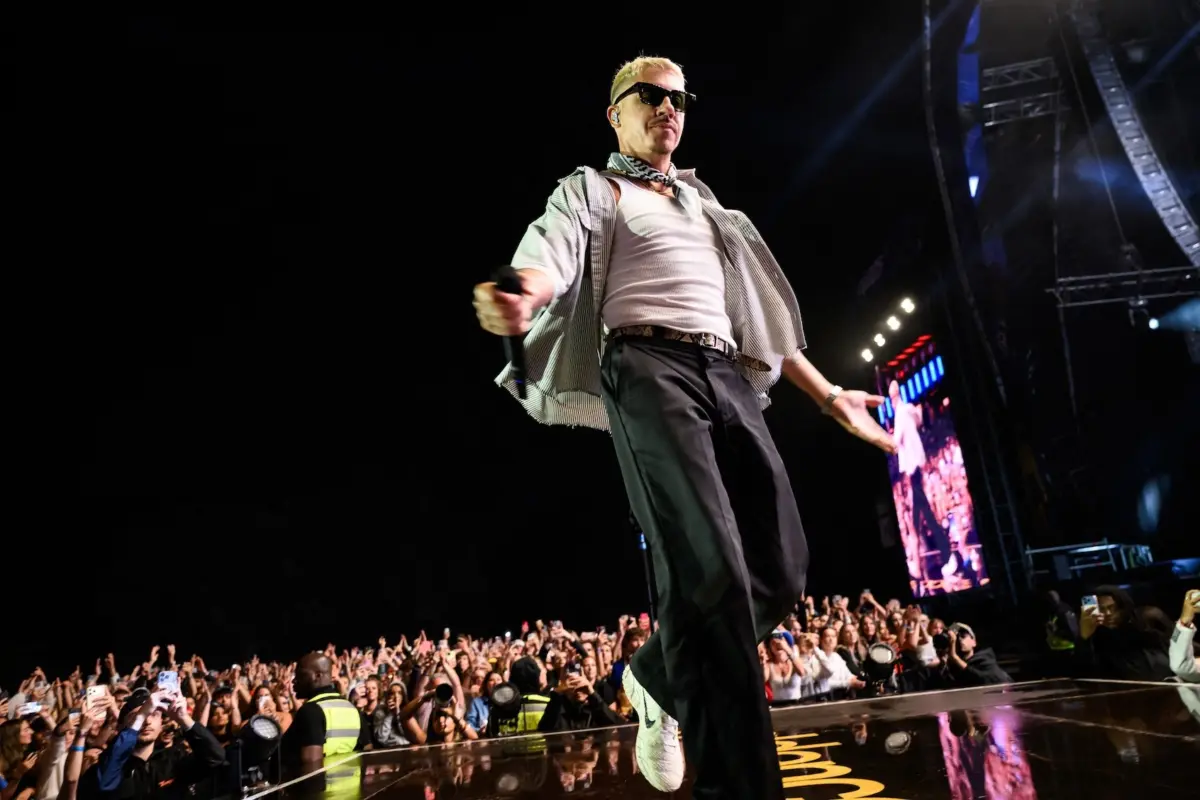
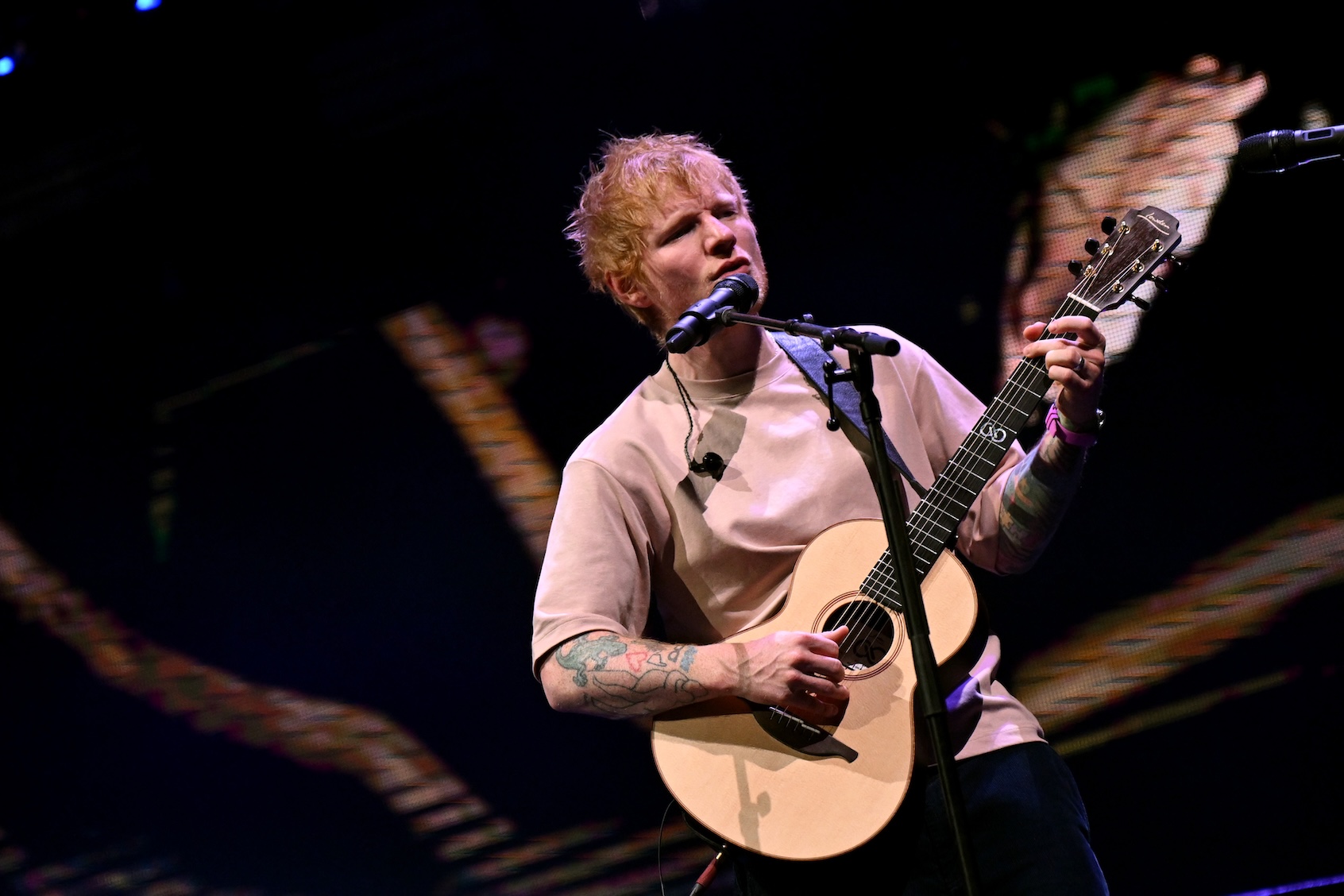
In the modern music industry, reaching the upper echelon of superstardom is often measured not by critical acclaim or chart longevity, but by real estate. While arena acts command massive indoor crowds, true A-listers belong to the elite tier of stadium headliners—artists capable of packing massive open-air sports complexes night after night. Yet, occupying these sprawling spaces requires navigating a complex corporate ecosystem where billions of dollars, powerful venue owners, and high-stakes financial logistics intersect.
When political conviction collides with this corporate-backed machinery, the fault lines are exposed with brutal clarity. The recent high-profile controversy surrounding Ed Sheeran’s U.S. stadium tour, Seattle rapper Macklemore, and New England Patriots owner Robert Kraft illustrates the precarious tightrope artists walk today.
After Macklemore used his opening-set platform during the tour’s opening nights to voice support for the Palestinian cause, he was swiftly booted from the remaining dates. The decision was spearheaded by Kraft—owner of Gillette Stadium—and backed by the tour’s promoters, citing Macklemore’s history of rhetoric regarding the Middle East. While supporting acts like Aaron Rowe subsequently walked off the tour in protest, headliner Ed Sheeran attempted to thread a diplomatic needle, issuing a statement that balanced personal privacy with a desire to protect his tour’s logistics and crew.
The incident has ignited a fierce debate across the cultural landscape. It raises urgent questions about the suppression of political speech in major entertainment venues, the immense financial pressures facing stadium headliners, and whether neutrality in the face of geopolitical crisis amounts to complicity.
Detailed Chronology: Anatomy of a Tour Cancellation
The friction that would ultimately rupture Ed Sheeran’s U.S. stadium run began quietly before escalating into a full-scale industry crisis.
The Spark: Opening Nights and Stage Advocacy
As Sheeran’s tour kicked off its U.S. leg, supporting acts took the stage to warm up massive stadium audiences. Among them was Macklemore, long known for his outspoken political and social commentary. During the first two shows of the itinerary, the "Thrift Shop" rapper used his platform to express solidarity with the Palestinian people, condemning the ongoing humanitarian crisis in Gaza. While crowd reactions varied, the statements immediately drew the ire of venue executives and stakeholders who view political discourse on stadium stages as a liability to brand safety and corporate harmony.
The Hammer Drops at Gillette Stadium
The situation metastasized when the tour approached Gillette Stadium in suburban Boston. The venue is owned by the Kraft Group, headed by billionaire philanthropist and New England Patriots owner Robert Kraft. Objecting strongly to Macklemore’s prior remarks, Kraft intervened, decreeing that the rapper would not be permitted to perform at Gillette Stadium.
Faced with a logistical roadblock at one of the tour’s premier stops, the Messina Touring Group—the tour’s promoter—went a step further. Rather than simply benching Macklemore for the Boston date, the promoters booted him from all remaining U.S. tour dates, alleging that multiple venues across the itinerary had raised objections to his presence.
The Fallout and Statements
In a formal statement provided to Rolling Stone, Robert Kraft defended his decision, framing it as a defense against antisemitism and divisive rhetoric:
"These recent actions… and a broader history of antisemitic rhetoric and imagery… [are] deeply offensive and hurtful to the Jewish community."
Macklemore responded via Instagram, acknowledging that Kraft had effectively rallied a coalition of venue owners to force him off the tour. However, he stopped short of blaming the headliner, referring to Sheeran as a "brother" and noting that the billionaire-led boycott had placed the British singer in an impossible position.
Sheeran, meanwhile, released his own carefully calibrated statement. Seeking to distance himself from the controversy while avoiding taking a concrete stance on the underlying geopolitical conflict, Sheeran emphasized his devotion to his fans and crew:
"I am not complicit. I have my personal views on this devastating conflict. Just because I choose not to speak publicly, it doesn’t mean I don’t have them, and it doesn’t mean I don’t care… Nor does it mean I don’t support causes in my own, personal way."
The crisis deepened when Irish musician Aaron Rowe, another supporting act on the bill, announced he was voluntarily leaving the tour in protest of corporate censorship and the silencing of pro-Palestinian voices. Rowe stated:
"I don’t take this decision lightly. Ed has been a friend to me and has changed my life… But as Irish people we know all too well about genocide, forced famine and violent occupation."
Supporting Context & Metrics: The Mechanics of Stadium Tours
To fully understand why Ed Sheeran navigated this controversy with cautious self-preservation rather than a disruptive act of solidarity, one must examine the staggering scale of modern stadium tours.
Arenas vs. Stadiums: A Fractured Ecosystem
In contemporary popular music, the live performance landscape is sharply divided:
Arenas typically seat between 10,000 and 20,000 patrons. While lucrative, they represent a tier accessible to a broad array of established legacy acts, indie crossover darlings, and mid-to-upper-tier pop stars (e.g., Olivia Rodrigo or John Mellencamp).
Stadiums, by contrast, seat anywhere from 50,000 to over 100,000 people. Filling multiple stadiums requires immense global pull, massive capital investment, and intricate scheduling. Artists like Taylor Swift, Bruce Springsteen, and Ed Sheeran operate in this rarefied air.
The Economic Web of a Mega-Tour
When a stadium tour hits the road, the financial and operational stakes are monumental. A shutdown does not merely affect a wealthy headliner’s bank account; it impacts an entire ecosystem:
Support Staff & Crews: Dozens of audio engineers, riggers, lighting directors, logistics managers, and backstage personnel have put their home lives on hold to travel with the show. Halting the tour abruptly cuts off their livelihoods.
Promoter and Venue Contracts: Mega-tours are bound by complex legal agreements involving multi-million-dollar guarantees, insurance policies, and corporate venue partnerships. Breaking a contract with a venue owner of Robert Kraft’s stature could result in lifetime bans from premier entertainment complexes across North America.
Fan Investment: Because stadium dates are geographically sparse compared to arena runs, fans often travel hundreds of miles, booking flights and hotels months in advance.
While supporting acts like Aaron Rowe or Finneas can walk away from a tour with relative ease due to lower financial exposure and smaller touring footprints, a headliner like Sheeran carries the weight of an entire corporate and logistical machine.
Official Statements & Industry Perspectives
The controversy has drawn sharp lines across the entertainment industry regarding the responsibilities of artists versus the rights of venue owners and the ethics of political expression.
The Case for Venue Accountability and Corporate Boundaries
Proponents of Kraft’s intervention argue that private venue owners possess the legal and moral right to curate the events hosted on their property. From this perspective, public platforms in privately owned or corporate-sponsored stadiums should not be weaponized to amplify polarizing geopolitical rhetoric, particularly when venue ownership feels targeted by language they perceive as harmful or offensive to specific communities.
Kraft’s statement attempted to bridge this corporate boundary with an appeal to broader peacemaking, asserting that his decision was "not about diminishing the suffering of innocent Palestinians or denying anyone the right to advocate on their behalf," while simultaneously condemning rhetoric that ignores the actions of Hamas.
The Artistic Precedent: Risk vs. Reward
Conversely, cultural critics and politically active artists argue that corporate sanitization of concert stages stifles essential public discourse. Throughout recent years, several prominent stars have demonstrated a willingness to risk their careers for their convictions:
Susan Sarandon was dropped by her longtime talent agency UTA after speaking at pro-Palestine rallies in late 2023.
Melissa Barrera was fired from her starring role in the horror franchise Scream 7 following social media posts condemning the humanitarian crisis in Gaza, later doubling down on her activism at the Sundance Film Festival.
Selena Gomez and Mark Ruffalo faced intense public scrutiny after signing open letters calling for an immediate ceasefire, though their high-profile status insulated them from the severe legal and economic penalties faced by non-celebrity activists on college campuses.
Macklemore addressed this dichotomy head-on in his post-termination statement:
"Taking a side can cost you. Money, brand deals, sponsorships, festivals, private shows, relationships and access. I’ve lost all of those things. But there is no neutral position between the oppressor and the oppressed… When one side has the bombs and bottomless financial and military support from America, refusing to take a side doesn’t leave you in the middle."
Future Outlook: What the Macklemore-Kraft Incident Means for Live Music
The clash at Gillette Stadium is unlikely to remain an isolated incident. As global geopolitical tensions continue to polarize public opinion, the intersection of live entertainment and political advocacy faces an increasingly hostile environment.
1. Stricter Vetting and Clauses in Touring Contracts
In the wake of this controversy, promoters, booking agencies, and venue conglomerates are expected to implement tighter clauses in performance agreements. Expect increased scrutiny over supporting acts, impromptu stage commentary, and political messaging. Venues with strong corporate or billionaire backing may demand pre-approval of stage banter or explicit behavioral codes to protect brand alignment.
2. The Shrinking Space for Nuance
For major headliners like Ed Sheeran, the lesson of the 2026 tour is a cautionary tale about the perils of association. When political fires ignite around a supporting act, the headliner is forced into a defensive posture. This dynamic encourages a culture of enforced silence among top-tier artists who fear that any misstep—or failure to police their peers—could jeopardize their access to the world’s most lucrative stages.
3. A Widening Chasm Between Commercial Pop and Radical Art
Ultimately, the Macklemore-Kraft saga highlights an enduring truth of the modern entertainment complex: true radical expression thrives in the margins, while stadium-scale pop music is inherently tied to capital.
While artists like Macklemore and supporting voices like Aaron Rowe have chosen to accept career disruption in exchange for ideological consistency, mega-headliners are continually reminded that maintaining a stadium-sized career often requires paying a heavy toll in moral compromise. As the live music industry moves forward, both fans and artists will be forced to reckon with the chilling realization that on the biggest stages in the world, neutrality is rarely neutral—it is simply the price of admission.