

Executive Overview
In the heart of northeastern Brazil’s rugged terrain, a routine infrastructure project has unexpectedly unlocked a monumental chapter in prehistoric history. During industrial excavation for a new road rail terminal in Davinópolis, located in the state of Maranhão, construction crews struck something far more enduring than modern concrete: the fossilized remains of a colossal, previously unknown dinosaur species.
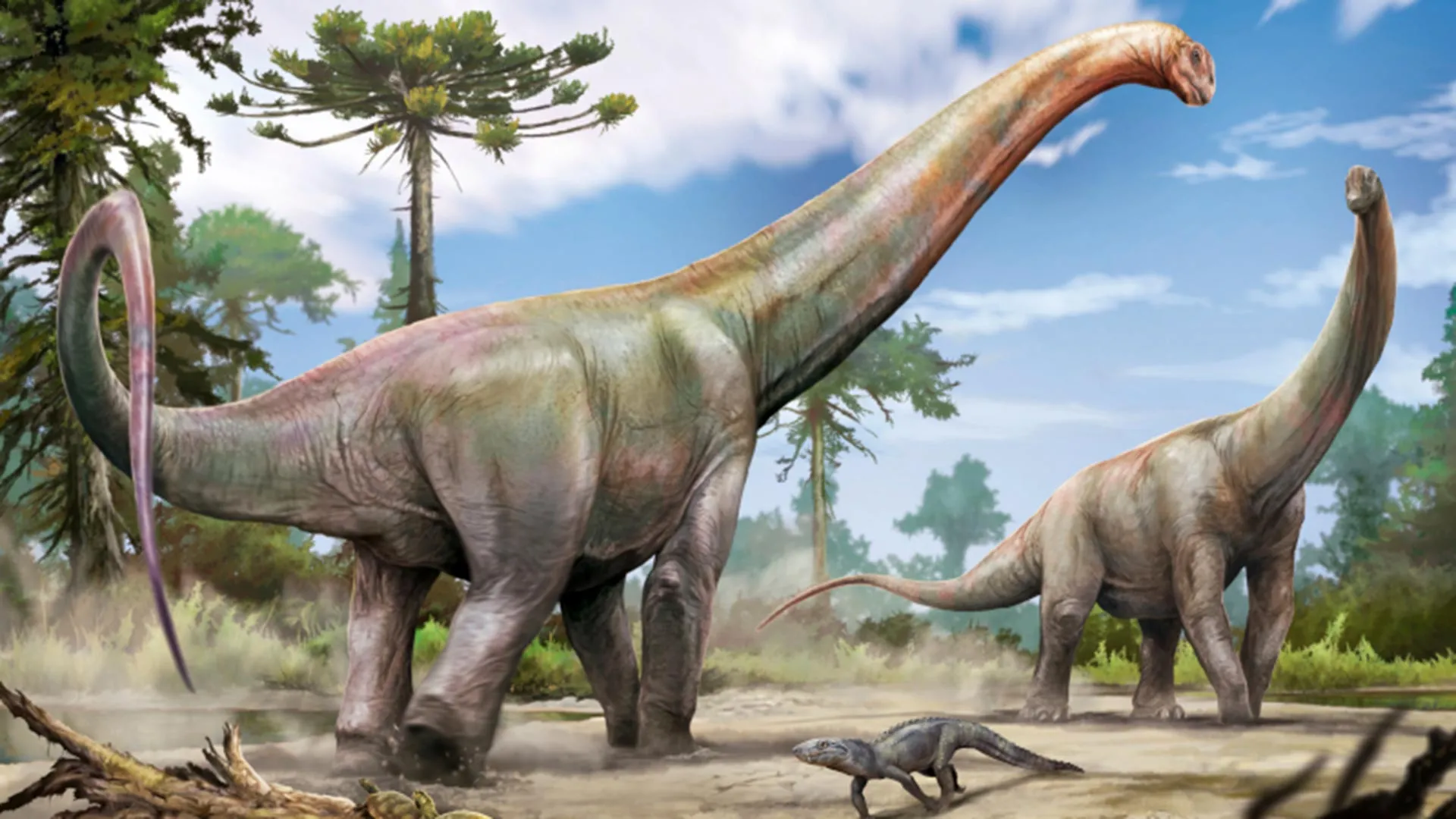
Named Dasosaurus tocantinensis, this newly identified sauropod measured an astonishing 20 meters (approximately 65 feet) in length and roamed the Earth roughly 120 million years ago during the Cretaceous period. Published in the esteemed Journal of Systematic Palaeontology, the discovery offers unprecedented clarity regarding the global distribution, evolutionary trajectories, and anatomical adaptations of the planet’s largest land-dwelling animals.
Crucially, Dasosaurus tocantinensis establishes a profound evolutionary bridge between South America and Europe. Paleontological analysis reveals that the dinosaur’s closest known relative inhabited what is now Spain, indicating that these titanic creatures belonged to a widespread, trans-oceanic lineage before continental drift tore the landmasses apart. Furthermore, microscopic bone analyses are challenging established timelines regarding how sauropods achieved their staggering proportions, suggesting that certain biological growth mechanisms evolved much earlier than previously thought.
Yet, beyond its immediate paleobiological significance, the discovery underscores the delicate balance between modern industrial development and the preservation of irreplaceable natural heritage. Unearthed initially by environmental archaeologists monitoring construction impacts, the find highlights both the disruptive potential of heavy civil engineering and its paradoxical capacity to expose hidden geological strata that might otherwise have remained entombed forever.
Detailed Chronology: From Accidental Discovery to Scientific Revelation
The journey of Dasosaurus tocantinensis from a silent subterranean tomb to the spotlight of international scientific literature is a narrative of serendipity, multidisciplinary collaboration, and rigorous academic inquiry.
The 2021 Breakthrough in Maranhão
The story began in 2021 at a bustling construction site in Davinópolis, Maranhão. As part of mandatory environmental licensing agreements for a regional road rail terminal, archaeological monitors were stationed on-site to ensure that construction activities did not inadvertently destroy culturally or historically significant artifacts.
Initially, the heavy machinery exposed large, heavy objects embedded approximately eight meters below the modern surface. Because of the depth and the initial appearance of the remains, on-site personnel hypothesized that the bones belonged to large prehistoric mammals—perhaps ice-age megafauna that coexisted with early human populations in South America.
However, the assumption of recent antiquity was quickly dismantled upon the arrival of Elver Luiz Mayer, a professor then affiliated with the Federal University of Southern and Southeastern Pará (UNIFESSPA) and now at the Federal University of the São Francisco Valley (UNIVASF). Though Mayer’s primary research focus centers on much younger Quaternary-period mammals, his geological intuition was immediately triggered by the context of the find.
"Given its depth of about eight meters, I realized that it was much older," Mayer explained. Drawing on prior geological mapping of the region, he recognized that the sedimentary layer belonged to the transition epoch between the Lower and Upper Cretaceous, placing the fossils squarely in an era roughly 120 million years old. Recognizing the monumental nature of the exposure, Mayer swiftly pivoted from his usual research, abandoned his initial assumptions, and mobilized a multidisciplinary team of specialists to investigate the site.
Excavation, Preparation, and Curation
Following the initial identification, the fossils underwent a painstaking extraction and preparation process in the state of Pará. Cleaning, stabilizing, and hardening sedimentary-encrusted dinosaur bones of this scale requires months of meticulous laboratory work using dental picks, pneumatic chisels, and chemical consolidants to prevent the ancient material from crumbling upon exposure to modern air and humidity.
Once stabilized, the specimen was officially repatriated to the state of Maranhão. Today, the skeletal remains are permanently housed in São Luís, the state capital, at the State Center for Natural History and Archaeology Research, an institution that played a pivotal role in the collaborative study.
Unlike many fragmentary sauropod discoveries—which often consist of little more than a single tooth or an isolated vertebra—the Dasosaurus find is remarkably complete. The recovered components include critical diagnostic elements: robust tail vertebrae, a massive 1.5-meter (nearly 5-foot) femur, intact ribs, specialized foot bones, and various limb elements from both the fore and hind quarters.
Max Langer, a professor at the Ribeirão Preto School of Philosophy, Sciences, and Letters at the University of São Paulo (FFCLRP-USP) and a key collaborator on the research project, emphasizes the extraordinary nature of the assemblage. "Because it includes tail vertebrae, a 1.5-meter femur, ribs, foot bones, and arm and leg bones, this is considered a relatively complete specimen," Langer noted. "We believe there are more fossils from this same specimen yet to be excavated at the site."
Supporting Context & Metrics: Anatomy, Evolution, and Geography
To fully grasp the scientific weight of Dasosaurus tocantinensis, one must examine the paleogeographic and biological frameworks of the Cretaceous world.
Sizing Up Maranhão’s Apex Sauropod
In the context of regional paleontology, Dasosaurus stands unrivaled. While the state of Maranhão has yielded various prehistoric species in the past, none have approached the sheer bulk of this new sauropod.
- The Titleholder: Dasosaurus tocantinensis is officially the largest known dinosaur ever discovered in Maranhão, stretching an impressive 20 meters from snout to tail tip.
- Local Predecessors: Prior discoveries in the area featured significantly smaller herbivorous dinosaurs. For comparison, the diplodocid Amazonsaurus maranhensis—previously one of the state’s notable sauropod finds—measured roughly 10 meters in length, making Dasosaurus twice as long and exponentially heavier.
Etymology and Cultural Geography
The nomenclature chosen for the new species pays homage both to its physical surroundings and the historical linguistic roots of the region:
- "Daso": Derived from a linguistic root meaning "forest," this prefix honors the heavily wooded environment that characterizes the region today. Early Portuguese colonizers historically described these dense, tangled forests using the term "maranhão".
- "Tocantinensis": The specific epithet references the majestic Tocantins River, near the eastern banks of which the fossil site was discovered.
Trans-Atlantic Connections and the Gondwana Supercontinent
Perhaps the most compelling aspect of Dasosaurus tocantinensis is what it reveals about ancient continental migration. Phylogenetic analysis indicates that the dinosaur’s closest evolutionary relative resided in what is now the Iberian Peninsula (Spain).
How did a lineage of massive herbivores span the distance between modern-day Spain and northeastern Brazil? The answer lies in plate tectonics. Approximately 140 to 120 million years ago, Earth’s landmasses were configured very differently. South America and Africa were still firmly joined as part of the southern supercontinent known as Gondwana, while North Africa maintained terrestrial proximity and ecological pathways to southern Europe.
Researchers hypothesize that the ancestral lineage of Dasosaurus traversed these continuous land bridges, migrating from European territories down through North Africa and eventually populating the northern and northeastern reaches of South America. This trans-continental dispersal model provides vital data points for paleobiologists mapping how mega-herbivores colonized newly forming sedimentary basins during the early Cretaceous breakup of Gondwana.
Microscopic Bone Histology and Gigantism
To push the research beyond gross anatomy, a specialized sub-team—led by Tito Aureliano and Aline Ghilardi of the Federal University of Rio Grande do Norte (UFRN)—conducted a microscopic histological analysis of the dinosaur’s bone structure.
By examining thin sections of the fossilized bone under polarized light microscopes, the researchers unlocked the cellular architecture of Dasosaurus. The analysis revealed an unusual hybrid growth pattern: the bone histology exhibited structural traits typical of older, basal sauropod lineages alongside specialized features characteristic of titanosaurs, the dominant group of armored, whip-tailed giants that would later rule the Cretaceous.
This discovery implies that the physiological adaptations responsible for rapid bone growth, remodeling, and extreme weight-bearing capacity evolved much earlier in sauropod history than previously theorized. Understanding these cellular mechanisms helps shed light on the evolutionary "tricks" that allowed these animals to defy physiological constraints and evolve into the largest walking creatures in Earth’s history.
Official Statements & Academic Perspectives
The publication of Dasosaurus tocantinensis has generated widespread commentary across Brazil’s scientific community, emphasizing the collaborative nature of the research and the institutional backing required to bring such a project to fruition.
Elver Luiz Mayer reflects on the accidental nature of the discovery and the importance of cross-discipline awareness in field research:
"It’s the largest known dinosaur for Maranhão, which has other species, but not sauropods like this one; rather, it has smaller ones, such as the diplodocid Amazonsaurus maranhensis, which was about 10 meters long… Given its depth of about eight meters, I realized that it was much older. The age of the geological formation was already known from previous research and indicated that it was material from the transition from the Lower to the Upper Cretaceous, about 120 million years ago."
Max Langer of the Ribeirão Preto School of Philosophy, Sciences, and Letters (FFCLRP-USP), who coordinates the broader research initiative "Exploring the Diversity of South American Cretaceous Dinosaurs and Their Associated Faunas" with support from the São Paulo Research Foundation (FAPESP), elaborates on the completeness of the specimen and the logistical realities of Brazilian paleontology:
"Because it includes tail vertebrae, a 1.5-meter femur, ribs, foot bones, and arm and leg bones, this is considered a relatively complete specimen. We believe there are more fossils from this same specimen yet to be excavated at the site."
Langer also points out the complex, double-edged sword that industrial development represents for the nation’s fossil heritage:
"Brazil is a tropical country with dense vegetation. Geologists and paleontologists rely heavily on human activity to excavate, expose the rocks, and reveal the fossils. If we map Brazil’s fossil sites, we’ll see highways and quarries. These projects are important for understanding our heritage. But it’s obvious that specialized monitoring and artifact recovery are necessary, which doesn’t always happen."
Echoing these concerns, Elver Luiz Mayer stresses the urgency of institutional reform and proactive collaboration between private industry and academic bodies:
"That’s why it’s urgent to foster closer cooperation between the parties to reconcile construction projects with federal legislation on fossils and promote new discoveries while ensuring the proper preservation of our heritage."
Future Outlook: Unfinished Excavations and Ongoing Research
The unveiling of Dasosaurus tocantinensis is far from the final word on this fossil locality; rather, it marks the opening salvo of a broader, sustained scientific campaign.
Returning to Davinópolis
Buoyed by the initial success of recovering a structurally informative partial skeleton, the research collective—supported by FAPESP through doctoral scholarships, postdoctoral fellowships, and Young Investigator grants—is currently engaged in active negotiations with the construction company operating the Davinópolis rail terminal.
The primary objective is securing formal permission and safety clearances to return to the excavation site. Because preliminary osteological assessments indicate that additional elements of the exact same Dasosaurus individual remain embedded in the surrounding rock strata, a secondary excavation phase could yield critical missing skeletal components, such as skull material or complete cervical vertebrae, which are exceedingly rare in the sauropod fossil record.
Expanding the Horizon of South American Paleontology
The implications of the Dasosaurus discovery extend far beyond local municipal pride. As deforestation, highway construction, agricultural expansion, and industrial rail projects continue to reshape the Brazilian landscape, the integration of mandatory paleontological monitoring into environmental licensing laws becomes increasingly paramount.
If managed correctly, civil engineering projects can transition from being silent destroyers of historical strata to unwitting partners in scientific discovery. The story of Dasosaurus tocantinensis proves that beneath the tropical soils and industrial concrete of modern Brazil lies an extraordinary prehistoric archive, waiting only for the right combination of watchful eyes, academic rigor, and institutional cooperation to bring the titans of Gondwana back into the light.